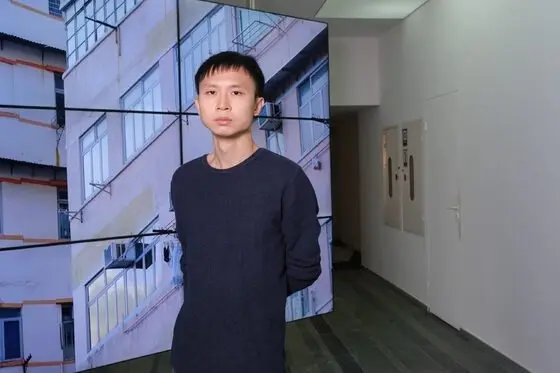
Ho Rui An
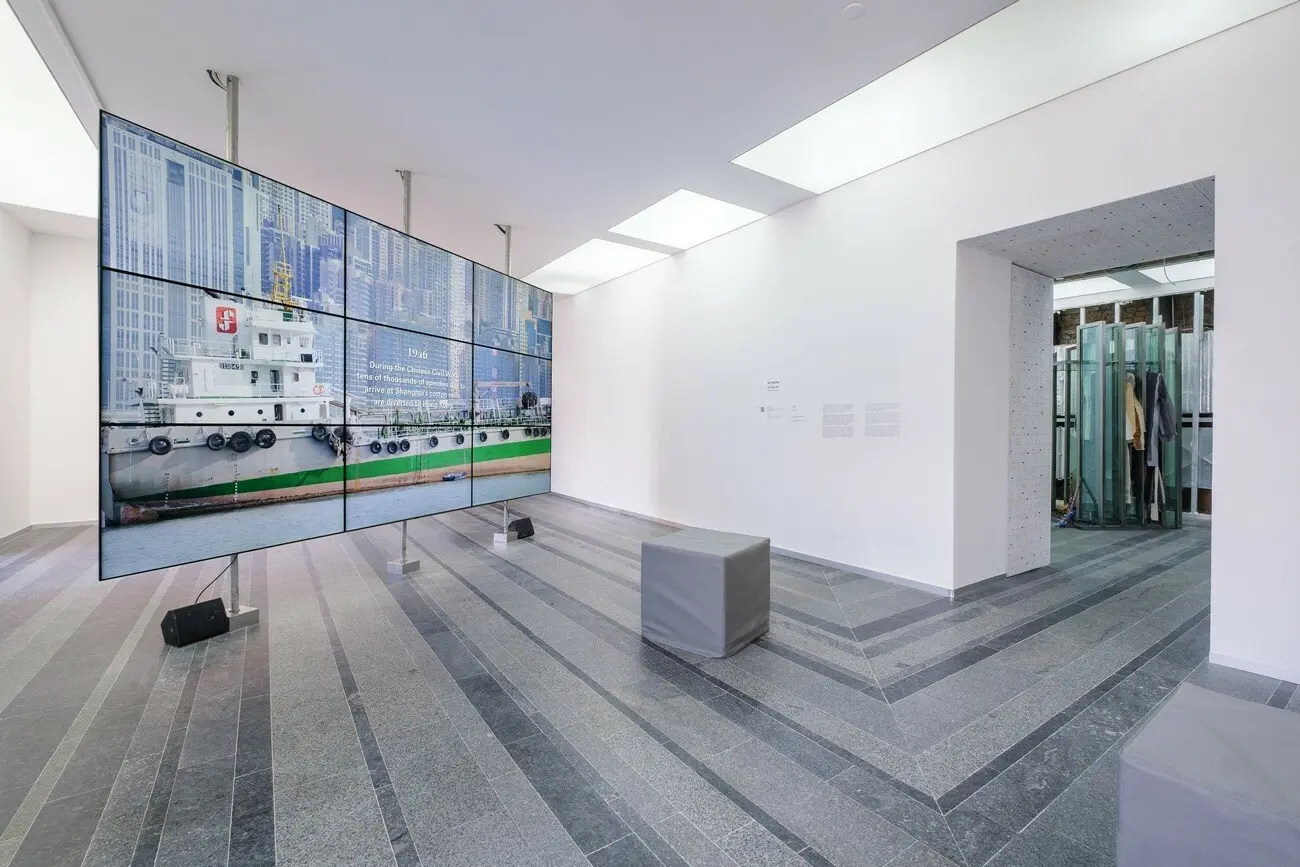
The key work in the exposition is the second chapter of an ongoing film project that maps the hundred-year history of the development of the textile industry and its many afterlives within the Greater China region. Each of the three chapters, namely Lineage, Lining, and Landing, is situated around a historical turning point and examines the shifts in the conditions of labour, capital, and technology as one socio-economic system gives way to another.
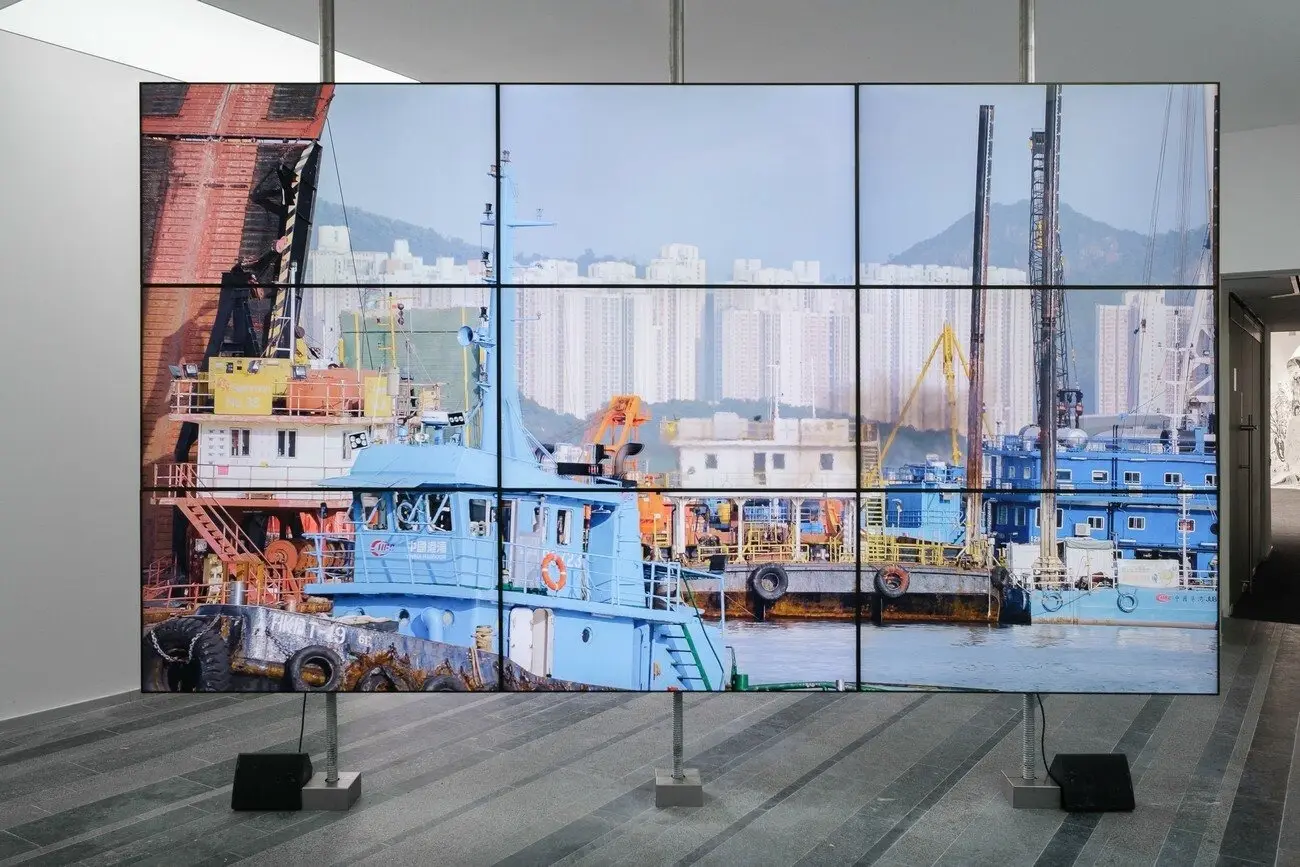
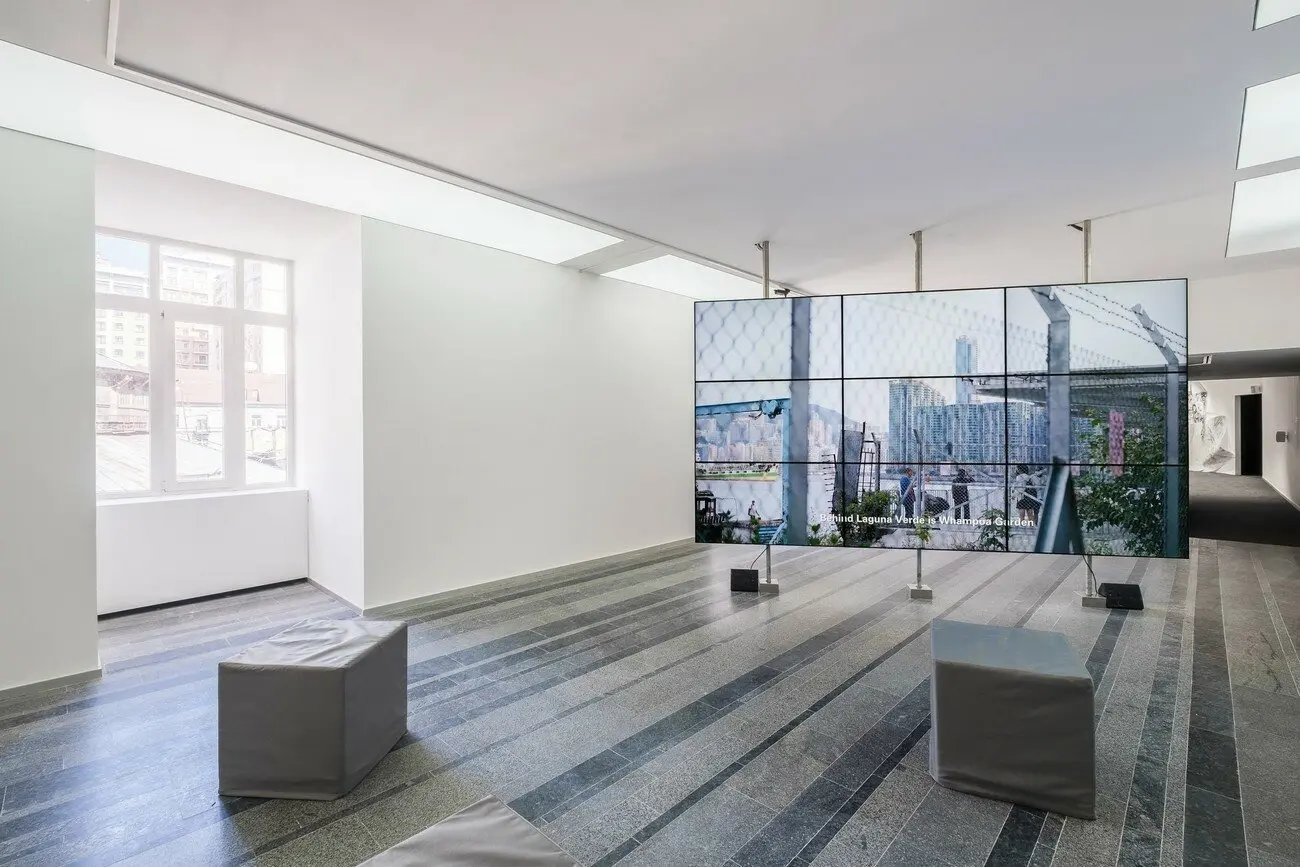
The second chapter, Lining, begins with the movement of Shanghai’s cotton mills to Hong Kong on the eve of the Communist takeover, and extends into the Reform era during which Hong Kong’s industrial base would in turn be displaced to the mainland, this time concentrated around the southern region of Guangdong. Weaving together archival material, interviews with former factory workers and managers, and observational footage shot between Hong Kong and Guangdong, the narrative describes the postindustrial turn of Hong Kong and how its relationship with Guangdong exemplifies the horizontal “lines” of connection within contemporary global capitalist networks.
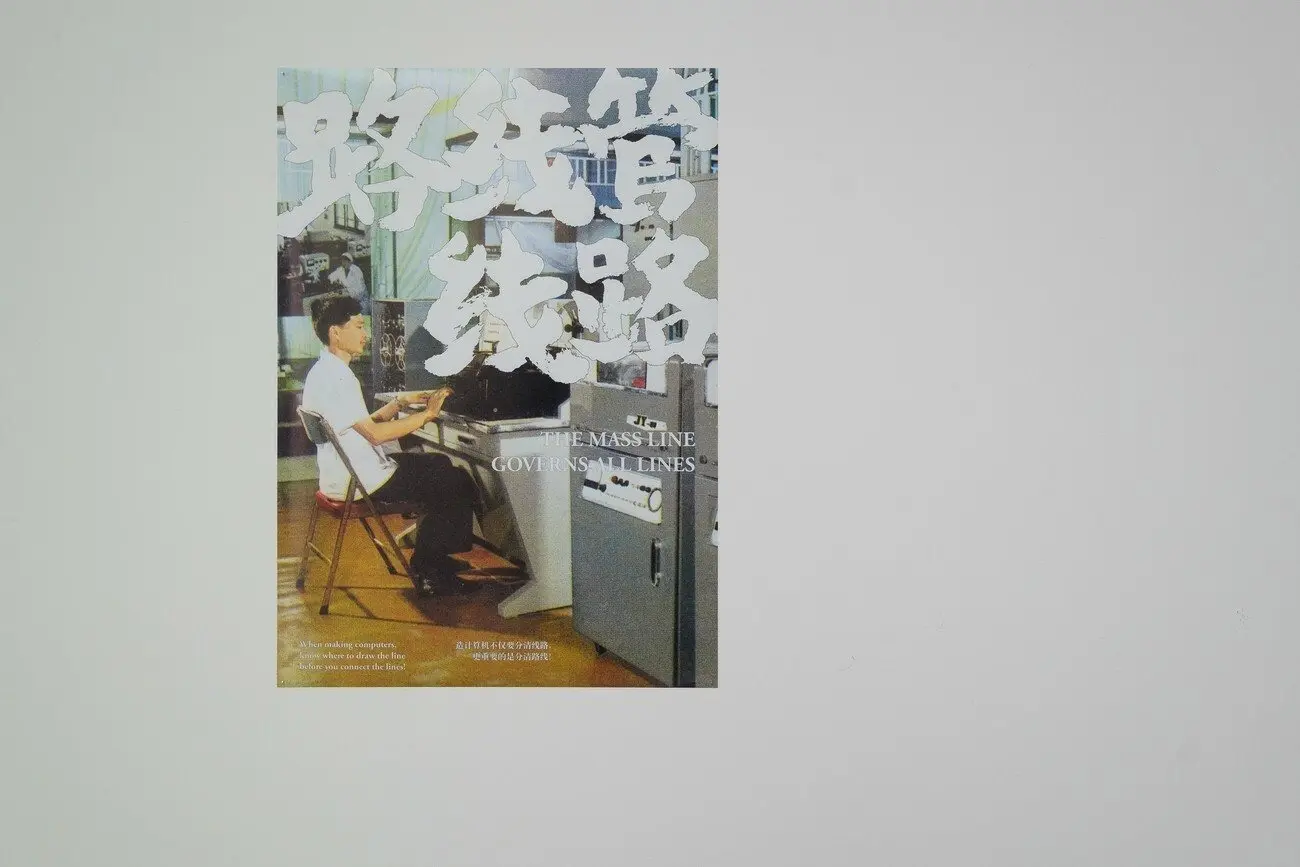
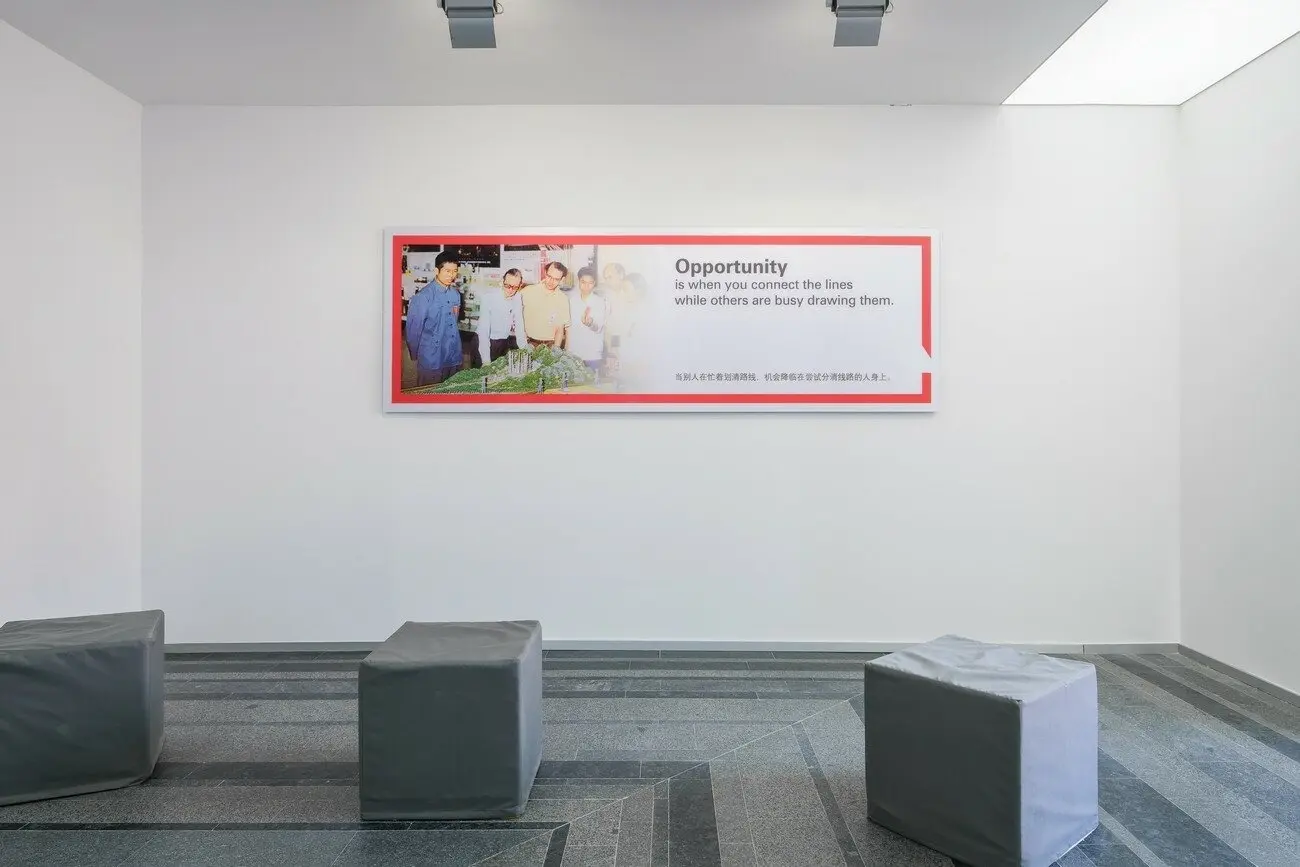
There are two posters included in the installation. They draw upon imagery extracted from publicity materials of the China Import and Export Fair, also known as the Canton Fair, during the 1970s. As one of the few occasions where Chinese trade representatives met foreign businessmen, the fair was where one could observe the ideological shifts of the Party as it gradually transitioned to a market economy integrated within global flows of labour, capital, and technology. The somewhat ironic pairing of the images with a set of devised slogans invokes the depoliticisation of technology that occurred as a part of these shifts, while questioning whether technological flows can ever be extricated from the lines of ideology.
Exhibition