Agata Ingarden
Лауреат спеціальної премії
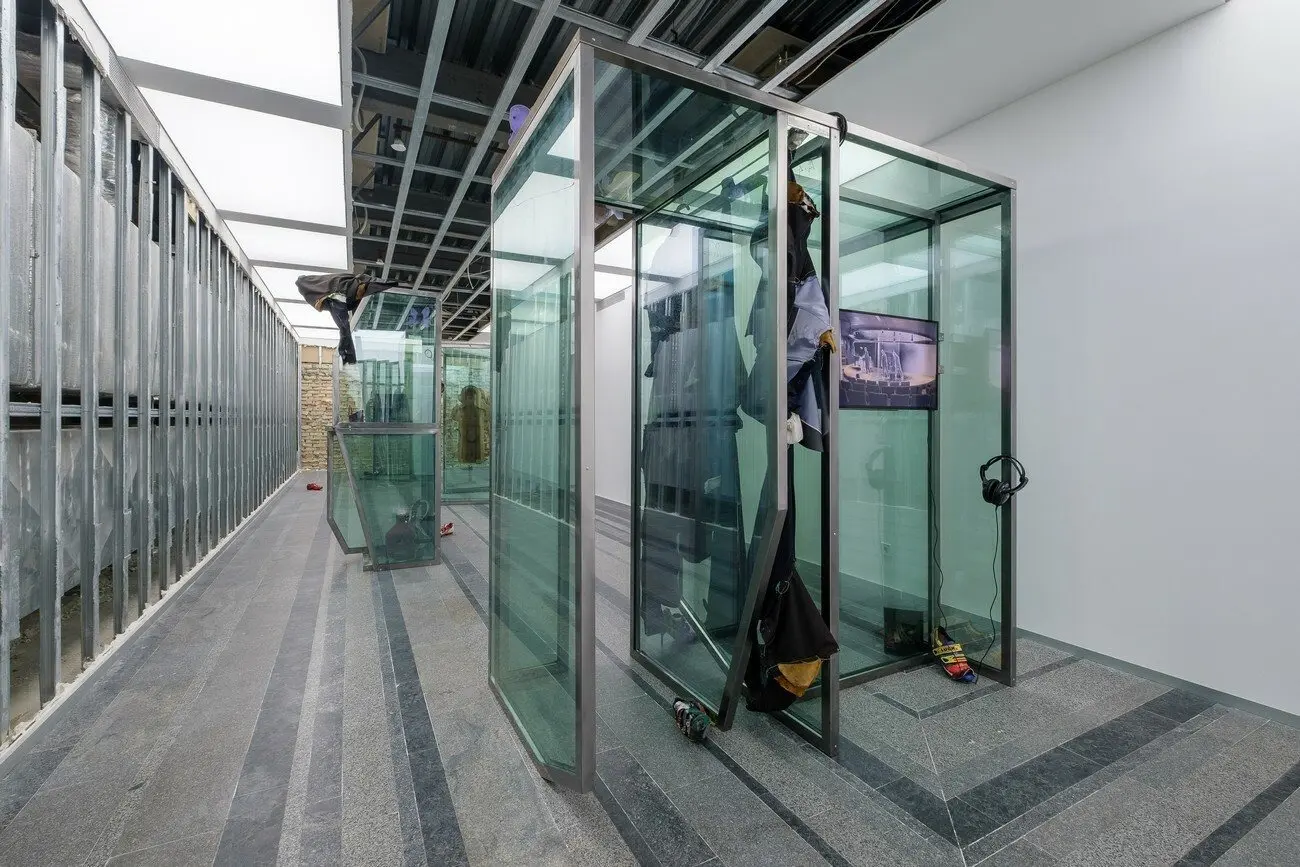
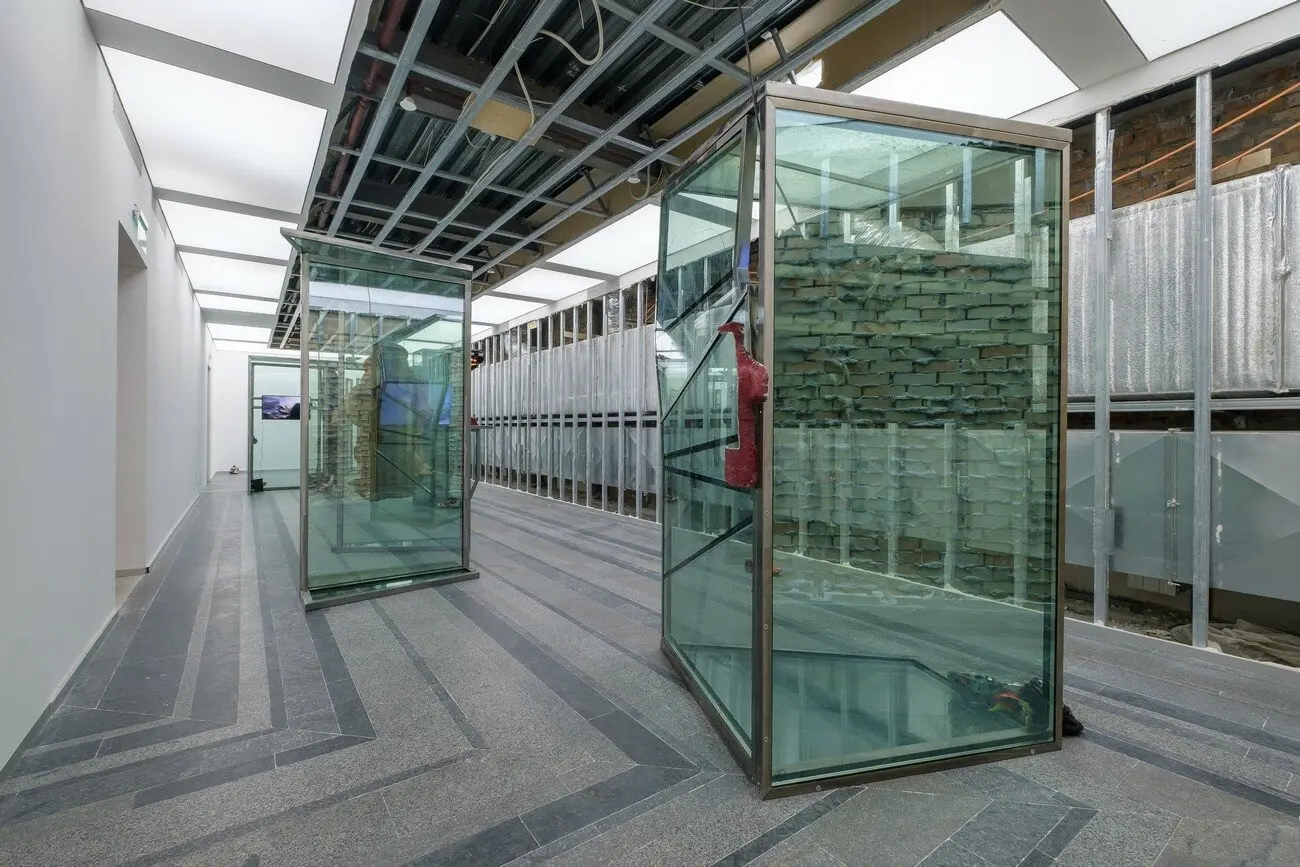
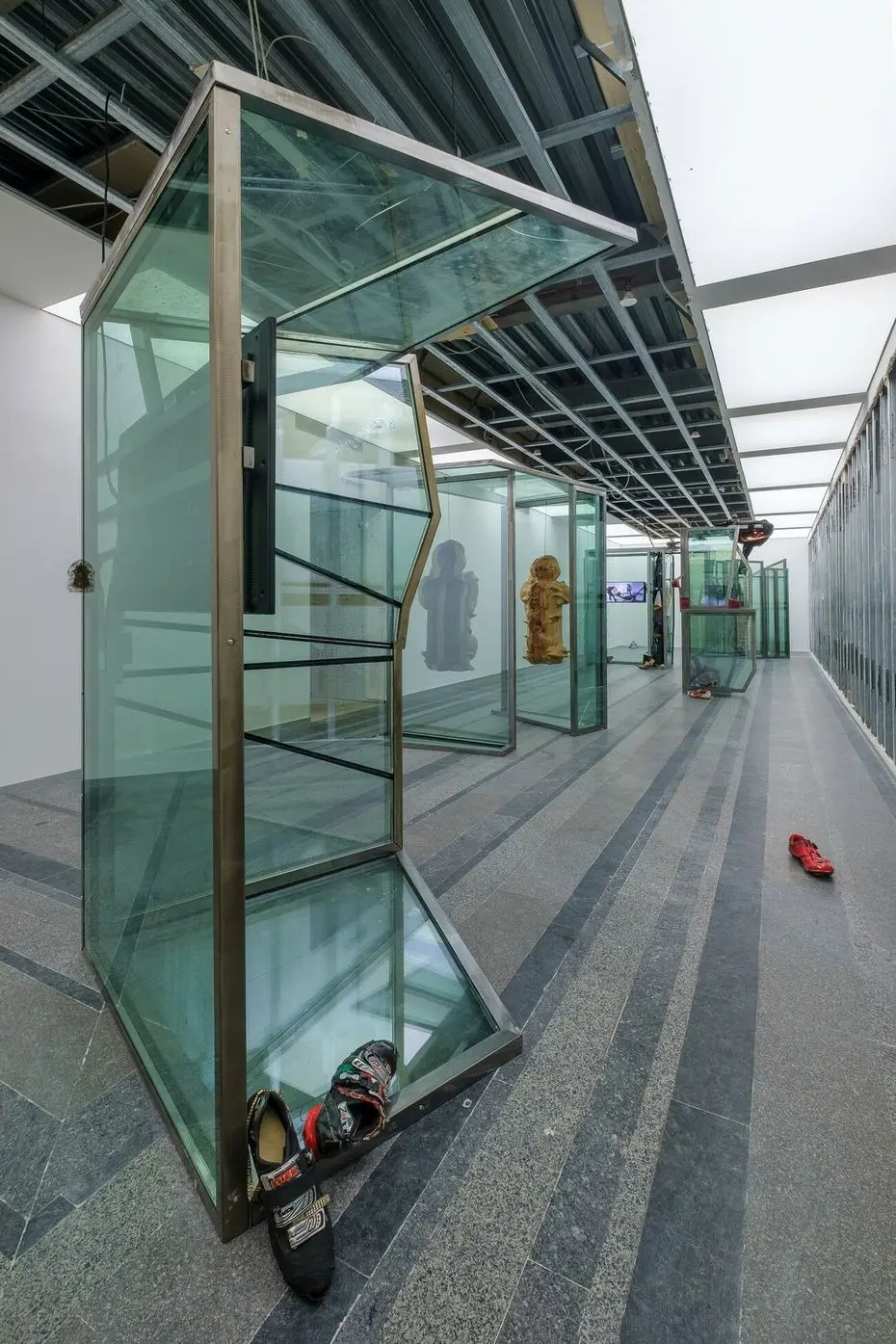
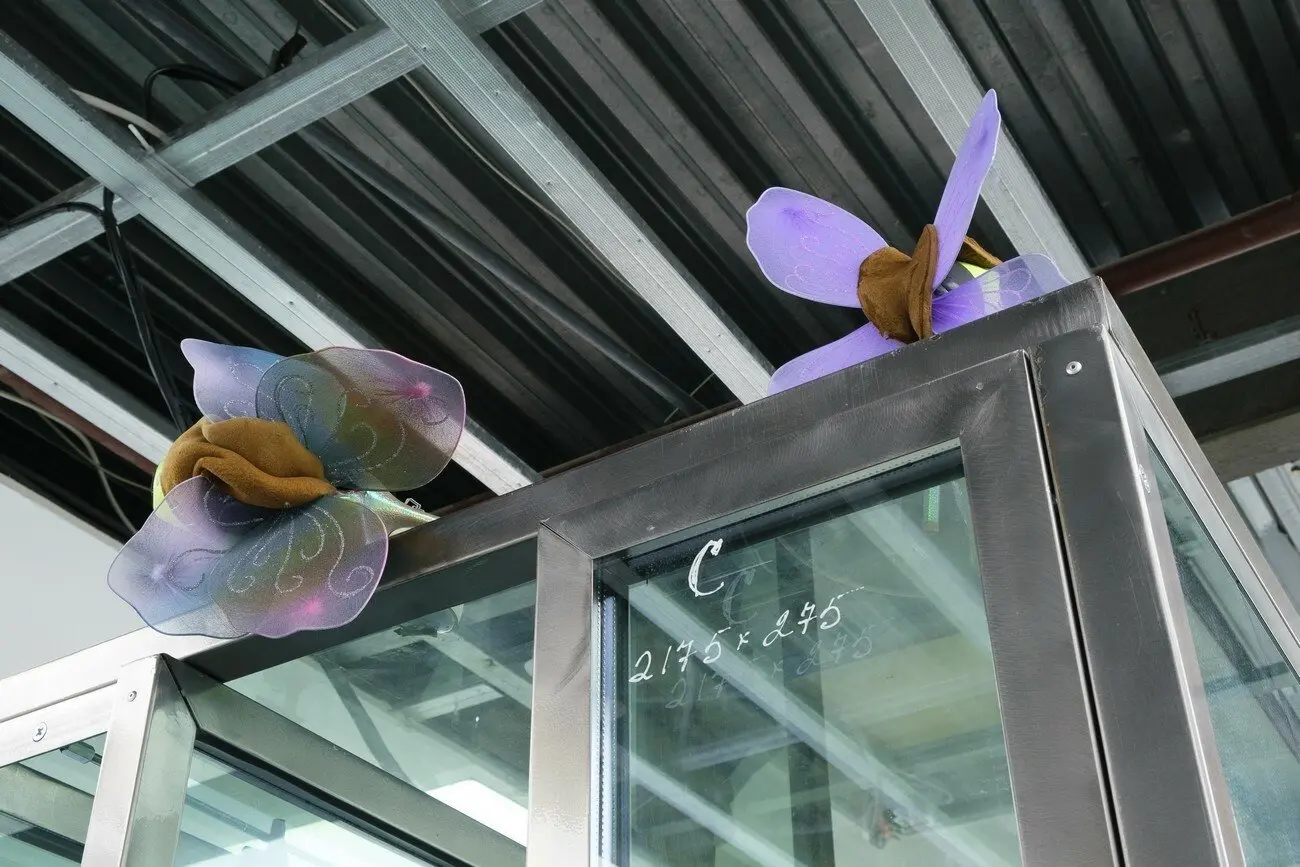
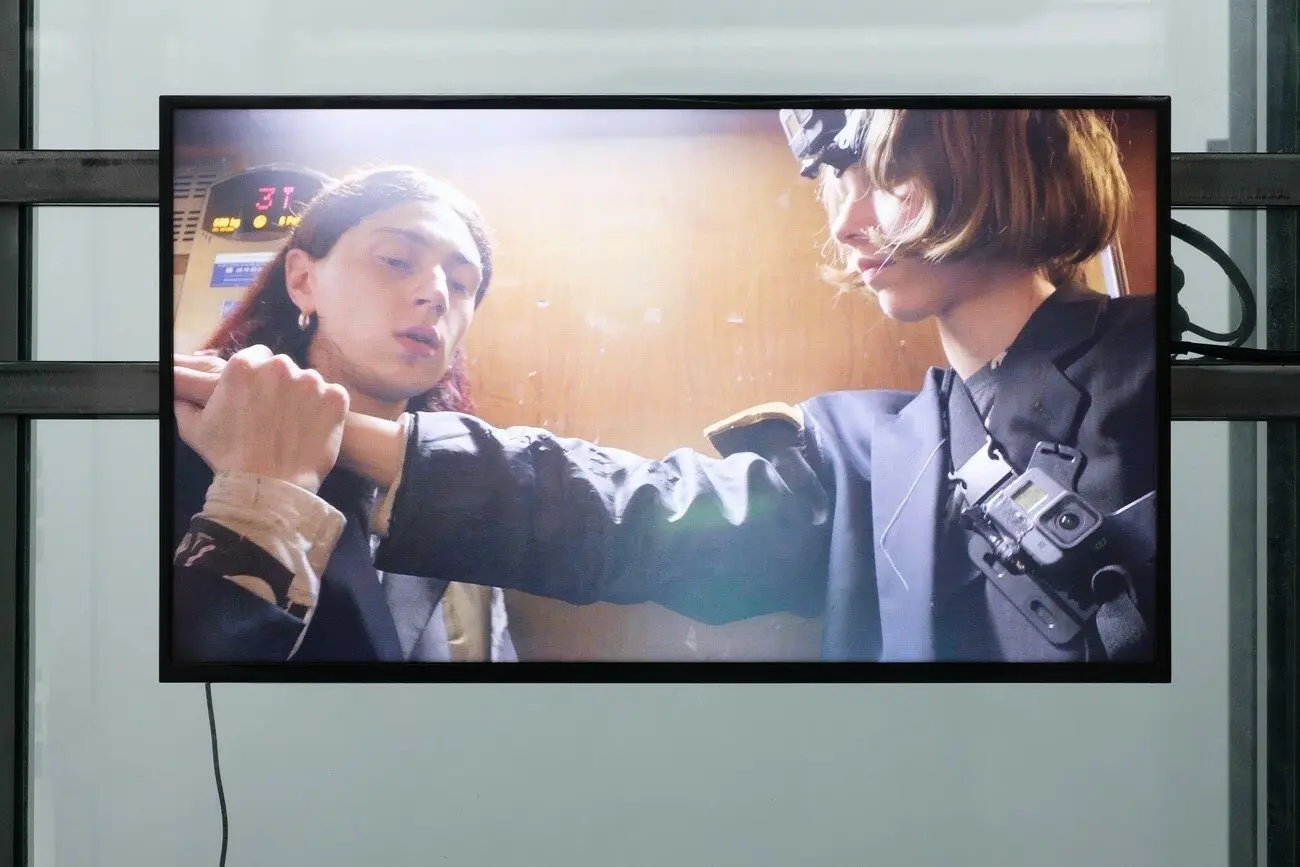
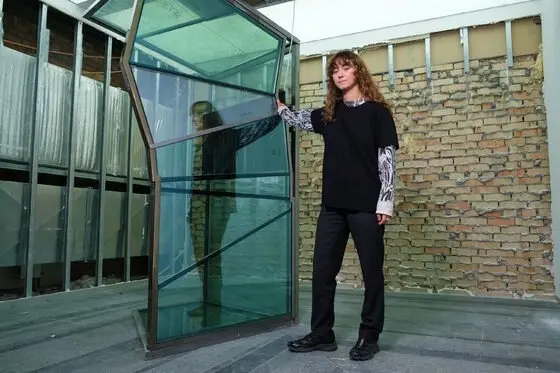
Agata Ingarden’s installation consists of architecture made out of windows, retrieved from an office building in Kyiv. Multiple types of objects appear in these forms such as wooden molds, bronze sculptures, textile suites of two designs, modified cycling shoes, and video screens. The room itself has been stripped from its white plasterboard and false ceiling, uncovering the ventilation system and the eclectic composition of the innards of the exhibition space. From in between the reflections of the kaleidoscopic, semi-transparent glass systems of elevators, corridors, and basements are revealed, constructing an emotional dimension that exists partly in reality and is partly accessible through video screens.
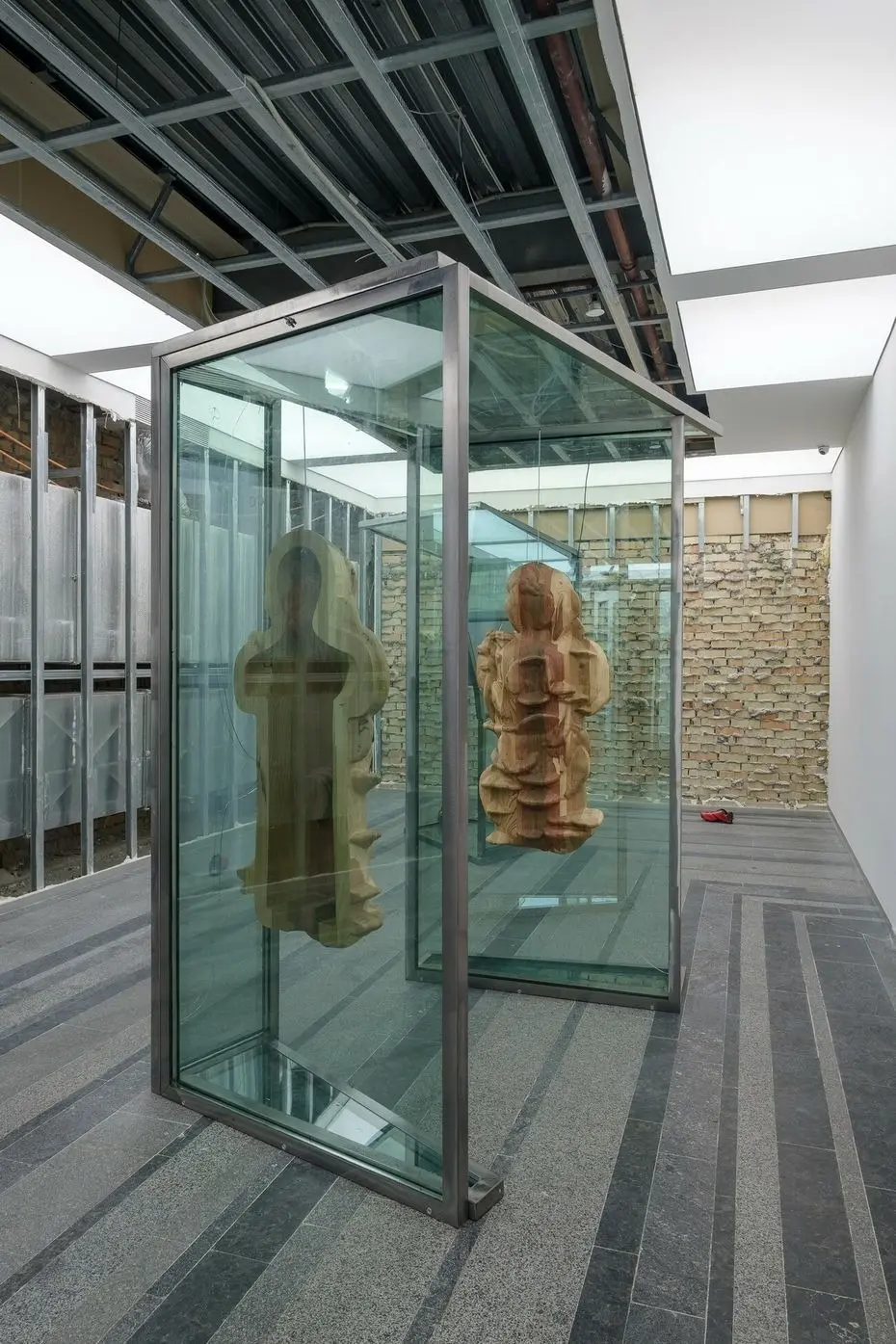
The wooden and bronze objects come from the form of a rescue dummy which is a mannequin used for water rescue training. The wooden molds are populated with 3D scanned tree mushrooms that usually grow parallel to the ground. Here, turning in all directions suddenly they indicate a different or changing point of gravity and at the same time mimic an imaginary system of internal organs. Bronze pieces, covered with red modelling wax on the outside, with polished insides and oxidized edges, resemble armour. Costumes are sewn together from many coatings with visible stitches. Playing with the idea of a mould, Ingarden introduces us to different sculptural shells, referring to the multiplicity of layers.
This setting introduces the audience to a game-like world. Dream House — an imaginary program generating a real-life simulation for a group of characters called Butterfly People who are supervised by characters called Emotional Police. Sometimes separate, sometimes merging as one character, the Butterfly People explore the boundaries of their bodies, emotional states and communication through dance and unorganised movement. On one hand, their efforts and energy fuel the entire program, and on the other become a form of revolt against generalised social norms and a way to free themselves from the system. The emotional dimension is a playground to explore the experience of becoming a “being”, or the idea of memory and constructing/recomposing identity as an individual and as a group.
Exhibition