Bronwyn Katz
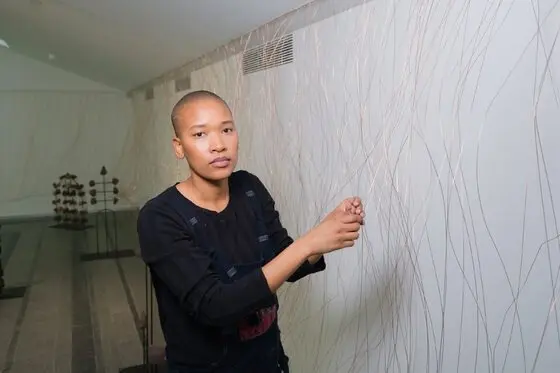
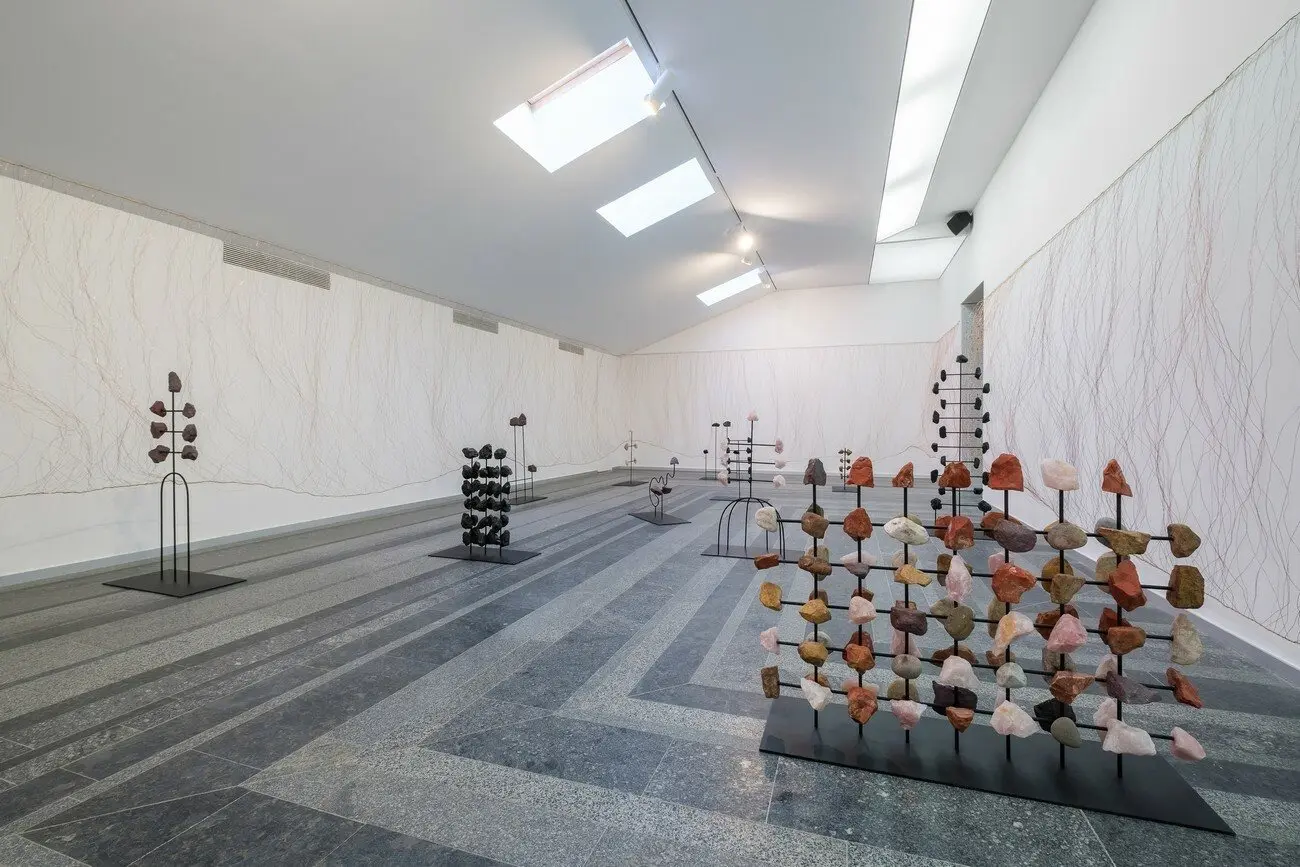
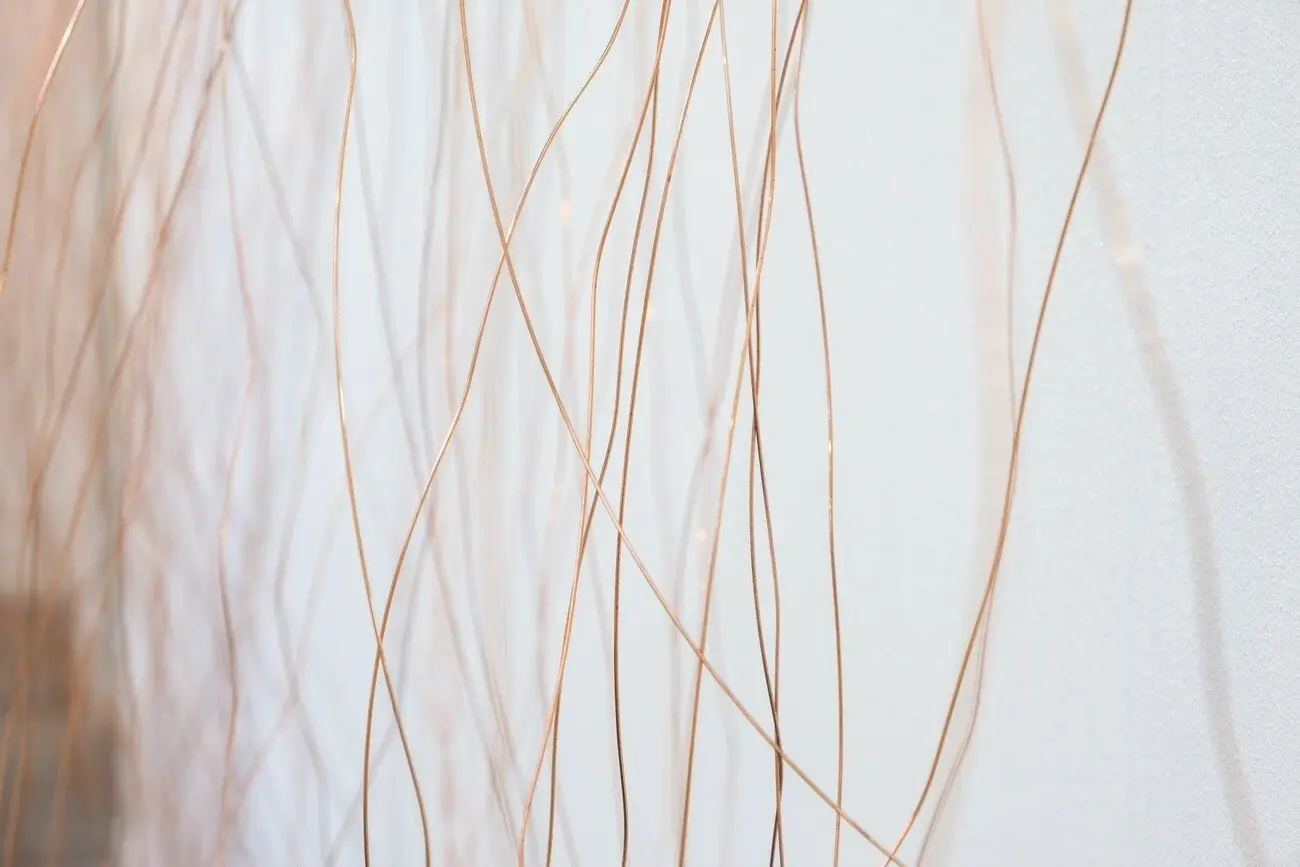
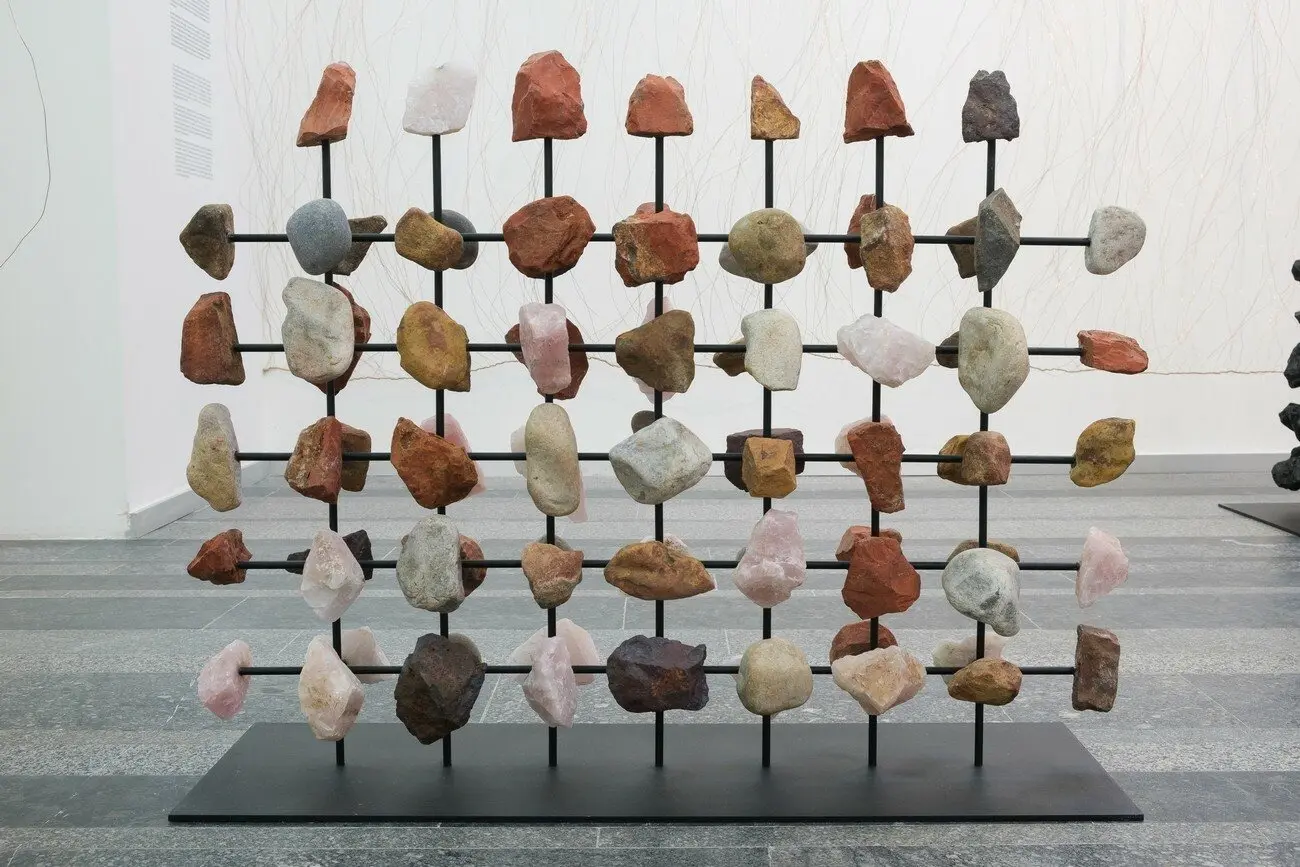
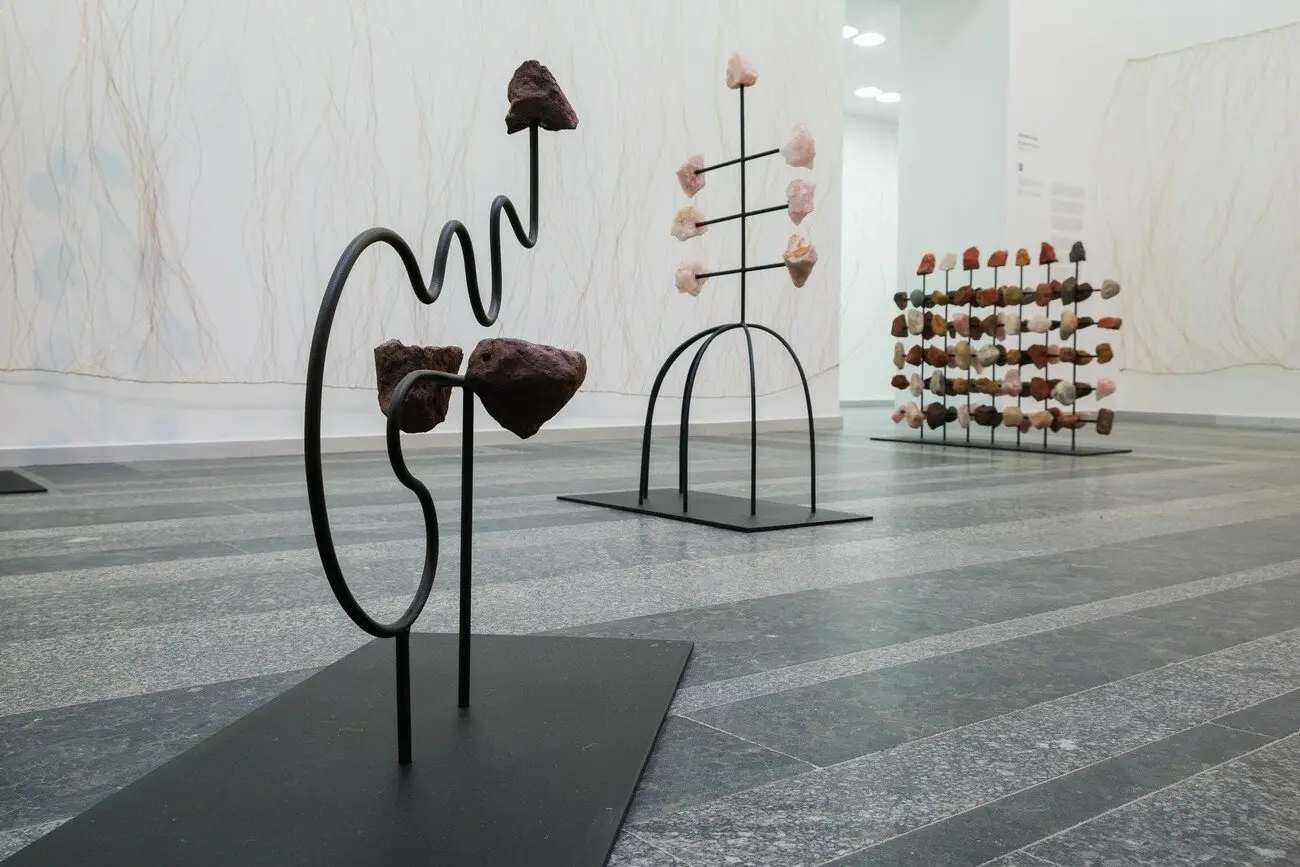
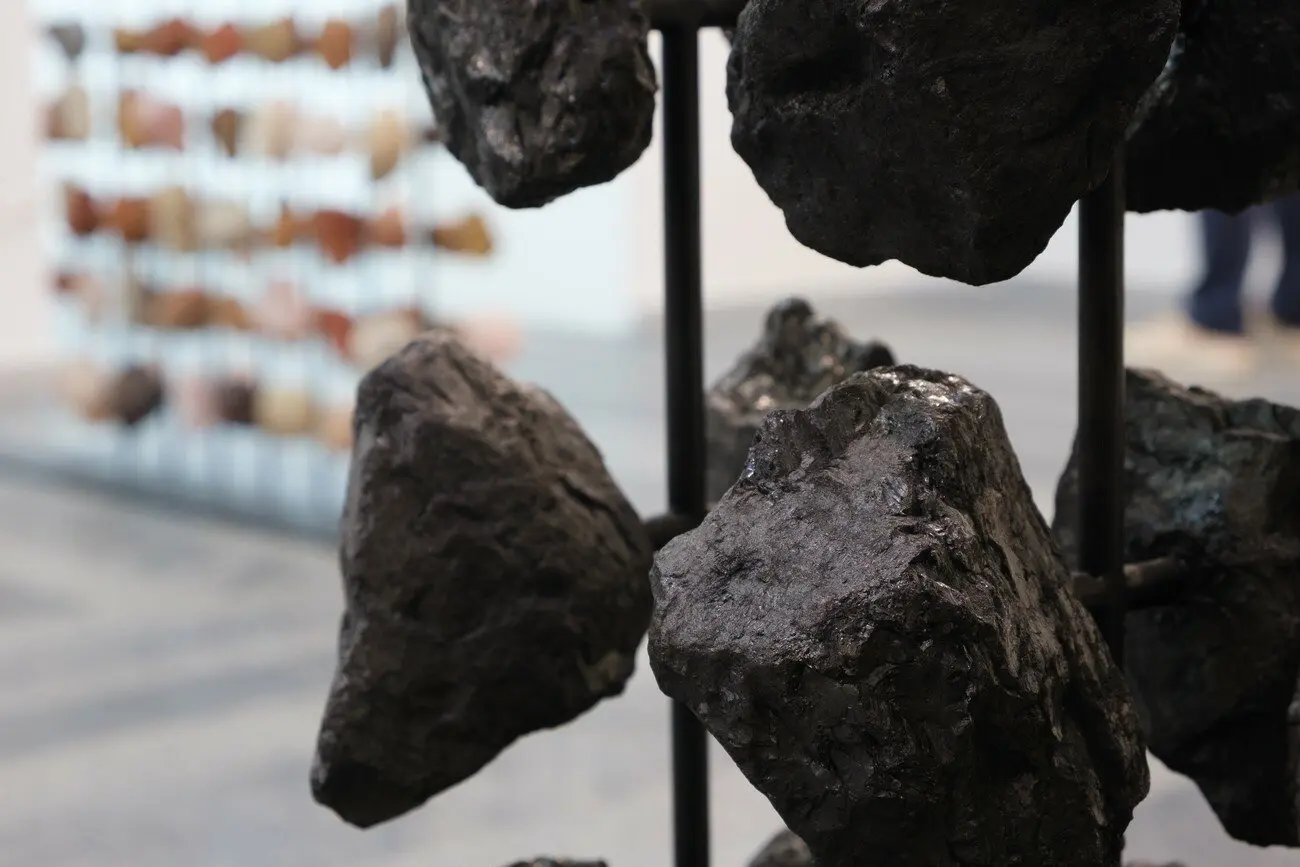
Bronwyn Katz’s large-scale installation, /xabi, is an extension of a system of notation she has been developing to signify the phonetics of a creole language, which is typically made by mixing two different languages into a new one. Her iteration of creole gestures towards the Southern African click-based dialect of !Ora. The installation is manifested as a single, immersive environment. In it, a series of rock and steel sculptures — denoting the letters or symbols of Katz’s imagined language — are surrounded by what she identifies as curtains of rain, materialised as lengths of copper coated carbon steel joined together with hemp twine.
The rock and steel “letters” reference the forms found at Driekopseiland, a site of rock engravings with which the artist has been working over the last 5 years. The site is located along the Riet river in the Northern Cape of South Africa, originally known as the Gama-!ab, a !Ora name meaning “muddy”. The petroglyphs of Driekopseiland are covered by the waters of Gama-!ab in the rainy season and exposed during the summer drought. Katz is interested in this collaborative intervention of water in the creation of signs, symbols, and language.
Elaborating on the generative and healing possibilities of moving water, the installation includes a sound recording of the artist moving salt water around in her mouth following the extraction of her tooth. Resonating throughout the space, the sound creates an awareness of the connection between earth and body — both living entities marked with scars and memory. The title, /xabi, is a !Ora word that can be translated as a spurt of water from the mouth, and Katz is invested in the potential of the action suggested by this word. With this installation, she posits that language, and its close relationship to the natural world, as a tool for the care of the self, and, by extension, the community and the earth.
Exhibition