Paul Maheke
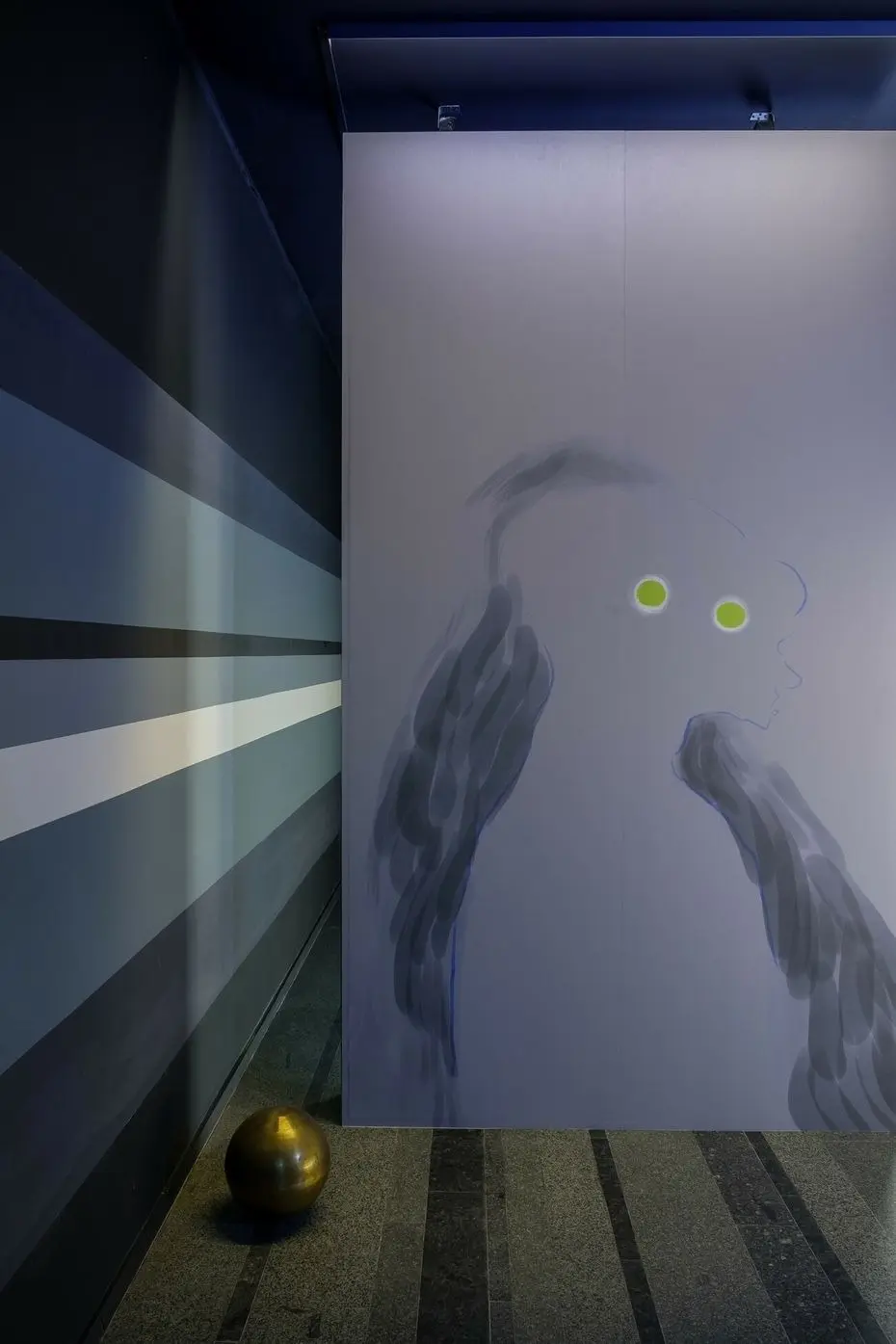
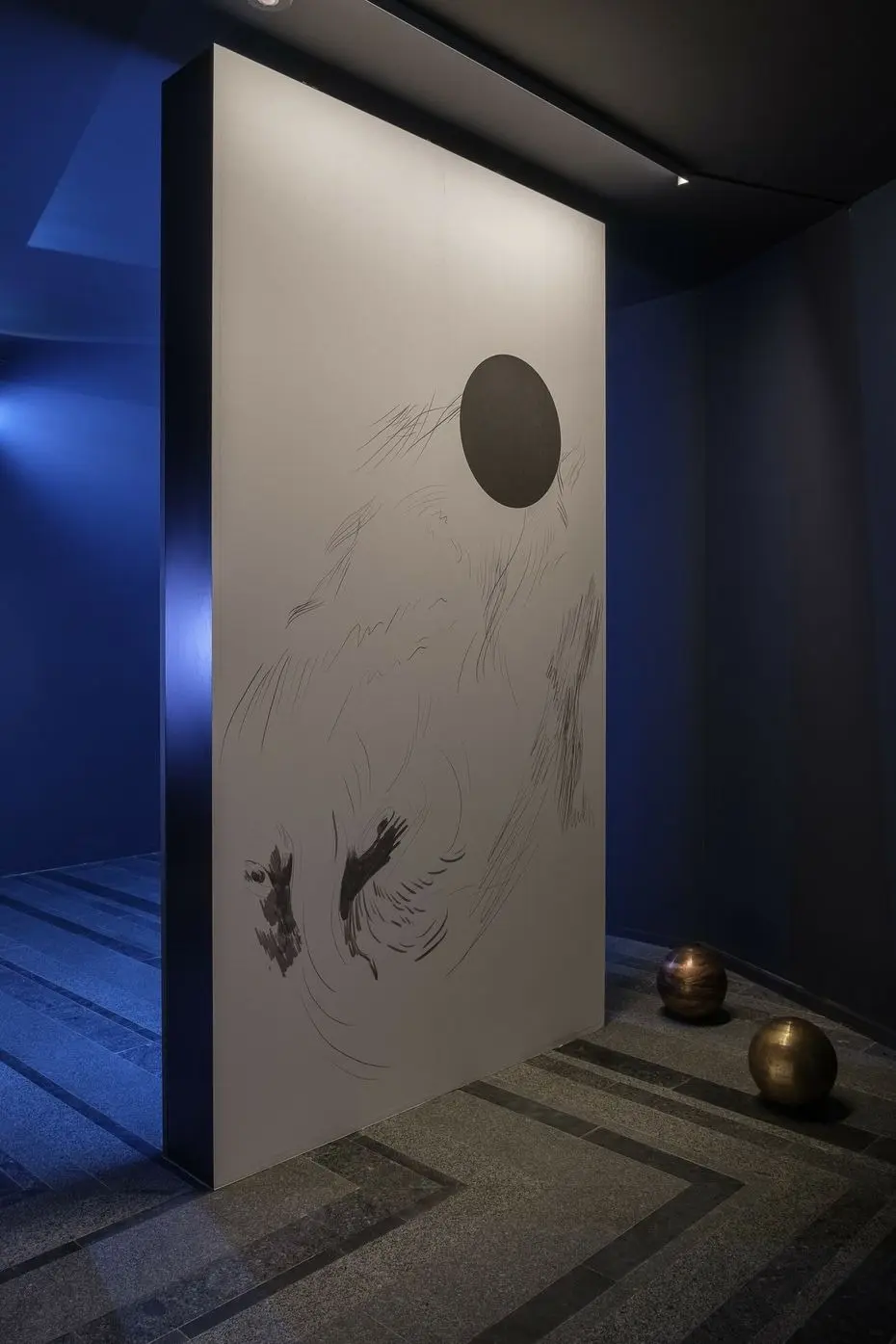
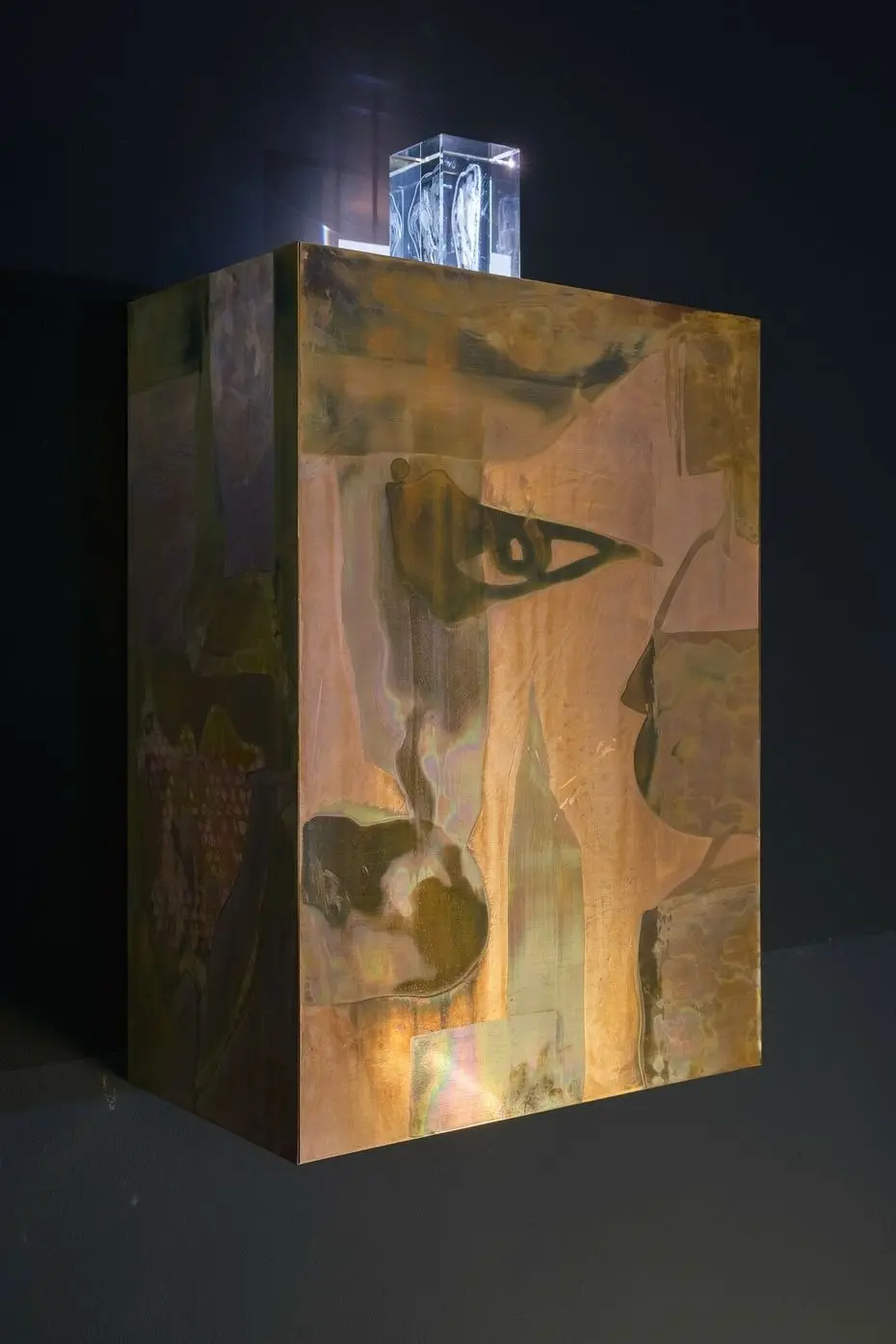
This installation represents a cohesive body of work centered around the question of visibility and invisibility. Each compositional element of the work has the potential to affect our physical experience of the space; of what we can see, hear, or feel. Everything here moves or alludes to movement, such as the use of a chemical reaction to form spontaneous images on copper, or the deep bass frequencies travelling through our bodies.
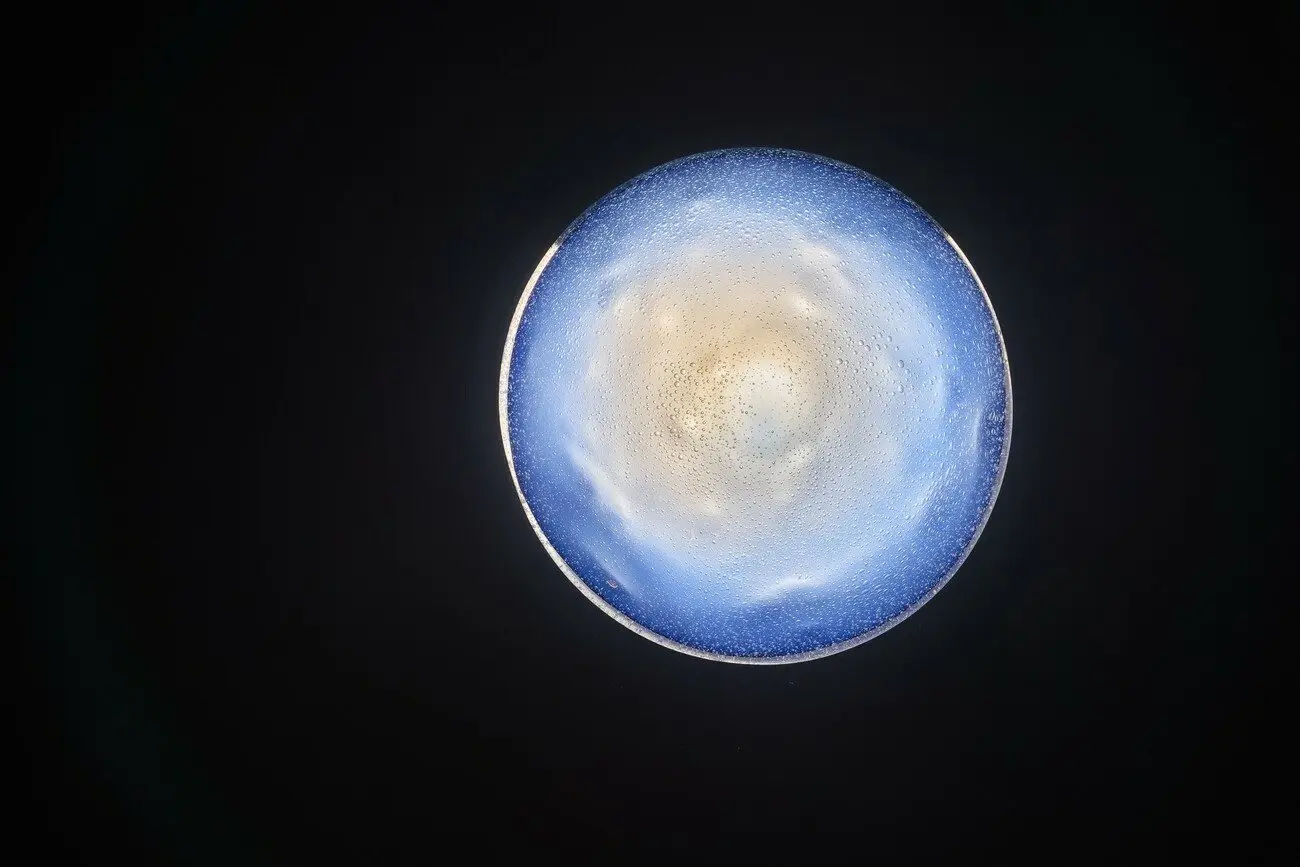
For this work, Paul Maheke takes radio astronomy, a field of study in which vision is only a secondary sense in the discovery of our galaxy, as a point of entry in order to further interrogate our earthly experience of the cosmos. Each planet emits sound: a song specific to each one of them. The frequencies emitted by the electromagnetic fields of planets, stars, and pulsars have been instrumental in the development of radio astronomy.
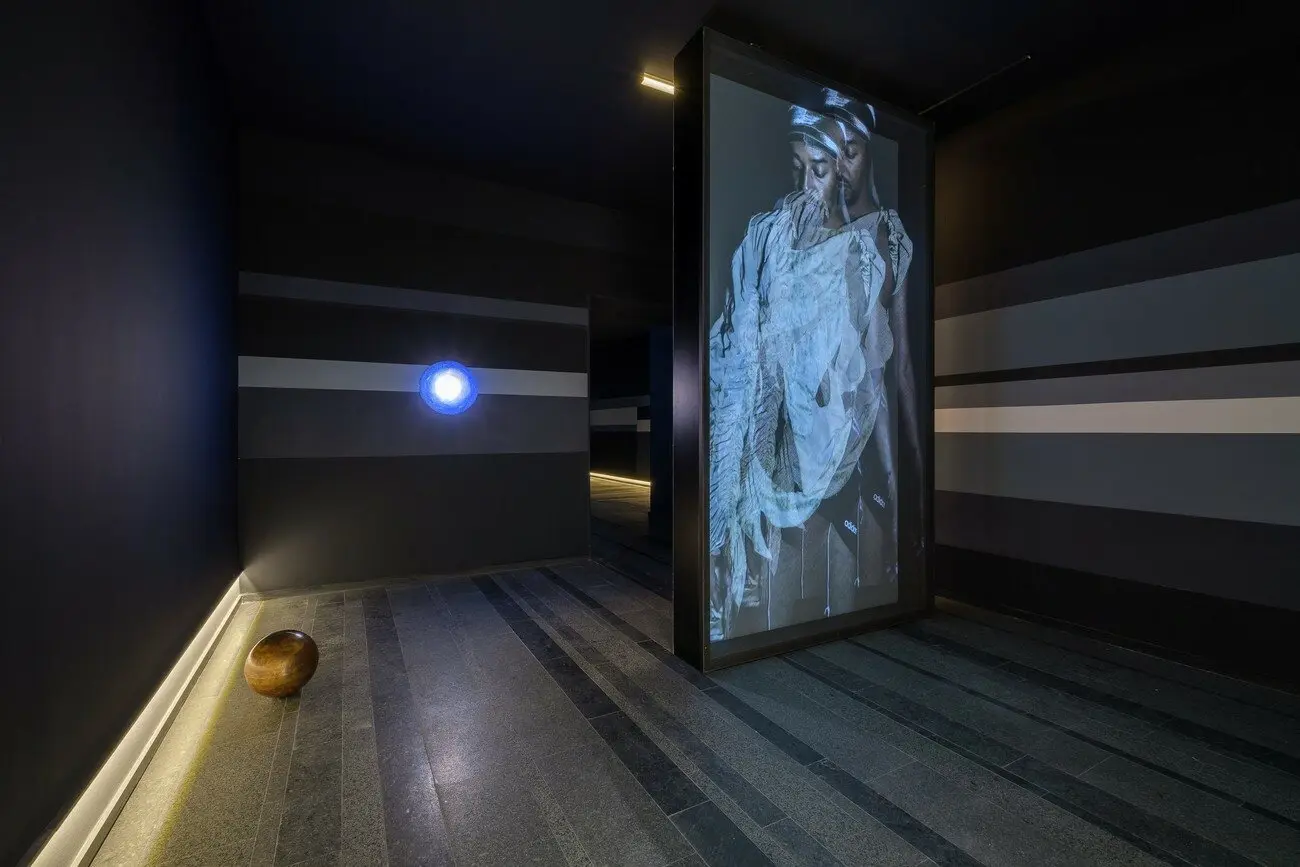
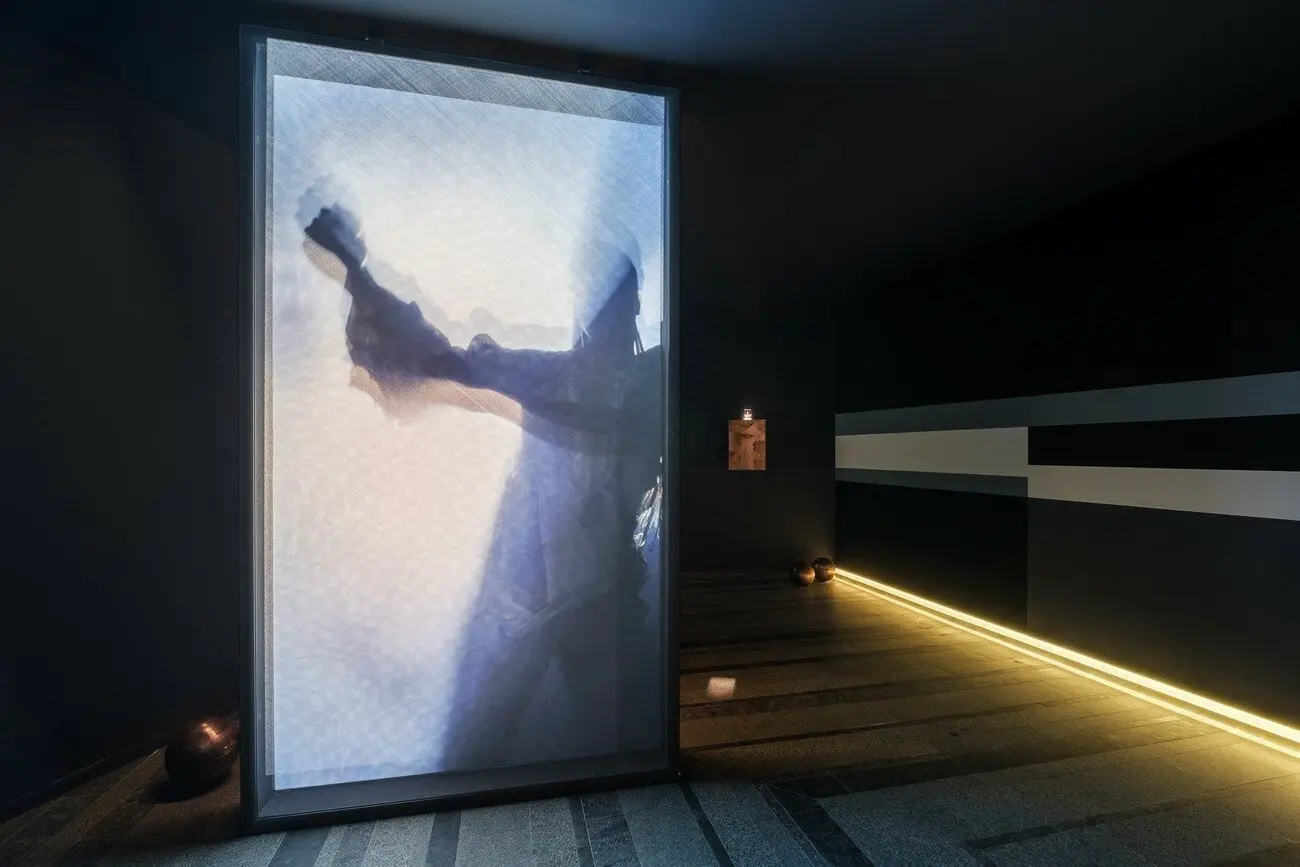
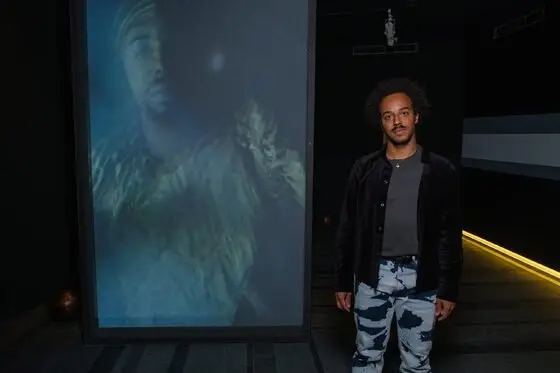
In When the bodies dissolved into the ether, orbs sang notes of the heavens, Maheke plays with the poetics of a body dancing to the sound of the Moon. This video diptych, projected on two identical screens erected in two consecutive rooms, uses motifs of presence and withdrawal. Both screens are made from HoloGauze, a material known for producing the illusion of a hologram. Captured on camera and shown as a video loop, the performance encompasses different choreographic moments based on principles of circularity and renewal found in the cosmology of ancient Congo, as well as in French Créole poet Edouard Glissant’s writing.
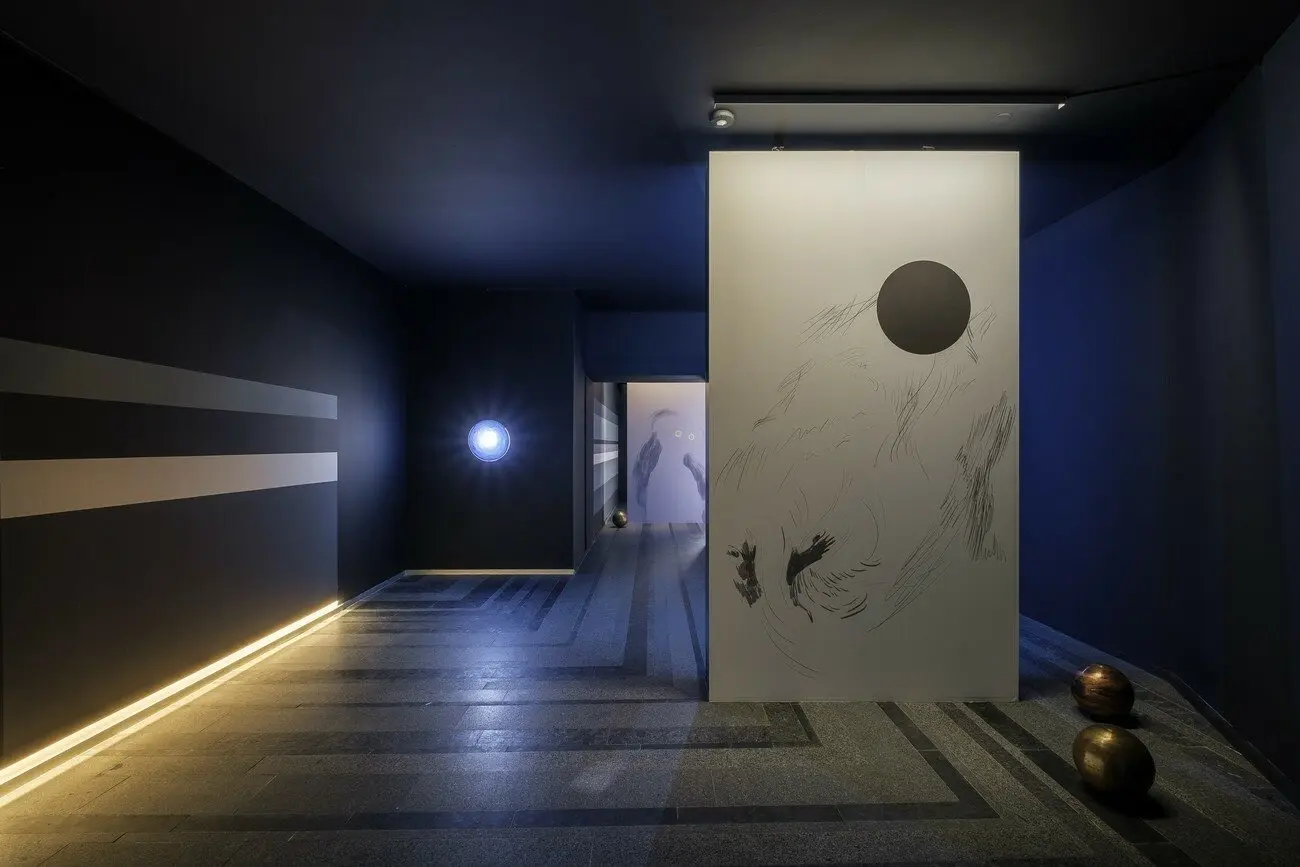
While a dancing figure appears and disappears repeatedly on screen, words are mumbled, a couple of wall drawings depict ghostly beings and metallic planets punctuate our journey through this sensorial space, which has no beginning and no end. Combining sound, light, and movement, the installation exists mostly as an attempt to blur the field of vision by arguing for the presence of that which is (made) invisible.
Exhibition