Alevtina Kahidze

Not finished version, filling up
Biography
March 16, 1973
Born in the city of Zhdanivka, Donetsk region, then the Ukrainian SSR.
1986
Was presented at her first exhibition at the Yenakiieve City Children's Art School.
1998–2004
Studied at the National Academy of Fine Arts and Architecture in Kyiv in the Department of Graphic Arts, specializing in "Fine Arts, Decorative Arts, Restoration" (then transferred to the graphic design course, and later back again).
1999
Got married.
2002
She took first place in the competition for young artists and curators at the Center for Contemporary Art at NaUKMA.
2004–2006
Studied at the Jan van Eyck Academy, Maastricht, Netherlands.
2008
Became a laureate of the Kazimir Malevich Prize. Founded the residency in Muzychi "Extended History of Muzychi" together with Volodymyr Babyuk.
2009
Started the practice of gardening, which became a key branch of the artistic practice.
2011
Participated in the Moroccan Pavilion of the 54th Venice Biennale.
2012
Participated in the 7th Berlin Biennale.
2013
Started a series of drawings on Maidan.
2014
Initiated a large project "Strawberry Andriivna." Participated in the international biennale Manifesta10, which took place in Saint Petersburg, Russia.
2015
Was presented in the art collection "Telekom" Germany.
2016
Was presented in the collection of the Museum of Contemporary Art Antwerp (M HKA), Cairo.
2018
Became a UN tolerance envoy in Ukraine.
2019
Became a finalist of the "Women In Arts" award.
2022
Participated in the international Manifesta14 biennale, which took place in Pristina, Republic of Kosovo. Performed at the 60th Venice Biennale.
Overview of artistic practice

Researcher

About the practice. Alevtina Kahidze.


Alevtina Kahidze’s artistic method is an open and complex rhizomatic network that not only endlessly branches out (being replenished with artistic works) and lacks a centralized structure, but also forms an entire system of relationships, interacting with other types beyond the artistic sphere. Her practice is transdisciplinary, as it goes far beyond issues in the field of culture, accordingly demonstrating the inclusiveness and flexibility characteristic only of an artistic perspective. The disciplines that the artist brings into dialogue with art do not function separately but begin to coexist and influence each other. The artist goes far beyond the format of sanctioned artistic actions or interaction with institutional cultural spaces, immersing herself in the world of flora or creating performances together with representatives of fauna, and so on. Through the appropriate methodological framework, I propose to analyze the development of Kahidze’s entire activity.


2000s: consumer culture, feminism, and communities


Alevtina Kahidze was born in the city of Zhdanivka, Donetsk region; there were no artists in her family. She studied at the Yenakiieve City Children’s Art School, later enrolling in the then Dnipropetrovsk Engineering and Construction Institute (now the Prydniprovska State Academy of Civil Engineering and Architecture) in the educational program “Industrial and Civil Construction.” Later, she moved to Kyiv and began studying at the National Academy of Fine Arts and Architecture (NAOMA) (1998–2004) in the Department of Graphic Arts, specializing in “Fine Arts, Decorative Arts, Restoration.” Kahidze quickly became disillusioned with teaching and switched to the graphic design course. An important place for the formation of her practice was the Center for Contemporary Art (CCA) at the National University of Kyiv-Mohyla Academy (NaUKMA), where in the 1990s she had the opportunity to see works by famous world artists and later present her own projects. It was visiting the CCA that prompted Kahidze to return from graphic design to her previous program and later to study art in the city of Maastricht in the Netherlands at the Jan van Eyck Academy (2004–2006).

The starting point of Kahidze’s artistic practice is the work “Invitation to Australia, or The Museum of One Story” (2002), which won a competition for young artists and curators at the CCA at NaUKMA. At that time, she became the curator of her own exhibition, which featured a total installation of letters, posters, and printed documents related to the refusal of a visa by the Australian embassy. In her practice, the artist avoided traditional artistic media taught at NAOMA, preferring contemporary ones: installation, performance, collage, and readymade objects.

As a student, she initiated a feminist line of practice criticizing hierarchical relations in patriarchal society, where the traditional role of women as muses is challenged, conventional ideas of beauty prevail, and so on. Among the works in this line are: “My Husband’s Eyes Are Like Jeanne Samary’s” (2003), “I Can Be a Girl with Blue Eyes” (2005), “For Men Only, or Betrothed-Disguised, Appear to Me in the Mirror” (2006), and the later work “44” (2018). At the same time, the artist touched on issues of market relations and consumption, difficulties of equal opportunities: “The Most Commercial Project” (since 2004) and “I’m Late for a Plane That Can’t Be Missed” (2010). The artist’s works of various thematic branches highlighted the problem of access to resources available only to privileged categories of society: men, the upper social class, and so on.

In the 2000s, Ukrainian artists actively formed artistic communities, including associations in public spaces against the backdrop of the Orange Revolution and other social changes, among them R.E.P., SOSka, and others. Although Kahidze is not a member of artistic collectives, she actively builds communities in another way: in 2008, she founded the “Extended History of Muzychi” residency at her home in the village of Muzychi, Kyiv region. After completing her educational program at the Dutch academy, the artist seriously considered the importance of international cultural exchange and since then decided to provide her studio for use by artists from other countries for two months each year.

The first decade of the 2000s is the period of Kahidze’s formation as an artist. Regarding themes, she begins to consistently engage with socially critical issues, and technically she works within her discipline while challenging artistic form. Her practice acquires a rhizomatic character closer to the second half of the 2010s, with the beginning of collaboration with other fields.


2010s: performative thinking, politics, and children’s education


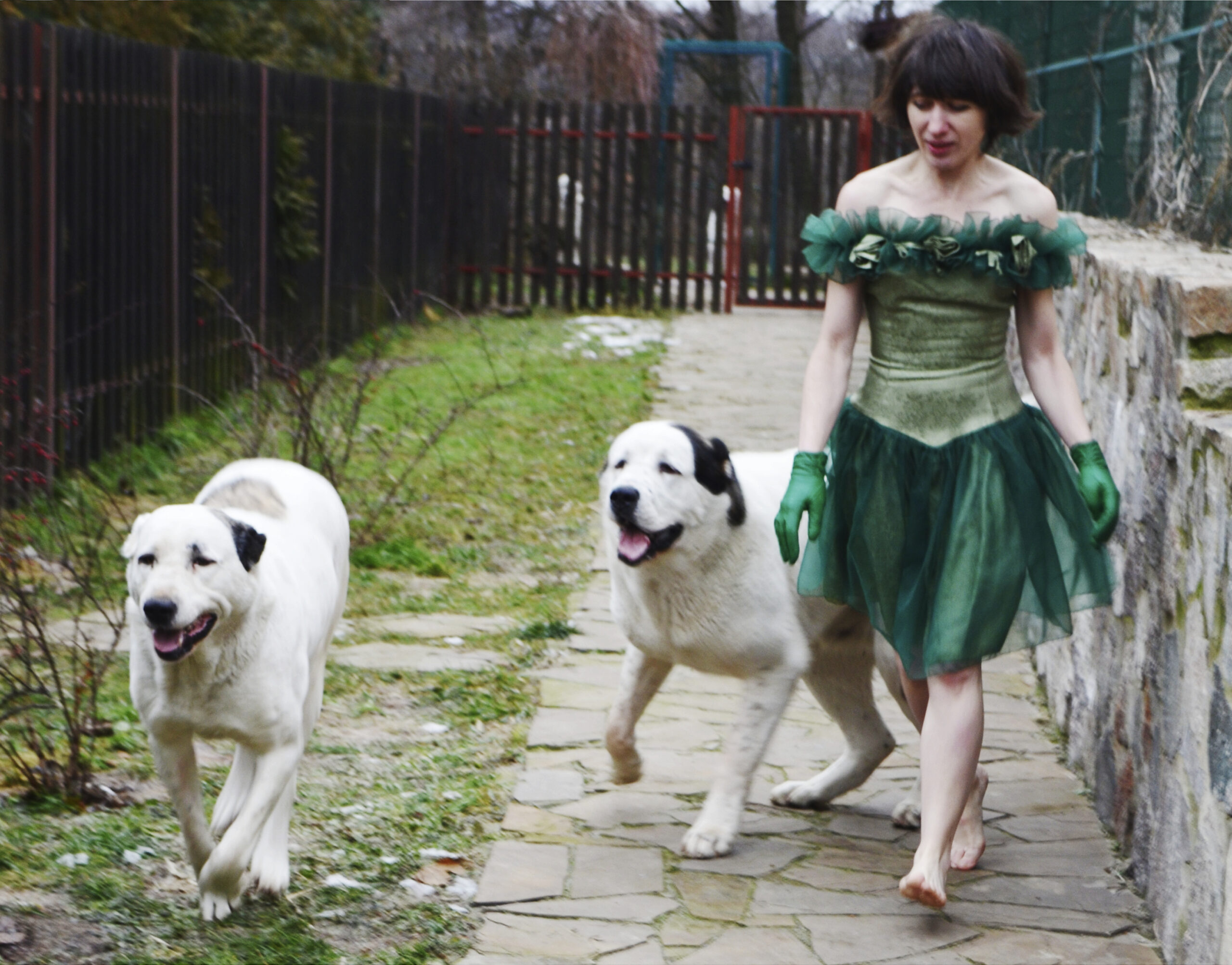
Spontaneous unsanctioned artistic works appear in the artist’s practice, caused by pure experiment or attentive observation. Performance becomes not only an artistic medium but also a way of everyday thinking for Alevtina Kahidze. This is how the artist turned a walk and cleaning into artistic works when she followed a stray dog and explored the city “through its eyes” or when she copied every movement of the cleaner of the neighboring house.

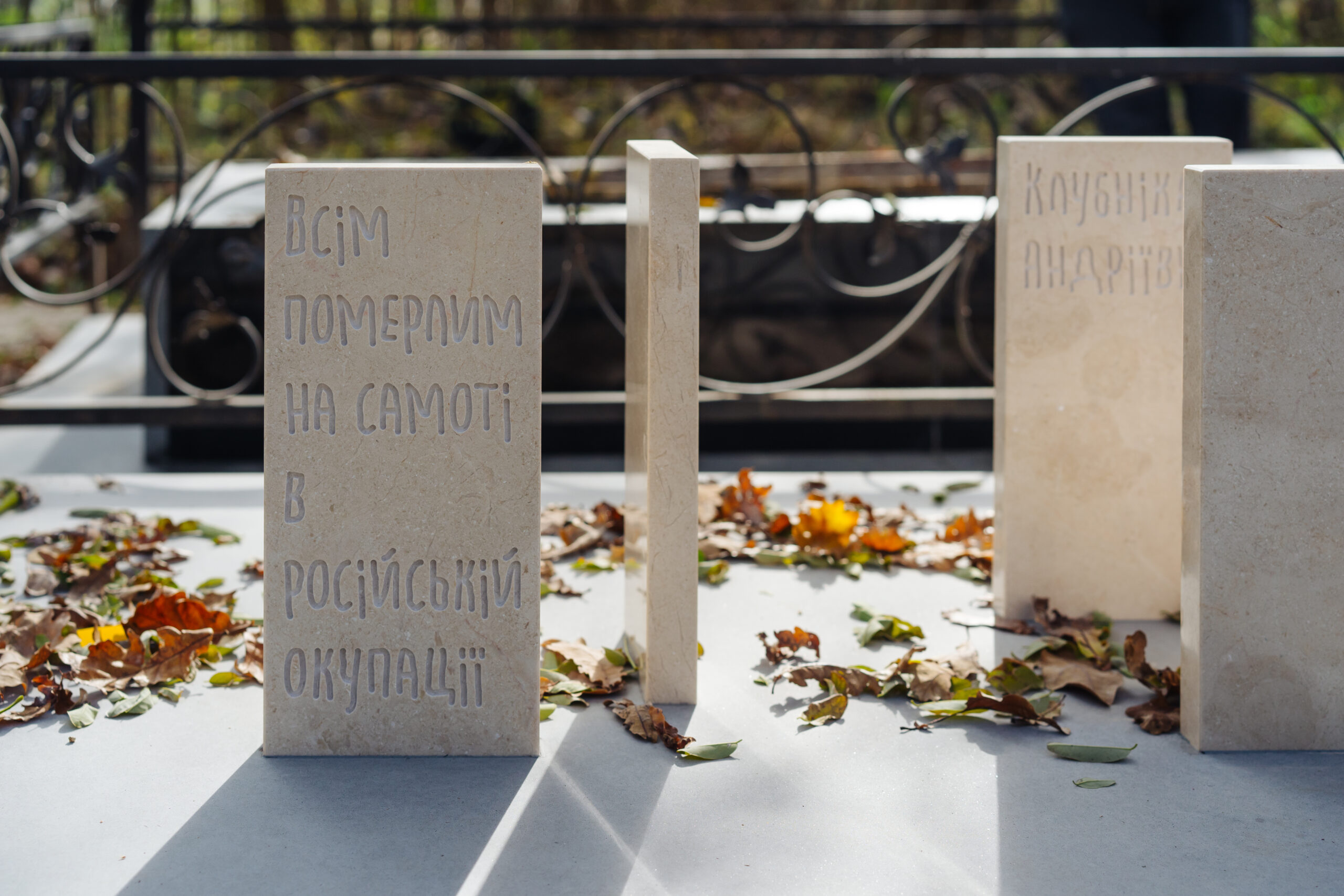
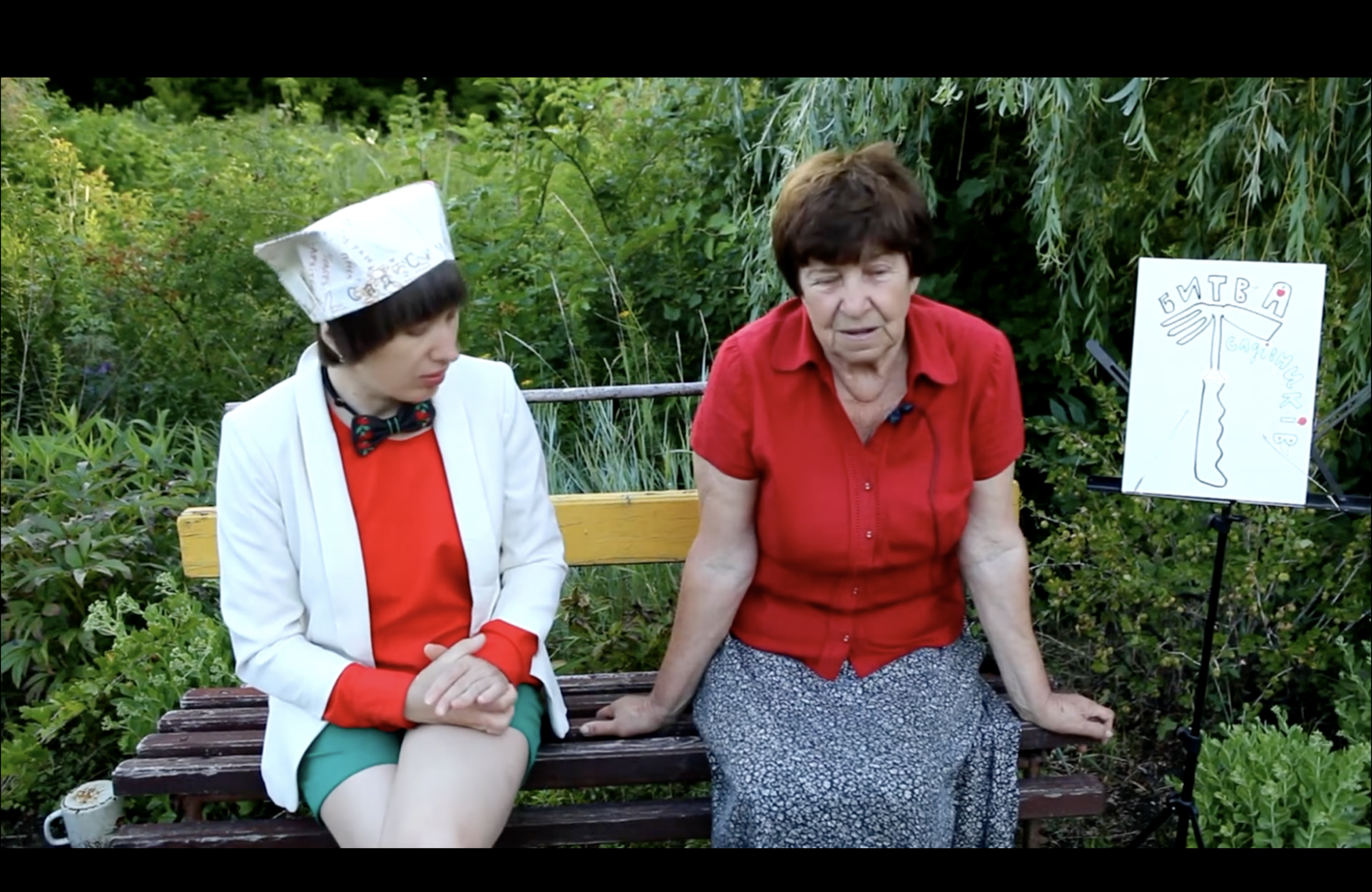
The artist’s processual performative practices are not limited to body-oriented works — dynamic objects or drawings as well. Often, graphics become a starting point or result of a certain performance, arise during happenings and actions — their serial nature reflects the process or the drawing gives form to the action or encourages/provokes discussion. Through drawing, Kahidze comprehends political events and records social changes; the works often contain textual comments. The social media pages where she posts her works embody a long-term drawing performance that testifies to an alternative historiography. For example, since the beginning of the Russian-Ukrainian war in 2014, the artist began making sketches from the stories of her mother, Lyudmyla Kahidze, or Klubnyka Andriivna (as a boy in kindergarten called his caregiver). The artist also shared these stories on Facebook.

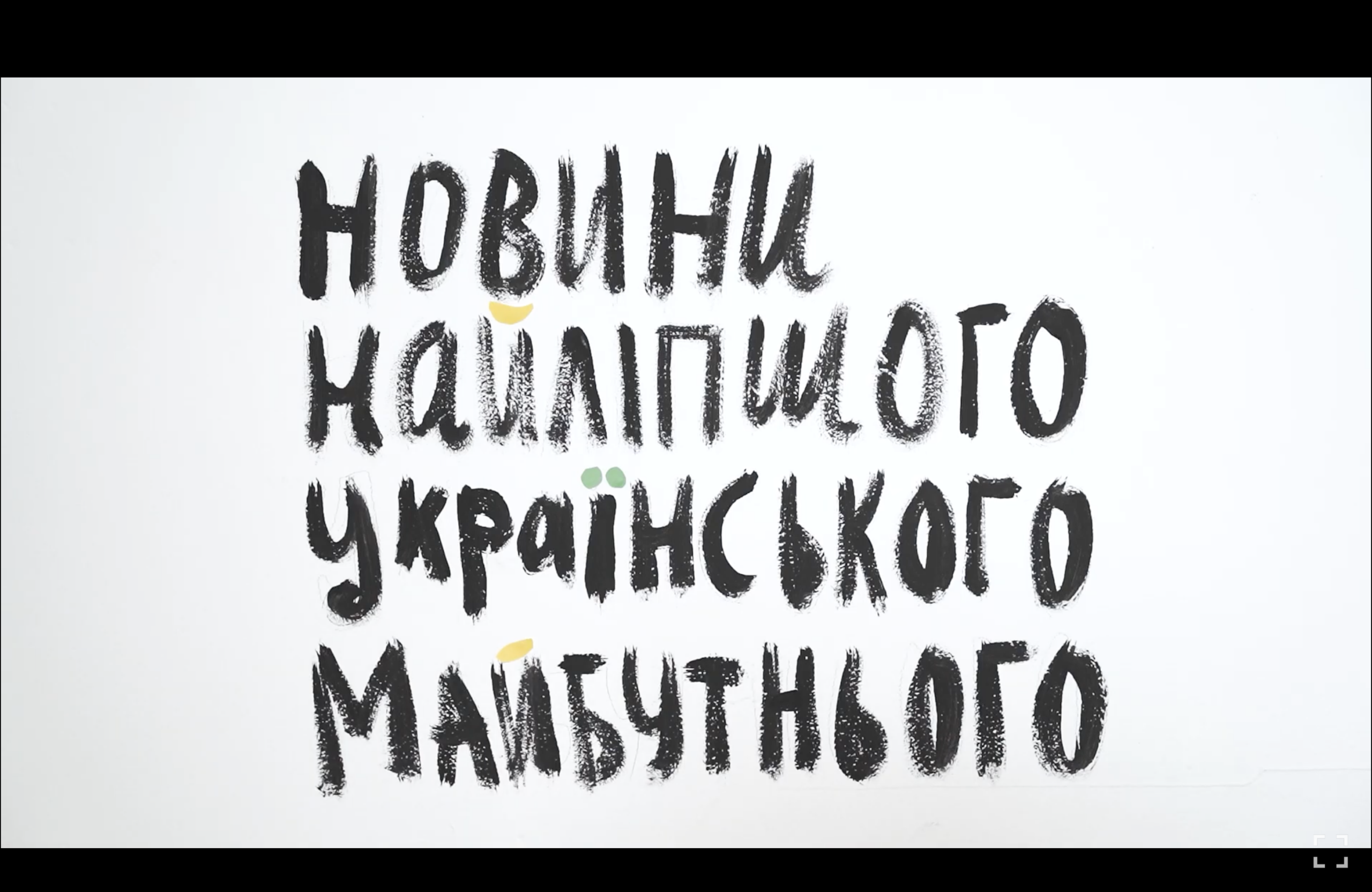
At the same time, she initiated the political line of her practice: performances such as “Method of Constructing Political Truth” (2014 – present), first presented at the international Manifesta 10 biennale in St. Petersburg; “News of All Times” (2015), presented at the Moscow Biennale. In the first phase of the war, the artist tested an approach of interaction and made activist appeals that could potentially change opponents’ opinions. At the same time, she not only highlighted events but also explored how political theses are created, how the speaker’s position influences their statements, and what the continuity and causes of the Russian occupation are.

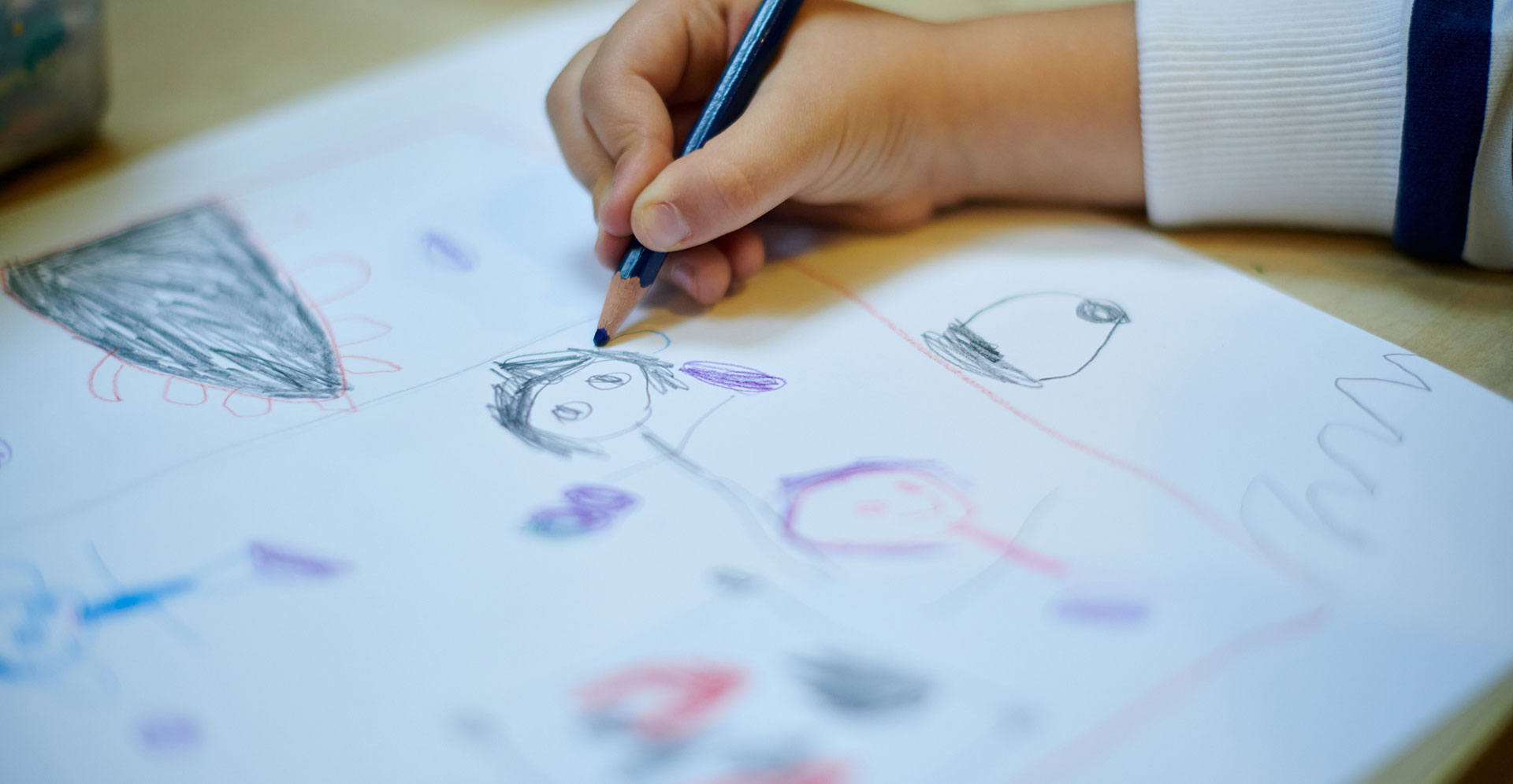
In 2014, Kahidze began conducting series of workshops and teaching at a local school in Muzychi. The educational direction of the artist’s work can be seen as a branch of the rhizome with many offshoots: community building, understanding political events, performative vision, and so on. In her classes, children learned not to create art but to think, to seek alternative answers to complex questions. One of the main projects of this line was the workshop “For Children About Citizenship of People, Plants, and Animals” based on creating an alternative stand for patriotic education in general education schools. The stand contained 30 questions, for example, “Who can be a citizen?”, “Do plants and animals have passports?”, or “Is it possible to love several countries at the same time?”.

The artist’s educational initiatives, residency, and community projects expand her role in collective practices that came into Ukrainian art in the early 2000s: she often involves groups outside the cultural sphere — active residents of her village, children — and encourages them to artistic cooperation. The 2010s period is for Kahidze the beginning of a dense intertwining of themes and disciplines, as well as going beyond not only traditional media, as in previous statements, but also artistic work as such.


2020s: legal relations, non-human agents, and decolonization


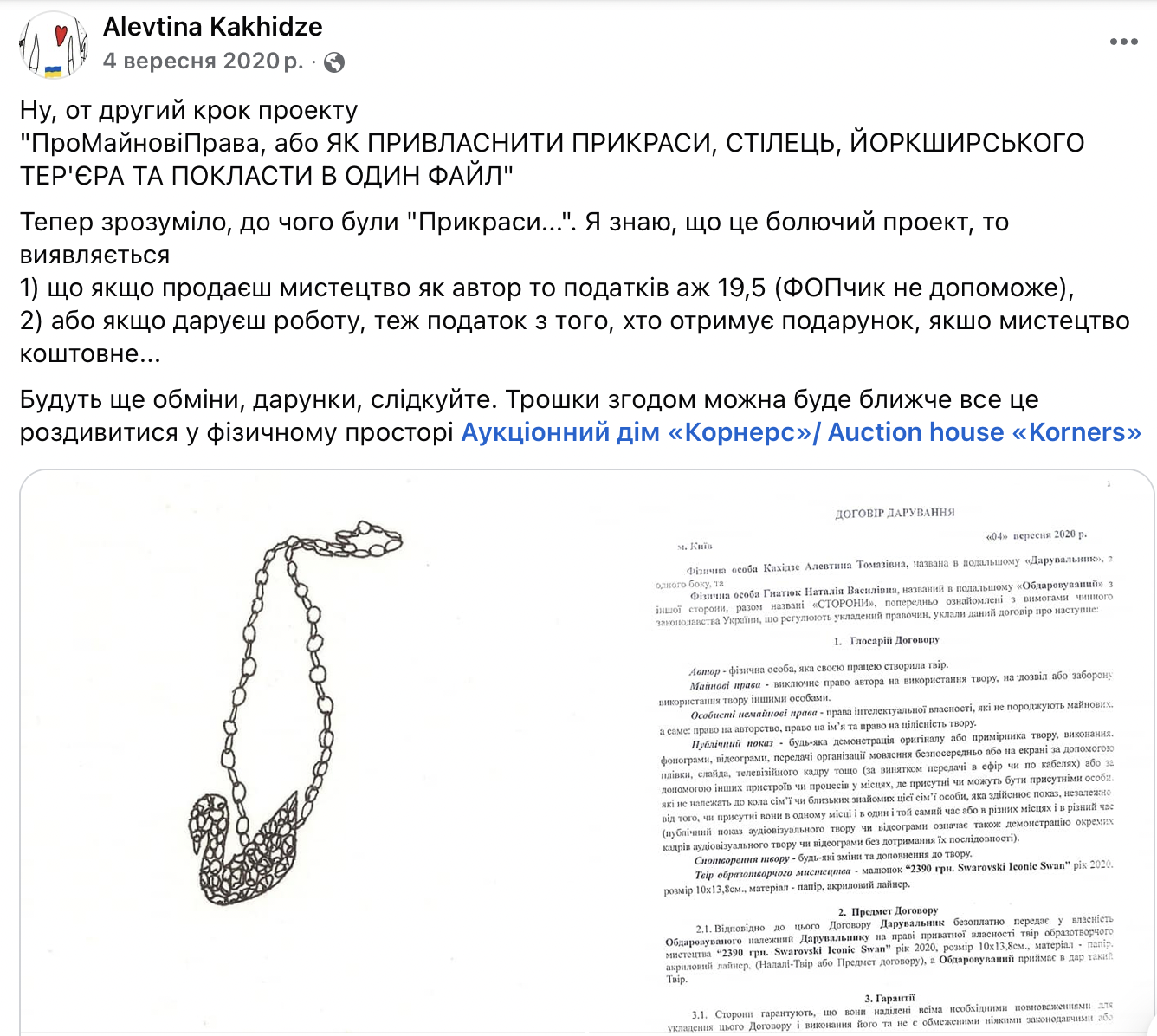
Kahidze’s interdisciplinary work format continues to develop after 2020. The COVID-19 epidemic period was marked by acquaintance with a new legal system for her. Then the legal company “Law Net LLC” and Alevtina Kahidze started an experimental project on the border of performance and legal research. It was an online performance “About Property Rights, or How to Appropriate Jewelry, a Chair, a Yorkshire Terrier, and Put Them in One File” (2020) on Facebook, where she tried to gift her drawings, reproduce works of other artists, etc., and instead received legal advice on how to do this according to the law. Within the project, Kahidze, in co-authorship with Anatoliy Belov and Alexander Krolikowski, presented a humorous play “Legal Fairy, or Legal True Stories” — stories of rights violations and other precedents from the real experience of the artistic community.

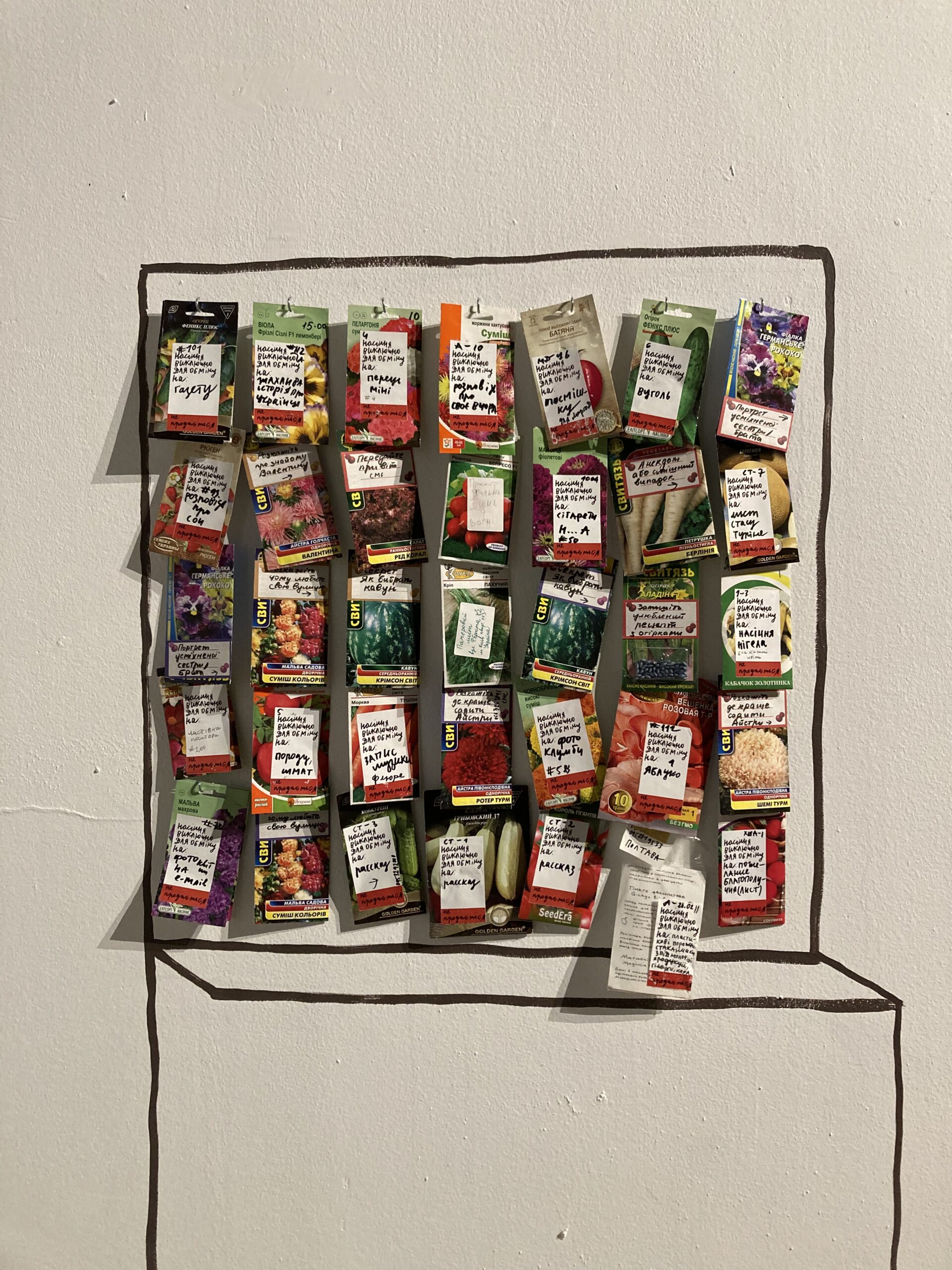
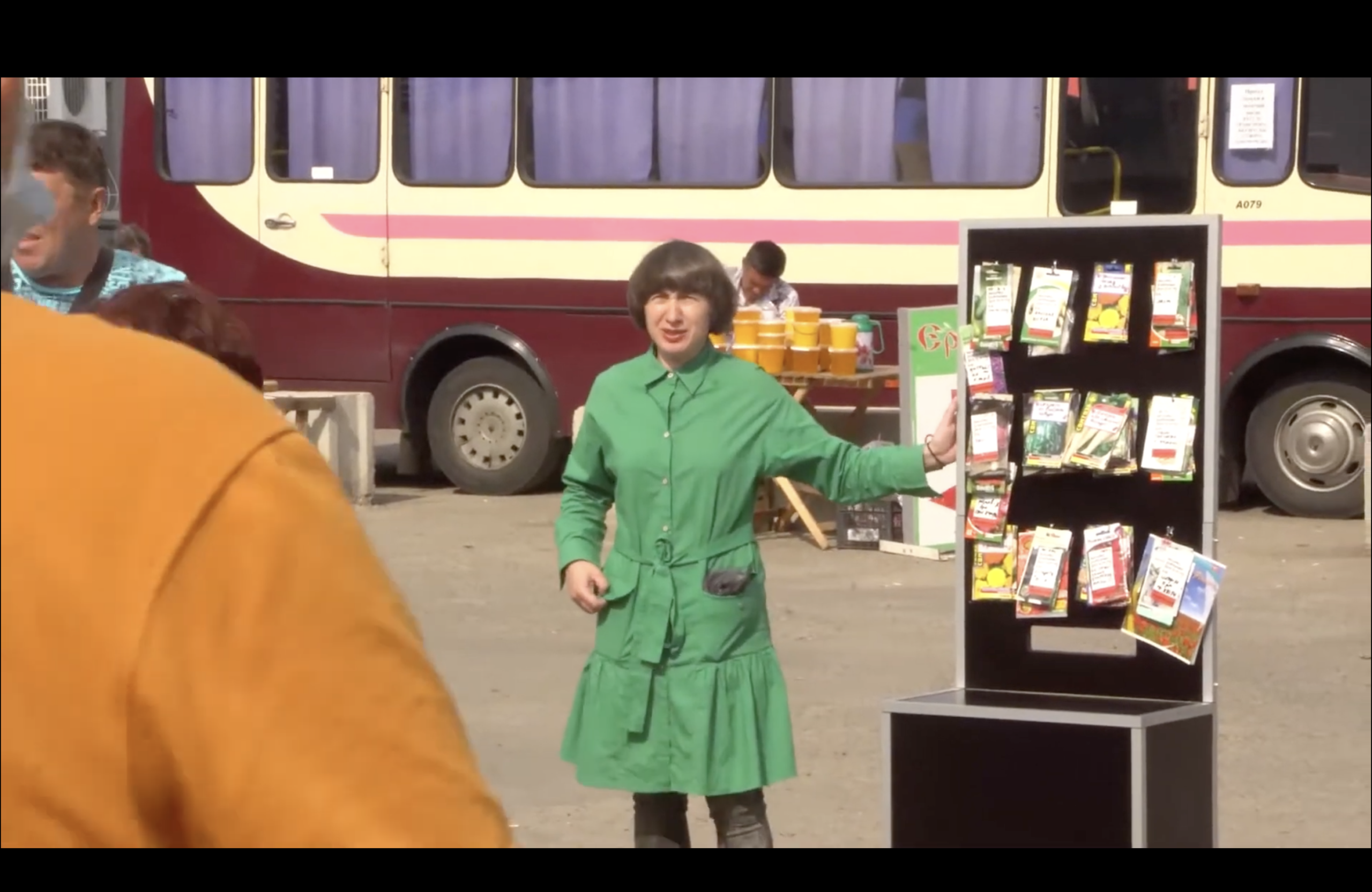
The political line continues to develop, followed by the line of gardening and the plant world — they, as is characteristic of the rhizome, are closely intertwined, complement, and change each other. As early as 2009, the artist moved from Kyiv to the village of Muzychi and took up gardening. In 2014, from observing common features in politics and gardening, the long-term project “Adult Garden” was born. In it, she explores sustainability that can be extrapolated from the plant world to various spheres of human life. The first works of this project appeared at the end of the 2010s, but the line actively grew and gained branches already in the 2020s, among them “Battle of Gardeners” (2018), “Love Triangle” (2021), “Field as a Garden” (2022), as well as separate works: “Seeds of Ukraine” (2020), “INVASIONS 1.2.3” (2022), and others. Works outside the “Adult Garden” project also touched on issues of sustainability in the social dimension: the “Seeds of Ukraine” project helped Kahidze maintain contact with occupied Zhdanivka after her mother’s death, and “INVASIONS 1.2.3” demonstrated ideas of resilience in confronting the enemy.

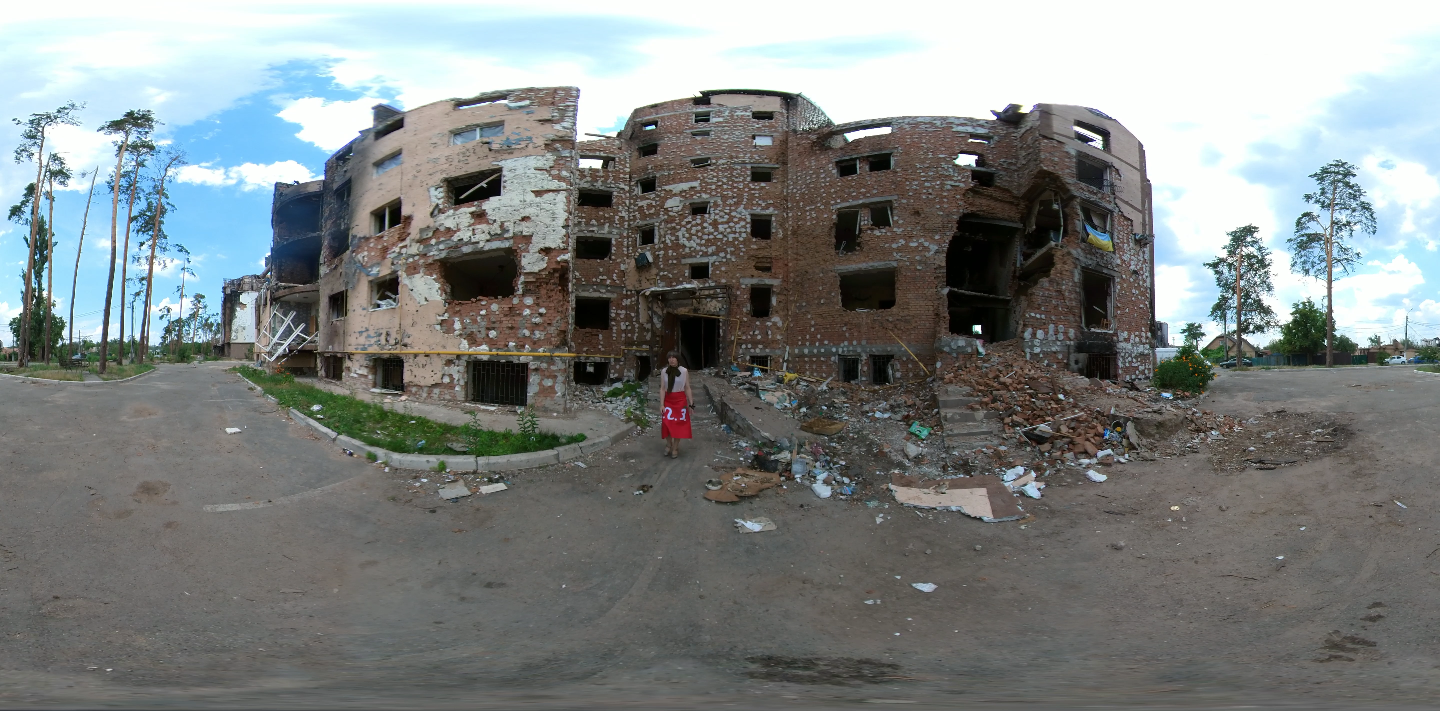
With the beginning of the full-scale invasion, the decolonial perspective, which is also inherent in Kahidze’s practice, is activated in Ukrainian cultural discourse. Decoloniality is manifested in works not only on politics or gardening but also on family history. If after 2014 the heroine of some of her works was her mother, then since 2022 the figure of the father appears in them. For example, the video “Is Everything Okay?” (2024), presented at the Maltese Biennale, refers to the Georgian line of the paternal family — from interrupted communication with the grandmother, who did not recognize Alevtina’s and her brother’s Ukrainian subjectivity and considered them Russian children, to the reappropriation of Georgian cultural traditions and memories.

All works in Alevtina Kahidze’s practice form lines and are almost always interconnected. They do not end but have continuations — they reappear in other contexts and situations. The artist not only explores how to grow a long-lasting garden or have a sustainable active society; her practice reflects certain characteristics of a garden, she herself is sustainable, and her expressions resemble the mechanism of existence of perennial plant species that have a prior soil.

From the 2000s until the beginning of Russia’s full-scale invasion of Ukraine, the artist’s practice has been enriched with new forms, works, collaborations, as well as gave new branches to past long-term projects. This made it possible to trace qualitative transformations of her artistic and political language: from experiments with media to complex post-media expressions; from individual works to interdisciplinary projects; from documenting political events to inventing an analytical method and creating participatory performances; from reaction to reflection. And vice versa, in a reassembled order, to once again challenge her own opinion.

Exhibitions
2025
"24 – 2 = 2022", St. Matthew's Church, Berlin, Germany
2025
"War Diary", Rasom, Harlem, Netherlands
2024
"Collection No. 7/ depends_on_who_is_speaking", drawings by Alevtina Kahidze, studio for radio + graphics (Studio für Radio + Grafik), Woltersdorf, Germany
2024
"Plants and People", Arsenal Gallery, Bialystok, Poland
2024
Ukrainian Pavilion "From South to North" at the Malta Biennale — 2024, Villa Portelli, Kalkara, Malta
2024
"Windows, signs of peace," the showcase of the Schunck Glass Palace (SCHUNCK Glaspaleis), SCHUNCK Library, Heerlen, Netherlands
2024
"Binary Bonds: New Media Expressions from Ukraine", Orf-Funkhaus, Vienna, Austria
2024
"Hostynets", "Gallery 91", Frankfurt, Germany
2024
"Invisible Force", Kyiv, Ukrainian House; Lviv, Powder Tower; Dnipro, Dnipro Art Museum; Odesa, Odesa Art Museum, Ukraine
2024
"Lomikamin. Women's resistance in Crimea", Office of the President of Ukraine in the Autonomous Republic of Crimea, Kyiv, Ukraine
2024
"Modern Sensation," Vali Bernasconi (Bernasconi), Geneva, Switzerland
2023–2024
Gallery of the School of Art at the University of Manitoba, Winnipeg, Canada (February 29 — April 27, 2024)
2023–2024
Chicago Cultural Center, Chicago, USA, (September — December 2024)
2023
"Women at War," Museum of Fine Arts, Florida State University, Tallahassee, USA, (July 13 — October 28, 2023)
2023
"Signs of Peaceful Life", Meyer Riegger Gallery, Berlin, Germany
2023
"Language gymnastics", Salam Cinema, Baku, Azerbaijan
2023
"How are you?", Ukrainian House, Kyiv, Ukraine
2023
"Kaleidoscope of (Pre)Histories. Ukrainian Art 1912–2023", Albertinum, State Art Collections Dresden, Germany
2023
"Parliament of Plants II", Liechtenstein Museum of Fine Arts, Vaduz
2023
"Dialogue", Eurofestival, Bluecoat, Liverpool, United Kingdom
2023
"The world is round", Nadja Vilenne Gallery, Liège, Belgium
2023
"Attempt to Understand" (with Kateryna Ritz-Rakul), House on Lutzowplatz (Haus Am Lutzowplatz), Berlin, Germany
2023
"Atomic Core Kyiv", Naked Room (TheNakedRoom), Kyiv, Ukraine Exhibition in an apartment in Kyiv, curator Oleksandra Pohrebnyak, February 24 — February 25, 2023
2022
"The Ratio of Women to Plants", Embassy of Ukraine in France, Paris
2022
"The Fruits of Wrath", House at Lützowplatz (Hal) (Haus am Lutzowplatz (Hal)), Berlin, Germany
2022
"Heart of the Earth", National Cultural and Artistic Museum Complex "Mystetskyi Arsenal", Kyiv, Ukraine
2022
"Tripolar", Hotel de la Salle, Paris, France "As We Are 4.0", Weserburg Museum of Modern Art, Bremen, Germany
2022
8th Tallinn Artishock Biennale «Botanical Witnesses», Estonia Manifesta 14, Pristina, Kosovo
2022
Project "Ukraine! Unmuted!" (UKRAINE! UNMUTED!), 5th Triennial of Contemporary Ukrainian Art "Ukrainian Slice", Kaunas, Lithuania
2022
"Dreams of Europe", Galerie Oscar E. V., Chemnitz, Germany
2022
"From the battlefield", Stichting SEA Foundation, Tilburg, Netherlands
2022
"Can you see what I see," Linz Museum of Contemporary Art (Lentos), Linz, Austria
2022
"If there is no war today, it does not mean that there is no war," Goethe-Institut Gallery, Krakow, Poland
2022
Art Archive of Wartime, «Naked Room» (TheNakedRoom), Kyiv, Ukraine
2022
"War Diaries", Contemporary Art Space, Batumi, Georgia
2022
"War Diaries," Artbeat Gallery 4710 E. A. Shared Space, Tbilisi, Georgia
2022
"Women at War," Fridman Gallery, New York, USA
2022
"The Captured House", Espas Vanderborght, Brussels, Belgium
2022
"Captivated House", "Door Open Space" Amsterdam, Netherlands
2022
"The Captivated House", WeGil, Rome, Italy
2022
"Captivated House", Alte Münze Art Center, Berlin, Germany
2022
"Artists Support Ukraine", Sølvberget Library and Cultural Center, Flekkefjord, Norway
2021
"Urban Art Weekends", Cooperative, Kyiv, Ukraine
2021
"Daddy, the helmet is too tight", National Art Museum of Ukraine, Kyiv
2021
"A Different View on Neighborhood", ICC, Krakow, Poland
2020
KyivArtWeek, online
2020
"Survival Kit 11: Being Safe is Scary", Latvian Centre for Contemporary Art, Riga
2020
Bear House, Paris
2020
Brotherhood, Kyiv, Dnipro, Ukraine
2020
"Artifact Chernobyl 34", https://www.artefact.live/
2020
"AboutCopyright", Corners Auction House, Kyiv, Ukraine "News: A Space for Improving the Future", room 46, Aarhus, Denmark
2019
"Let the garden be without war", American House, Kyiv, Ukraine
2019
"There is no blood in the garden. Plants bleed green bright sap," parallel program of the 2nd Young Art Biennale, Kharkiv, Ukraine
2019
"Careful with the axe, Yevhen," Artzavod Platforma, Kyiv, Ukraine
2019
Shadow of the Dream*, cast at the Giardini della Biennale (*"Dream" — a Ukrainian aircraft, the largest in the world), Ukrainian Pavilion at the 58th Venice Biennale, Italy
2018
"Space for Enhanced Futures: Adult Garden", room 46, Aarhus, Denmark
2018
"Personal Space", PinchukArtCentre, Kyiv
2018
"Party Content", Liège, Belgium
2018
"Design of Reciprocity," Liège, Nadja Vilenne Gallery, Belgium
2018
"Permanent Revolution", Ukrainian Art Today, Ludwig Museum, Budapest, Hungary
2018
"Behind the Scenes", Odessa, Ukraine Invogue gallery & UART
2018
"Checkpoints", Augusta Gallery, Helsinki, Finland
2018
"Reopening", Museum of Contemporary Art Antwerp, (M HKA), Belgium
2018
"On the Borderline," a residency program "Border," initiated by the public organization Garden Cit
2017
"Postworld", Nest Den Haag, curatorial group of Katya Krupenikova, The Hague, Netherlands
2017
"Postworld", Württemberg Art Association in Stuttgart, curator Katya Krupenikova, Stuttgart, Germany
2017
"I still paint about love, plants, and things," Bozar, Brussels, Belgium
2016
"Afternoon Web", Art Hall Trondheim, Trondheim, Norway
2016
"Despite Everything", Polish Institute Düsseldorf, Germany
2016
"Trans people", Yermilov Center, Kharkiv, Ukraine
2016
"Preventing Occupation" with "Metamisto", organized by "Garage Gang", Sloviansk, Ukraine
2016
"Bud’Mo!" BWA Zielona Góra, Zielona Góra, Poland
2014
"Television Studios / Rooms Without Doors", PinchukArtCentre, Kyiv, Ukraine
2014
"Through Maidan and Beyond", Kyiv Contemporary Art Scene, Vienna, Austria
2014
"Artists are painting." A4, ballpoint pen, "Karas Gallery", Kyiv, Ukraine
2014
"Places." K. Malevich Prize Laureates, National Museum of Contemporary Art, Kyiv, Arsenal Gallery, Bialystok, Poland
2013
"It only looks the same," Center for Contemporary Art "FUTURA", Prague, Czech Republic
2013
"Artists are painting." A4, ballpoint pen, "Karas Gallery", Kyiv
2013
"Prada Truth", ART IST KUKU NU UT, Tartu, Estonia
2013
"His Hers", http://womanorial.com/hishers/
2013
"Ukrainian News", Center for Contemporary Art "Ujazdowski Castle", Warsaw, Poland
2012
"I can't draw without words", (http://3-art.org/past-projects/now-here-this/april-2012/): 3-art
2012
"Artists are painting." A4, ballpoint pen, "Karas Gallery", Kyiv, Ukraine
2012
"Journey to the East", Arsenal Gallery, Bialystok, Poland, MOCAK, Krakow, Poland
2012
"Independent", "Mystetskyi Arsenal", Kyiv, Ukraine
2012
"Mr. Gold", Art Center "I Gallery", Kyiv, Ukraine
2012
"Space Odyssey 2011", "Mystetskyi Arsenal", Kyiv, Ukraine
2012
"Working for Change": The Moroccan Pavilion Project at the 54th Venice Biennale, IT: Venice (Spazio Punch), Italy
2012
"Consume More", Norrköping Art Museum, Norrköping, Sweden
2011
"Consume More", Norrköping Art Museum, Norrköping, Sweden
2011
"Material Conversation", Grim Museum, Berlin, Germany
2011
«У маленькому місці будь-який куточок можна вважати громадським», Лабіринт (Labirynt), Люблін, Польща «Ти вдома у Володимира Алевтини Сьюзі Пенелопи», артцентр «Я Галерея», Київ, Україна
2010
«Художники малюють», кулькова ручка, «Карась Галерея», Київ, Україна
2010
«Грошовий потік», Художня галерея Боткирки, округ Стокгольм, Швеція
2010
«Якщо», Музей сучасного мистецтва PERMM, Перм, Росія
2010
«Подорож на Схід», галерея «Арсенал», Білосток, Польща; Mocak, Краків, Польща; «Мистецький Арсенал», Київ, Україна
2009
«Щотижня нове», Іапіс, (Iaspis), Стокгольм, Швеція
2009
«Форми спокуси», галерея Веттерліґ у рамках освітньої програми міжнародної кураторського менеджменту в стокгольмському університеті, Стокгольм, Швеція
2009
«Майбутнє було вчора», Студентський центр у Загребі КУЛЬТУРА ЗМІНИ, Загреб, Хорватія
2009
«Художники малюють», А 4, кулькова ручка, «Карась Галерея», Київ Мініарт, артцентр «Я Галерея», Київ
2009
«1989–2009: Турбулентний світ — відлік часу», Виставка Ґете-Інституту, Східна Європа та Центральна Азія: Берлін, Москва, Київ, Мінськ, Тбілісі, Ташкент, Алмати, Бішкек, Санкт-Петербург, Новосибірськ
2008
«Шопінг», артцентр «Я Галерея», Київ, Україна
2008
«Художники малюють». А 4, кулькова ручка, «Карась Галерея», Київ, Україна
2008
«Нескінченна сфера», Центр сучасного мистецтва НаУКМА, Київ, Україна
2008
«Свіжа кров», Diehl+Gallery One, Москва, Росія
2008
«Транзит», артцентр «Я Галерея», Київ, Україна
2008
«Нова українська мова», «Карась Галерея», Київ, Україна
2008
«Супутникові мелодії», Угорський університет мистецтв, Будапешт, Угорщина
2008
«Рукавички», Мистецький хаб Копенгагена, (KBH Kunsthal), Копенгаген, Данія
2007
Художники малюють. А 4, кулькова ручка, «Карась Галерея», Київ, Україна
2007
«Екстер’єри», Центр сучасного мистецтва НаУКМА, Київ, Україна
2007
Невідомі задоволення, Stadtgalerie, Берн, Швейцарія
2006
«Художники малюють». А 4, кулькова ручка, «Карась Галерея», Київ, Україна
2006
«Глобальний», Артфорт, Центр сучасного мистецтва у Вейфгейзені, Вейфгейзен, Нідерланди
2006
«Як робити речі? — Посеред (ні)де...», SOX 36, Берлін, Німеччина
2006
«Як робити речі? — Посеред (ні)чого...», Центр сучасного мистецтва Ніколай, Копенгаген, Данія
2005
«Уривки без назви», Галерея Надії Віленне, Льєж, Бельгія
2005
«Виходячи», Академія Яна ван Ейка, Маастрихт, Нідерланди
2005
«Для і з», Metropole Galleries Kent, Велика Британія
2005
«Борщ», відеоарт з України, галерея «Арсенал», Білосток, Польща
2005
«Континентальний сніданок», Memory (W)hole Ljubljana, Люблянський замок, Любляна, Словенія
2005
«Приватна власність», галерея Wizytujaca, Варшава, Польща
2005
«Мені це не потрібно / Я це хочу», Скляний палац (Glaspaleis), Герлен, Нідерланди
2003
«Ніжність», Центр сучасного мистецтва НаУКМА, Київ, Україна
2003
«Відкрита кафедра та словник забутих метафор» (у співпраці з Павлом Браїлою), Академія Яна ван Ейка, Маастрихт, Нідерланди
2002
«Три категорії речей та дослідження ідеалу», KSA: K, Типова, Молдова
2002
«Запрошення до Австралії, або Одноповерховий музей», Центр сучасного мистецтва в НаУКМА, Київ, Україна
2000
«Результат 2000», Палац Вітгенштейна, Відень, Австрія
Bibliography
  1. Bazdyreva A. There are no voids in nature: Alevtina Kahidze and Asya Bazdyreva [Electronic resource] // Support Your Art. 2019. August 5. URL: https://supportyourart.com/conversations/kahidzebazdyreva/.
  2. House of Alevtina Kakhidze's Mother: A Monument to All Who Did Not Participate in the War but Became Its Participants [Electronic resource] // Past / Future / Art. 2021. December 23. URL: https://pastfutureart.org/alevtina-kakhidze-mother-memorial/.
  3. Zlobina T. Kahidze Alevtina Tomazivna [Electronic resource] // Encyclopedia of Modern Ukraine / editorial board: I. M. Dziuba, A. I. Zhukovsky, M. G. Zheleznyak [et al.]; NAS of Ukraine, NTSH. Kyiv: Institute of Encyclopedic Research of NAS of Ukraine, 2012. URL: https://esu.com.ua/article-11139.
  4. Zlobina T. Masquerade of Femininity as a Successful Artistic Strategy // Krytyka. 2011. No. 1–2. Pp. 159–160. URL: https://krytyka.com/ua/articles/maskarad-zhinochnosty-yak-uspishna-khudozhnya-stratehiya.
  5. Злобіна Т. Тиха художниця [Електронний ресурс] // Спільне. 2009. 9 травня. URL: https://commons.com.ua/en/tiha-hudozhnitsya/.
  6. Кахідзе А. Від стану безпеки до стану боротьби. Як українській художниці (не)взаємодіяти з російськими [Електронний ресурс] // Українська правда. Життя. 2024. 22 січня. URL: https://life.pravda.com.ua/culture/2024/01/22/258966/.
  7. Kakhidze A. Official website [Electronic resource]. URL: http://www.alevtinakakhidze.com/.
  8. Кахідзе А. Сталість — саме те слово [Електронний ресурс] // Your Art. 2020. 13 лютого. URL: https://supportyourart.com/columns/stalist/.
  9. Кахідзе А., Брюховецька О. Алевтина Кахідзе [Електронний ресурс] // Secondary Archive. 2022. URL: https://secondaryarchive.org/artists/alevtina-kakhidze/.
  10. Качковська Я. Як це — бути сусідом Алевтини Кахідзе? Про квартирну виставку в Музичах [Електронний ресурс] // Коридор. 2024. 29 січня. URL: https://korydor.in.ua/ua/bez-rubriki/iak-tse-buty-susidom-alevtyny-kakhidze-pro-kvartyrnu-vystavku-v-muzychakh.html.
  11. Как помочь украинскому обществу реализовать культурные желания: Алевтина Кахидзе [Відеозапис] // TEDxDonetsk. 2013. URL: https://www.youtube.com/watch?v=Wf6jghesIu8.
  12. Котубей-Геруцька О., Яковленко К. Як говорити про війну з людьми, які взагалі нічого про неї не знають — інтерв’ю з мисткинею Алевтиною Кахідзе [Електронний ресурс] // Суспільне Культура. 2023. 29 травня. URL: https://suspilne.media/culture/483811-ak-govoriti-pro-vijnu-z-ludmi-aki-vzagali-nicogo-pro-nei-ne-znaut-intervu-z-mistkineu-alevtinou-kahidze/.
  13. Лібет С. «Зелений театр, де рослини, комахи — актори»: Про проєкт Алевтини Кахідзе [Електронний ресурс] // Your Art. 2021. 19 липня. URL: https://supportyourart.com/stories/zelenyj-teatr-de-roslyny-komahy-aktory-pro-proyekt-alevtyny-kahidze/.
  14. Лібет С. «Я малюю багато слів. Він малює одне»: Алевтина Кахідзе про продуктивну суперечку з Даном Пержовські та виставки про війну за кордоном [Електронний ресурс] // ArtsLooker. 2023. 21 грудня. URL: https://artslooker.com/i-draw-many-words-he-draws-only-one-alevtina-kakhidze-on-a-productive-dispute-with-dan-perjovschi-a/.
  15. Поле як сад: розмова Алевтини Кахідзе та Олексія Коваленка [Відеозапис] // YouTube-канал «Мистецький Арсенал». 2023. 17 лютого. URL: https://www.youtube.com/watch?v=dRlD5j4GrVY.
  16. Семенік О. Місця для художніх провокацій після Майдану та війни вже не лишилось [Електронний ресурс] // Часопис РТВ. № 13. URL: http://magazynrtv.com/ukr/wydanie-13/wywiady/місця-для-художніх-провокацій-після-м/.
  17. Schiller V. Alevtina Kahidze "Only for Men, or The Fated Disguised, Appear to Me in the Mirror" // Why There Are Great Female Artists in Ukrainian Art / ed. K. Yakovlenko. Kyiv: Publish Pro, 2019. pp. 148–155.
  18. Шиллер В. Як зацікавити мистецтвом: про виставку Алевтини Кахідзе в Нідерландах [Електронний ресурс] // ArtsLooker. 2024. 22 грудня. URL: https://artslooker.com/yak-zatsikavyty-mystetstvom-pro-vystavku-alevtyny-kakhidze-v-niderlandakh/.