
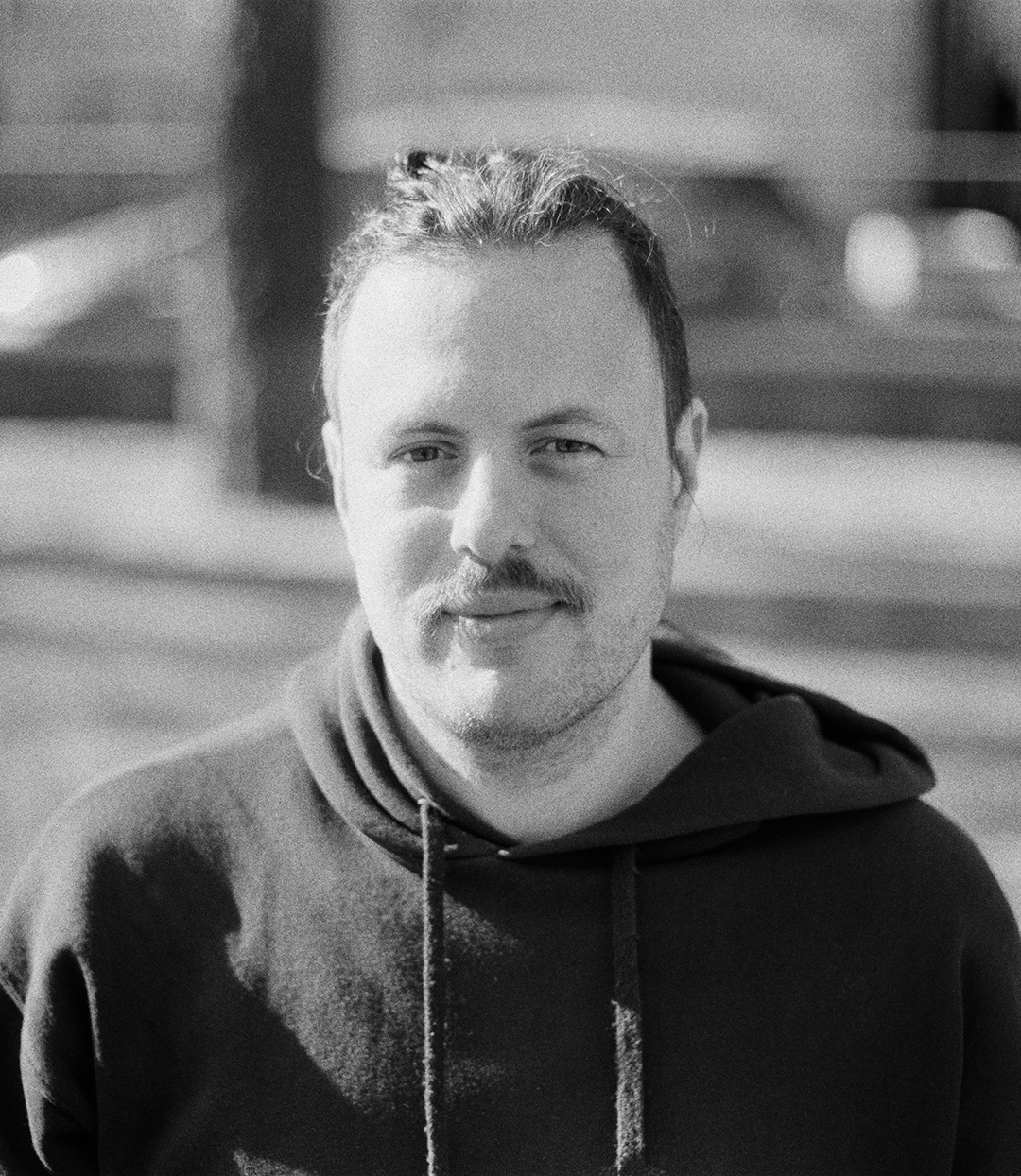
Yevhen Korshunov
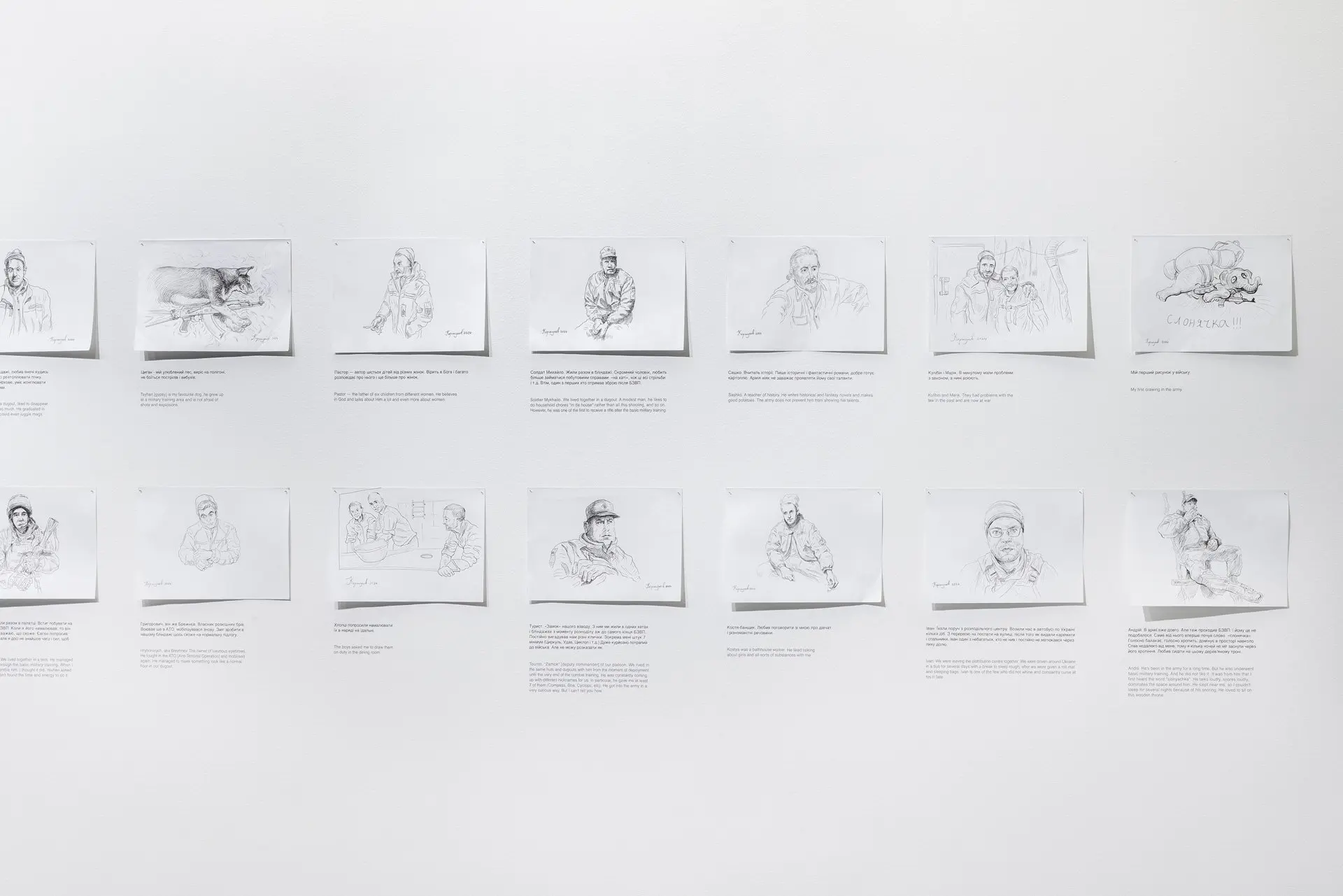
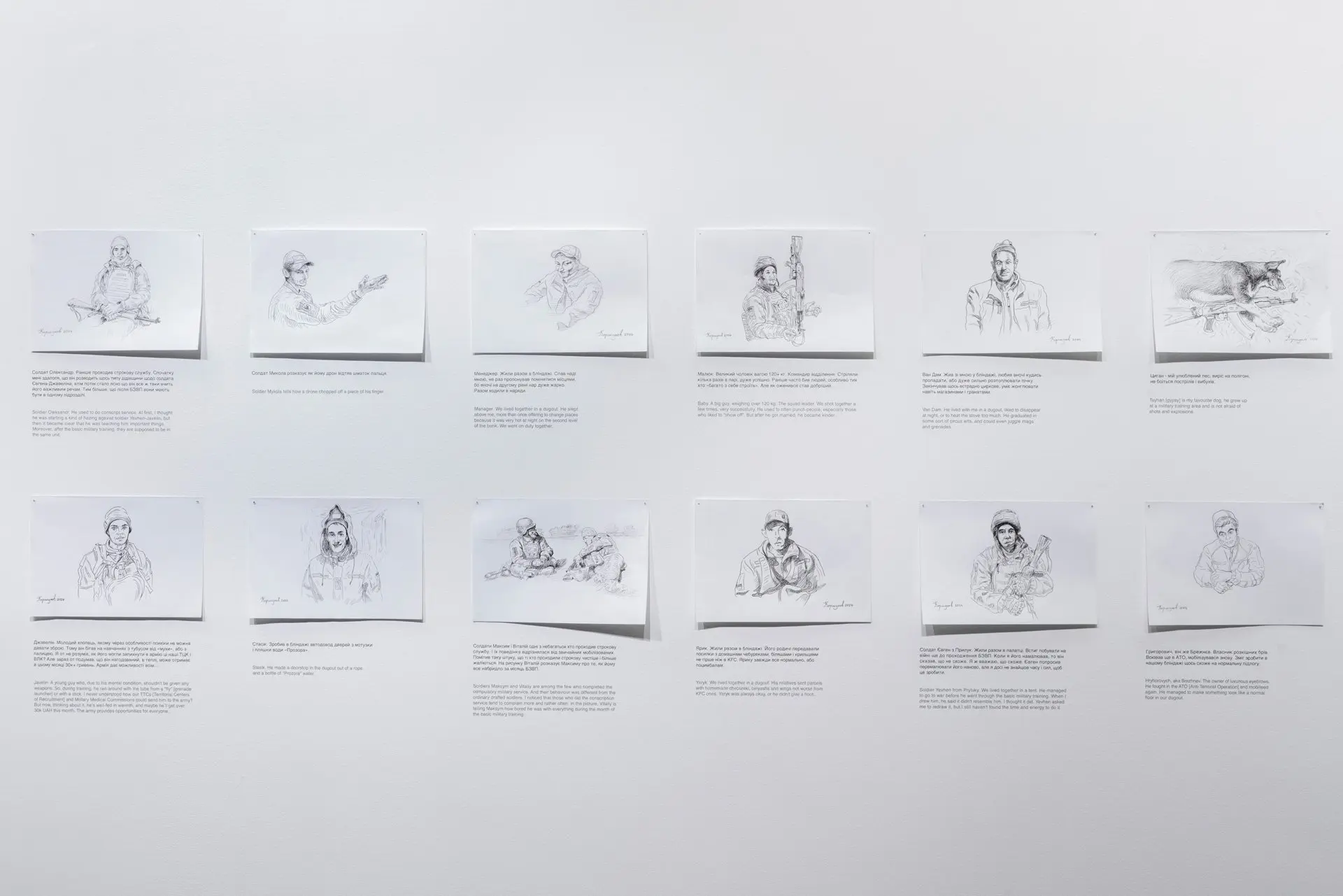
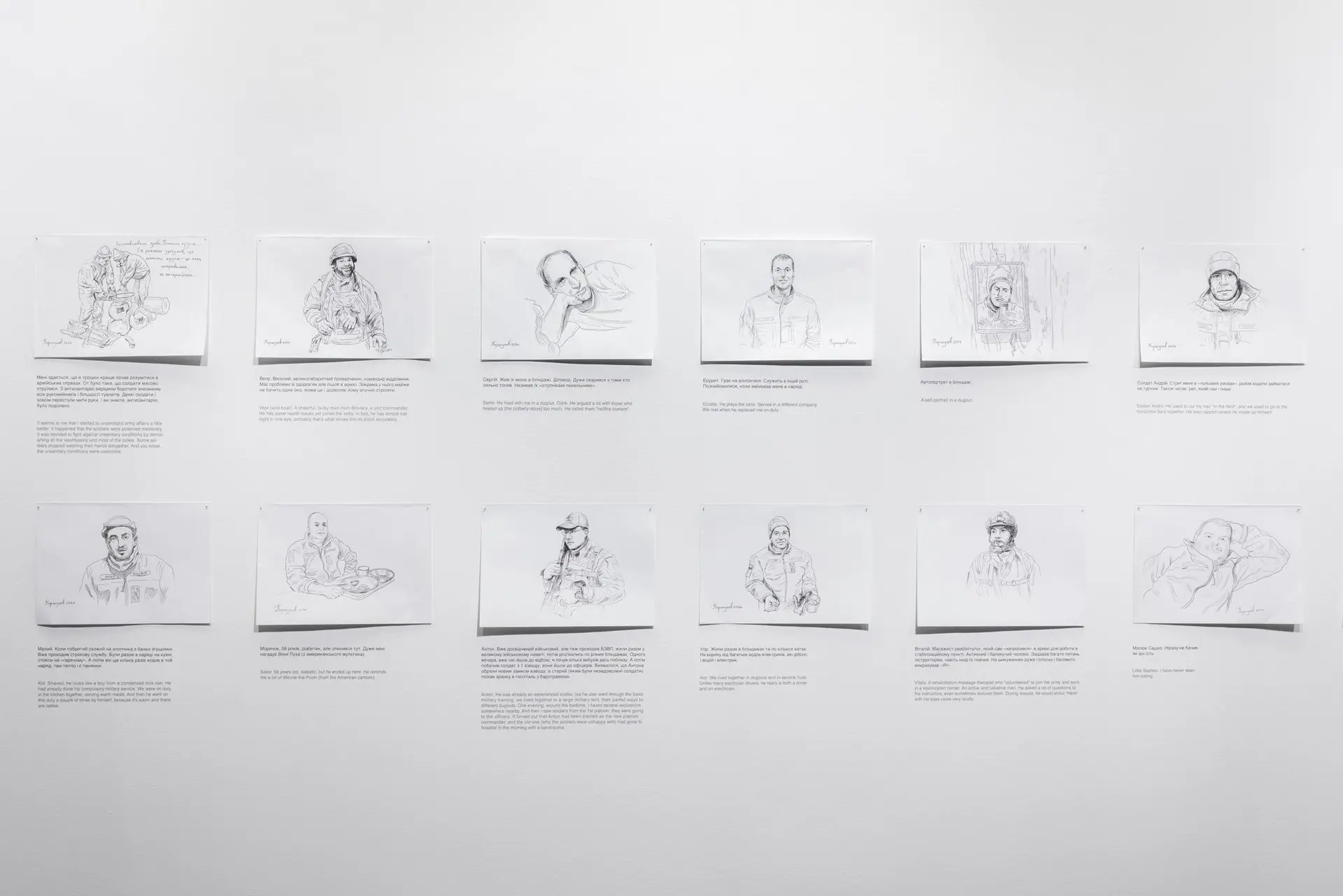
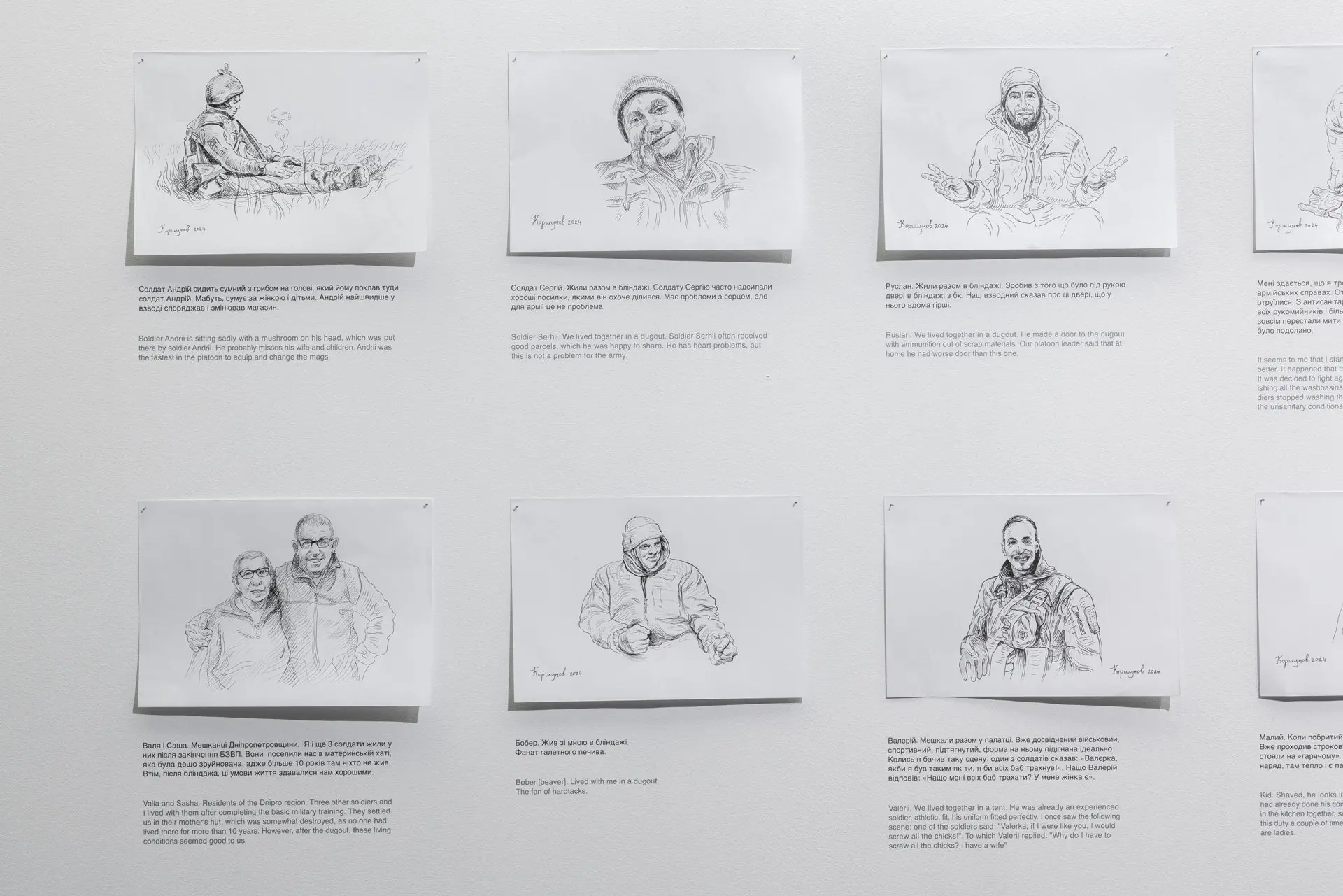
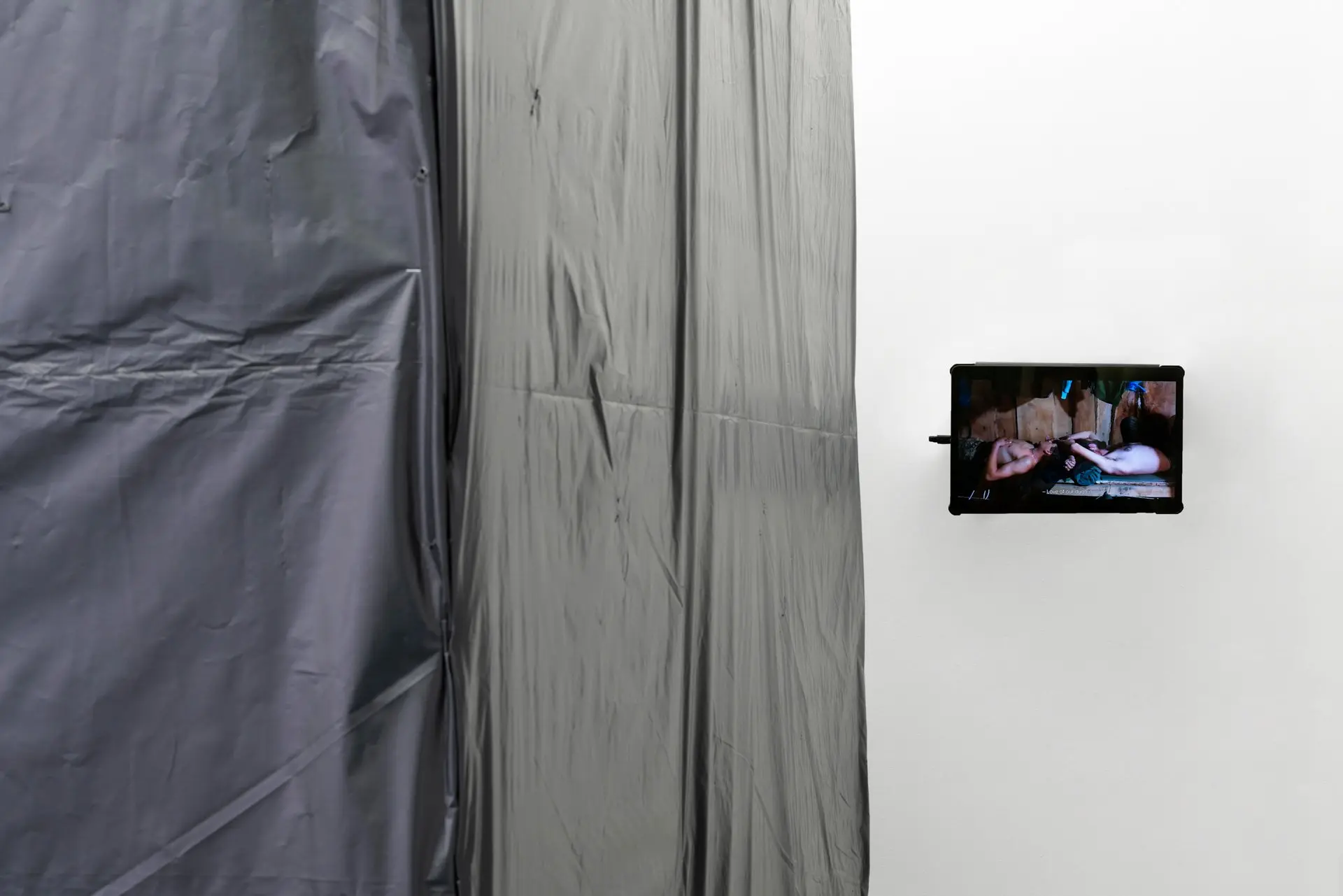
The work Dust Сures encapsulates Yevhen Korshunov’s memories of his basic military training, which the artist himself calls a kind of ‘poetic introduction’ to the war. On the outside, it is a minimalist black block, and on the inside, it sort of recreates the atmosphere of a dugout — an underground shelter that houses the military. Drawings on the walls depict people with whom Korshunov lived, made friends, and communicated during his basic training. In short descriptions, the artist shares their prominent features and stories from their past or life during the wartime.
The work invites the audience to immerse themselves in soldiers’ living conditions. However, in this installation, the dugout is placed in an independent structure, separate from the walls of the art center, to emphasize the symbolic nature of this reconstruction. Importantly, Dust Сures captures the artist’s seemingly conflicting feelings: complete discomfort and coziness. In an underground dugout, there are usually many mice, and dust clogs everything, gets into eyes and makes it difficult to breathe. The artist noticed that after the third week in dugouts, on the way to training sessions in the morning, over a hundred people started coughing the same way. However, the soldiers optimized their living space as much as they could, adding various conveniences, such as a bottle that closed the door automatically, stopping the cold from getting in.
The exhibited work is focusing on people with various professions and experiences, whose paths crossed in the army. Drawing our attention on them helps to better see the faces behind the generalized image of a military servant. Thus, the work leads to reflections on the role of an artist on the front line, asking whether there is space for art in the reality of wartime.
Public Choice Prize
Awarding Yevhen Korshunov, the second special prize, the jury said:
“Yevhen Korshunov is awarded the second Special prize for a work that is a unique record of everyday wartime life seen from the inside. His drawings and anecdotes render the anonymous figure of the soldier visible, individual, and human. They reveal, through a male gaze, a tenderness expressing quiet gestures of care under duress of a military training—and on the quiet, vital space art can inhabit, in the shadow of war.
The jury is humbled by his ability to create and remain an artist while being a soldier. Describing honestly and filled with humour, humanity under straining conditions. His work embodies the transition of men, their bodies, their goals and functions.”
Special Prize
Artworks
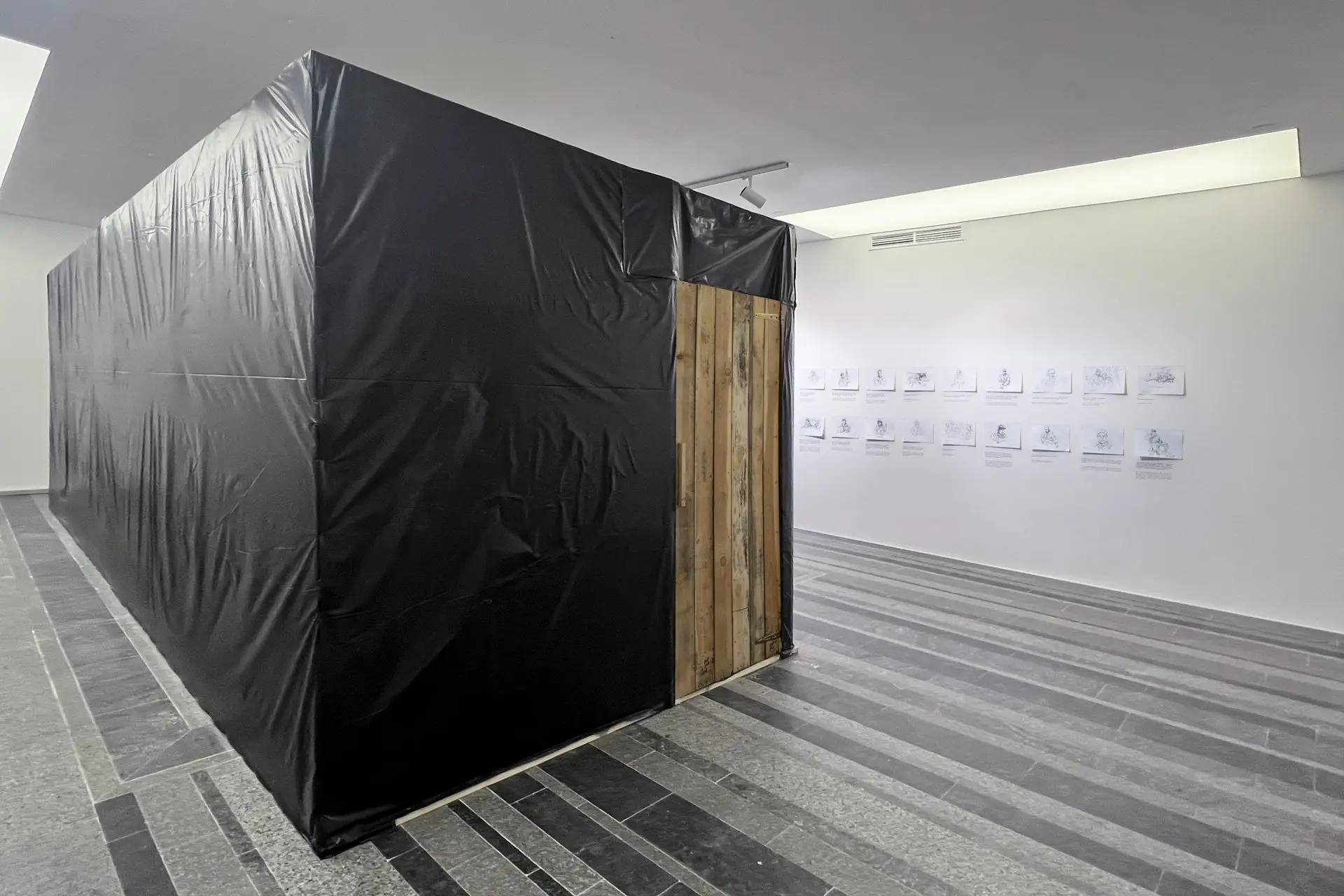
wooden bars and boards, polyethylene, incandescent lamps, potbelly stove, soil, radio, audio compositions “Tristan” and “Triptych of the ordeal” by Terekhov Artem (de guerre Erudite), plastic water bottle “Prozora”, pencil and pen on paper Courtesy of the artist
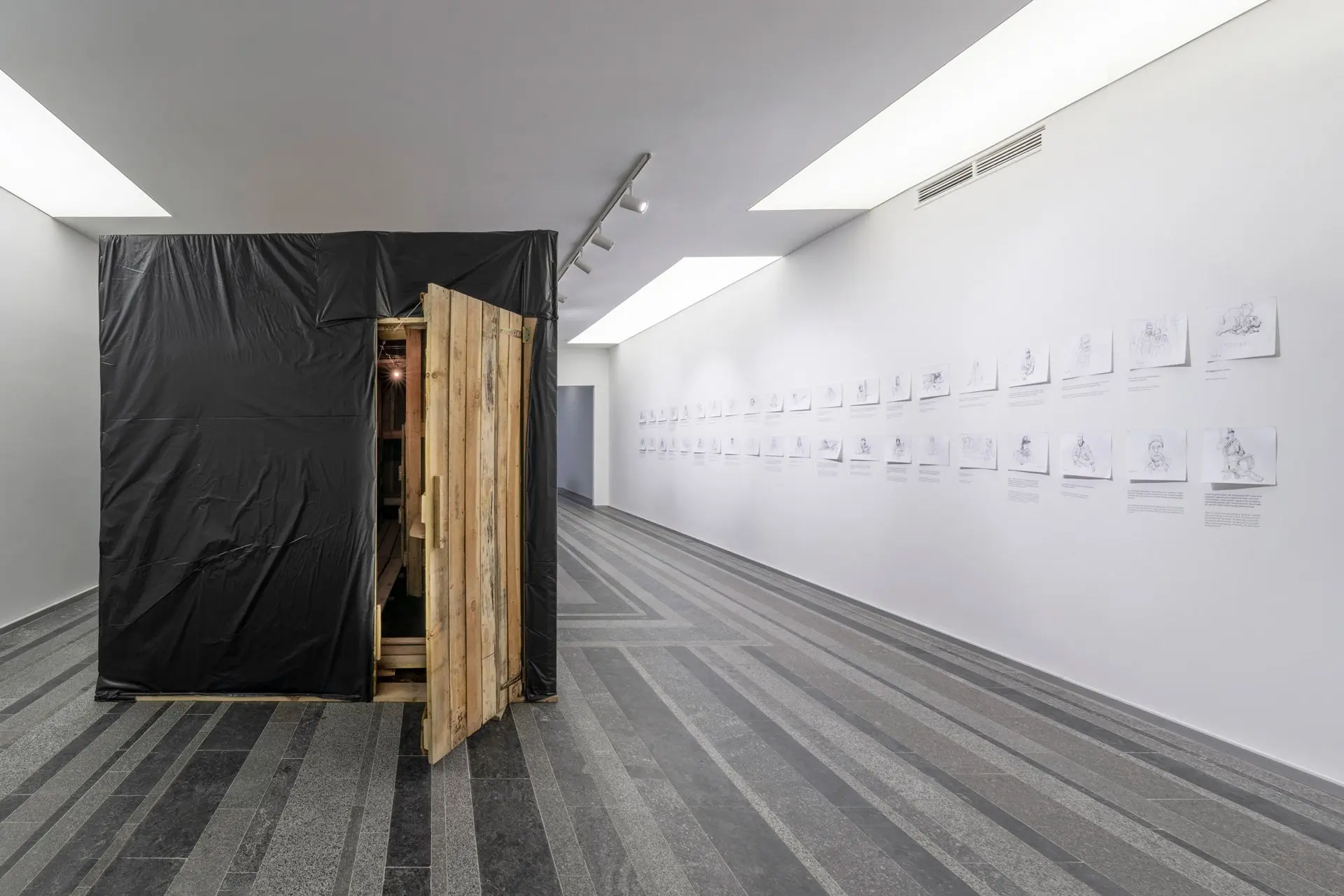

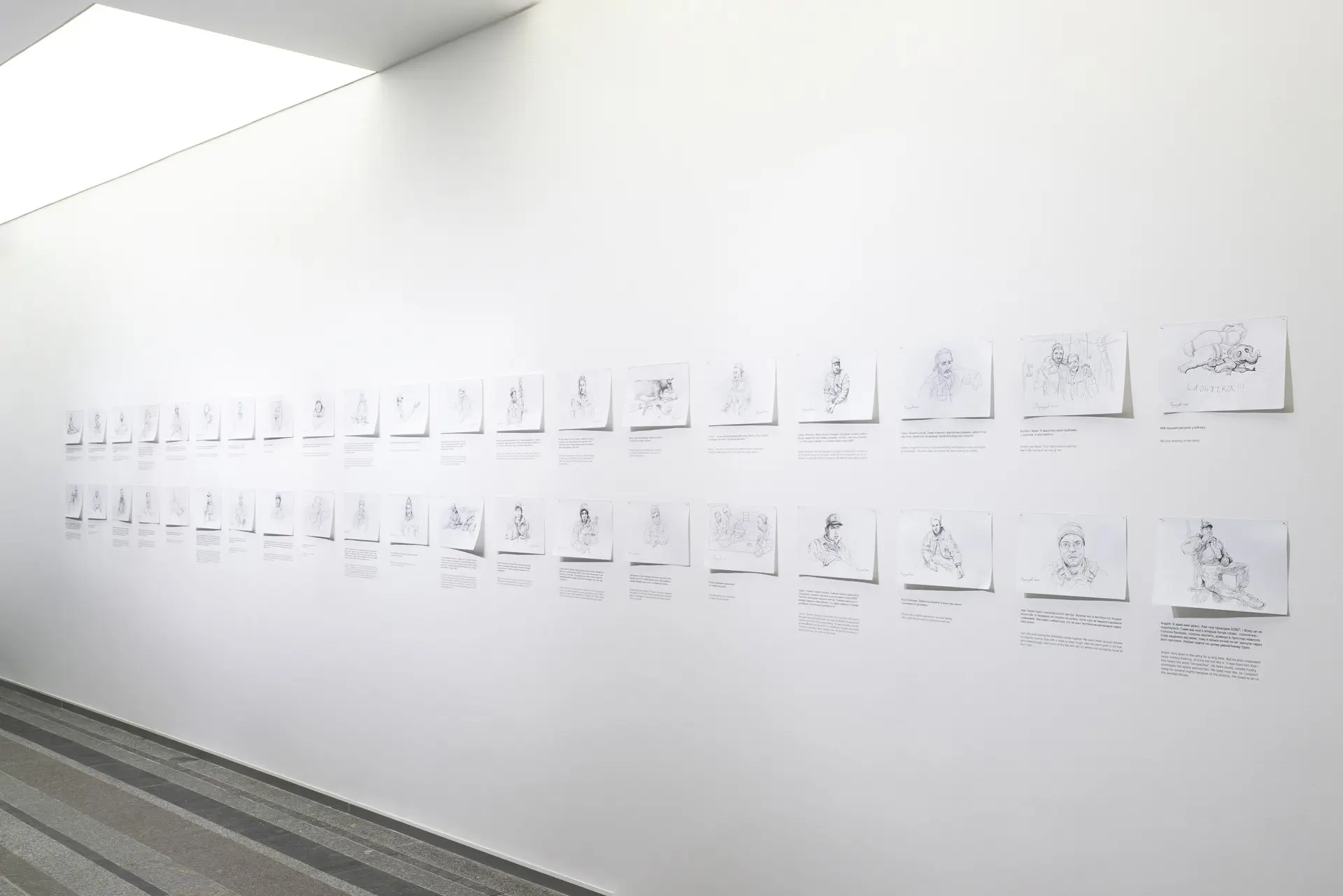
wooden bars and boards, polyethylene, incandescent lamps, potbelly stove, soil, radio, audio compositions “Tristan” and “Triptych of the ordeal” by Terekhov Artem (de guerre Erudite), plastic water bottle “Prozora”, pencil and pen on paper Courtesy of the artist