
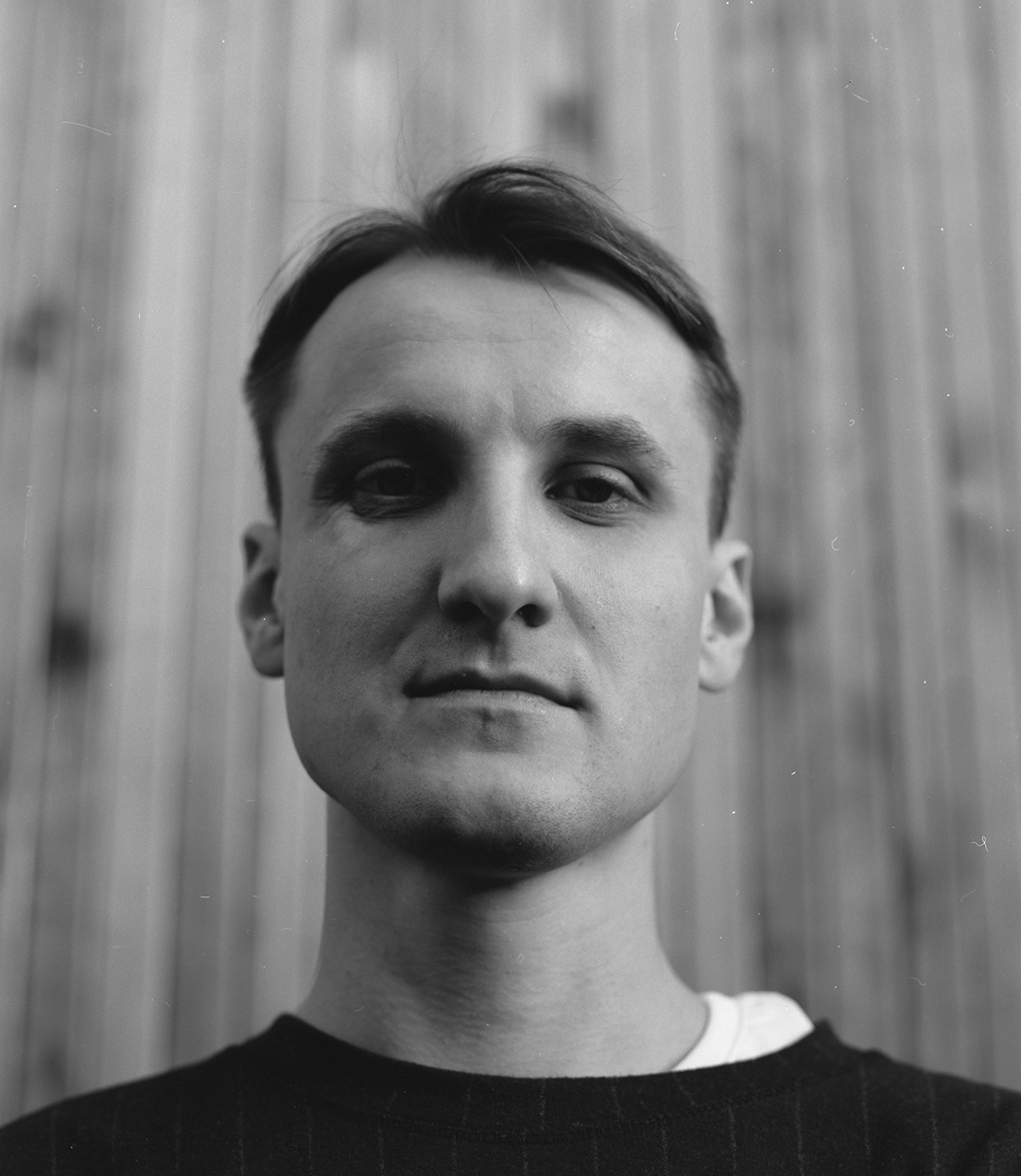
Mykhailo Alekseenko
In his work Peaceful Landscape in a Nonexistent Museum, Mykhailo Alekseenko explores the theme of silence and emptiness in Ukrainian art and culture caused by historical repressions and the ongoing war.
The space through which the viewer travels encourages to reflect on the challenges Ukrainian museums are facing during wartime: art collections that have been hidden and evacuated, buildings that have been physically destroyed. The fragmented parquet is reminiscent of museum walls that were on the verge of disappearing due to enemy shelling or negligence. Perhaps the walls of a contemporary art museum could once have stood here? However, in the thirty-three years since Ukraine’s independence, no such museum has been established, leaving a tangible void in the cultural field.
Going deeper into the room, one can see a landscape — a metaphor for territory, while the frame, embellished with elements of human bones, outlines the territory’s borders. The work refers either to a legend or a real story about a Soviet artist who, after returning from exile, painted exclusively apolitical landscapes. Alekseenko asks the question: can a landscape really be neutral? In this context, even a ‘peaceful landscape’ becomes politicised by social and political events.
The work invites the viewer to reflect: what do we see in Ukrainian landscapes, and how do political realities influence our perception of them? Can a landscape be peaceful?
Artworks
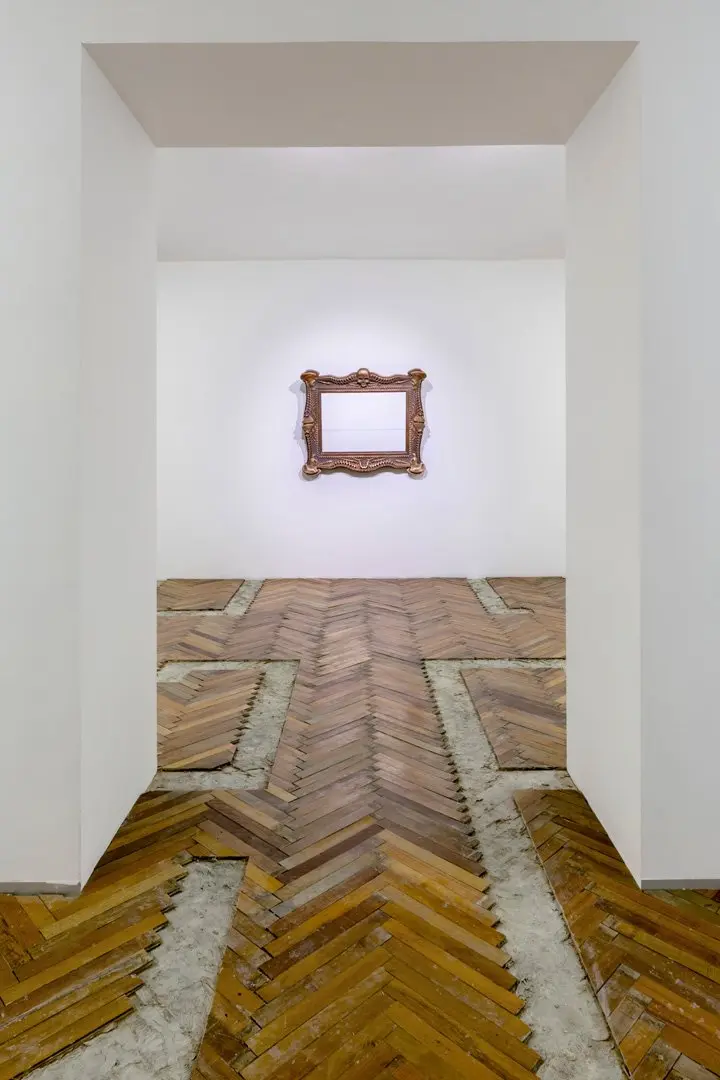
oil on canvas, baguette framing, parquet, thermoplastic polymer, wood Courtesy of the Аrtist Acknowledgements: Anastasia Paseka, Ihor Kanivets, Volodymyr Kovalenko, Sergey Zapadnya, the A85 Workshop, Yevhen Holik, Mykhailo Melnyk. Special tribute to Mykola Pymonenko and the entire history of art
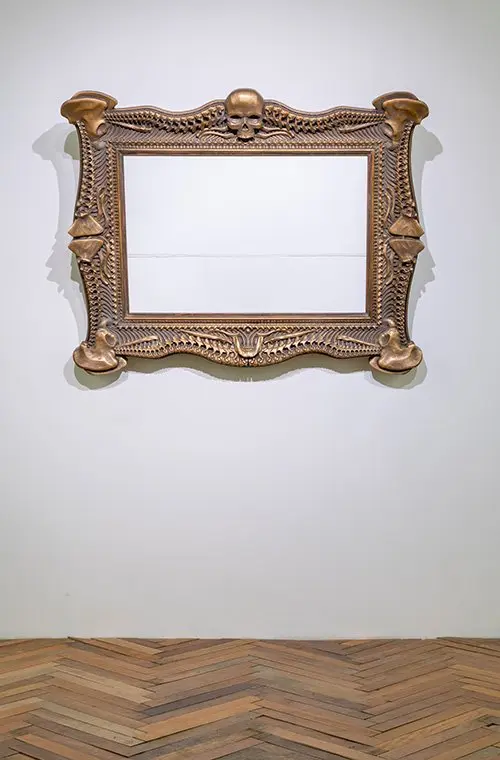
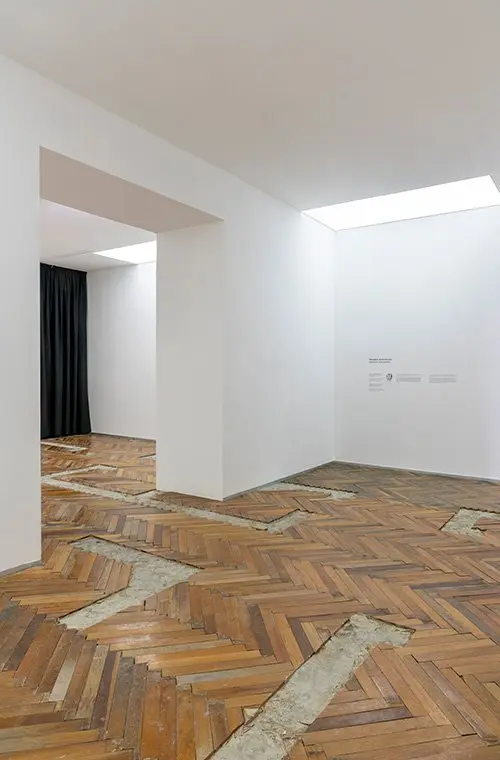
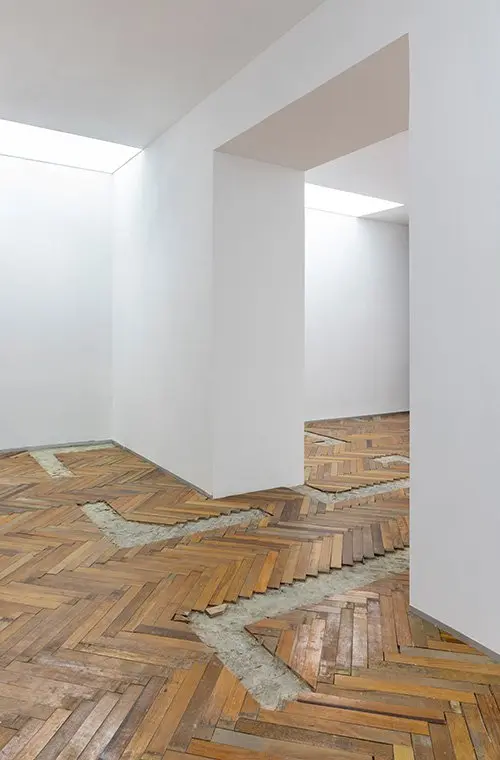
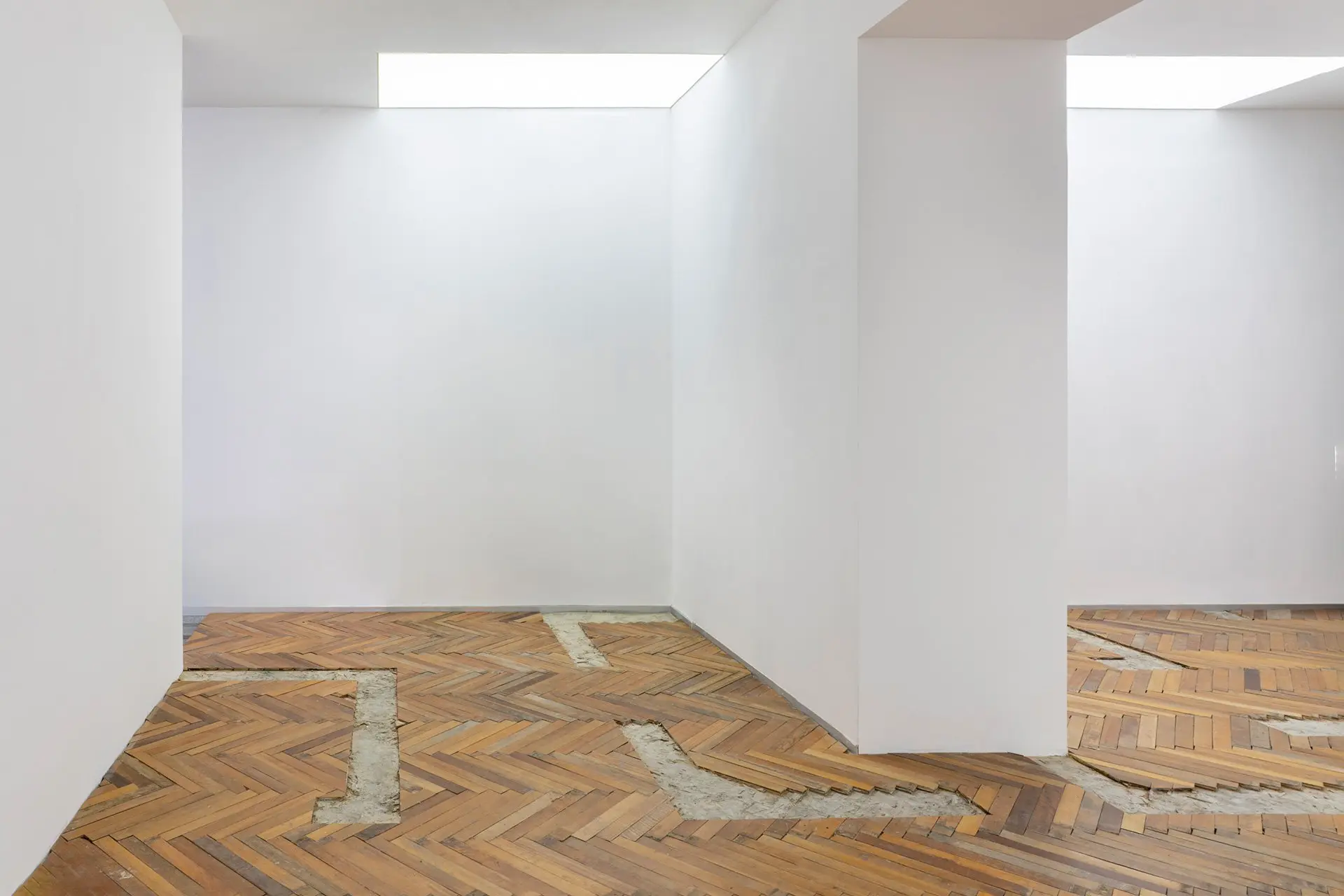
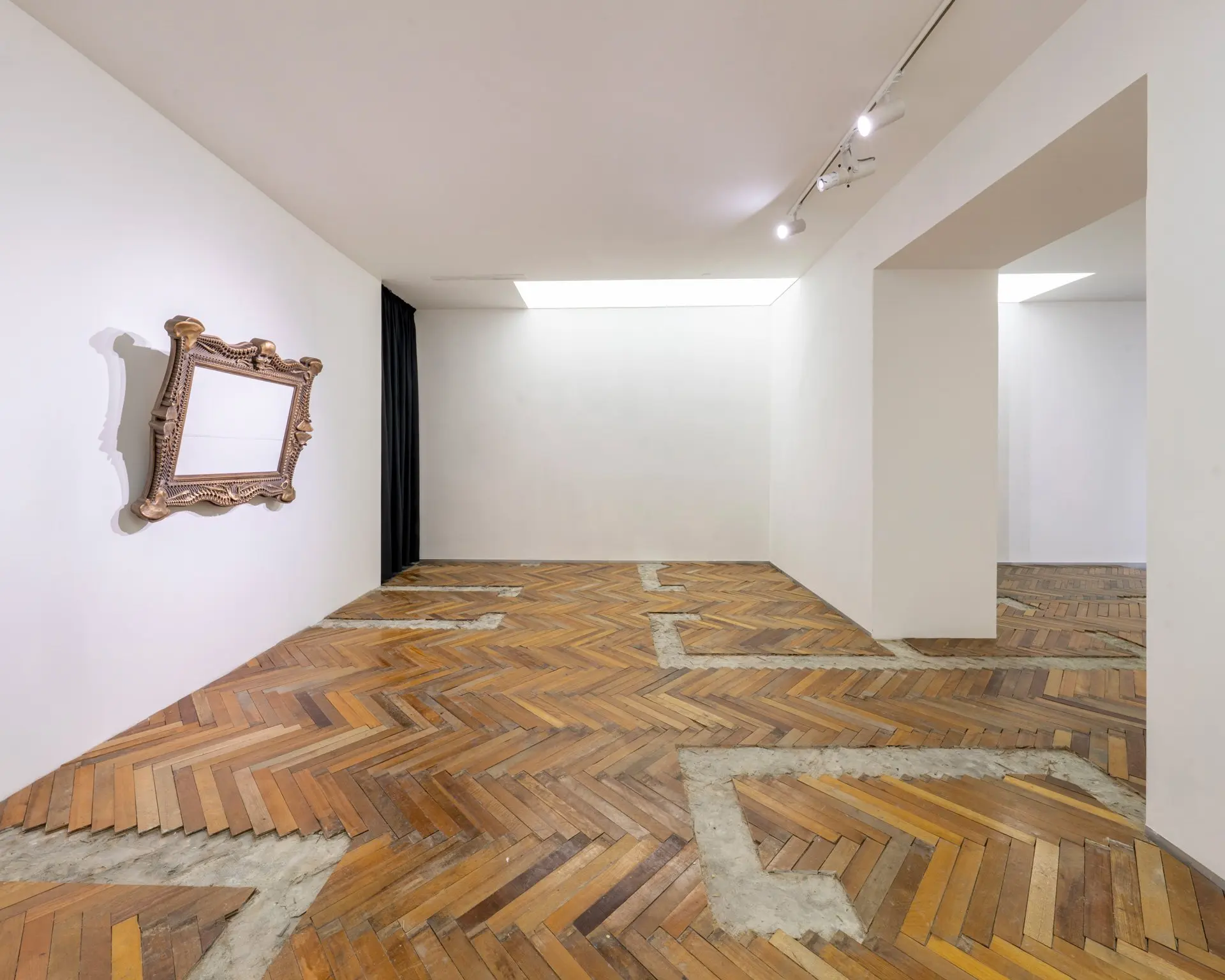
oil on canvas, baguette framing, parquet, thermoplastic polymer, wood Courtesy of the Аrtist Acknowledgements: Anastasia Paseka, Ihor Kanivets, Volodymyr Kovalenko, Sergey Zapadnya, the A85 Workshop, Yevhen Holik, Mykhailo Melnyk. Special tribute to Mykola Pymonenko and the entire history of art