Disciplined Vision: School solo exhibition of Lada Nakonechna
This exhibition is the second part of the 2021 diptych and, like the Disciplined Vision exhibition at NAMU, involved preliminary research by Lada Nakonechna into the socialist realist part of the Artsvit Gallery collection. The artist continues her long-term investigation of the academic art education system in Ukraine—its history (avant-garde and socialist realist stages) and current condition (which formally or methodologically references both). The exhibition site is no coincidence: Nakonechna was born in Dnipro and graduated from an art school here. Unlike the previous exhibition, this one is not divided into three gallery rooms; instead, it offers a continuous experience with the works.
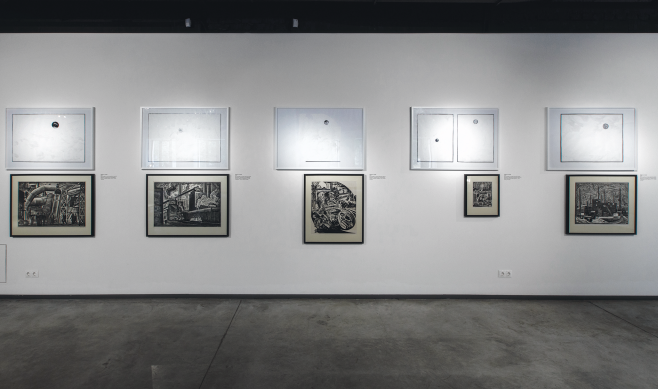
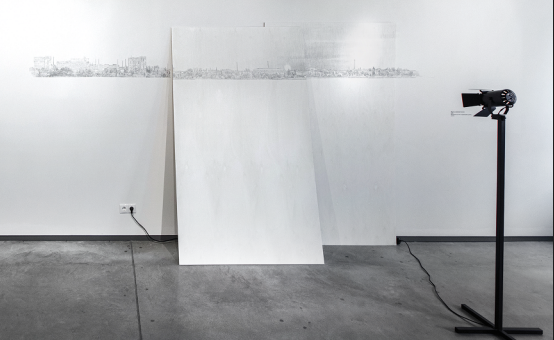
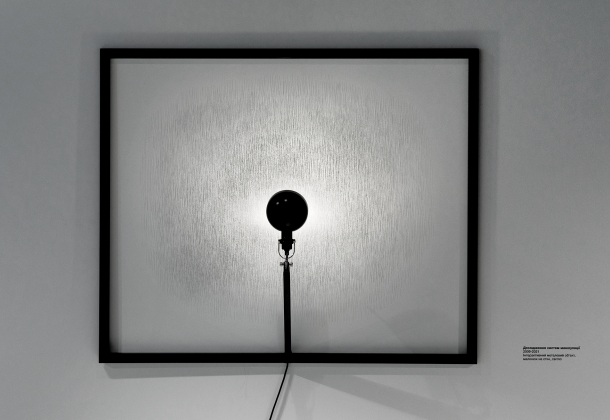
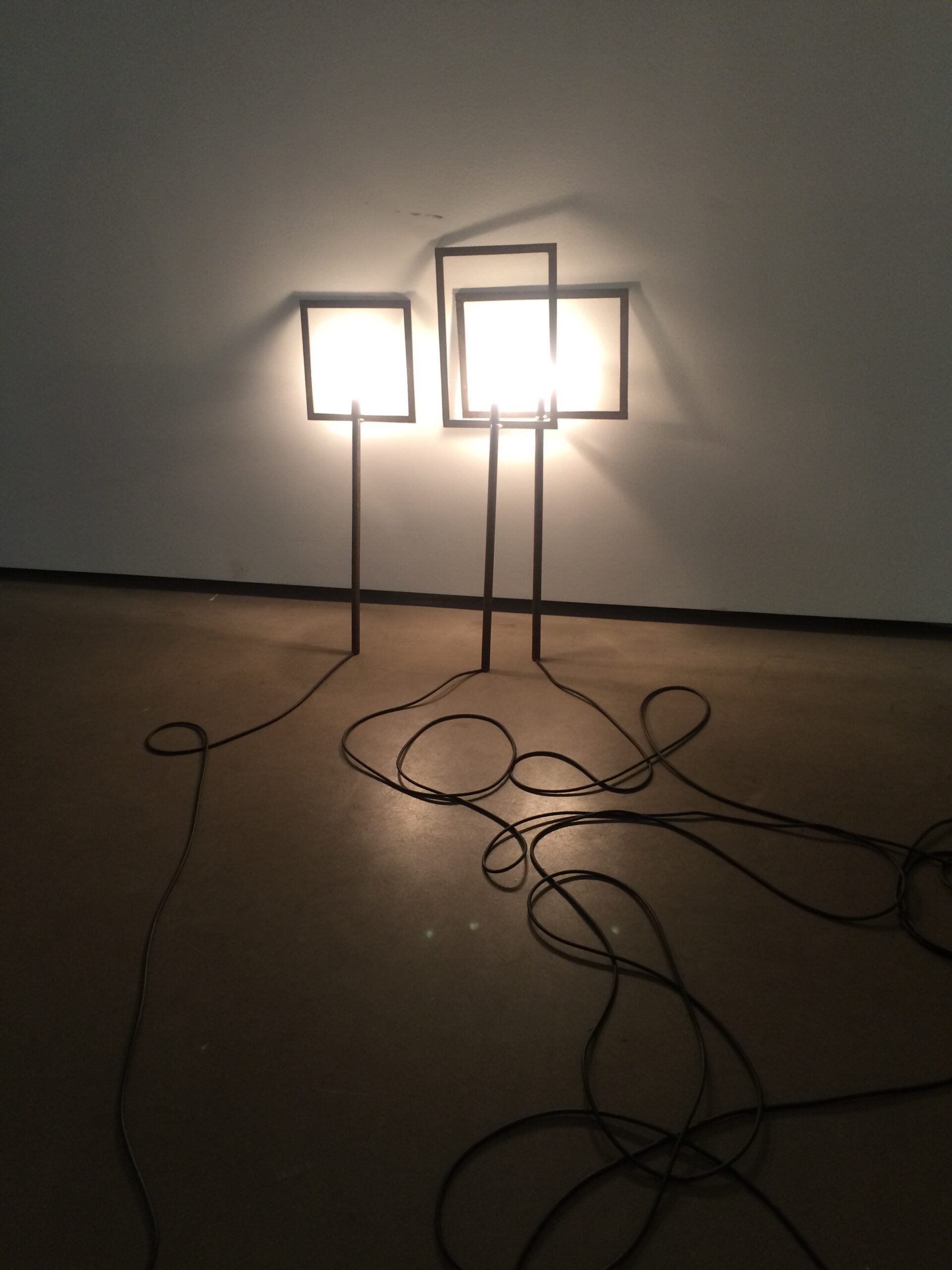
Nakonechna’s main co-author here is light—in the form of fixtures that can be turned on and off, integrated into works, placed within the viewer’s sightline or hidden from view. Her manipulation of light has become a familiar strategy, aimed at exposing the use of light and shadow as tools of influence on the viewer: the works Helpers and Investigation of Manipulation Mechanisms incorporate light sources as components. In the work Switch Off the Light When Leaving, the artist depicts a panoramic view of Dnipro featuring two suns: the real sun, obscured by a spotlight pointed at it, and the “sun” from Olafur Eliasson’s work Dnipropetrovsk Sunrise, commissioned by Dnipro steel plant owner Victor Pinchuk as a gift to the city. Nakonechna’s work is divided into three planes, alluding to social stratification and the role of art in legitimizing systems of wealth distribution. “Stars That Never Fade” includes another form of light—a lightbox emitting either stars or welding sparks, borrowed from graphic works glorifying the Soviet metallurgist.
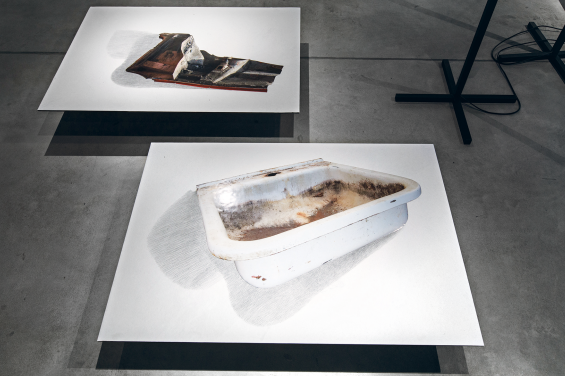
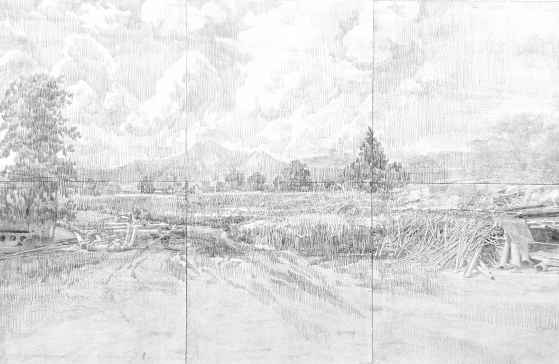
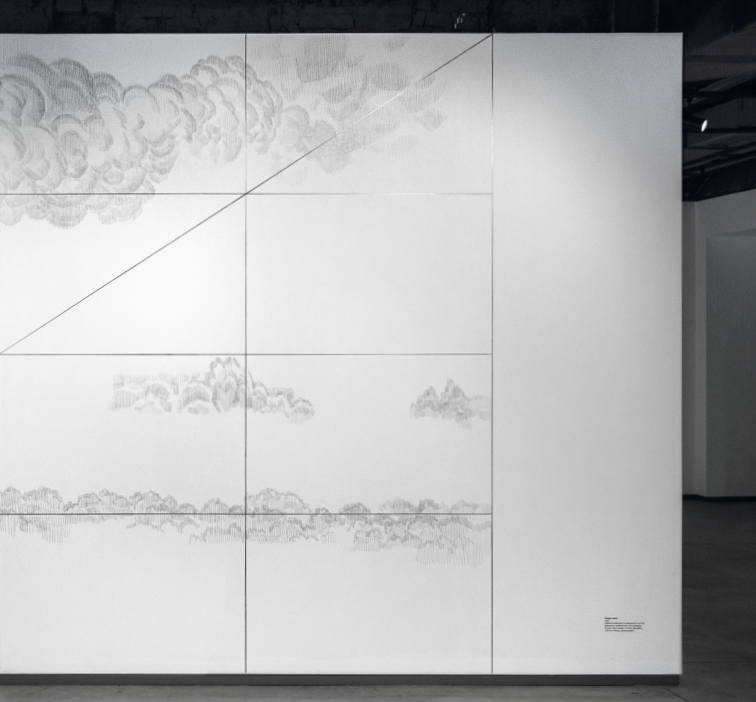
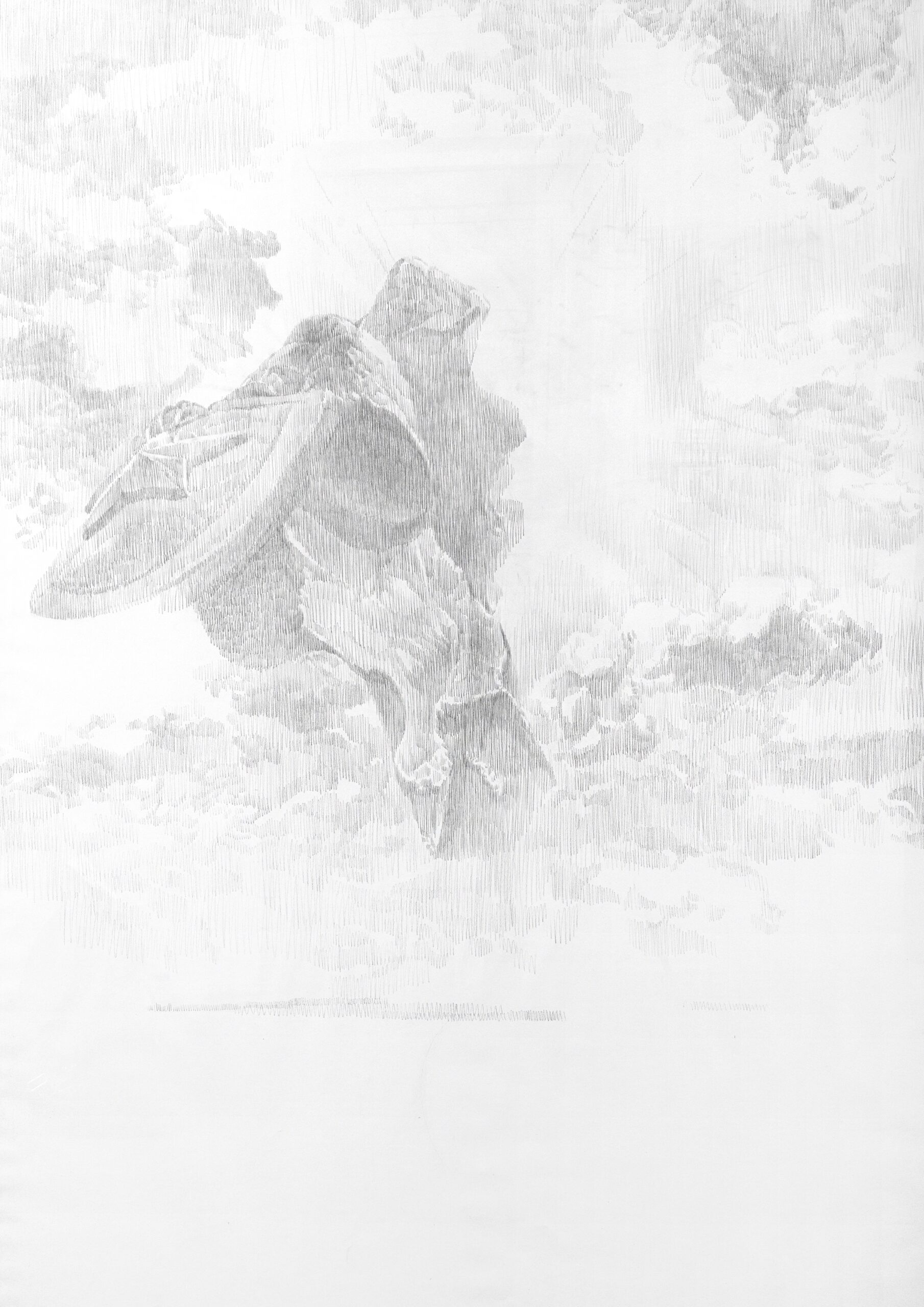
The artist analyzes and deconstructs various academic training methods (copying, studying through drawing) that have remained unchanged since Soviet times, aiming to reveal and demonstrate how they serve ideological purposes. For instance, in Cloud Catchers, repetition and scaling of an original are the main methods. David’s Nose is based on copying the classical academic model—Michelangelo’s David—but the artist draws only the nose in place of shadows that should have fallen from objects of ruin and neglect. These are also illusory—two-dimensional stickers illuminated by spotlights. Picturesque Ukraine emulates the study method: Nakonechna once again reproduces Burachek’s Road to the Collective Farm, but adds piles of scrap metal to the idyllic Soviet Ukrainian landscape.
Art works & Documents
Lada Nakonechna
Lada Nakonechna