Disciplined Vision solo exhibition of Lada Nakonechna
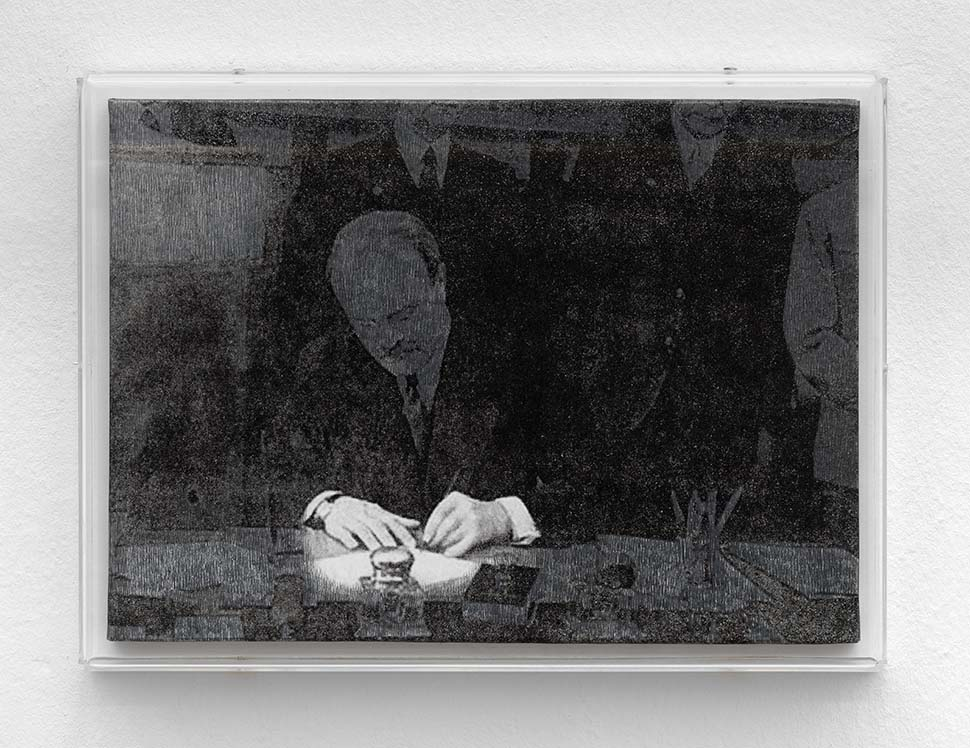
This exhibition is the first part of a diptych (alongside Disciplined Vision. School at the Artsvit Gallery in Dnipro), and also a continuation and expansion of the 2018 exhibition Background Mode. At that time, Lada Nakonechna presented a complex work of deconstructing the landscape Road to the Collective Farm (1937) by Soviet socialist realist painter M. Burachek, held in the National Museum’s collection. Now, in 2021, the artist was invited by NAMU to carry out a more in-depth study of the part of the collection and archive that relates to the period of socialist realism.
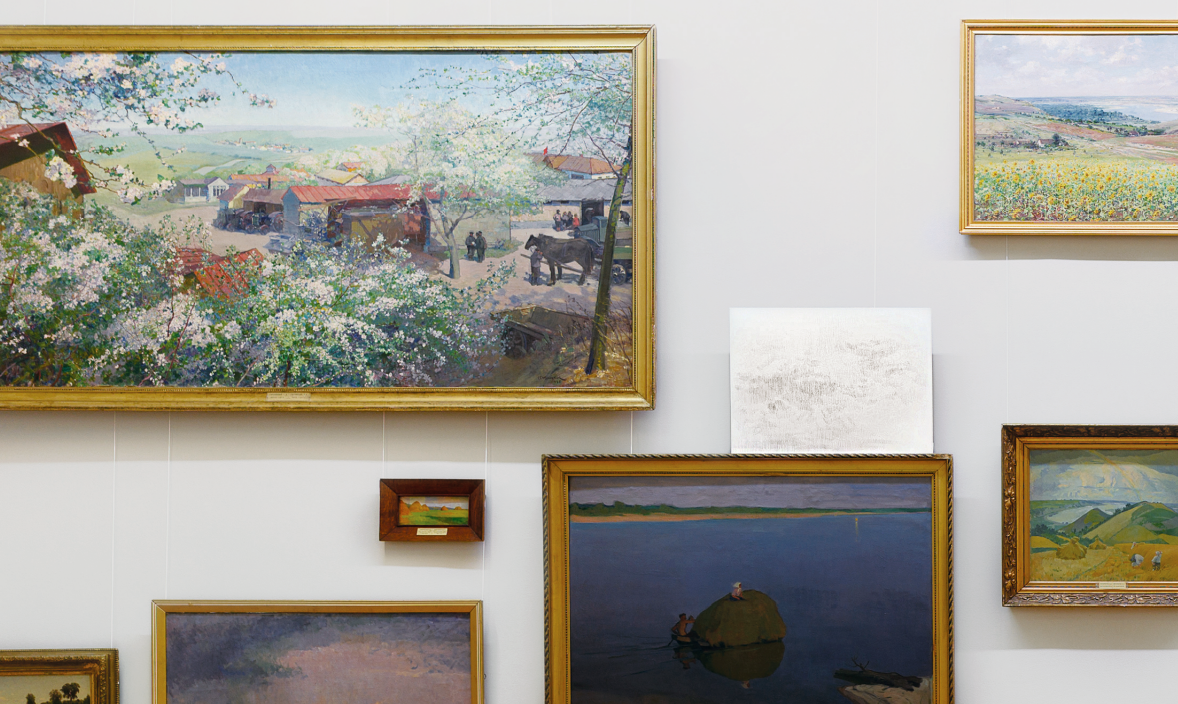
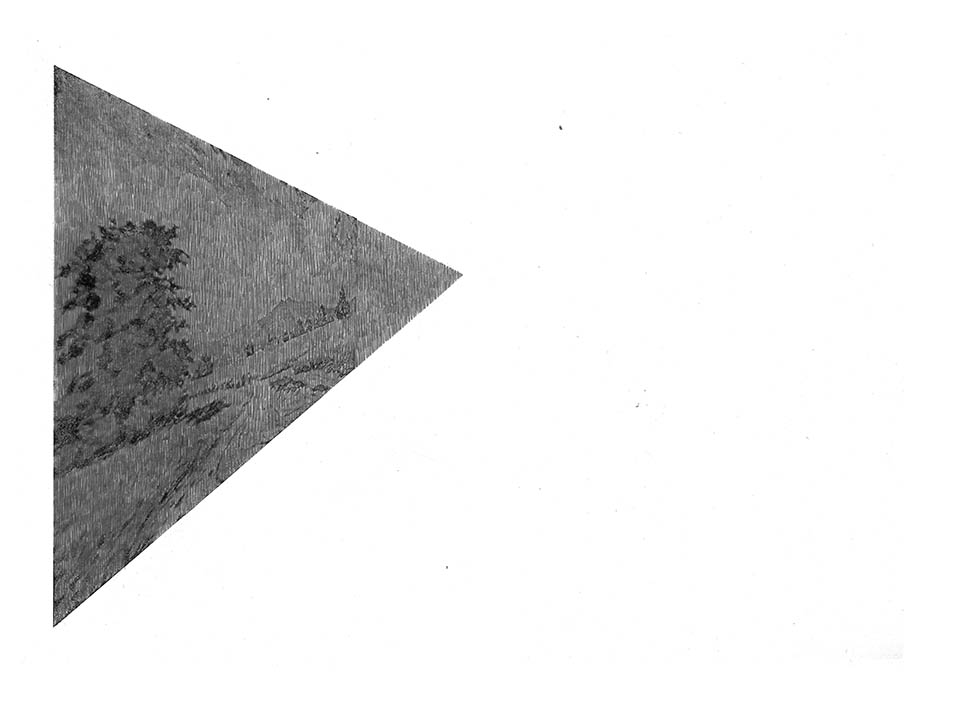
The first gallery space brings together the Background Mode stage (the work from the series Some Examples from the Field of Management and the series Perspective Reduction) with a new phase of the research, presented through the installation Obvious Connections. The latter imitates and at the same time distorts the classical museum-style display of paintings. It includes landscape works from the 1930s–1950s, including the original Burachek painting, arranged by the artist in several horizontal rows (aligned according to the horizon line in each canvas). Nakonechna complements these museum pieces with her own drawings—extensions of the framed landscapes. In doing so, she suggests “going beyond the frame”—beyond the standard ideologized view of the “Ukrainian landscape.” A striking element in the gallery is the set of colorful ribbons attached to the wall at the entrance. They reference both the kitsch Soviet-era image of a Ukrainian girl’s wreath and the ceremonial ribbon-cutting depicted in the work from Some Examples…
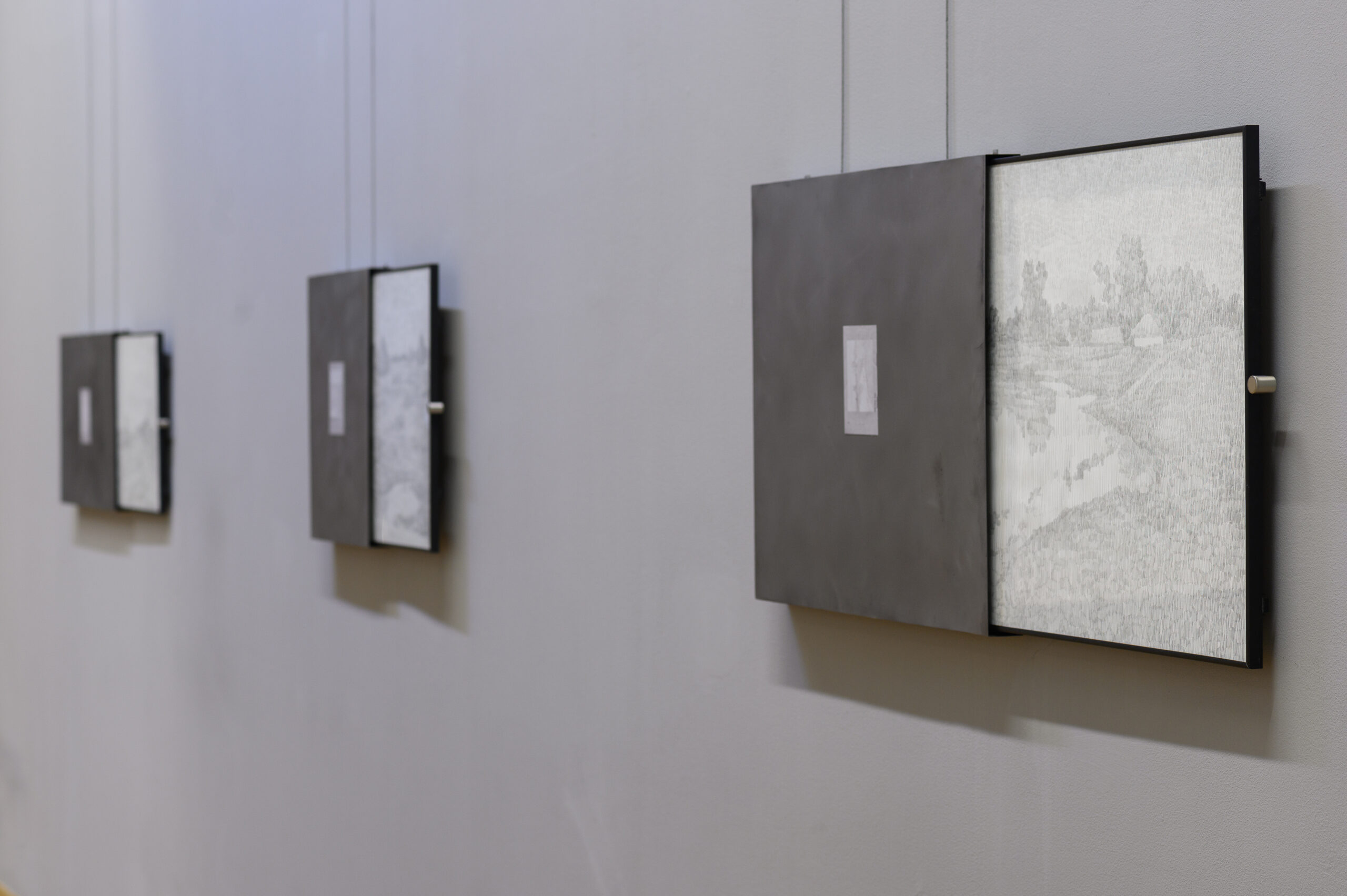
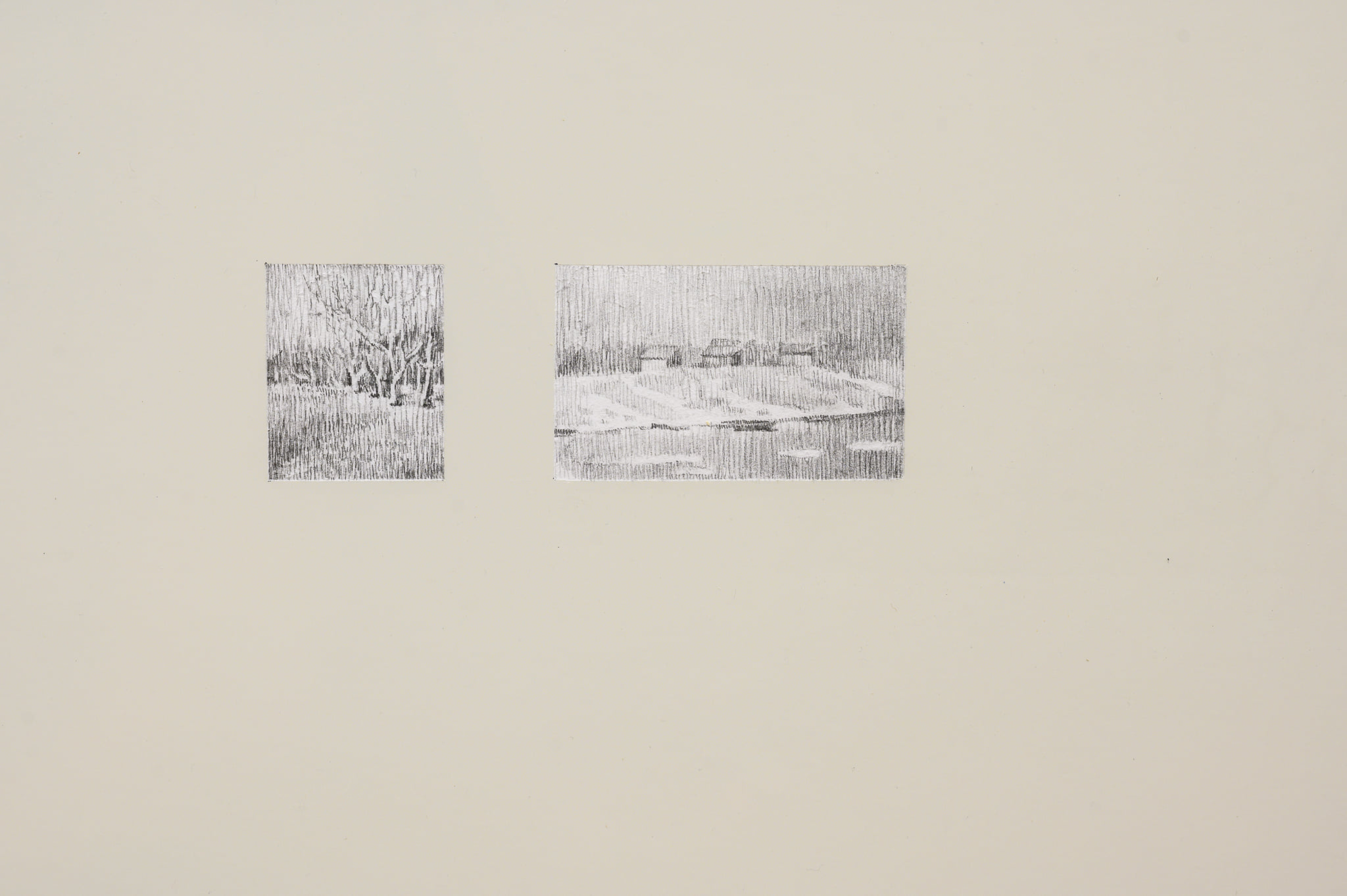
In the second room, ribbons reappear, this time as part of a museum stanchion that fences the exhibit from the viewer. With this, Nakonechna reminds us that institutions always condition our view—even physically: where to look from and where to stand. By placing the barrier in front of a bare wall, the artist makes a Brechtian gesture of “alienation,” inviting viewers to critically reflect on the role of the artist, the artwork, the institution, and the art historian. She does this by analyzing a report exhibition by Yevhen Kholostenko—a younger member of the Boichukist circle and monumental painter who later transformed into a socialist realist landscapist. Around 1940, the artist presented a landscape exhibition, reviewed by critic H. Radionov, who accused Kholostenko of overusing ivory tones—too pale for the Ukrainian landscape’s palette. Nakonechna shows the review text and the exhibition catalogue cover. The original Burachek landscapes did not survive, so she recreates them in her own drawings, storing them in metal folders resembling archival drawers used for storing graphics and documents. Viewers can open and close the folders, engaging with the artist’s archival gesture. In the work Landscapes in Ivory, the artist places two small reproductions from the catalogue onto a large-format ivory-colored photo canvas, matched to a Pantone palette tone.
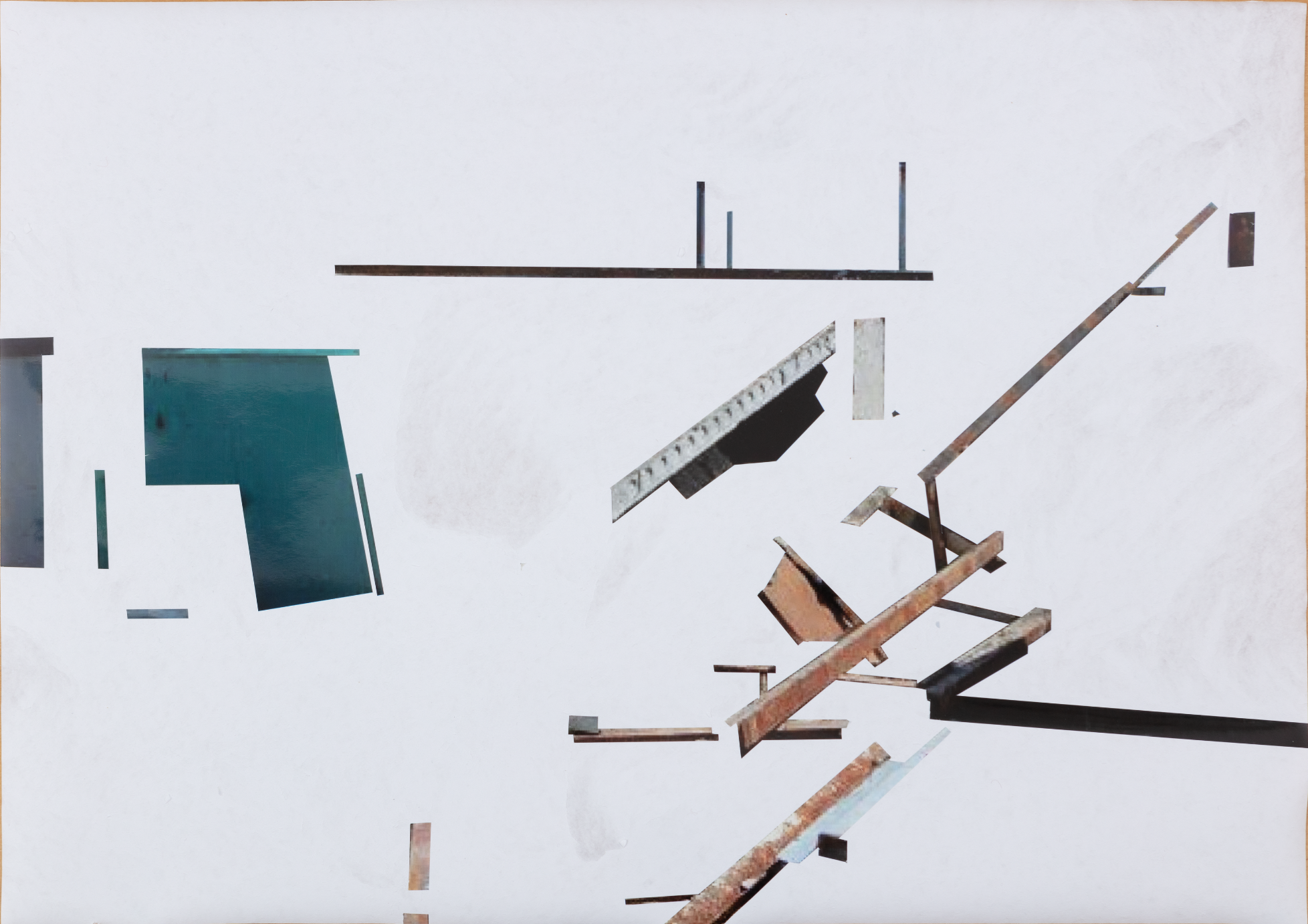
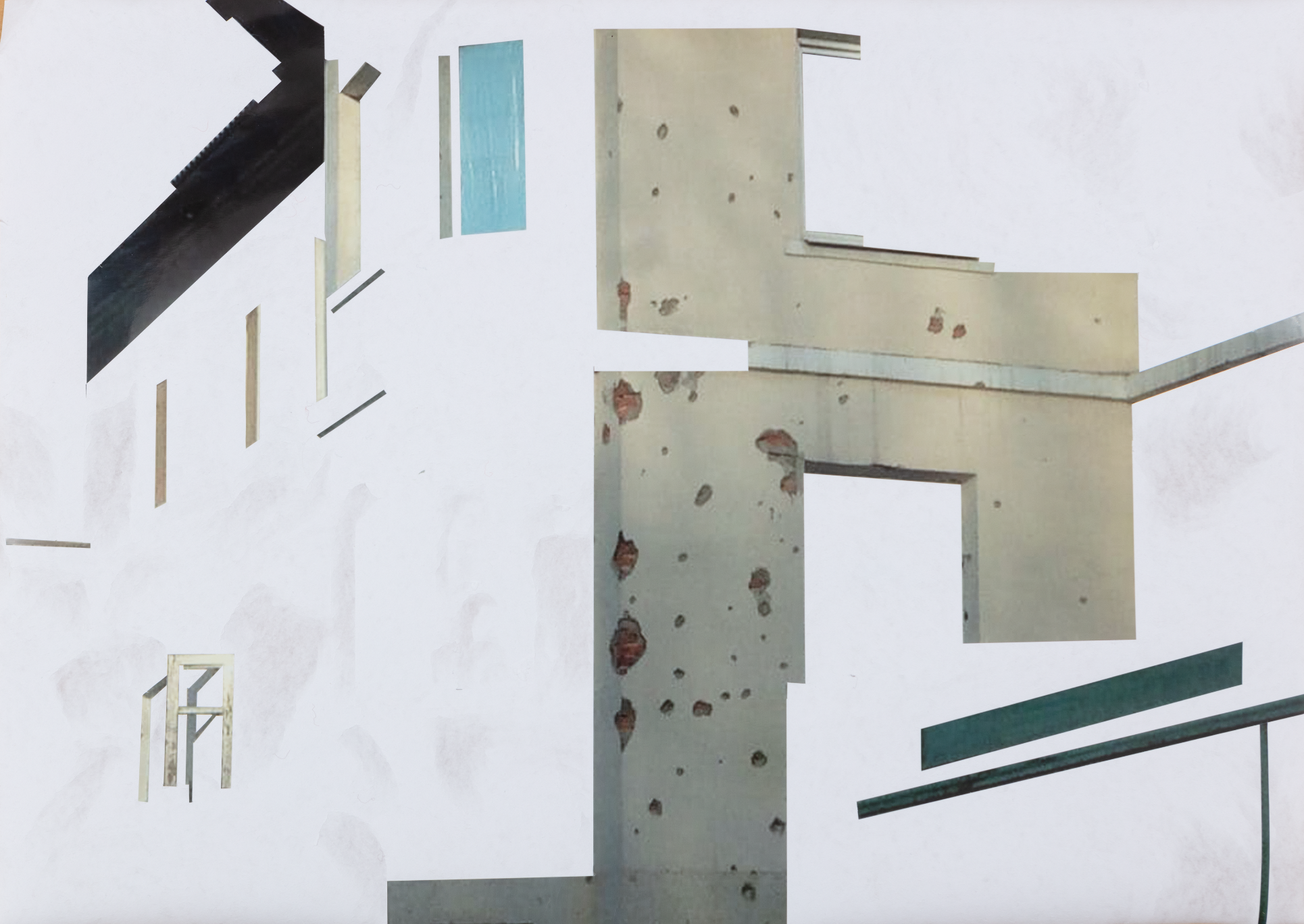
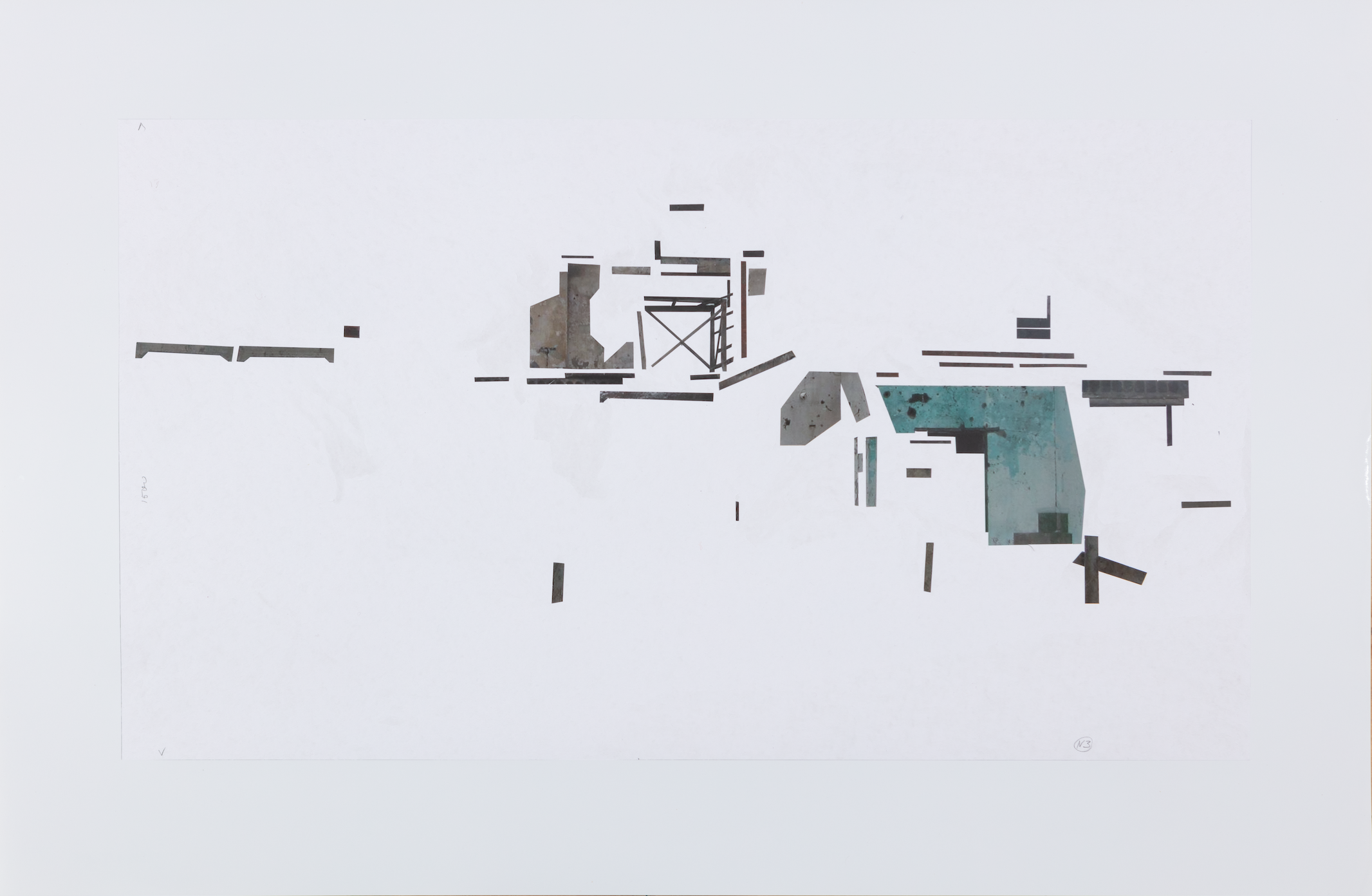
The third gallery space brings us into the present: here, Nakonechna presents works from previous years that address current events (the war in Eastern Ukraine) while also engaging with the avant-garde legacy undermined by socialist realism and neo-academism (the de facto revival of formal academic canons). The Merge Visible series refers to destruction caused by the war in Eastern Ukraine, cutting out traces of damage in a graphic editor and transforming the photographs into abstract compositions. The Flags are small colored glass vitrines displaying stones made from the rubble of Reading Abbey in England. This refers to the romantic landscape tradition and its fascination with ruins from past eras. The colored glass gives the stones a symbolic and political meaning, like the colors of a flag representing a country that occupies (or has occupied) land. This work resonates with the video Switch on Red, in which the artist, against a green background, unrolls a red fabric that gradually covers the entire screen. The exhibition concludes with the work Plane in Dissolution: Nakonechna shades in gray an archival photograph of Mykola Pymonenko at his easel. Only the surface of the realist painter’s canvas—known for depicting Ukrainian peasantry—is turned into a lightbox. The artist leaves the ending open, placing an ellipsis in her dialogue with Ukrainian art history and with the viewer.
Art works & Documents