Background Mode solo exhibition of Lada Nakonechna
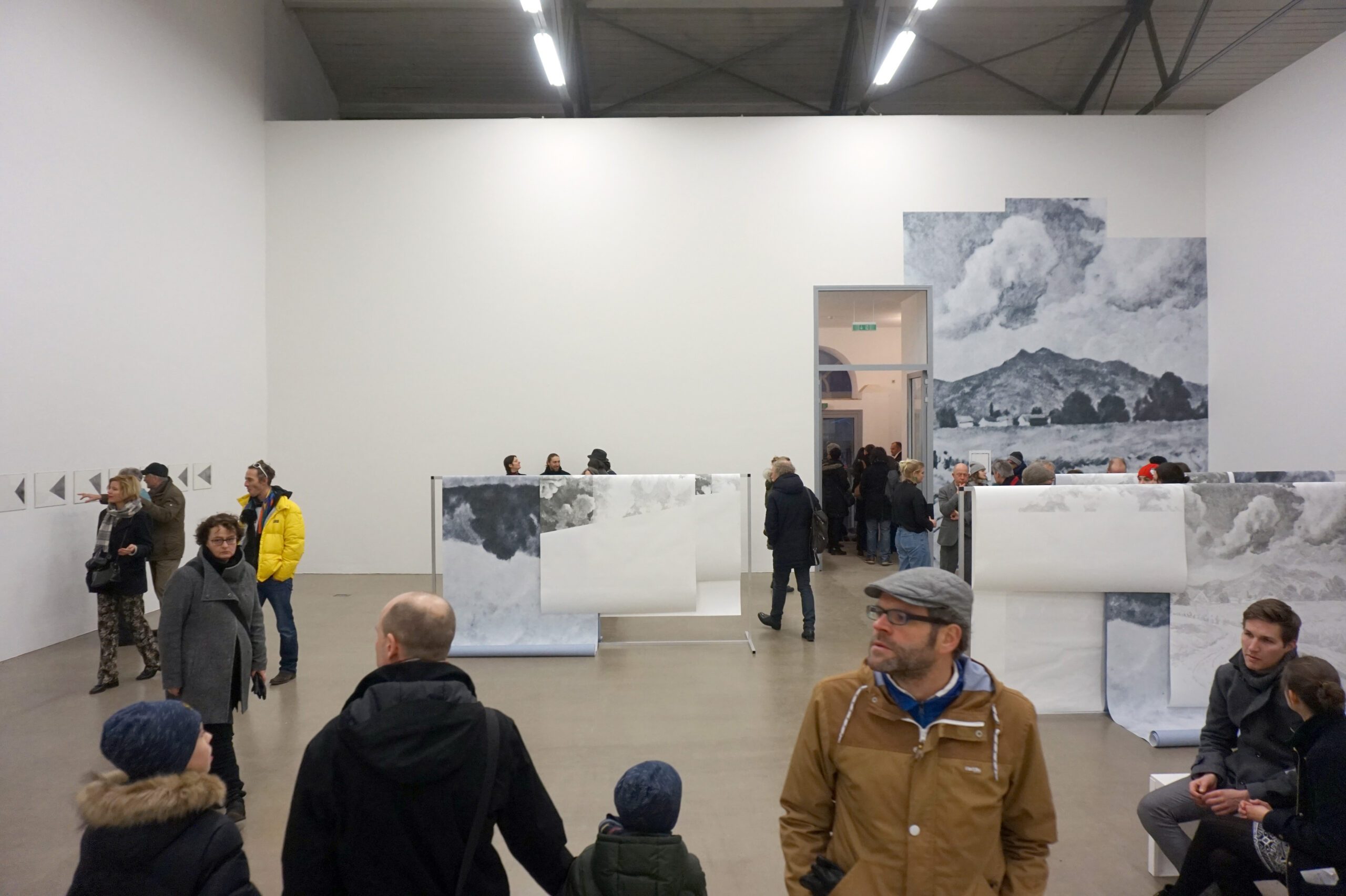
This exhibition marks the beginning of a series of large-scale projects by Lada Nakonechna. Each is a layered composition of works that echo one another, forming a complex engagement with the viewer on themes explored by the artist through the Method Fund (in this case, the research-based seminar Socialist Realism: Pretending to Be the Other, 2017–2018).
The exhibition unfolds with its own dramaturgy, offering viewers a multi-layered experience as they move from one room to the next. Nakonechna openly shares her intentions with the visitors, making the experience collective.
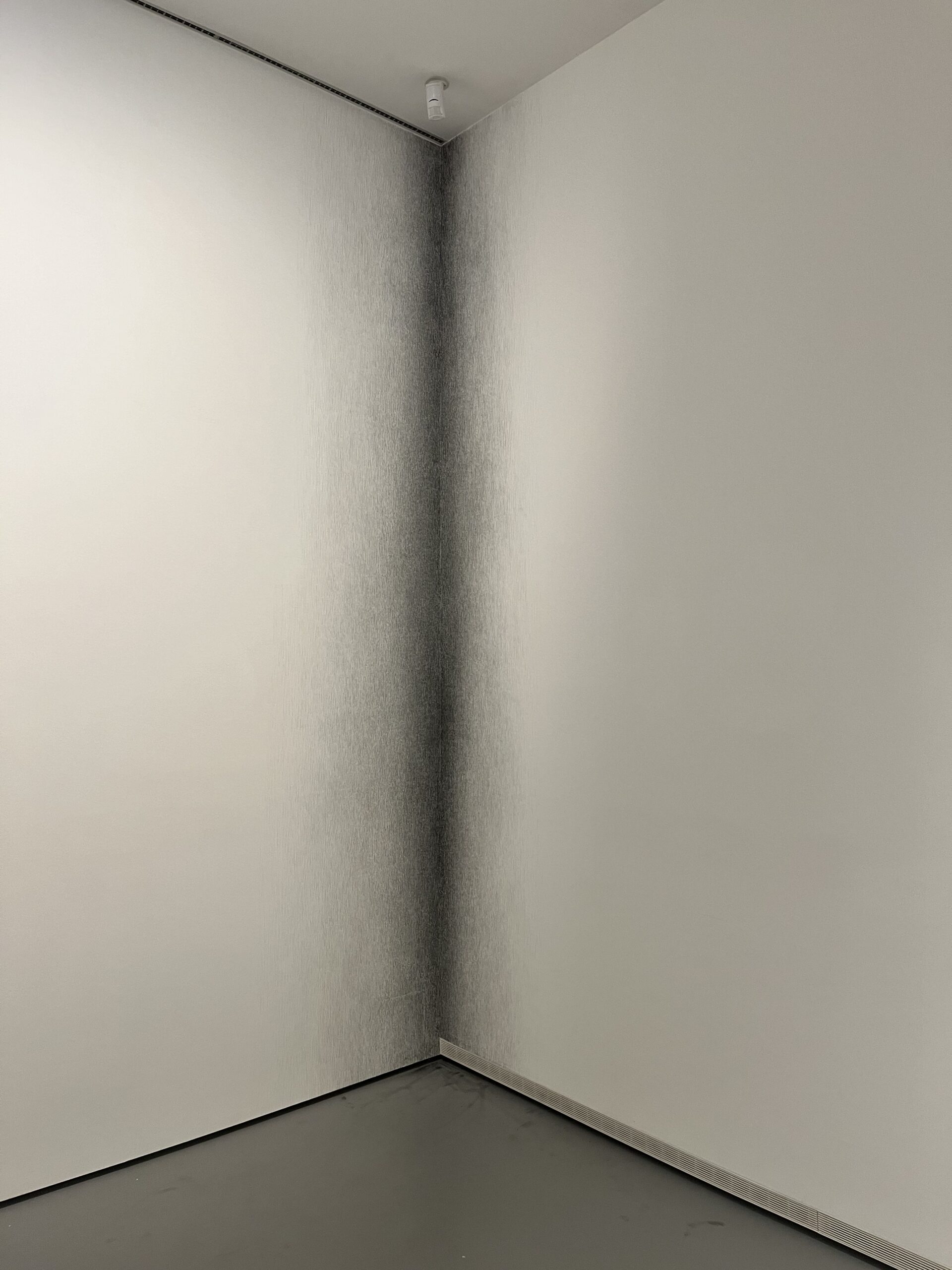
A kind of epigraph to the exhibition is the work Trap, which references earlier pieces involving graphite wall drawings that create deceptive light-and-shadow effects. The trap lures the viewer into a corner, inducing a childish guilt and turning them away from the rest of the exhibition—demonstrating how easily one’s position, gaze, and experience can be steered.
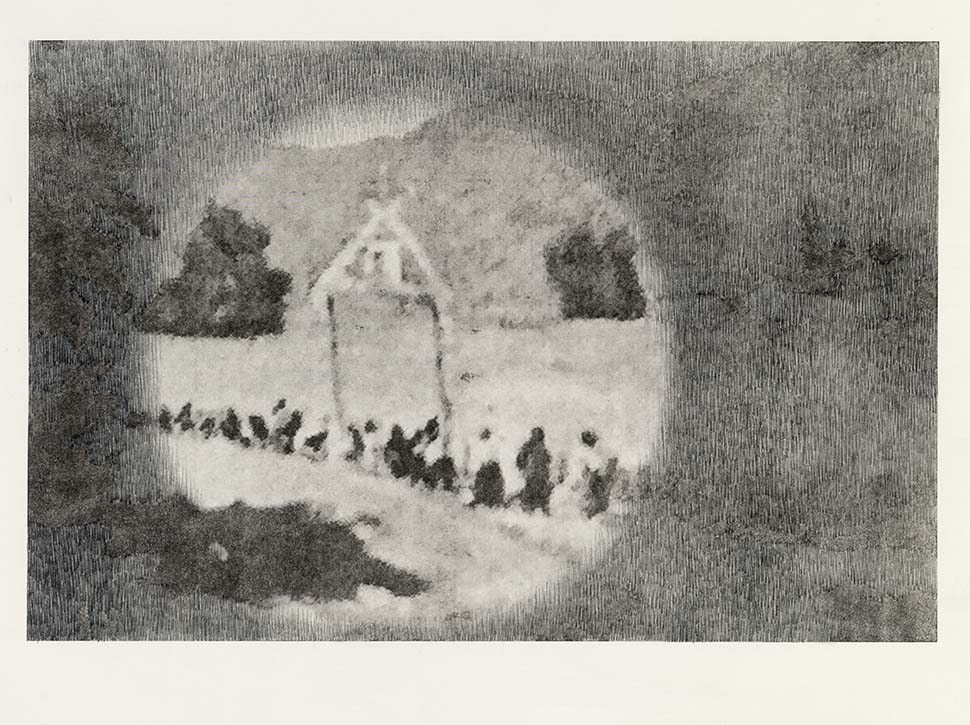
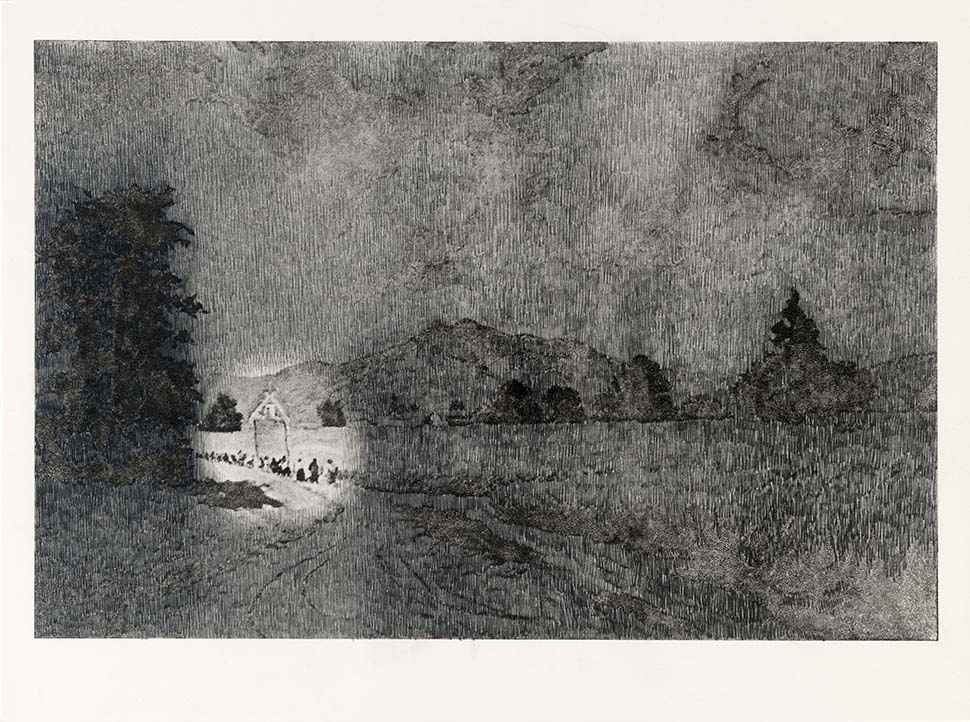
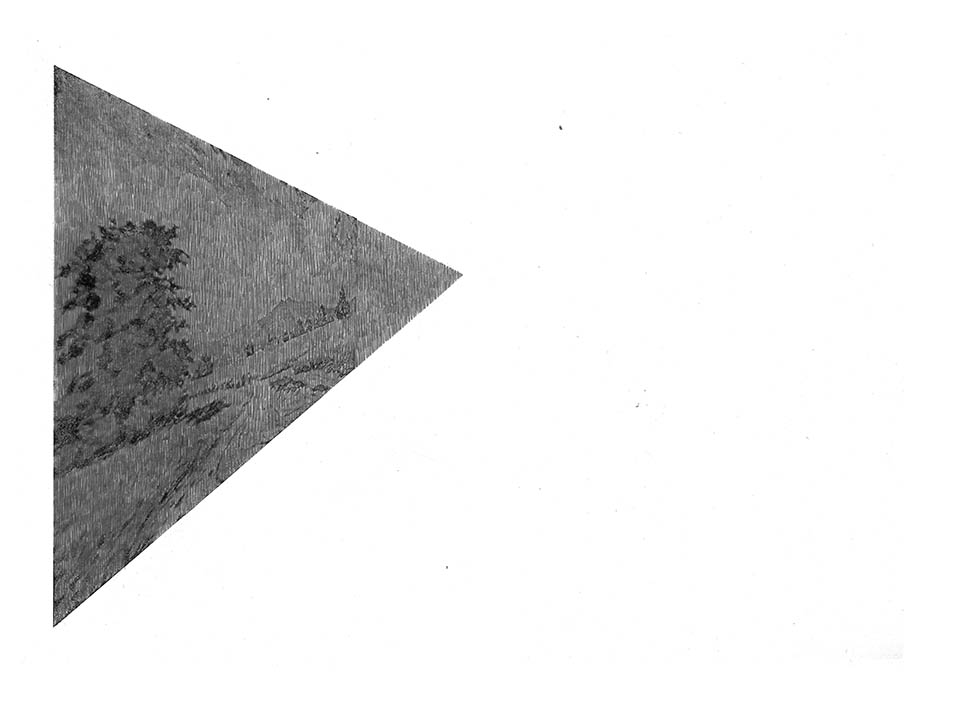
The title Background Mode refers to the experience of viewing landscapes in Socialist Realist paintings. Nakonechna takes Road to the Collective Farm (1937) by Ukrainian-Soviet painter Mykola Burachek as a case study. The painting depicts peasants walking to work, inspired and surrounded by idyllic fields, trees, mountains, and skies. Yet its date of creation invites reflection on its historical context: the era of Stalinist repression, including mass starvation and forced collectivization in Ukraine. Nonetheless, the landscape neutralizes this context, shaping perception and sensibility. Nakonechna analyzes how this is done, deconstructing Burachek’s painting in several series.
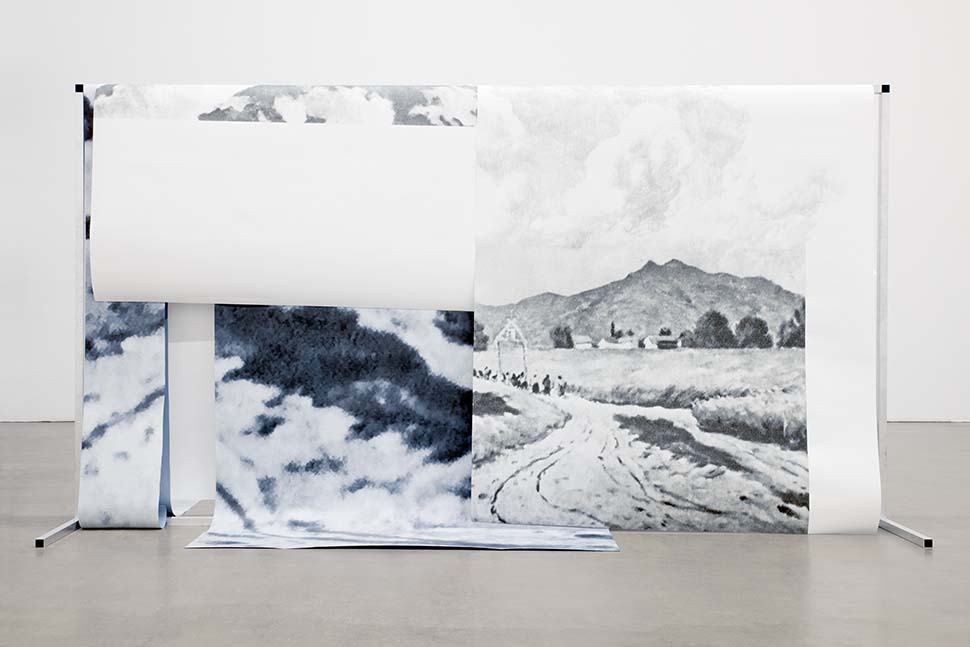
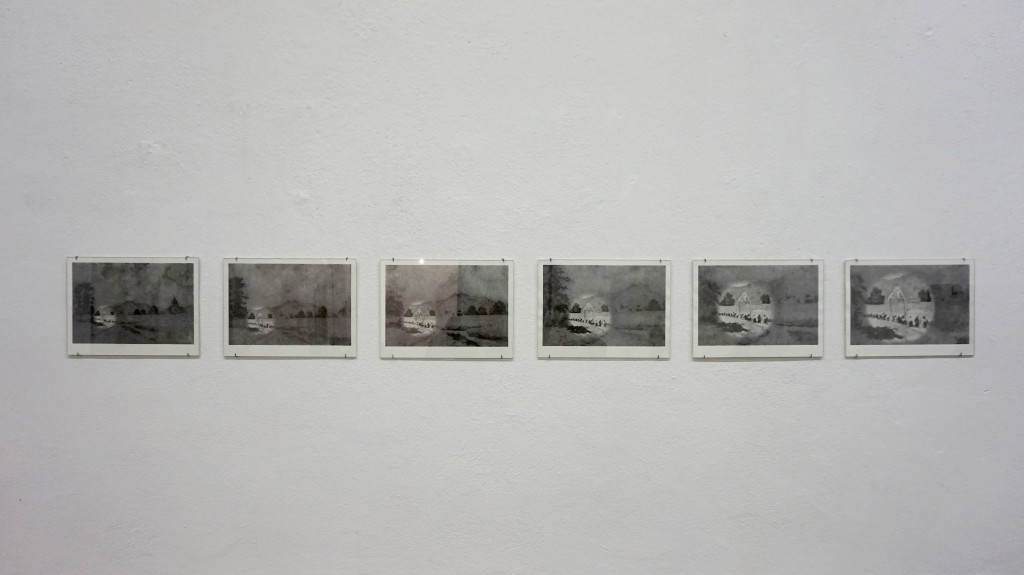
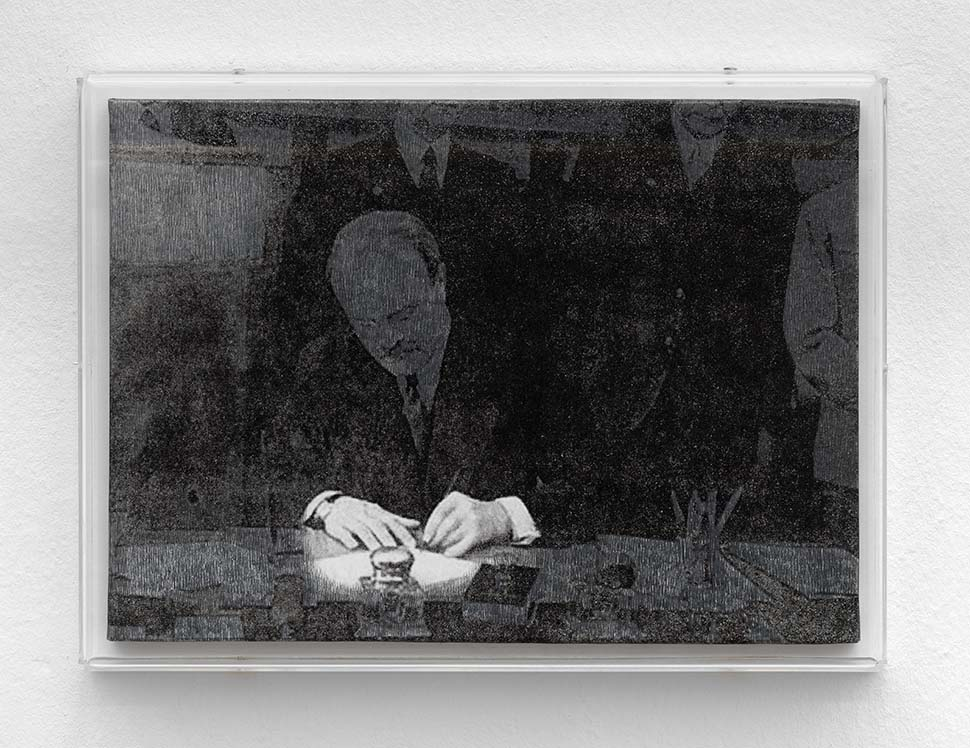
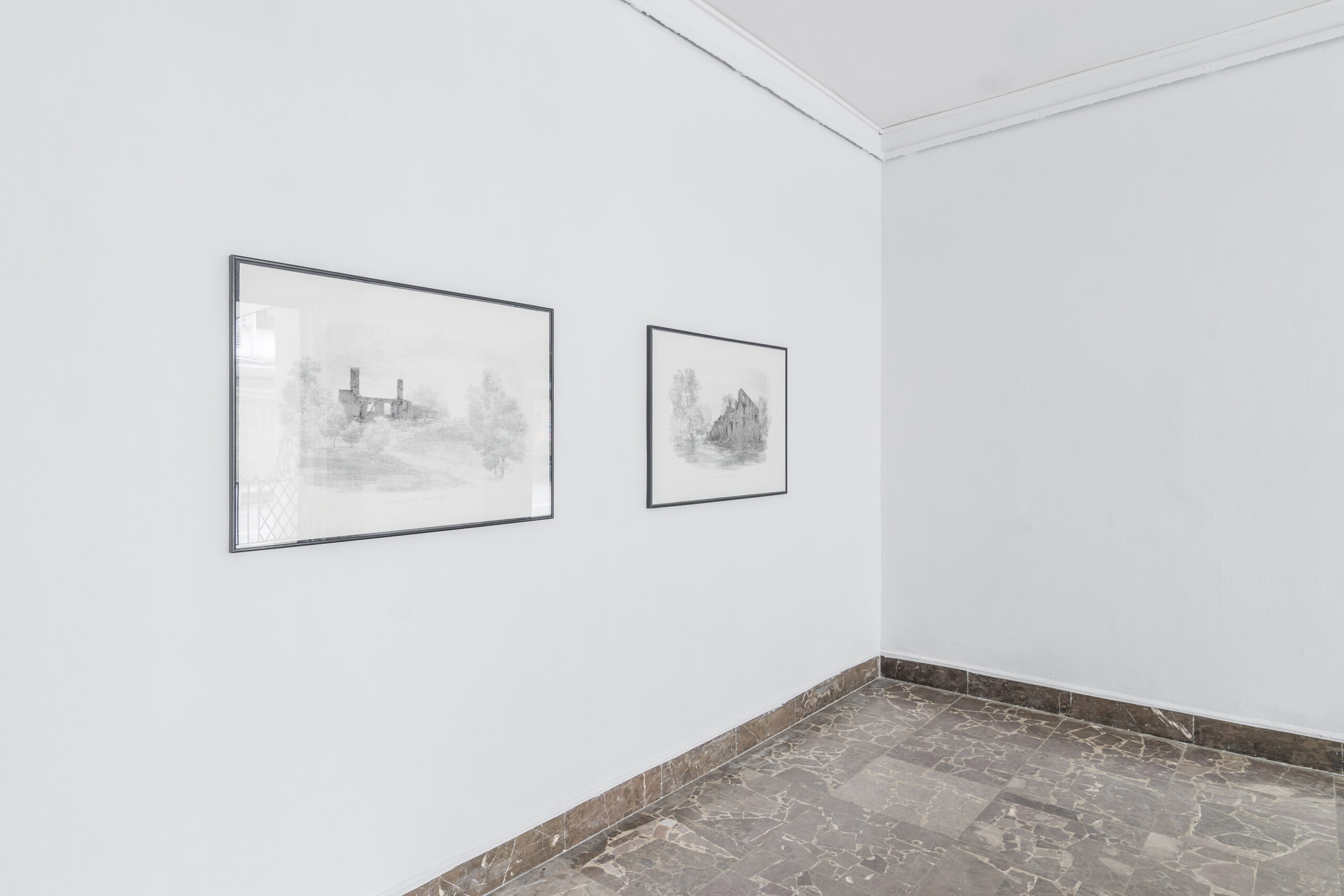
In Perspective Reduction, she plays with how perspective changes with body movement and distance. Following the Plan presents a collage-installation of a fragmented Soviet painting, mixing reproductions and her own drawings. In Demonstration, she shades in all light areas of black-and-white reproductions of Road to the Collective Farm, leaving and gradually enlarging only a circle of light, as if projected onto the people in the distance of the painting. In Some Examples from the Field of Management, she applies this method to the hands of Soviet party officials. Finally, Historical Paintings of Modern Ruins engages with the Romantic tradition of ruin imagery: Nakonechna uses found photographs of ruins in eastern Ukraine caused by Russian aggression, surrounding them with hand-drawn, idyllic, depoliticized landscapes. The resulting absurdity highlights the contrast between central subject and background, turning the latter into a metaphorical “background mode” of perception and meaning-making in painting—a medium meant to represent reality.
Art works & Documents
Lada Nakonechna