“Hope!”, Pavilion of Ukraine at the 56th International Art Exhibition – la Biennale di Venezia
The Ukrainian national pavilion at the 56th International Art Exhibition – la Biennale di Venezia, presents a group exhibition entitled “Hope!” featuring a young generation of Ukrainian artists, including Yevgenia Belorusets, Nikita Kadan, Zhanna Kadyrova, Mykola Ridnyi & SerhiyZhadan, Artem Volokitin, Anna Zvyagintseva and Open Group. The project is organized by the PinchukArtCentre with the support of the Victor Pinchuk Foundation.
Ministry of Culture of Ukraine is commissioner. Björn Geldhof, Deputy Artistic Director of the PinchukArtCentre, is the curator of the project.
<< The young generation of artists we have been supporting for many years, started the future Ukraine already long ago – independent, uncompromising, critically reflective.
Today they are new Ukraine’s ambassadors.
1 am proud that we can make a small but important contribution to the international communication of my country by organizing the Ukrainian national pavilion and bringing young artists to Venice. >>
<< The works presented in this exhibition create, in combination with the glass pavilion, a contradictory space.
They ofter a cntical narrative that resists the ideals or the hopes expressed in the architecture of the pavilion.
They reveal a critical and non-partisan attitude to the conflict while being marked by a deep personal commitment and solidarity with Ukraine. >>
The Ukrainian national pavilion stands as a model for a new transparent Ukraine reaching out to the world. With this exhibition a young generation of artists voices hopes for Ukraine’s future while confronting the current conflict and the countries recent history.
Cage (2010) by Anna Zvyagintseva embodies the contradictions between freedom and imprisonment, rule of law and lawlessness and strength and fragility. Blind Spot by Ridnyi and Zhadan focusses on the price of violence but resists the narrow narratives that provoke radicalisation of thought. Artem Volokitin reduces in his painting the reality of life to a violent act that moves between hope and fear, between death and the sublime. And Zhanna Kadyrova shows Ukraine as a part of the world, using the recent past to glimpse a future.
Open Group and Yevgenia Belorusets emphasize in opposite ways personal commitment and responsibility of individuals in an armed conflict. Their works reveal the different civil attitudes within society. Open Group deals with young men drafted into the army and their families waiting for their return. Belorusets portrays invisible miners who chose to live and work within the zone of conflict but refuse to take part in the war, trying to “save” their future by daily working in the mines.
Just outside the pavilion, the public sculpture of Nikita Kadan refers to the past and confronts the present situation of war. He deals with questions related to the historification of a conflict and confronts this with Ukraine’s Soviet past.
Organising Institutions::
Ministry of Culture of Ukraine – Commissioner.
PinchukArtCentre with the support of the Victor Pinchuk Foundation – Organizer.
Artists
Born 1981 in Brovary in the Kyiv region, Ukraine, where she currently lives and works. She graduated from Taras Shevchenko State Art School.
Her works have been extensively exhibited worldwide, including the 5th Moscow Biennale, the 55th Venice Biennale, “Nouvelles Vagues”, Palais de Tokyo, Paris (all 2013). In 2014 she participated in the residential programmed supported by Baró Galeria, Sao Paolo, Brazil, which she finished with a solo exhibition “Street Collection”.
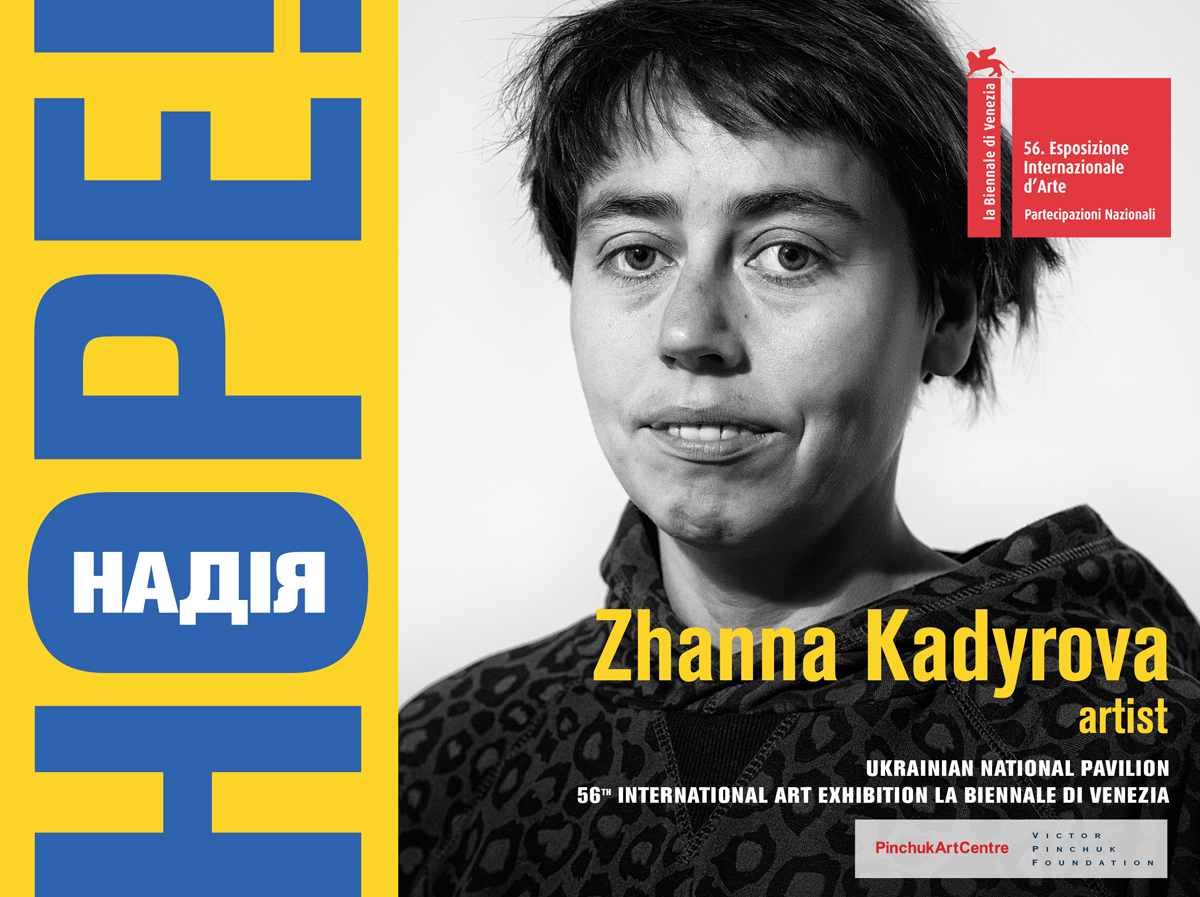
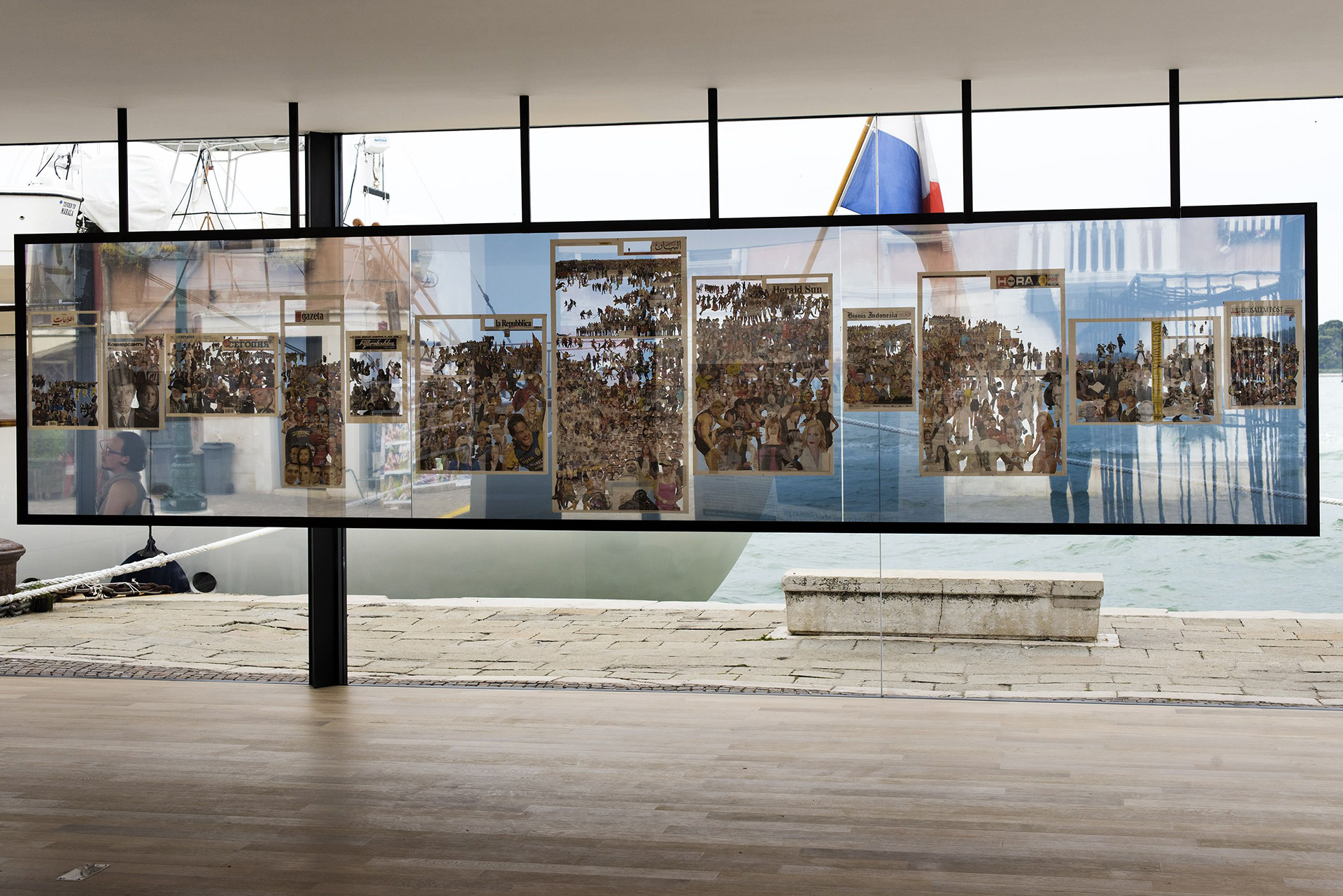
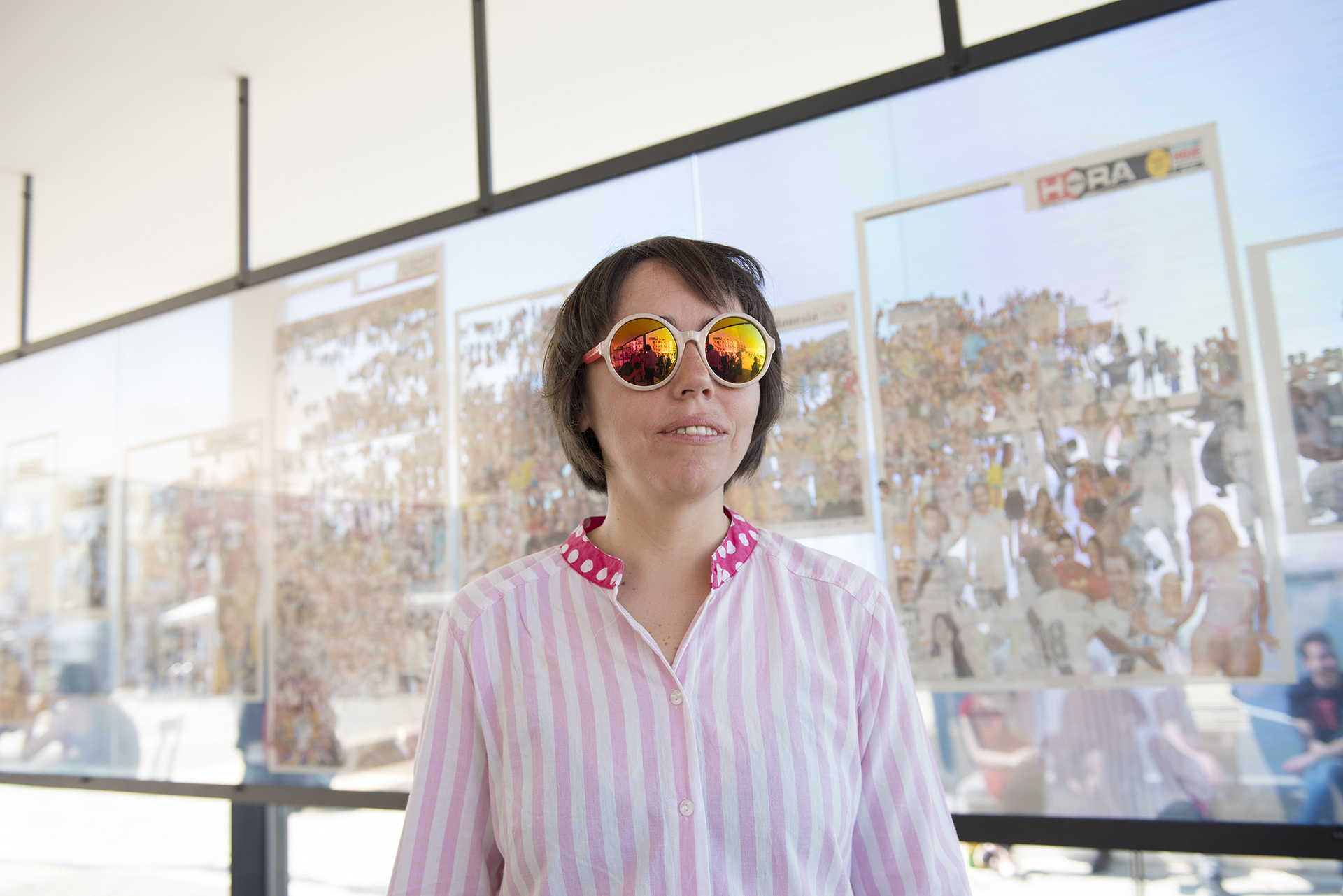
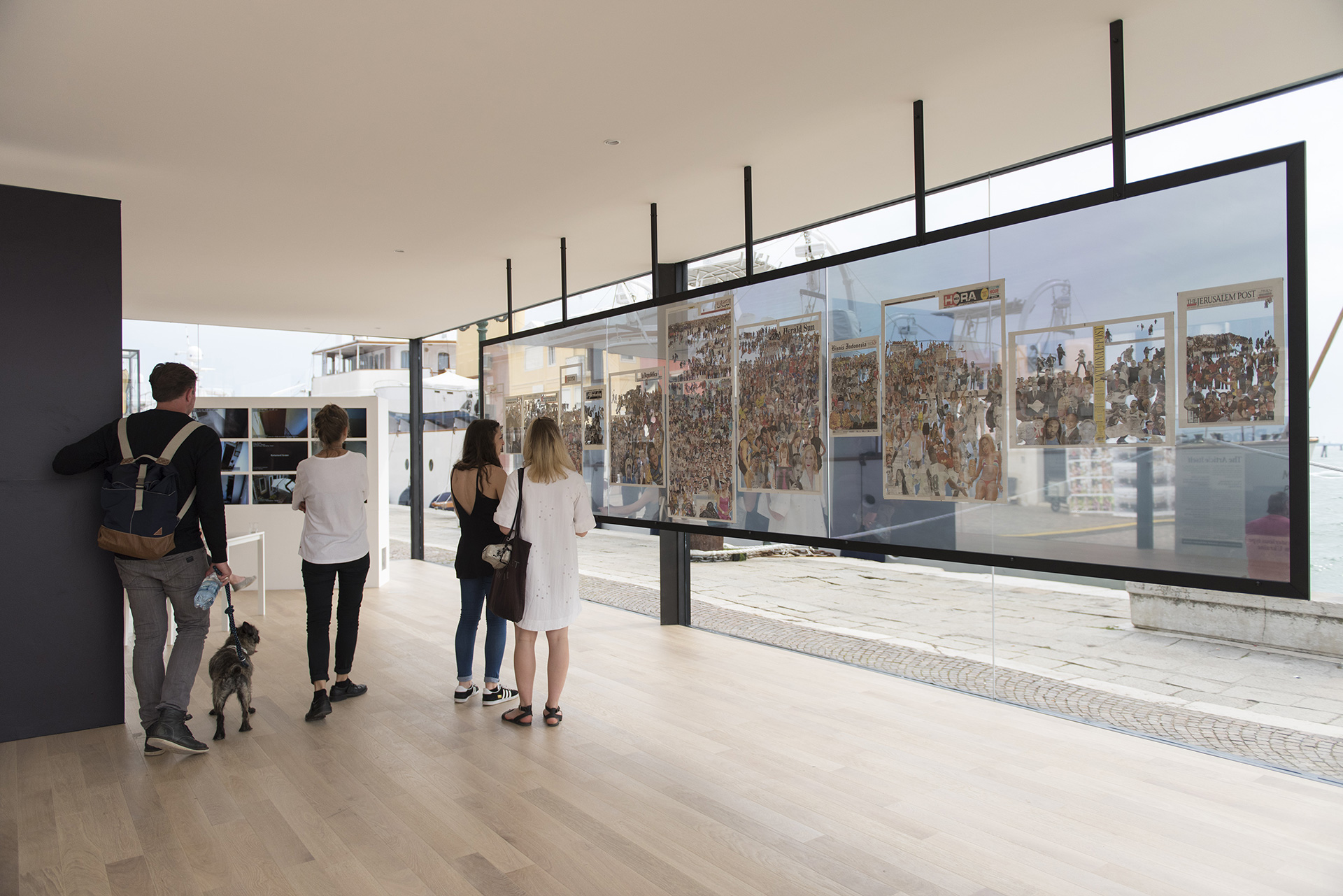
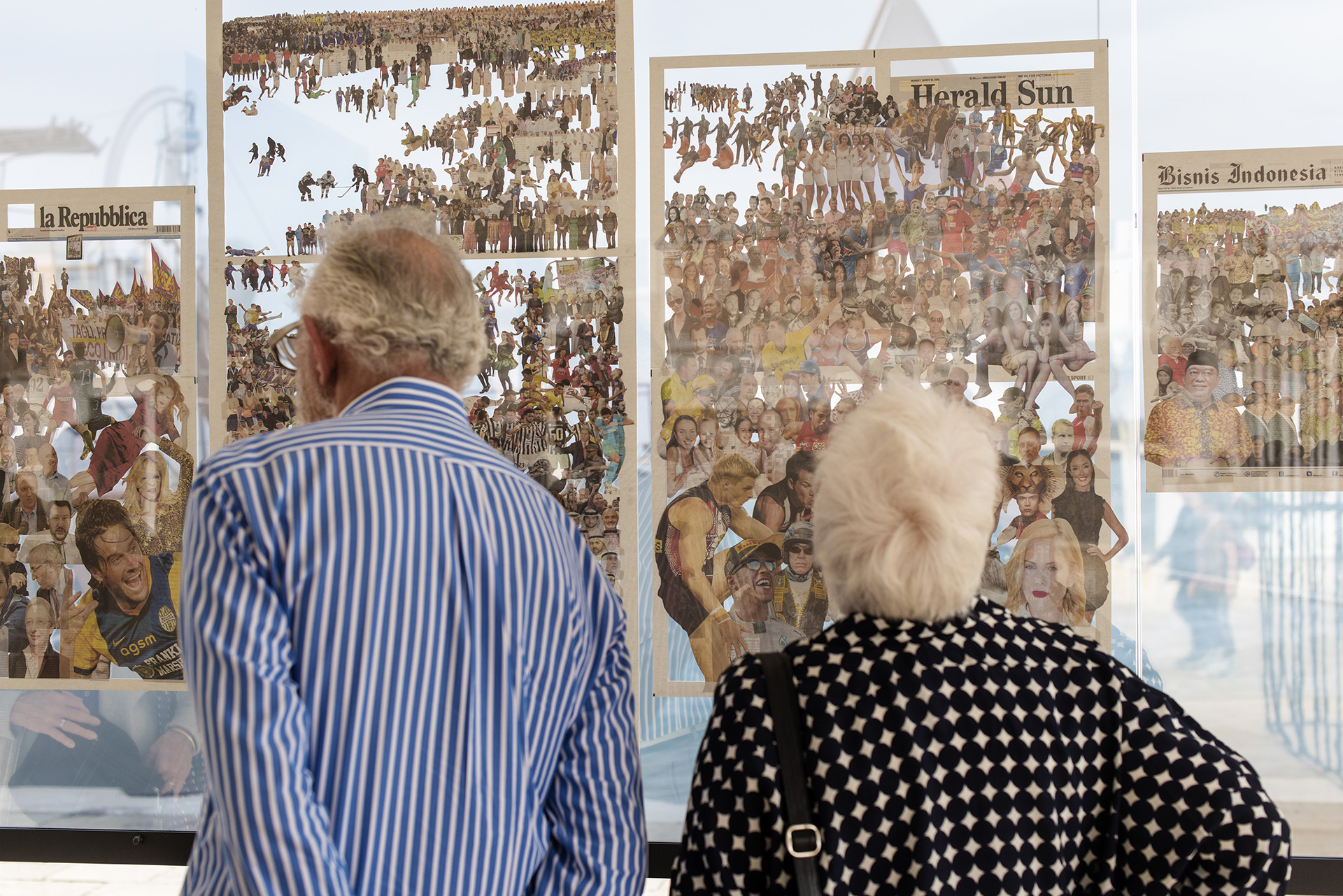
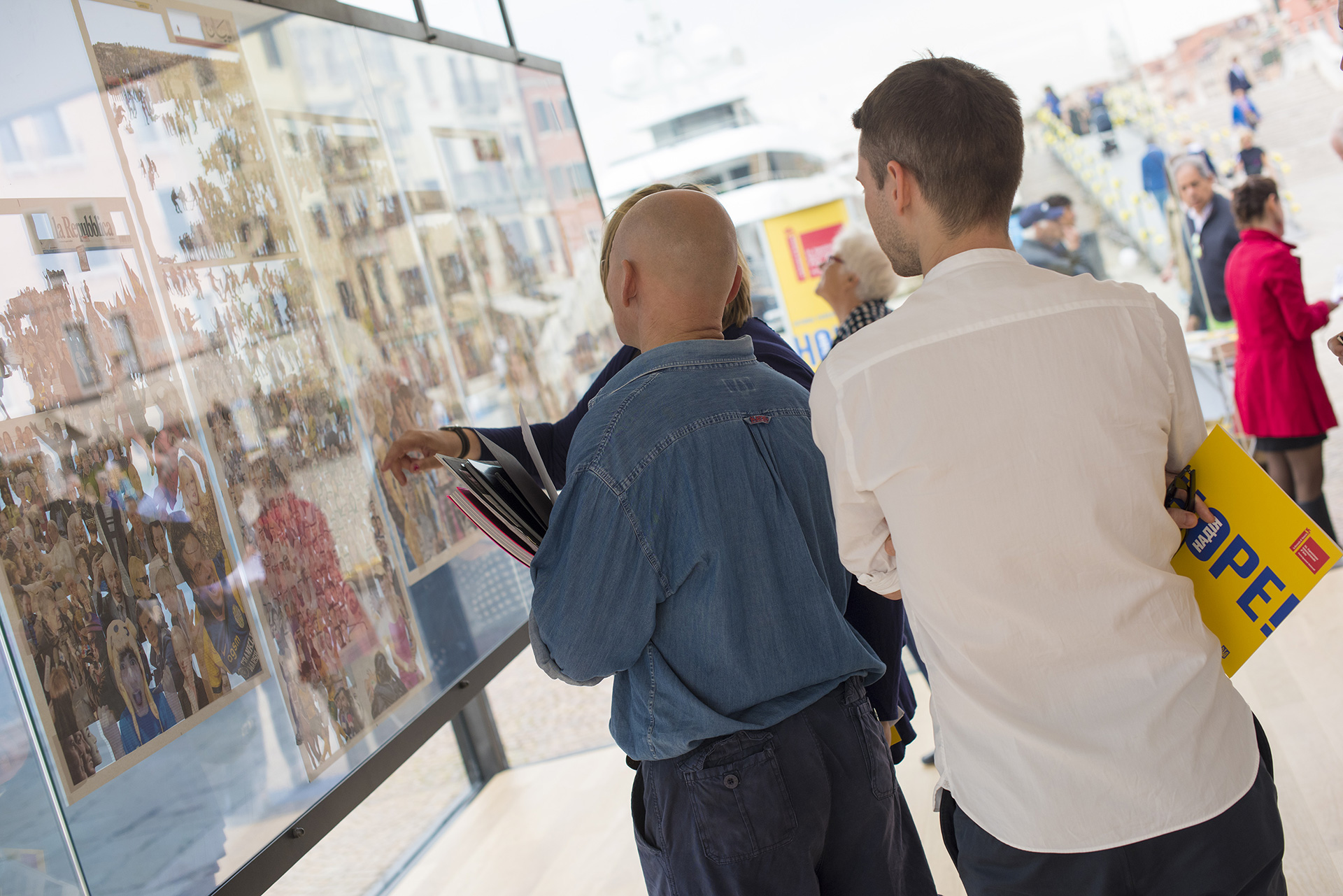
On 16 March 2014, the Crimea voted in an unlawful referendum to secede from Ukraine and join Russia. One year after this dramatic event that deeply influenced the world’s geopolitical situation, on 16 March 2015, Zhanna Kadyrova collected newspapers from around the world. She used them to create a 6-metre-long panoramic collage, cutting out all faces of people, re-composing them and juxtaposing persons of different social status, political position or religion side by side within the original frame of the newspaper page.
Losing all reference to text or language apart from the names of the papers, which “frame” the crowds in a geographical culture context, each collage becomes a representation of a mass of people, with the installation in its entirety representing the portrait of a crowd. The work also investigates the differences and unifying features of the global mass media. By choosing newspapers from a single day, Kadyrova traces the international attention granted to Ukraine and its conflict, exploring the power and responsibility of media and focusing on how “man” is represented in different countries. In a time of worldwide social unrest, where people everywhere take to the streets for change, Kadyrova presents us with an unruly crowd, anonymous, multicultural and shared.
Year of realization: 2015
Technique: glass, newspapers
Size: 140 x 600 см
Year of realization: 2015
Technique: glass, newspapers
Size: 140 x 600 см
Year of realization: 2015
Technique: glass, newspapers
Size: 140 x 600 см
Year of realization: 2015
Technique: glass, newspapers
Size: 140 x 600 см
Year of realization: 2015
Technique: glass, newspapers
Size: 140 x 600 см
«It is obvious that changes which take place in a country strongly affect its citizens. Still the main hopes are connected to the people. We observe how society is being transformed in extreme situations, when powerful resources of humanity are manifested in people – mutual aid, self-organization, unselfishness. Therefore, the hope of building a civil society remains».
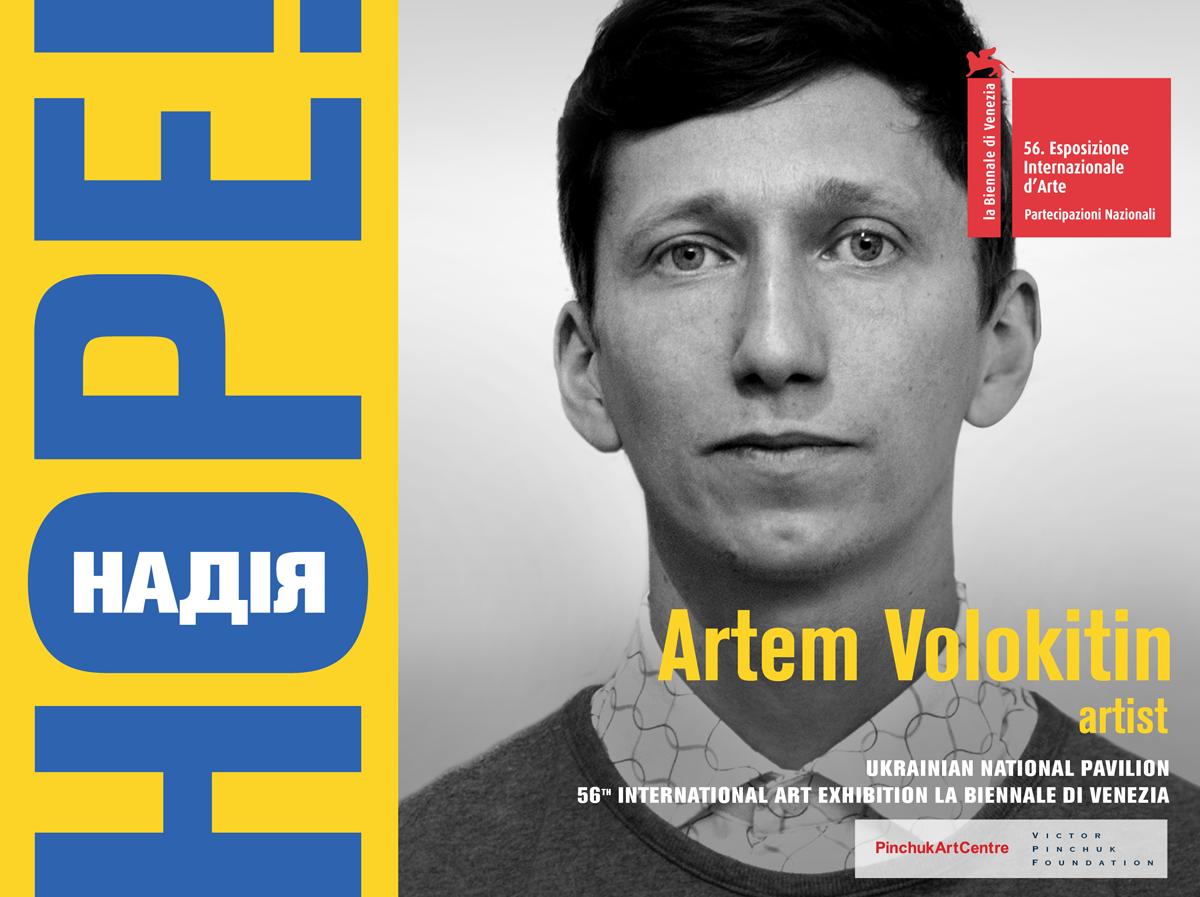
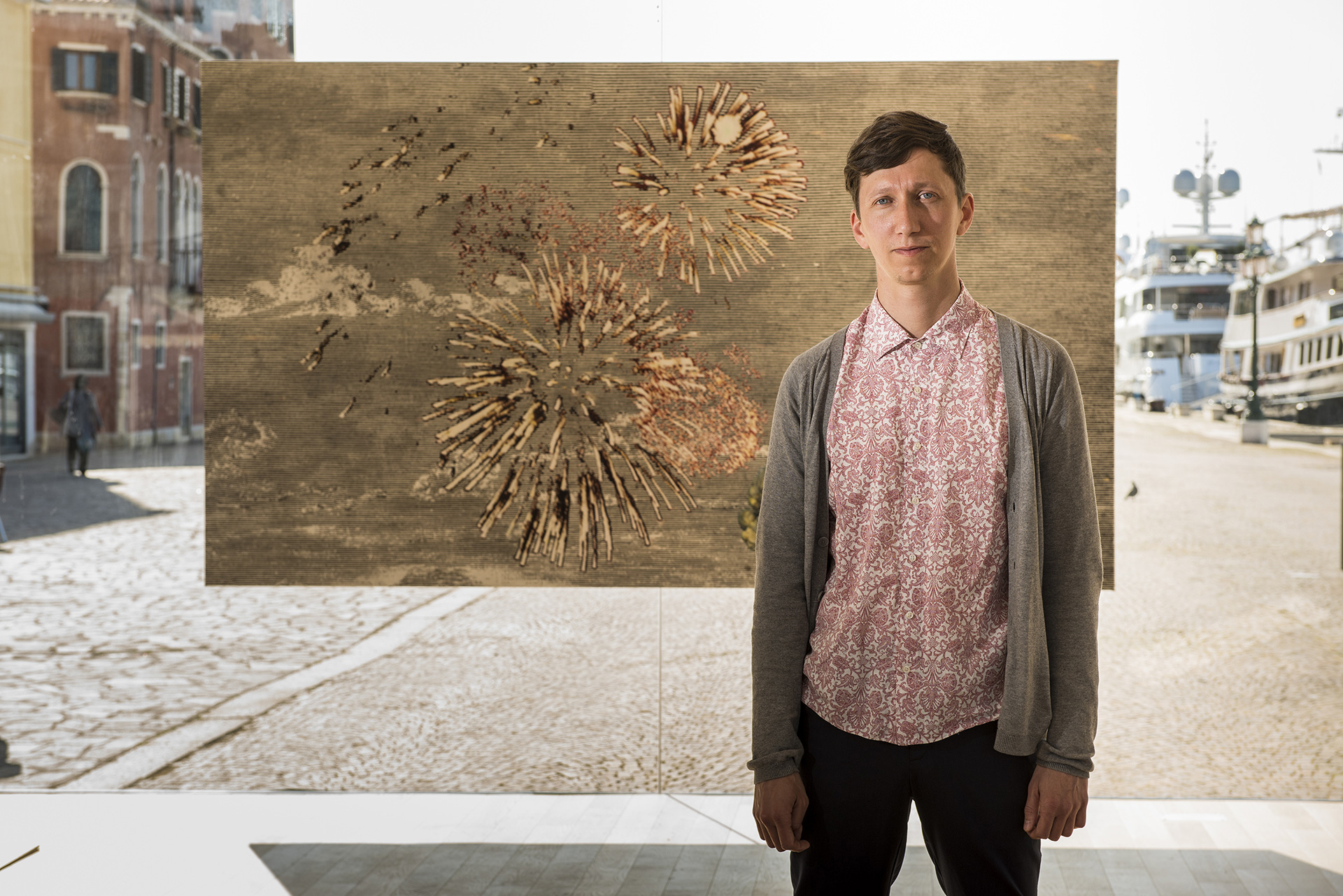
Artem Volokitin was born in 1981 in Chuguiv, Kharkiv Region. Lives and works in Kharkiv and Kyiv. He graduated from Kharkiv State Academy of Arts and Design in 2005.
In 2009 he received his first prize, the PinchukArtCentre Prize. In 2010 he was nominated for the Future Generation Art Prize. He is a Category 1 winner of the Non-Stop Media Festival of Youth Projects, Kharkiv (2006); winner of the contest of EIDOS Foundation for Contemporary Art Development (2007)/
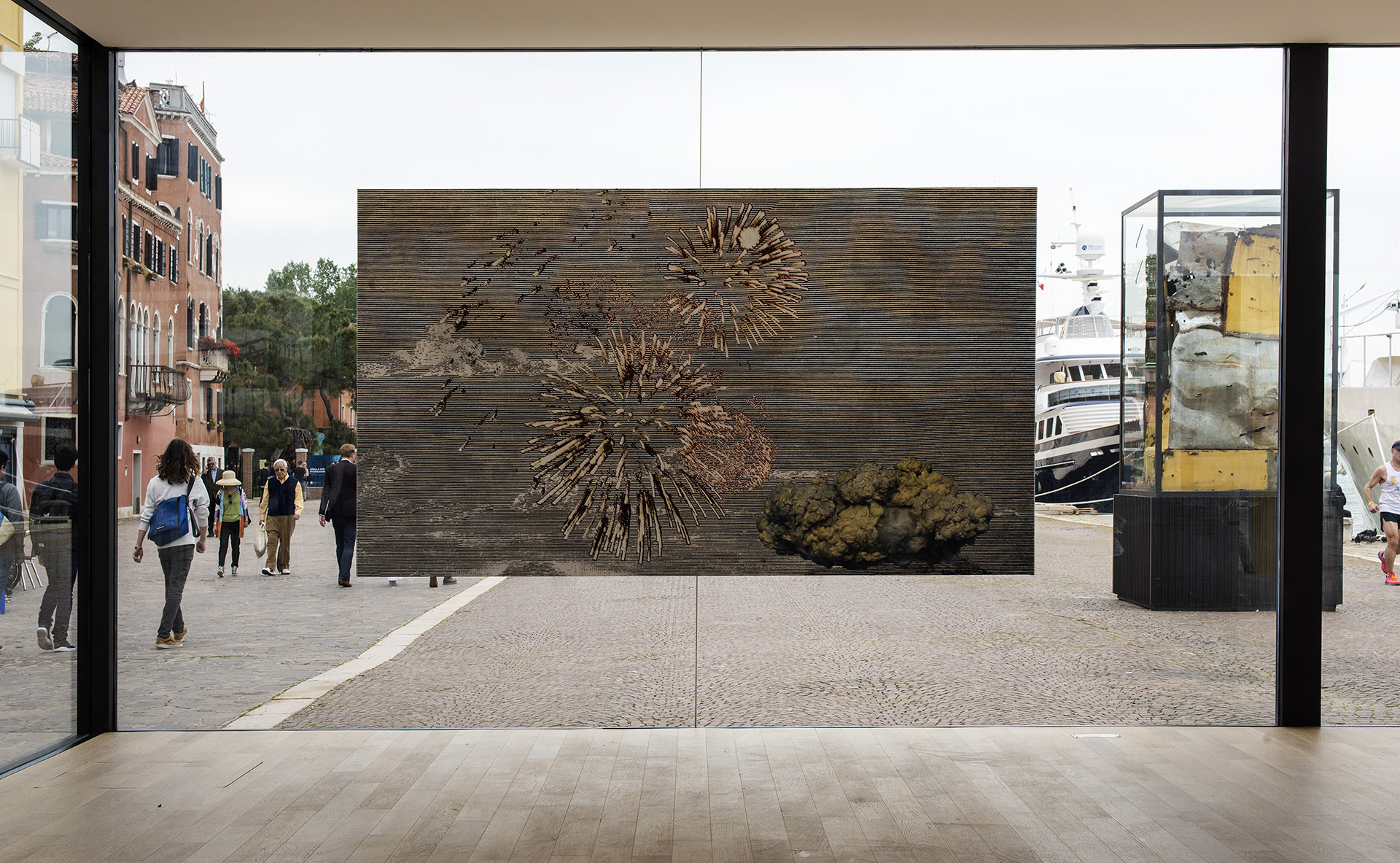
In his new painting, Artem Volokitin addresses war as a spectacle, focusing on the act of violence. His monumental canvas deals with the horror of the sublime and the deeply emotional aspects of war. Within an abstracted black and white horizon, two types of explosions create sensational events on the forefront of the picture. The first type of explosion is fireworks, an expression of joy, beauty and victory. The other is a nearly photo-realistic, painted cloud, resulting from a violent explosion during a bombardment. The background landscape is reduced, painted with fading black lines, reminding us of landscape etchings. The horizon evades reality to become an anonymous background to the sublimity of the violence.
One topic of Volokitin’s painting is how the medialization of war directs our view. Through television, radio and social media the battlefield finds an extension into the living room. To look upon the world and the Ukrainian conflict with distance has become extremely difficult, as space is consumed by media reports with a singular narrative. This creates a tunnel vision reducing the diversification of the metaphorical landscape while concentrating on the spectacular, the drama and the hollow victories of war.
Year of realization:: 2015
Technique: oil on canvas
Size: 300 x 170 см
Year of realization:: 2015
Technique: oil on canvas
Size: 300 x 170 см
«Hope for me is a highly concentrated substance. Even a trace amount is enough to transform any reality».
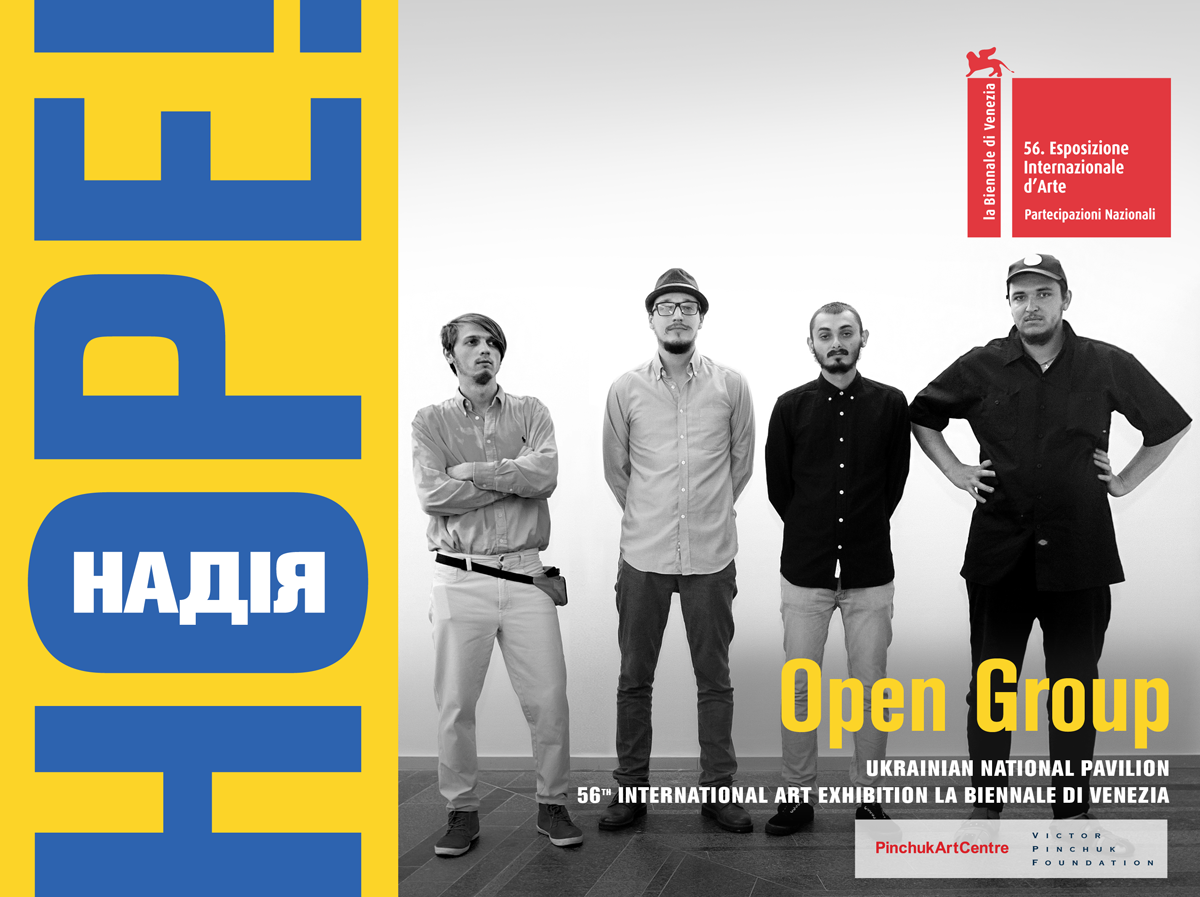
Open Group was founded in August 2012 in Lviv by artists Yevgen Samborsky, Anton Varga, Yuriy Biley, Pavlo Kovach, Stanislav Turina and Stanislav Perkovskyi. The permanent group members are Anton Varga, Yuriy Biley, Pavlo Kovach and Stanislav Turina. Open Group can be joined by other people for a certain period of time until the end of the project they take part in.
The Open Group’s work is based on research issues of interaction and communication between people, artists, situation and space.
Open Group is a participant of numerous exhibitions in Ukraine and abroad, as well as residential programs. The team was the First Special Prize winner of the PinchukArtCentre Prize in 2013.
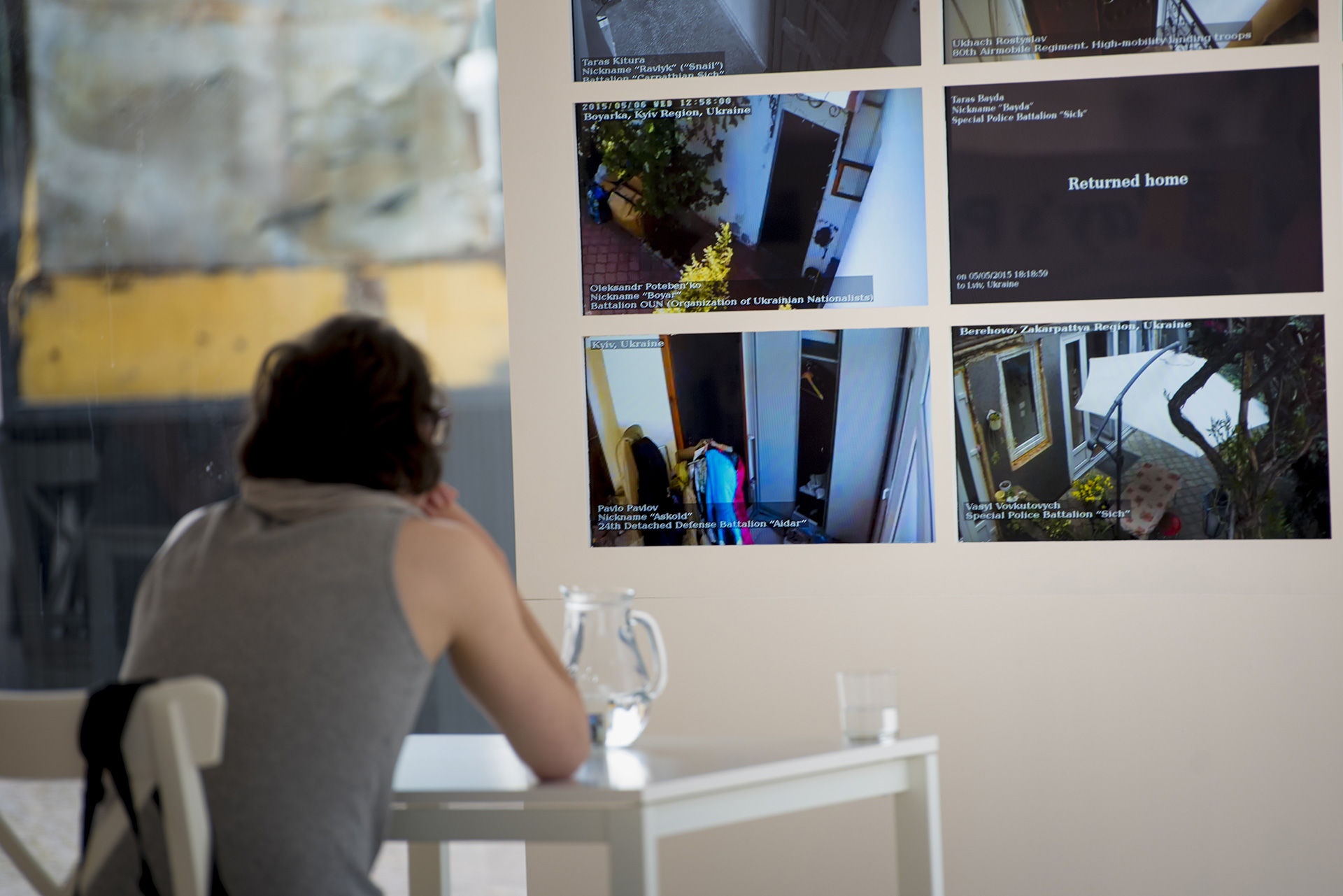
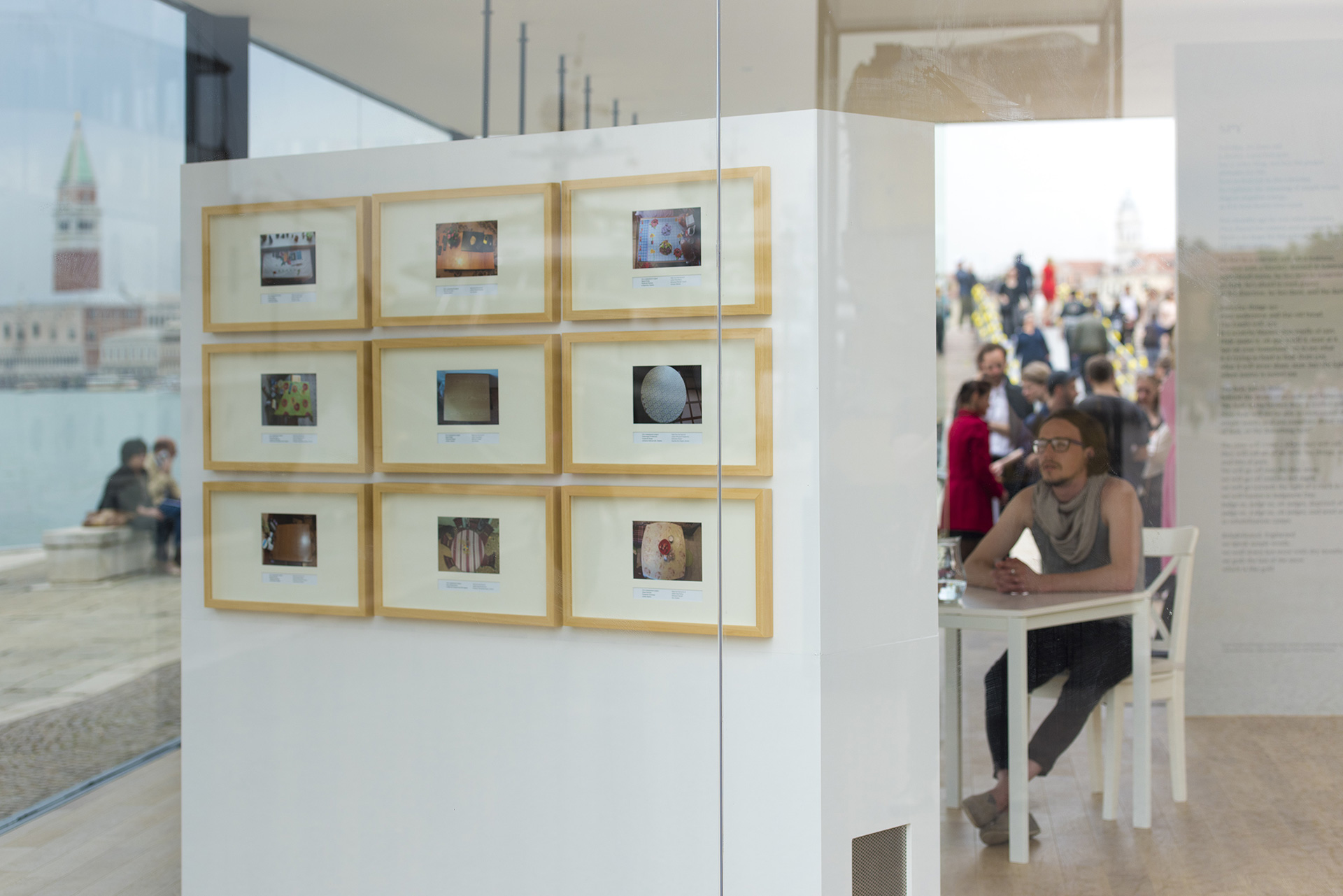
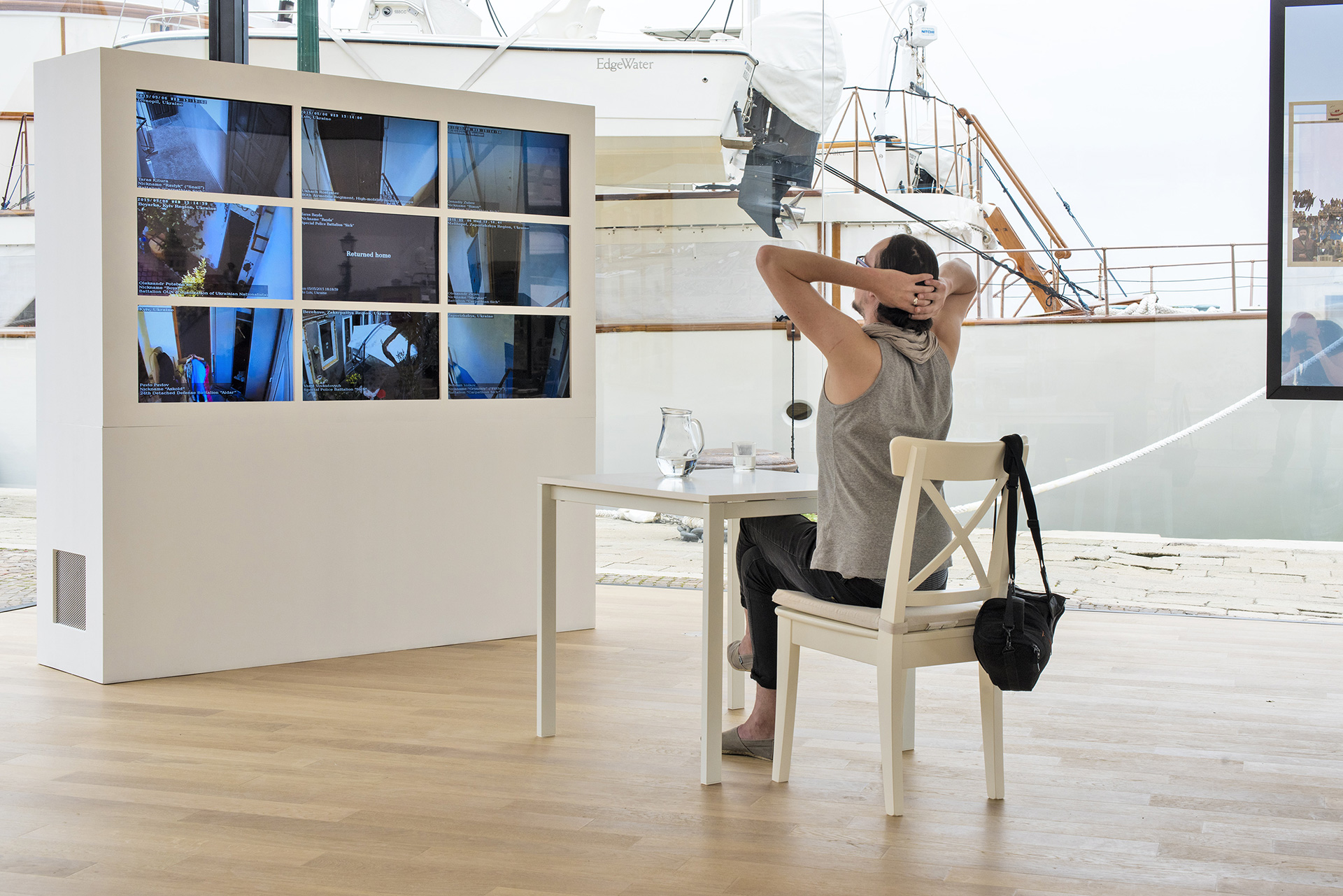
A video wall composed of nine screens is transmitting live streams from nine front doors of the family homes of recently drafted Ukrainian soldiers, all living in different parts of the country. To the backsides of the screens framed photographs of the families’ dinner tables are hung, a reference to the life behind these doors. During the period of the exhibition, one member of Open Group sits in front of the live stream, at a similar, typically Ukrainian table, waiting for the soldiers to return home and refusing to eat during this period.
The work moves between presence, absence and anticipation. The performative act requires a test of endurance, which is a quality shared by the families, the soldiers and Ukrainian society as a whole. It expresses hope for the soldiers’ return and an end to this conflict. Through its simple and honest form, this work deals with people and their fears. It reveals the helplessness of people drawn into a violent conflict while suggesting the hopes that allow them to find new ways of making life go on.
Year of realization: 2015
Technique: live streaming video and performance
Size: 210 x 210 cm
Year of realization: 2015
Technique: live streaming video and performance
Size: 210 x 210 cm
Year of realization: 2015
Technique: live streaming video and performance
Size: 210 x 210 cm
“A lot of people.
And finally we are.
Or maybe at first.
Why not.
We hope that everything will be fine.”
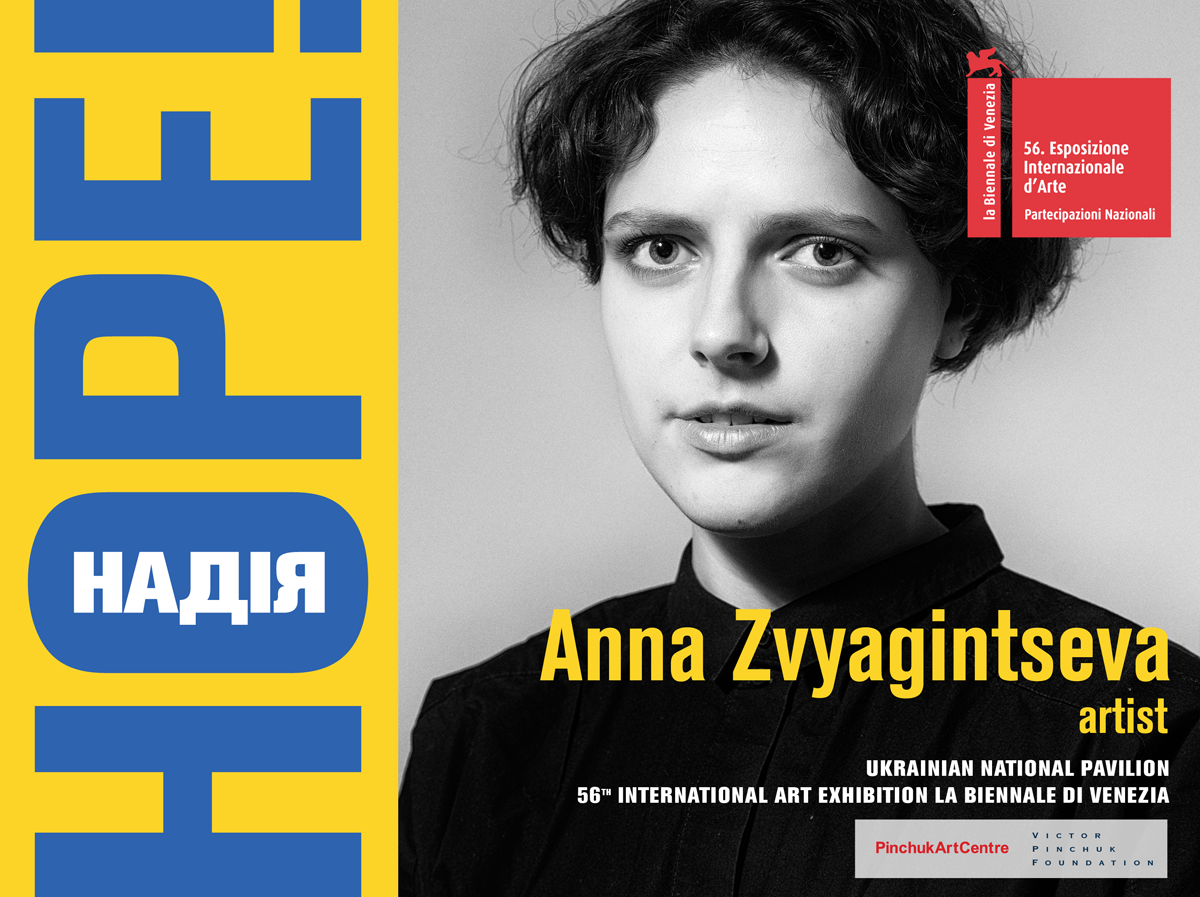
Born 1986 in Dnipropetrovsk, Ukraine. She lives and works in Kyiv. Zvyagintseva studied at the National Academy of Fine Arts and Architecture, Kyiv. She was a finalist in the 2010 MUHi Young Ukrainian Artists Prize. She has been a member of the curatorial group Hudrada since 2010, and in 2011 was co-founder of ISTM (Art Workers’ Self-Defense Initiative).
The knitted Cage of Anna Zvyagintseva is based on the standard cages installed in Ukrainian court houses to seat the defendant during his or her trial. The artist made the work in 2010 as a response to the political misuse of the juridical system and the prosecution of three members of Hudrada (a curatorial group to which Zvyagintseva belongs) for their social activism.
The work balances between monumentality and disappearance, embodying contradictions like freedom and imprisonment, rule of law and lawlessness and strength and fragility. The knitted material transforms the cage, making it unstable, undermining our expectations of the rule of physical law itself, expectations of independence and reliability. The gesture of knitting, a metaphor for time and patience, emphasizes the role ascribed to women in the re-building and shaping of society.
Cage in 2015 becomes an iconic image for a country that has nearly collapsed under the abuse of the juridical system. It voices the fragile hopes within society that corrupted systems could be replaced and rule of law reinstated. The urgency expressed by Cage reaches beyond Ukraine and its recent history, since it is a challenge that most countries are facing every day: to enforce and protect the idea of the rule of law.
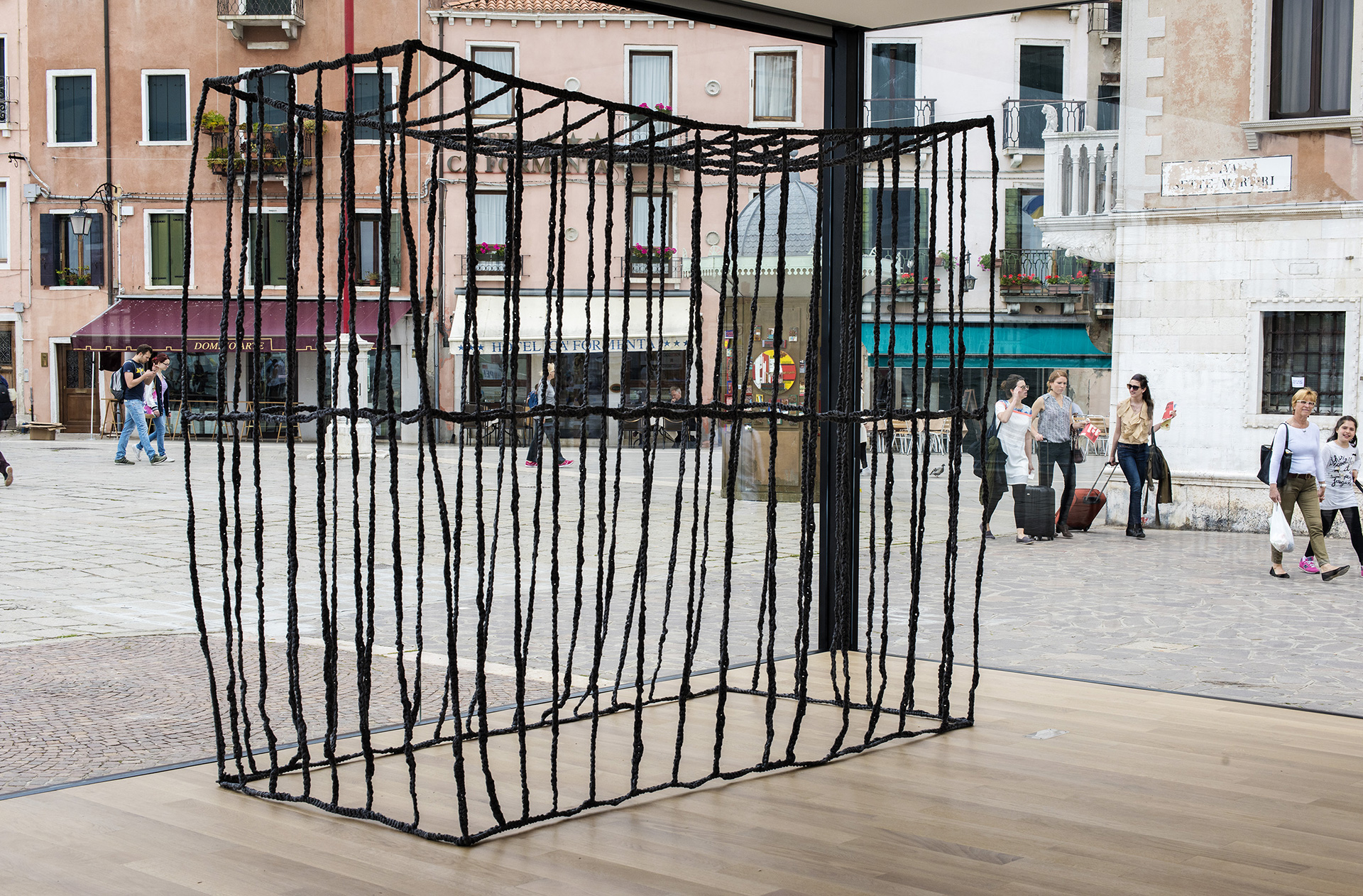
Year of realization: 2010
Technique: textile, metal
Size: 250 x 200 x 100 cm
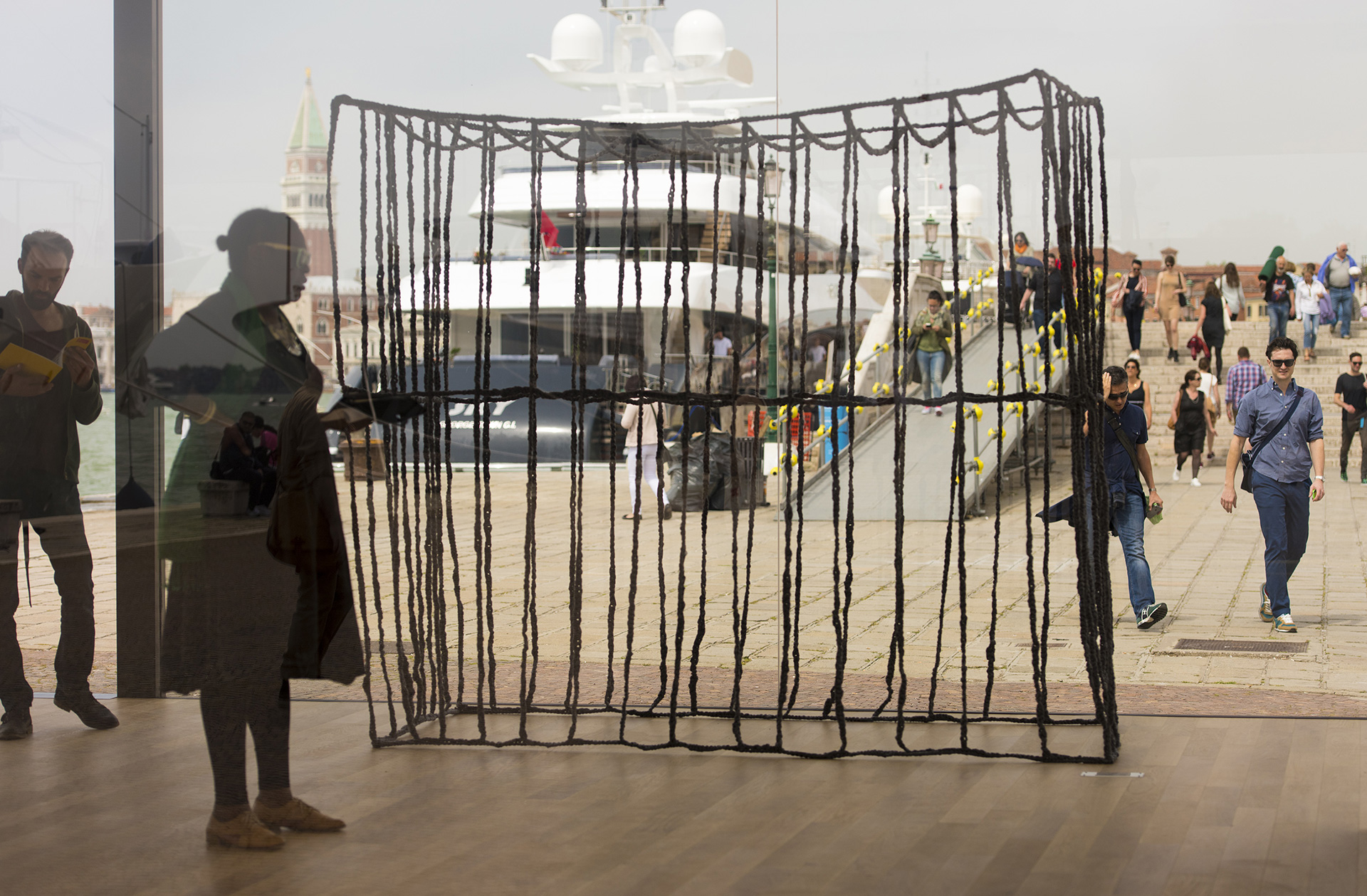
Year of realization: 2010
Technique: textile, metal
Size: 250 x 200 x 100 cm
“Hope for me is a one-word question. You want to put a question mark in the title of this exhibition instead of the exclamation mark. Hope is akin to the commonplace phrase ‘Everything will be fine’. This is a transfer of responsibility to somewhere in the future, while you are clearly not happy with the present and the past is not something you can grasp. Otherwise hope can only exist as a finger pointing into the darkness, a certificate of readiness to stand up and go. In that case, there is some responsibility.”
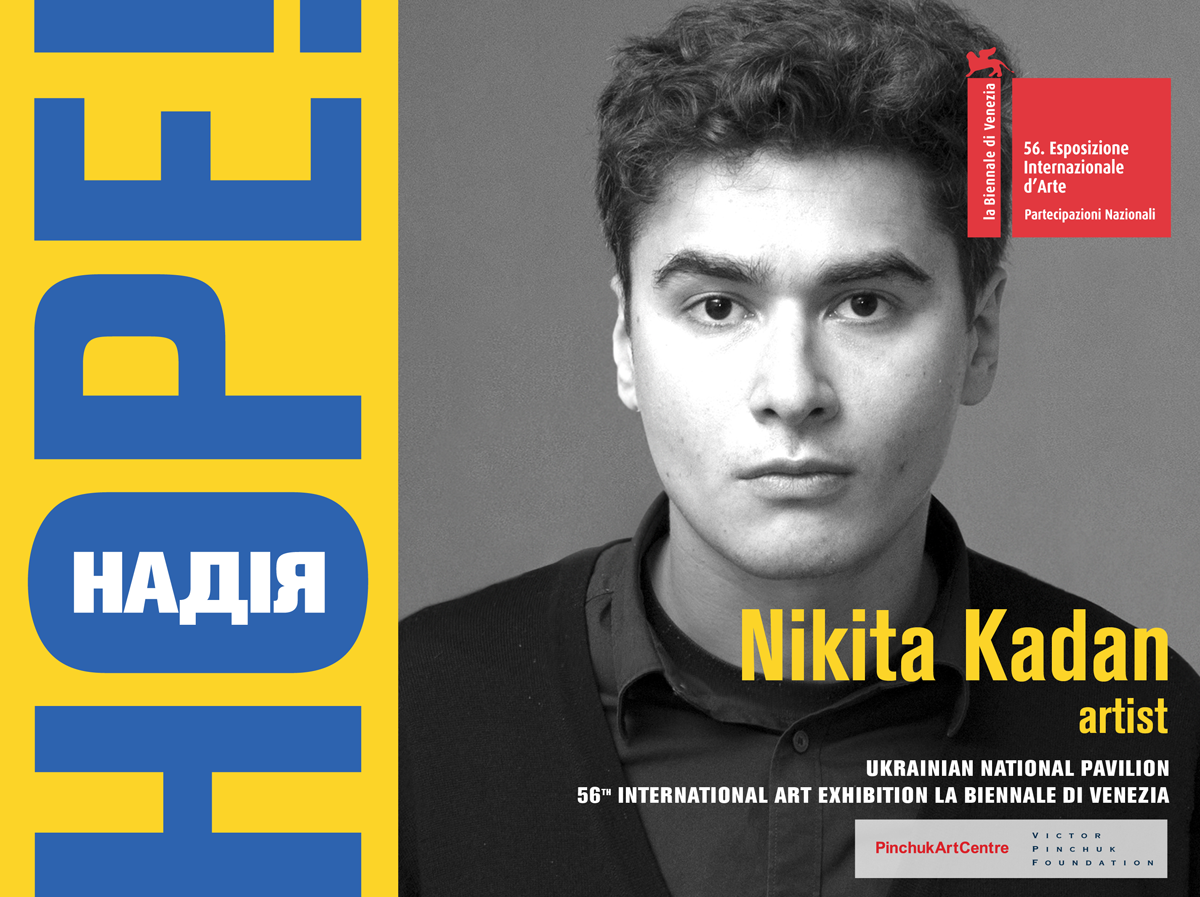
Nikita Kadan was born 1982 in Kyiv, Ukraine, where he lives and works today. In 2007 he graduated from the National Academy of Art and Architecture in Kyiv. He is a painter, graphic artist, author of objects and installations. Kadan was nominated for the PinchukArtCentre Prize in 2009 and won it in 2011. His work has been exhibited nationally and internationally, including exhibitions at the Index Contemporary Art Centre, Stockholm (2008), the first Kyiv Biennale at Art Arsenal and at Lavra Gallery, Kyiv (both 2012).
A traditional showcase, in its form and material referring to showcases from the Soviet Union, accumulates materials that Nikita Kadan has collected in eastern Ukraine during the war. The rubble inside reveals political narratives with a striking truthfulness: these destroyed artefacts are containers of words, of images and memories that narrate a (present) history. Thus the sculpture deals with the institutionalization of memories, the role of local heritage in forming a historical understanding against the cultural amnesia resulting from the conflicts. The showcase itself, in opposition to the rubble it collects, addresses Ukraine’s Soviet past, a part of history that is rather readily forgotten. It places the current conflict in a historical framework and presents the war as an extension of an established conflict of ideologies.
In between the rubble, inside the showcase, grows a bean plant that over time will cover the destroyed artefacts. It transforms the sculpture into a greenhouse, referring to popular gardens that appeared throughout the conflict, starting on the occupation of Maidan Square and continuing to the warzone in Dombass. These gardens suggest hope, a new start, a future life and process of reconciliation.
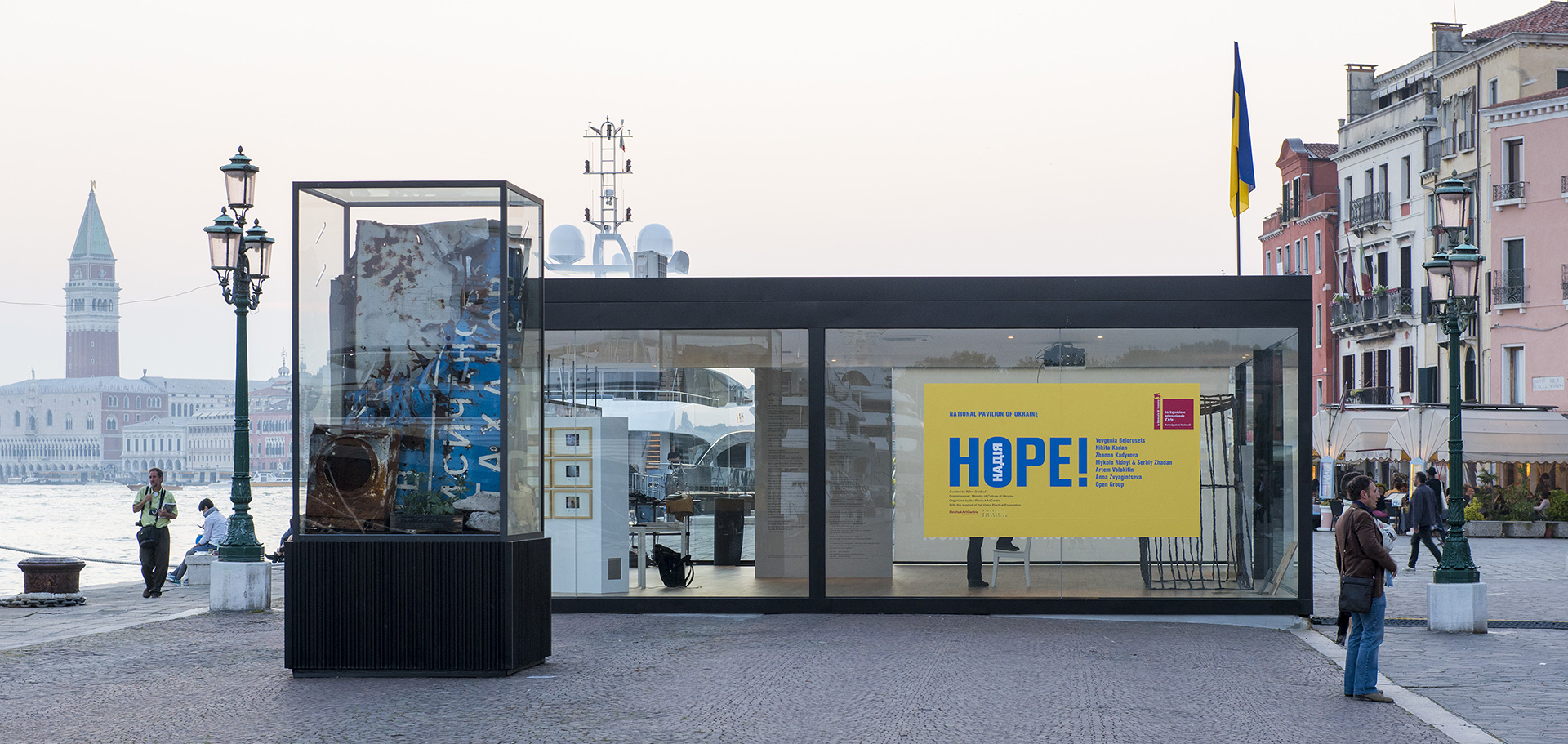
Year of realization: 2015
Technique: Marble, steel, glass, earth, bean plant, glass and wood
Size: 160 x 160 x 370 cm
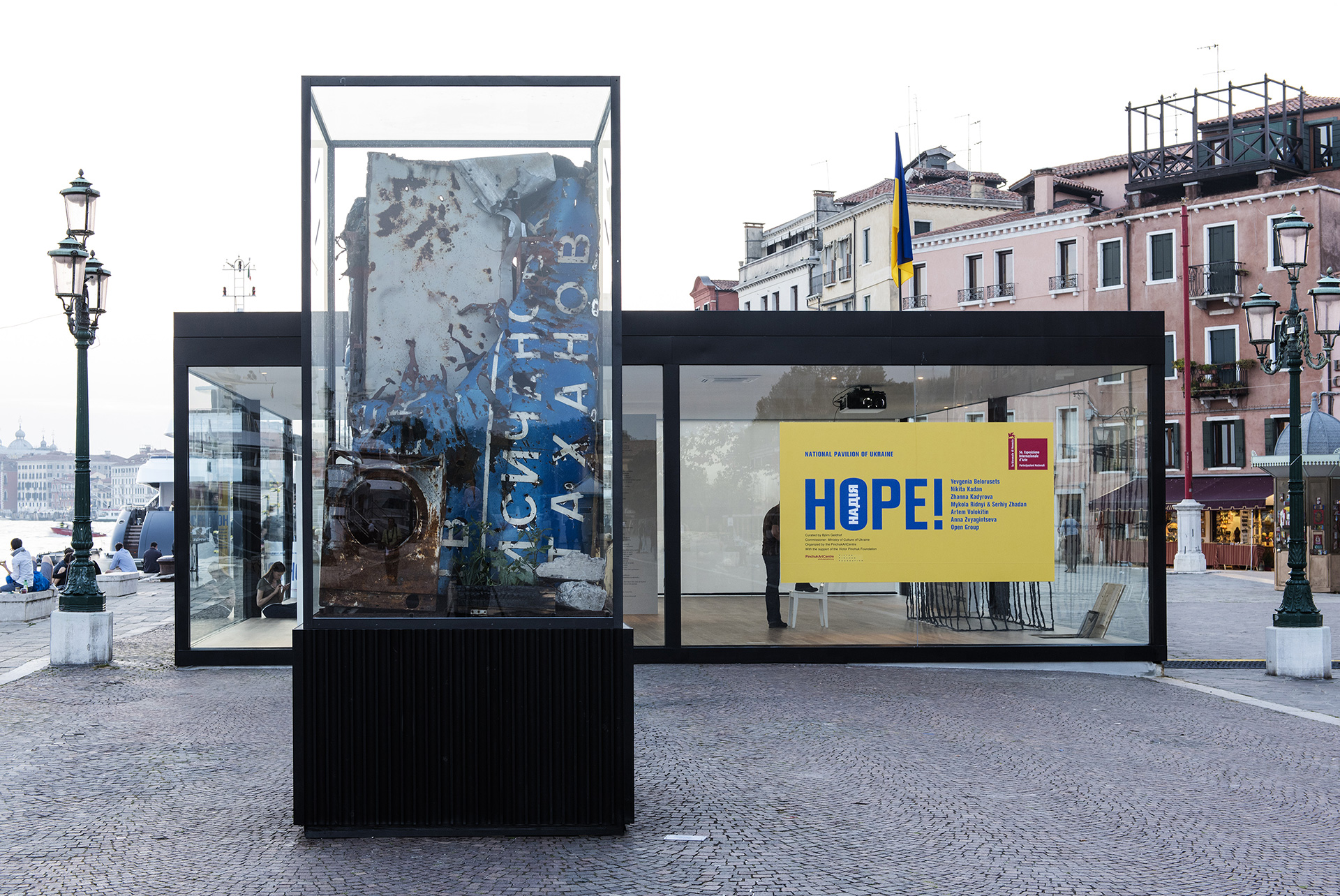
Year of realization: 2015
Technique: Marble, steel, glass, earth, bean plant, glass and wood
Size: 160 x 160 x 370 cm
“The allegorical character of Hope is traditionally called upon by shipwreck victims, those who are completely at the mercy of external forces. It is easy to make profound generalizations about it for those who are safe on the shore. And it is impossible to describe his situation to the one who is being played by the waves. The experience of a pure, all-encompassing hope, which has replaced everything else, must remain untold. It often appears as an aid, an excuse for leaving loopholes, for thoughtlessness and for not pursuing a matter. We should talk about hope only if we need to exhaust it, to step over it as if it was a threshold, to be on the other side of it. Only then we can calmly walk on the burning ground, smiling and taking full responsibility for our choices.”
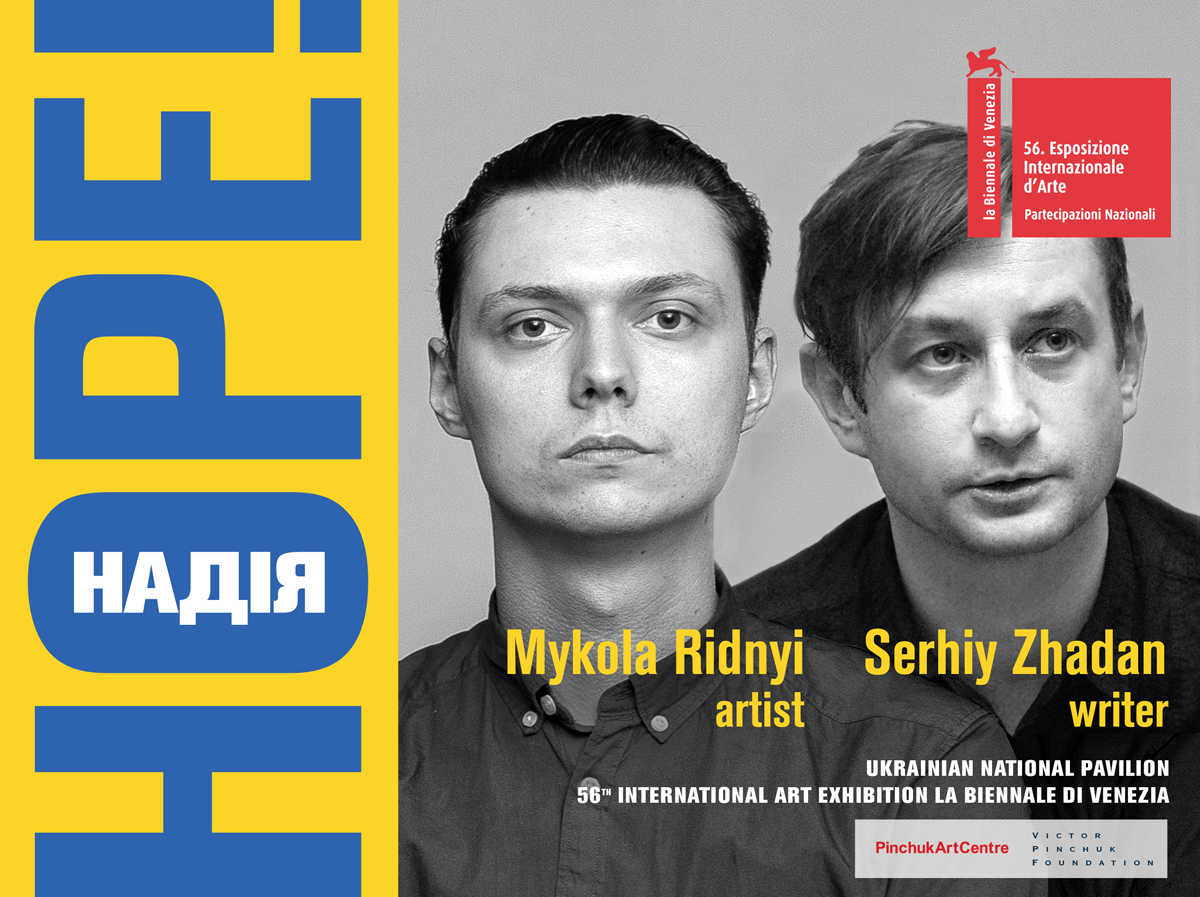
Mykola Ridnyi
Born 1985 in Kharkiv, Ukraine, where he currently lives and works. He graduated from the Kharkiv State Academy of Design and Arts. In 2005 he became co-founder and curator of the gallery-laboratory SOSka, an artist-run space for developing the local culture sphere in Kharkiv. Ridnyi was shortlisted for the PinchukArtCentre Prize 2011 and 2013.
Serhiy Zhadan
Zhadan was born in Starobilsk, Luhansk Oblast. He graduated from Kharkiv University in 1996, then spent three years as a graduate student of philology. He taught Ukrainian and world literature from 2000 to 2004, and thereafter retired from teaching. He lives and works in Kharkiv. His own works have been translated into German, English, Polish, Serbian, Croatian, Lithuanian, Belarusian, Russian, Hungarian, Armenian, Swedish and Czech. Zhadan collaborated with Kharkiv-based music band Luk and Sobaky v Kosmosi.
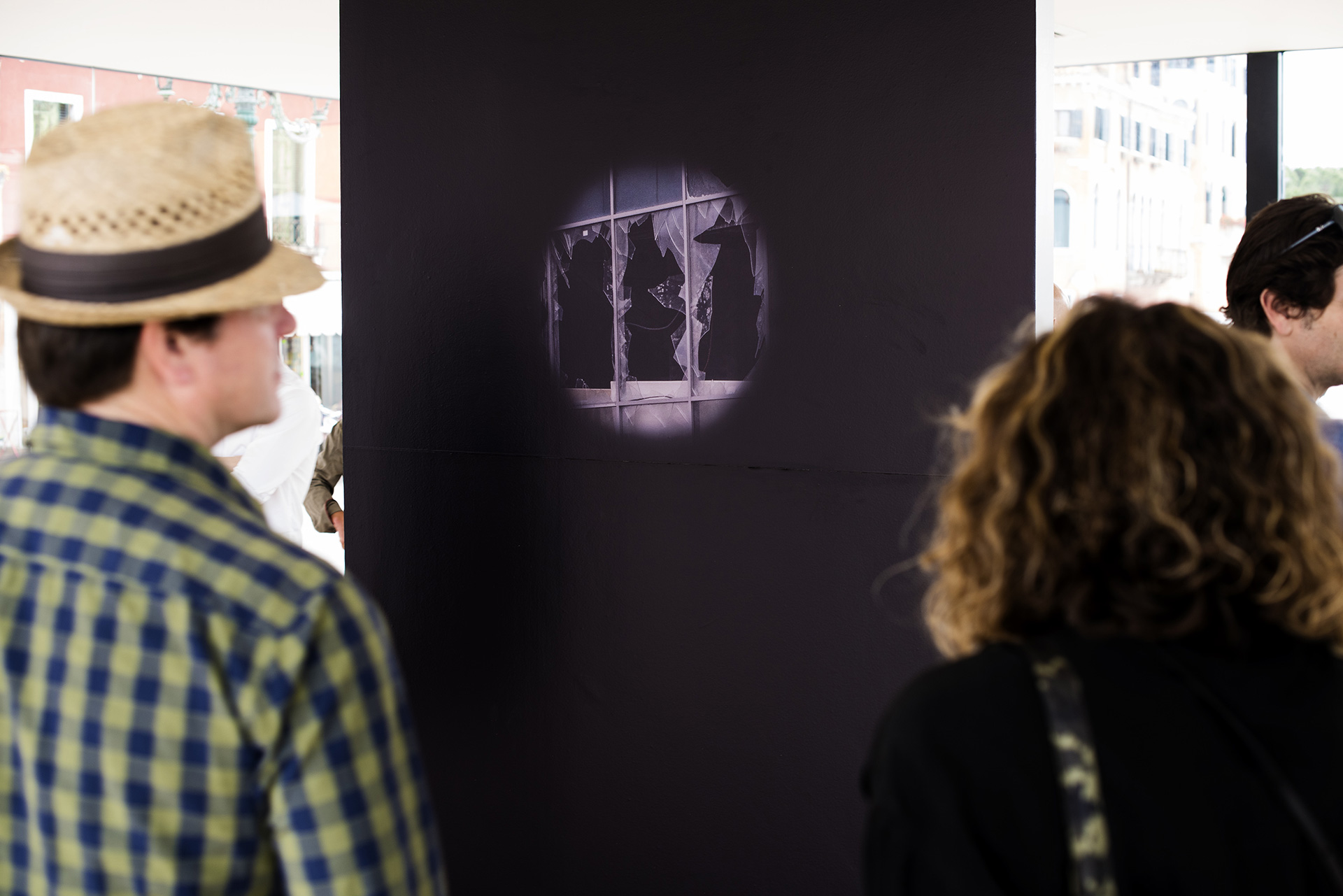
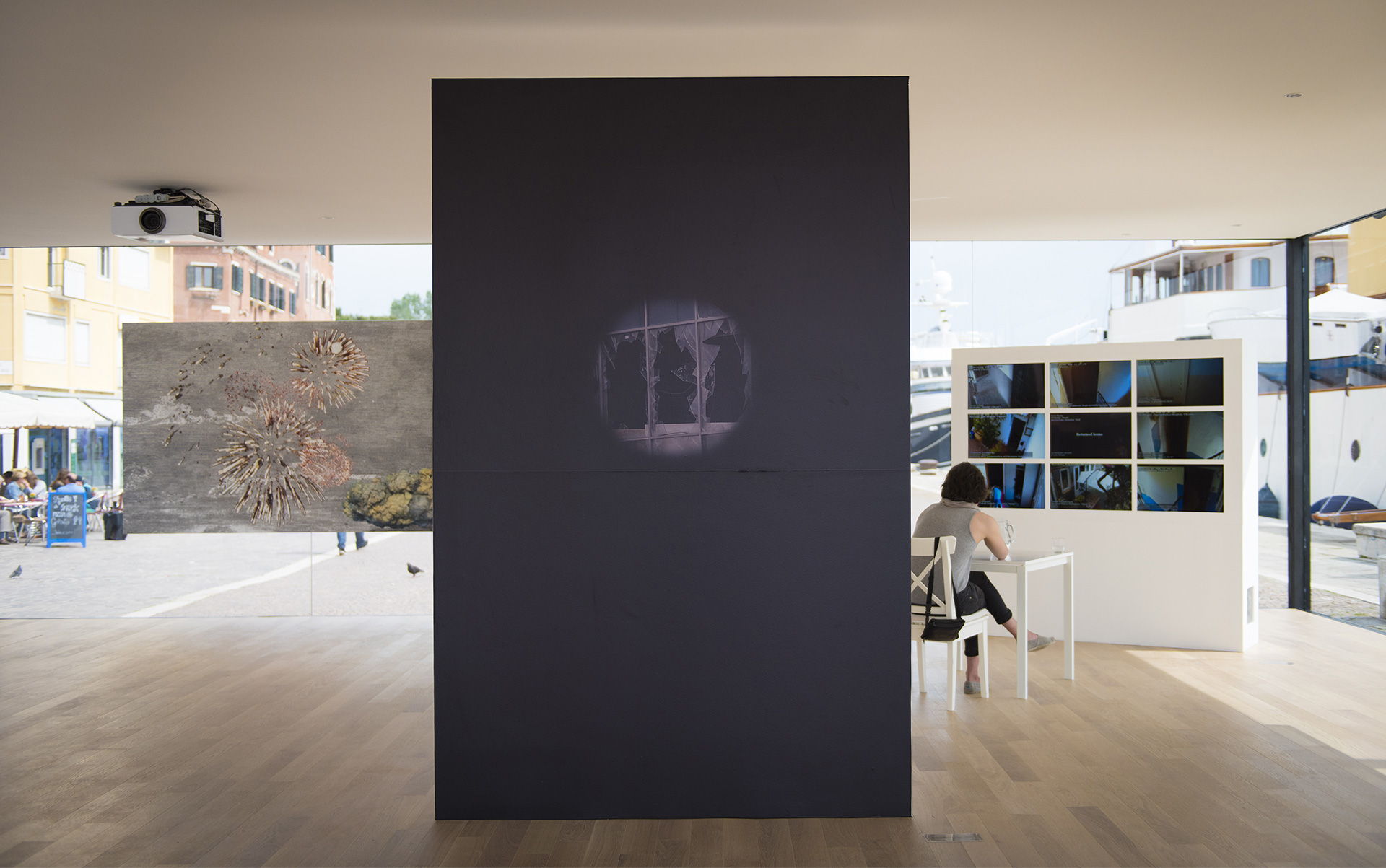
Blind Spot by Mykola Ridnyi and Serhiy Zhadan consists of two distinct elements, poetry by Zhadan and a monumental printed image by Ridnyi. Together they form two sides of the same medal, two ways to see one story. Ridnyi has found the motif for his image on the Internet and has sprayed it over with black paint, leaving only a peephole that creates a limited, partially erased view of the original photograph. What remains is an abstraction of the reality and violence in the picture. Contrary to the black-sprayed image, the poems of Zhadan give a face to the violence. Each poem tells a personal story, drawing a portrait of both real and fictional figures living through the war in eastern Ukraine. Blind Spot attacks the way reality is simplified in the media and on the Internet, where images are used to tell stories but too often alienated from their real-life context.
Thus blind spots are created in the way we look upon the world, and our sense of reality is constructed through a selective view and limited knowledge. The sprayed image is a metaphor for the power of propaganda, a conscious act of erasing parts of the image to show only that which fits the story. The poems individualize the victims of violence, and in these combined approaches Blind Spot resists any narrow narratives that provoke the radicalization of thought.
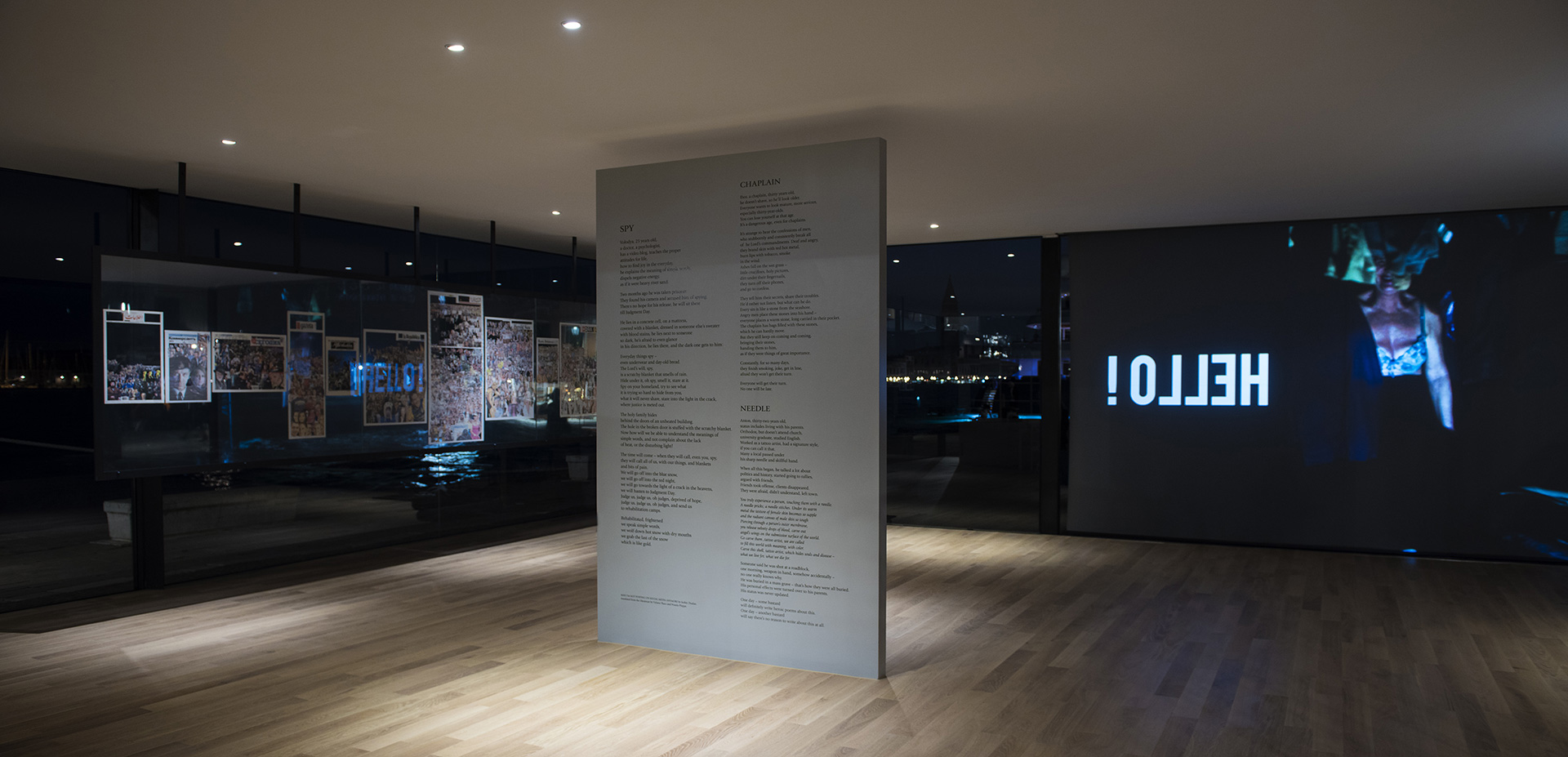
“Propaganda produced by a machine of war leads to blindness of society. It represents a binary vision that creates ‘us’ and ‘them’, ‘brothers’ and ‘enemies’, ‘citizens’ and ‘outsiders’ with no real basis for these oppositions. The reality of the present day creates an undifferentiated future, pushing it further and further. In other words, the war replaces future with a projection of THE endless present as a traumatic norm the society lives with. In this context, the hope for peace for the majority is subordinated to the military rhetoric: everyone talks about peace, but no one imagines what will become of Ukraine after the war. Will it become a country of freedom of speech or of suppression of civil rights, a country of social justice or neoliberal reforms, national and ethnic tolerance or hatred? If there is no hope nowadays, but only lost lives, burned houses and destroyed cities, it means that the future or its absence depend on the answers to the questions that both society and the state are responsible for.”
- Hope can remain silent for longer – they only start talking about it after the talks about guarantees and perspectives end.
- Hope usually appears at the last moment. Sometimes it appears too late.
- However, it always has a few more chances because we rarely bet on it.
- Even the one who has everything needs hope. And those who have nothing need it all the more.
- A human being has a right to have hopes even when he/she is deprived of the right to justice and private opinion. However, sometimes the only thing we have is hope for justice.
- Unlike faith or common sense, hope satisfies both atheists and fanatics. Fanatics, however, are not completely satisfied.
- Hope is usually mentioned when there are no rational arguments left. Or when irrational arguments do not work.
- Hope gives meaning to a lot of things. Moreover, some things make sense only because of it.
- In any case, hope will be amongst those things that you will see before death.
- The main thing is that it is hope that makes you not afraid of death.
Born 1980, in Kyiv, Ukraine. She lives and works in Kyiv and Berlin. Belorusets received a master degree in literature from Kyiv National Linguistic University, a diploma in documentary photography from the Viktor Marushchenko Photography School and she completed a PhD seminar group at Vienna University. Belorusets founded the journal for literature and art Prostory in 2008 and became a member of the curatorial group Hudrada in 2009.
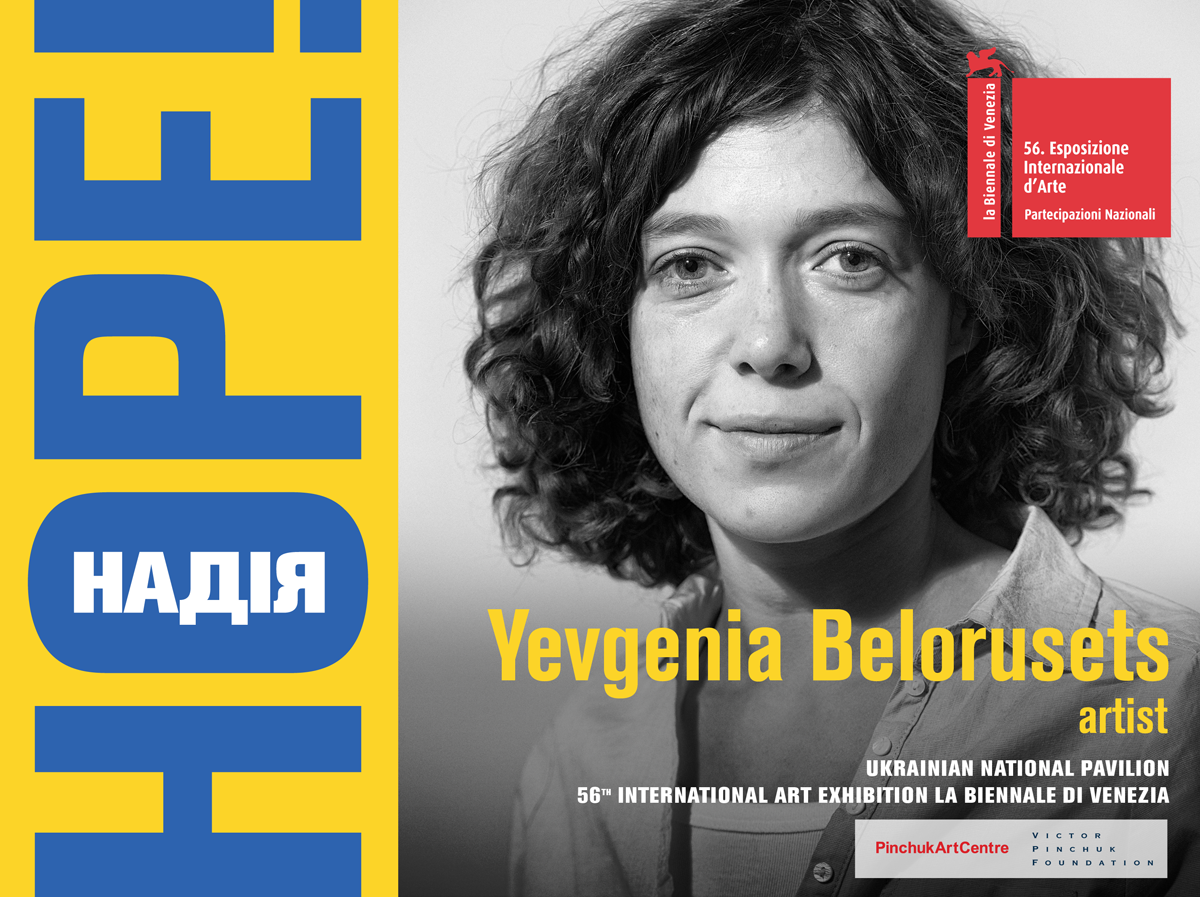
Yevgenia Belorusets spent months inside the zone of conflict in eastern Ukraine, portraying miners whose place of life and work is neither within the controlled territories of the separatists nor that of the Ukrainian government. Her portraits evince a deep personal engagement to those victims of a war that belong to neither side. The fight of the miners is one of survival in both the short and long term. First they need to survive the war, and second they need to save the mines to make sure their families and villages have a future once the conflict has ended.
During the day, the first part of the work shows a monumental portrait of a miner, an image of a man (dis)appearing like a ghost behind the smoke of his cigarette. The backside of this image is the front page of Today’s Paper, a fictional newspaper that tells a story of life under “the fog of war”. During the night, the narrative introduced in the newspaper is developed through a slide projection covering one glass wall of the pavilion. In this way, Belorusets’ portraits move between appearance and disappearance, using the ephemeral and temporal physicality of the work as a metaphor for the lives of the miners.
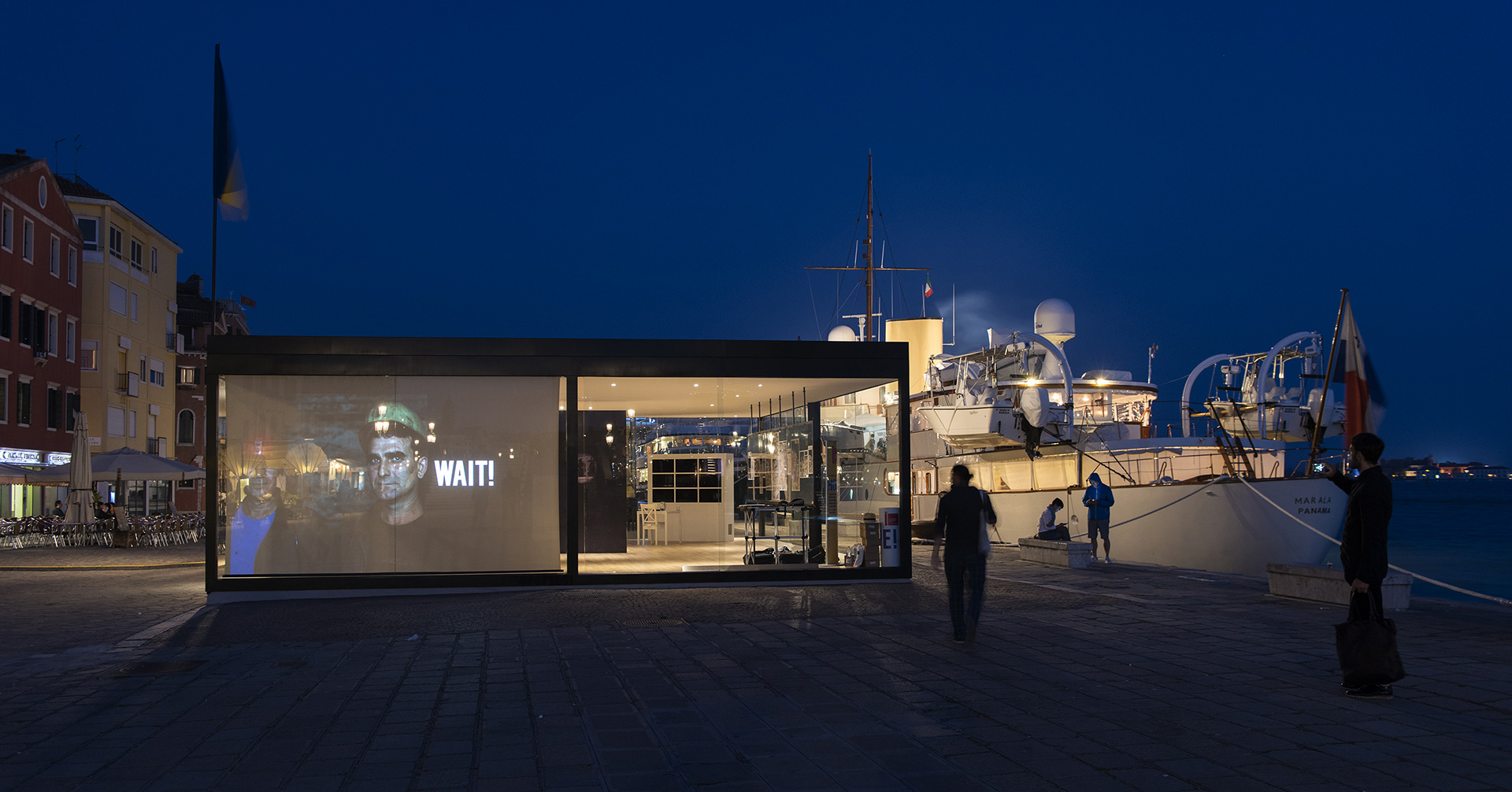
Year of realization: 2014-2015
Technique: digital print, video projection
Size: 175 x 236 cm (print), dimensions variable (projection)
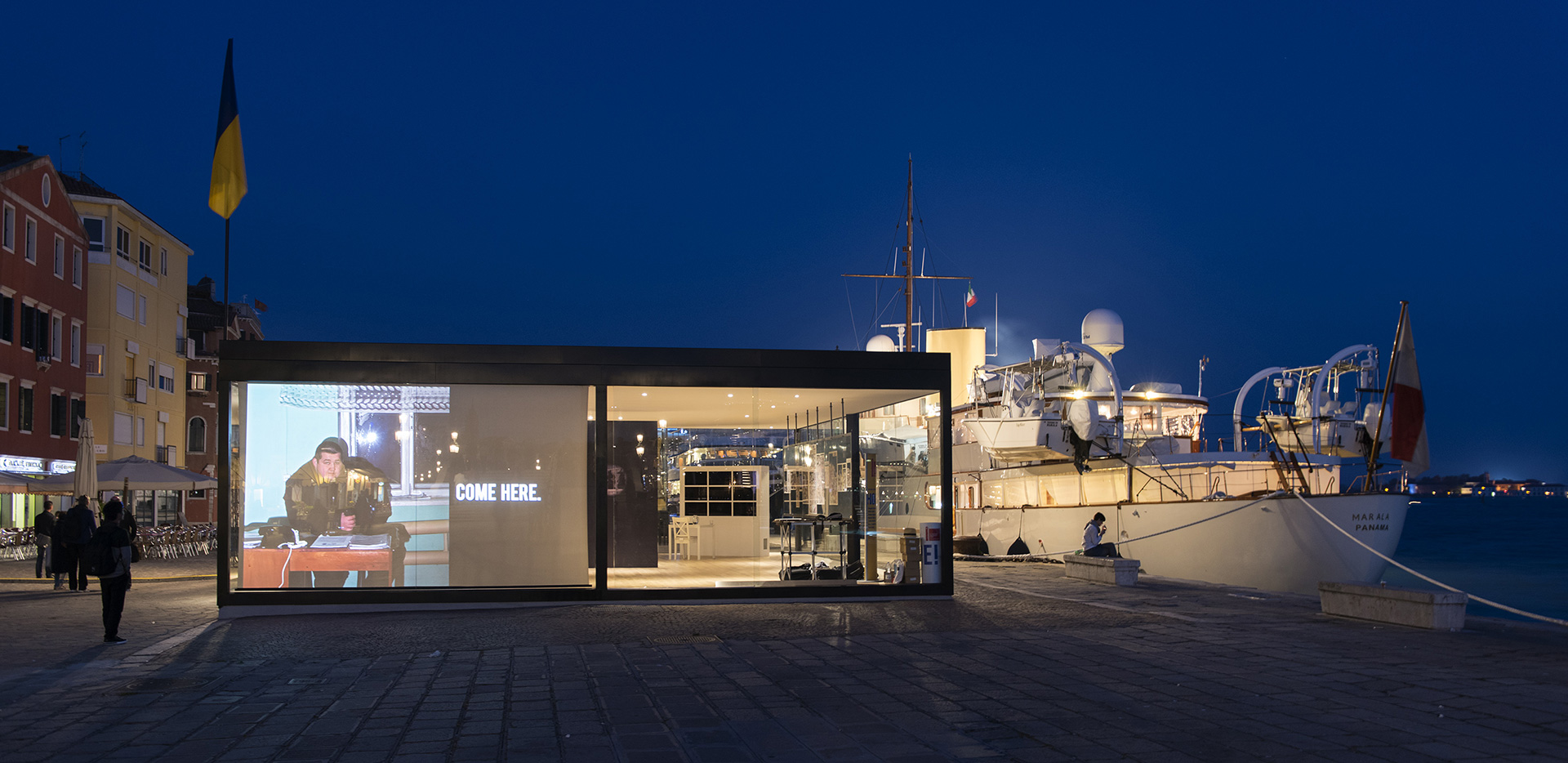
Year of realization: 2014-2015
Technique: digital print, video projection
Size: 175 x 236 cm (print), dimensions variable (projection)
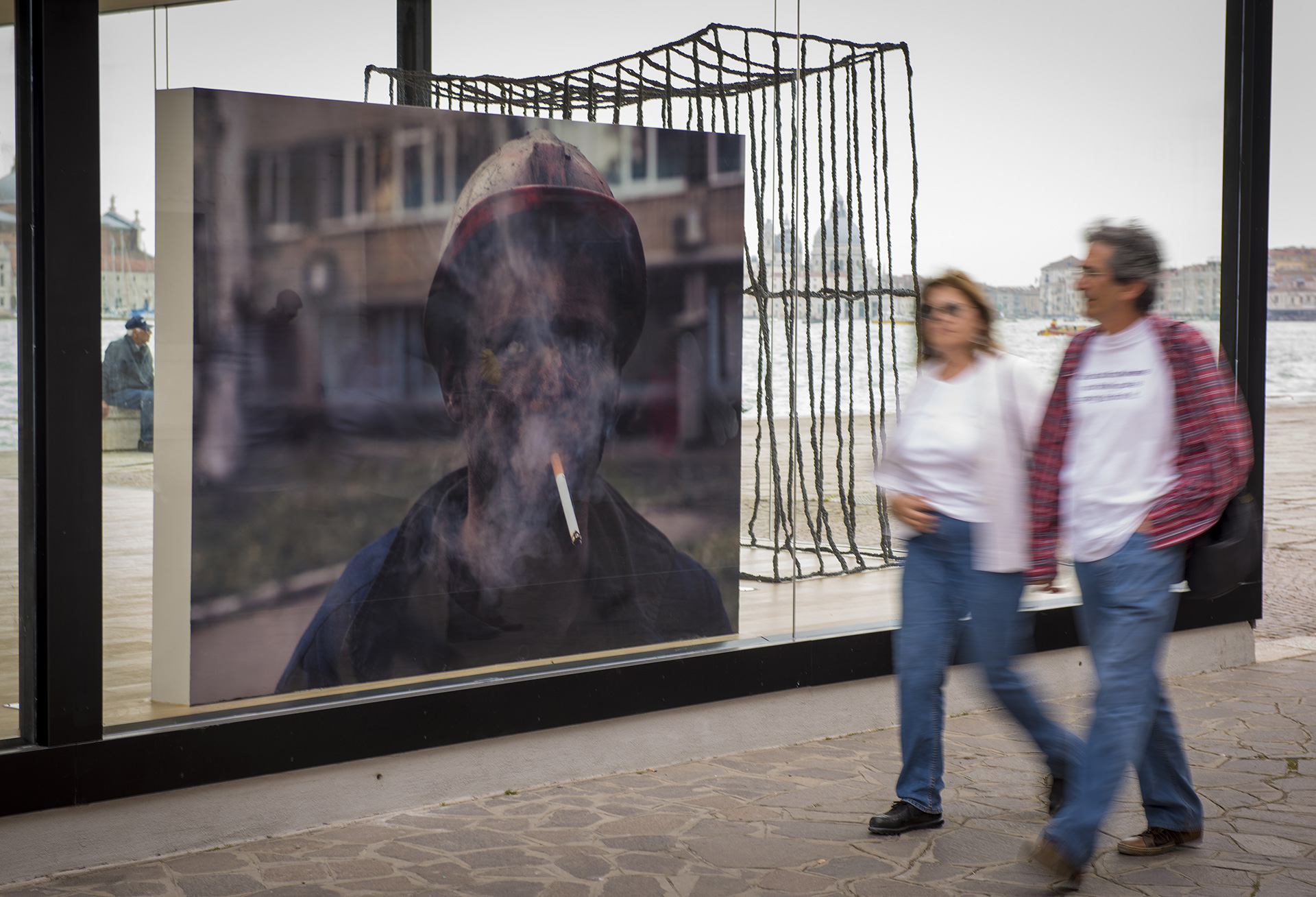
Year of realization: 2014-2015
Technique: digital print, video projection
Size: 175 x 236 cm (print), dimensions variable (projection)
I suppose I live in a country that has stepped on its own toes. But now it is going through a war. The neighbouring state punishes it for its essence, for its uncertainty, which is so valuable to me. Hope? Ukraine has always had more of it than you would expect. It is rationality lurking around every corner and maybe that will save us once again.”
Attention to the media!
Dear colleagues!
In order to save your time the art center team has collected all the necessary materials on the Ukrainian Pavilion at the Venice Biennale:
- Press release on the Ukrainian pavilion
- Press release on the concert of “Okean Elzy”
- Booklet of the exhibition
- Logo of the exhibition “Hope!”
- Portraits of the artists.