Without Asking Permission
Exhibition of the Research Platform of the PinchukArtCentre
The PinchukArtCentre Research Platform exhibition Without Asking Permission brings together works by Ukrainian artists created between two revolutions, from 2004 to 2014, in which the body is depicted as a tool of self-determination and resistance.
After Ukraine declared independence in 1991, artistic practices during the following decade were largely characterized by escapism and detachment from political reality amid the instability and chaos spreading across the country. In this context, the period after the Orange Revolution marked a significant turning point that changed perceptions of participation in political life and the possibility of influencing state processes. Against the backdrop of profound social transformations, a new sense of personal and collective responsibility began to emerge. Artists started engaging with the social reality unfolding around them, responding through bodily, often confrontational, practices. Their works reflected a shift from irony and alienation to presence and political engagement.
The mass rallies and civil protests of 2004 redefined public space from a center of power and state control to a place for expressing active civic positions. Artists tested the power of artistic gestures by taking to the squares and streets, challenging authorities, moral norms, and established notions of social acceptability. In a context where the system of cultural institutions remained weak or nonexistent, public space became an activist environment — a place where artistic interventions did not require mediation or permission.
Furthermore, many practices of that time aimed to rethink ideas about the body, shaped by (post)Soviet morality, culture, and patriarchal values. Subverting stereotypes of the “normal” body — conventionally attractive, heteronormative, and controlled — the artists instead proposed bodies that were real, vulnerable, and imperfect. Although these artistic gestures sought to grant agency to those with unmanifested visibility, the appearance of such bodies in public spaces was often met with rejection and stigmatization.
A prime example was the “Ukrainian Body” exhibition curated by Oksana Briukhovetska and Lesia Kulchynska, organized in 2012 by the Visual Culture Research Center at the Kyiv-Mohyla Academy. Three days after its opening, it was closed by the sole decision of the president of the educational institution, Serhiy Kvit. The exhibition was among the first dedicated to studying corporeality in Ukrainian society, inviting viewers to consider the body as a boundary of personal autonomy, a space of gender norms and stereotypes, and a tool of political criticism. In some cases, resistance went beyond institutional censorship and took the form of direct violence from viewers themselves. Later that year, Yevgenia Belorusets’s solo exhibition, which included the A Room of My Own series, was attacked: some works were torn down and damaged. These events illustrated that during this period, the body was often perceived as a source of anxiety and fear and could not be presented in public space without the risk of condemnation or violent exclusion.
Unlike the previous generation, which primarily addressed themes of corporeality and sexuality to subvert established moral norms, artists of the 2000s engaged in a more meaningful exploration, highlighting forms of intimacy that had been marginalized or relegated to the private sphere. The body thus became both tangible and vulnerable, and the right to choose identities assumed a political dimension.
The exhibition Without Asking Permission explores how artists conceptualized corporeality in response to changes in Ukrainian society between the Orange Revolution and the Revolution of Dignity. By advocating for equal rights and personal freedoms, they expanded the boundaries of perception and created new opportunities for future generations of Ukrainian artists. This period affirmed the importance of forming communities, enabling direct influence on political and social processes. These horizontal connections gradually shaped the strength of civil society.
Artists: Piotr Armianovski, Yevheniia Belorusets, Anatoliy Belov, Myroslav Vaida, Danylo Halkin, Anna Zvyagintseva, Taras Kammenoy, Alevtina Kakhidze, Alina Kleitman, Maria Kulikovska, Sasha Kurmaz, Serhii Melnychenko, Mykola Ridnyi, Lesia Khomenko, SOSka group (Hanna Kriventsova, Serhiy Popov, Mykola Ridnyi).
Curator: Daria Shevtsova
Managers: Alisa Dovbnia, Kateryna Melnyk
Production: Evhenii Hladich, Valentyn Shkorkin, Yevhenii Sulyma
Participants of the PinchukArtCentre Research Platform: Yevheniia Butsykina, Oksana Chornobrova, Milena Khomchenko, Oleksandra Mykhailenko, Daria Shevtsova, Kateryna Tsyhykalo, Tetiana Zhmurko
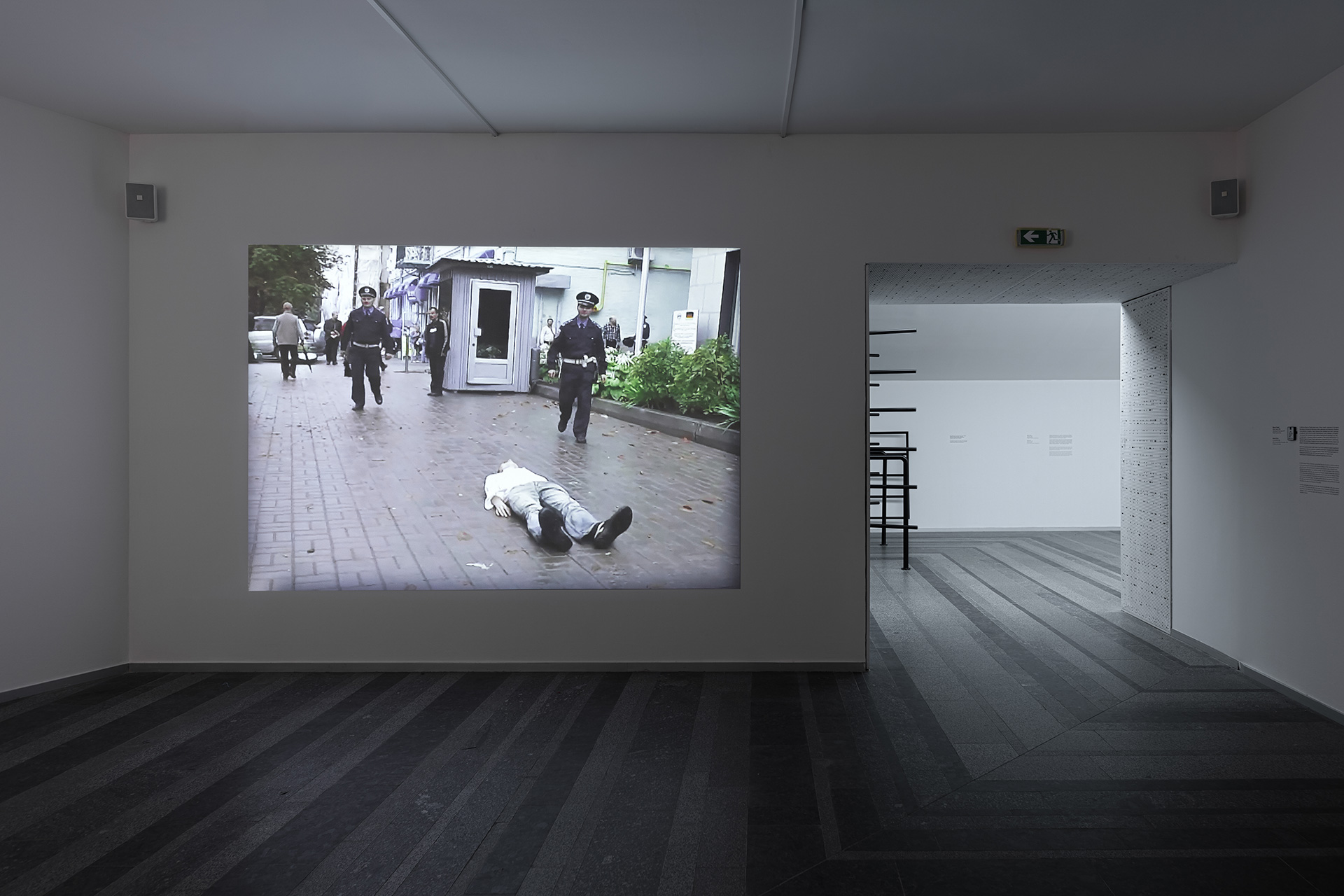
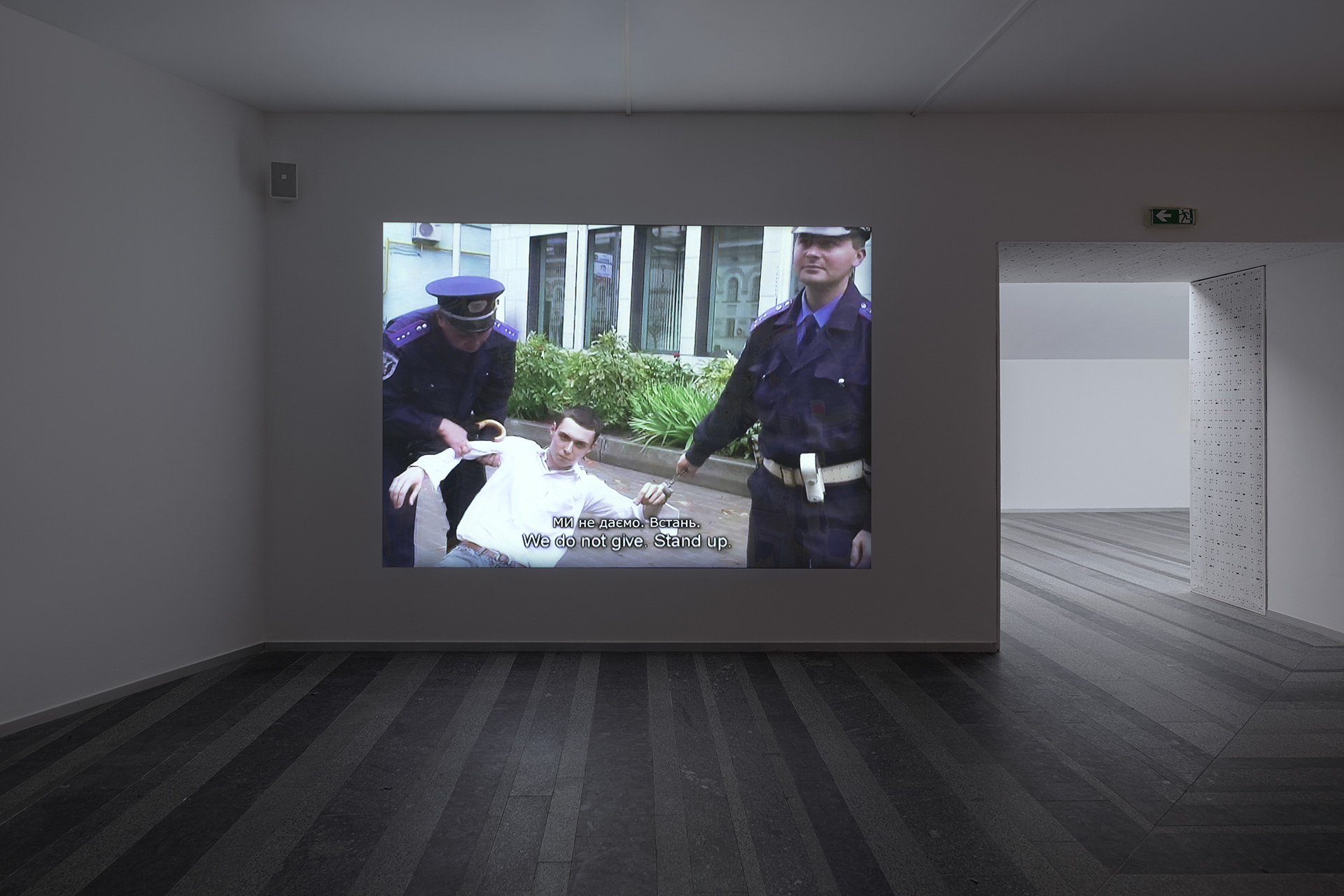
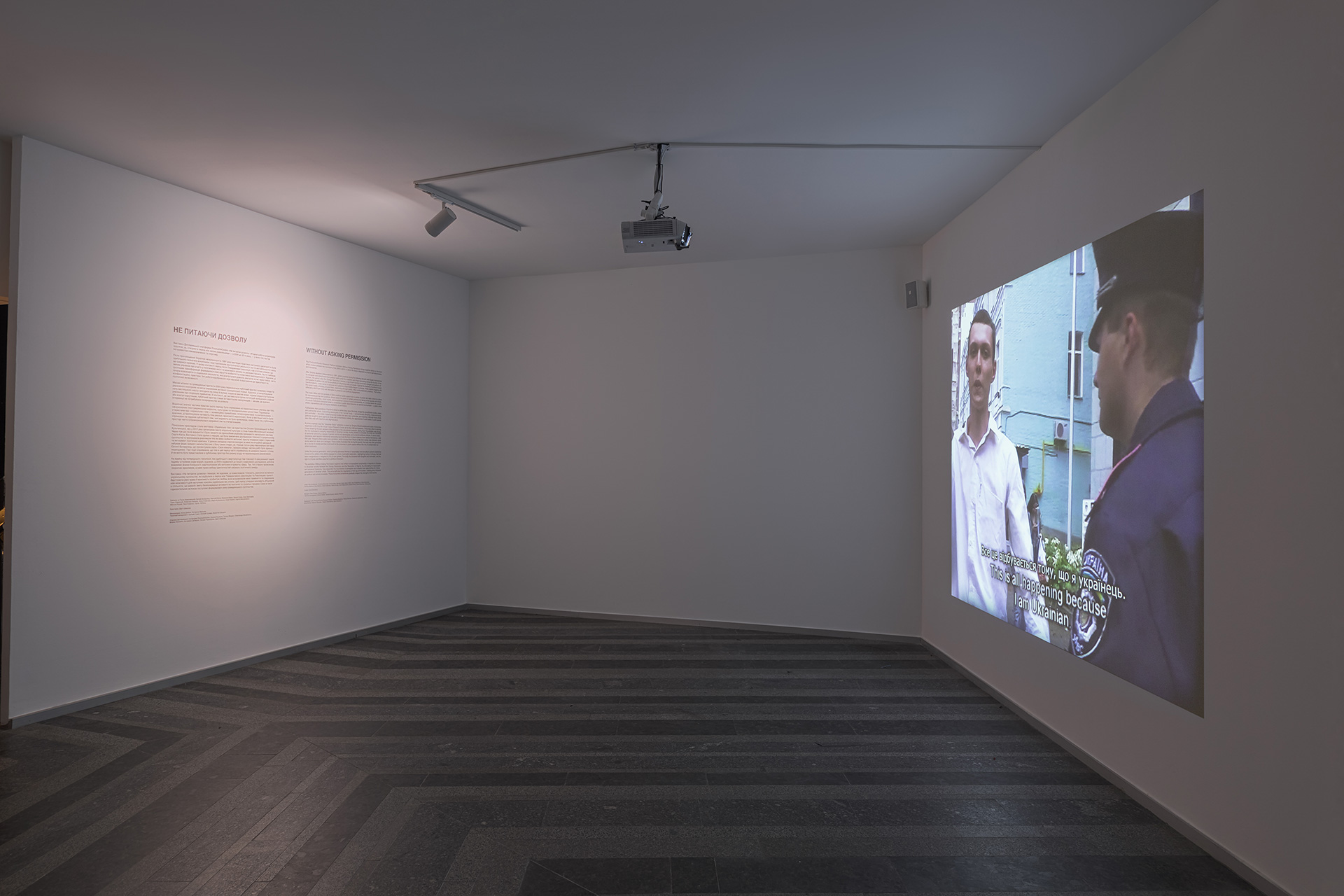
In 2006, Mykola Ridnyi performed Lie and Wait: this was an action in which the artist lay on the ground near the entrance to the German Embassy in Kyiv, demanding that they give him a visa. This work became a reaction to the refusal to issue a German visa, necessary for participation in an exhibition abroad. To travel to European Union countries, Ukrainian citizens at that time were forced to go through a lengthy bureaucratic procedure which did not even guarantee that the document required would ever be obtained. Ridnyi transformed his experience of uncertainty and powerlessness before the system into an open protest in the public space. His actions quickly attracted the attention of the police: the artist was forcibly removed from the building and threatened with punishment if he did not destroy the video documentation of the action.
An ironic continuation of the story was that after Ukrainian transliteration rules were updated, the spelling of the artist’s surname in his foreign passport changed, essentially resetting his previous visa history to zero. After the Revolution of Dignity and subsequent political changes, in 2017 a visa-free regime with European Union countries was introduced for Ukrainian citizens.
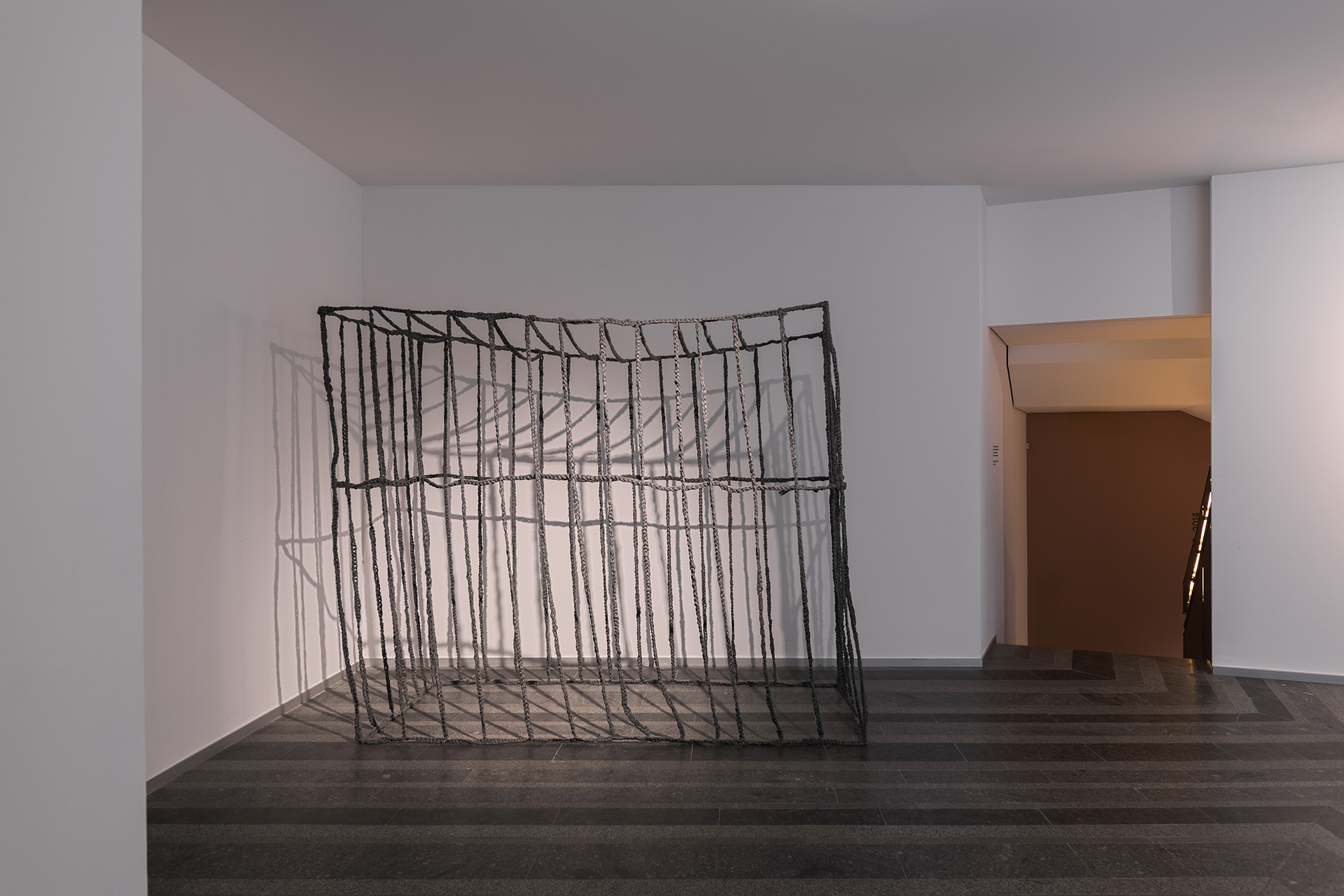
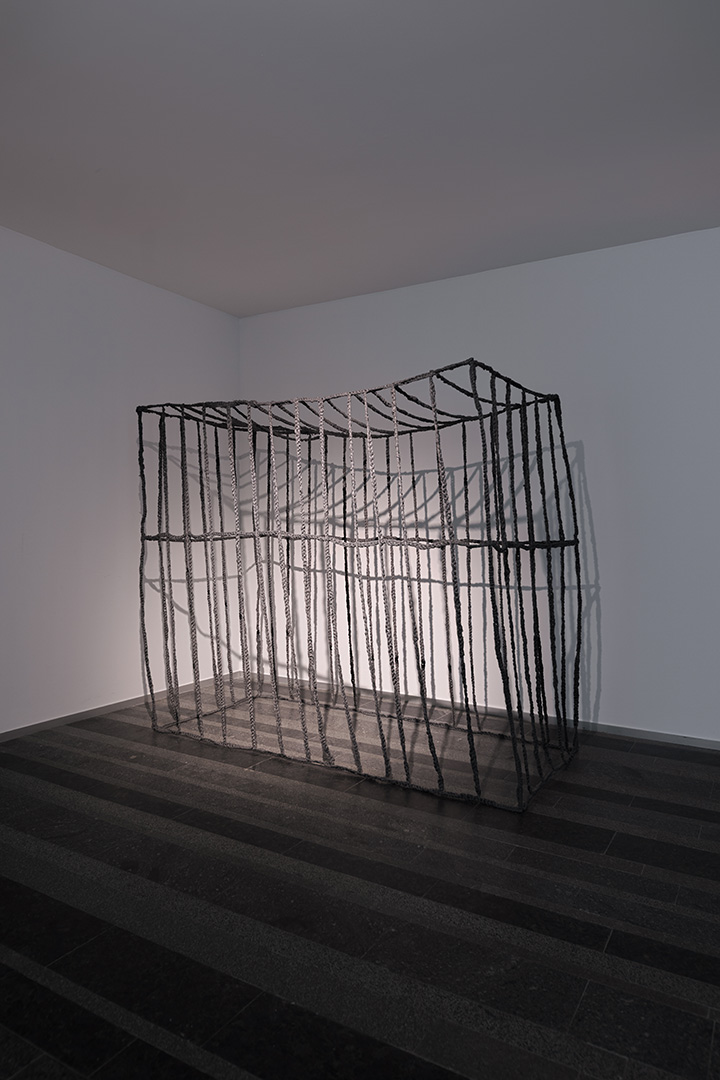
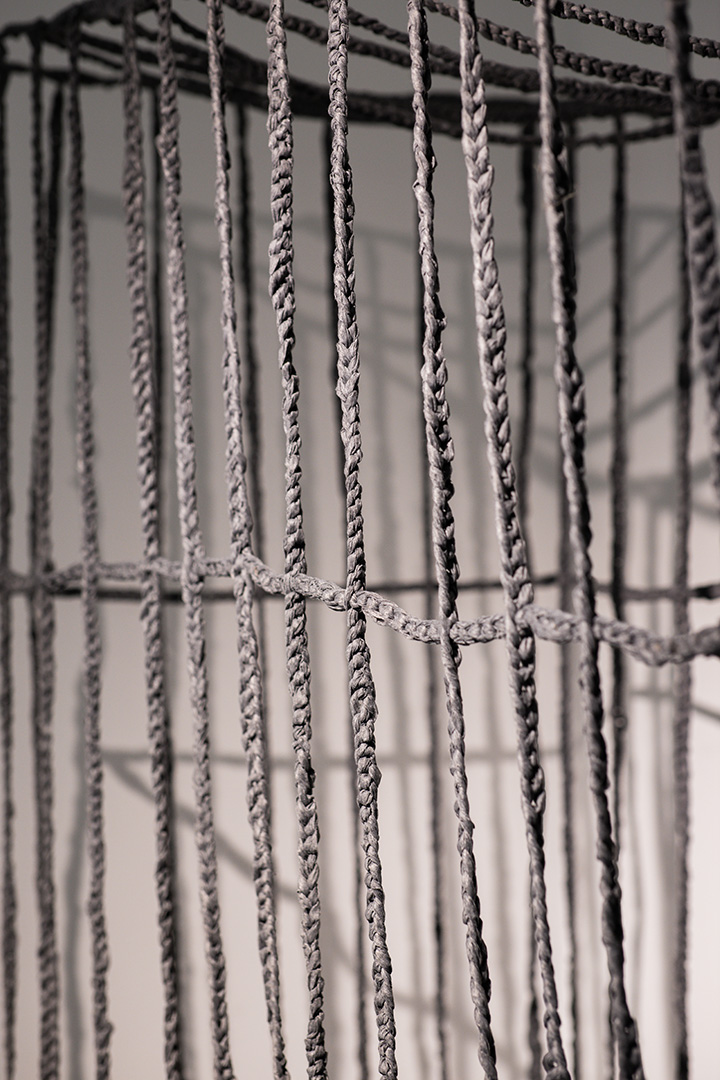
In 2010, Anna Zvyagintseva created her work Cage, a textile object whose shape and size is reminiscent of a cage that was typically used to hold defendants during criminal hearings in Ukrainian courts. The work is a response to political abuse by the legal system and persecution of public activists, including the participants in the Hudrada artistic committee, to which the artist herself also belongs.
In her work, Zvyagintseva turns to her personal experience, where the cage serves as a metaphor for lost and stolen time. When the cases of these public activists were tried, the presence of people in the courtroom was of great importance, since it made the process public and did not let the cases be forgotten or swept under the rug. Thus, for the activists and members of the public who showed up to support the defendants, courtrooms became a kind of second home. As hearings often lasted for hours, people found various ways to occupy all the time spent waiting: some translated poems, some responded to letters, some drew.
After a new Criminal Procedural Code was adopted in 2012, the metal cages were replaced with glass cabins, so-called “aquariums.” This was due to criticism from human rights organizations and the European Court of Human Rights, which stated that holding defendants in cages is degrading and violates their human rights.
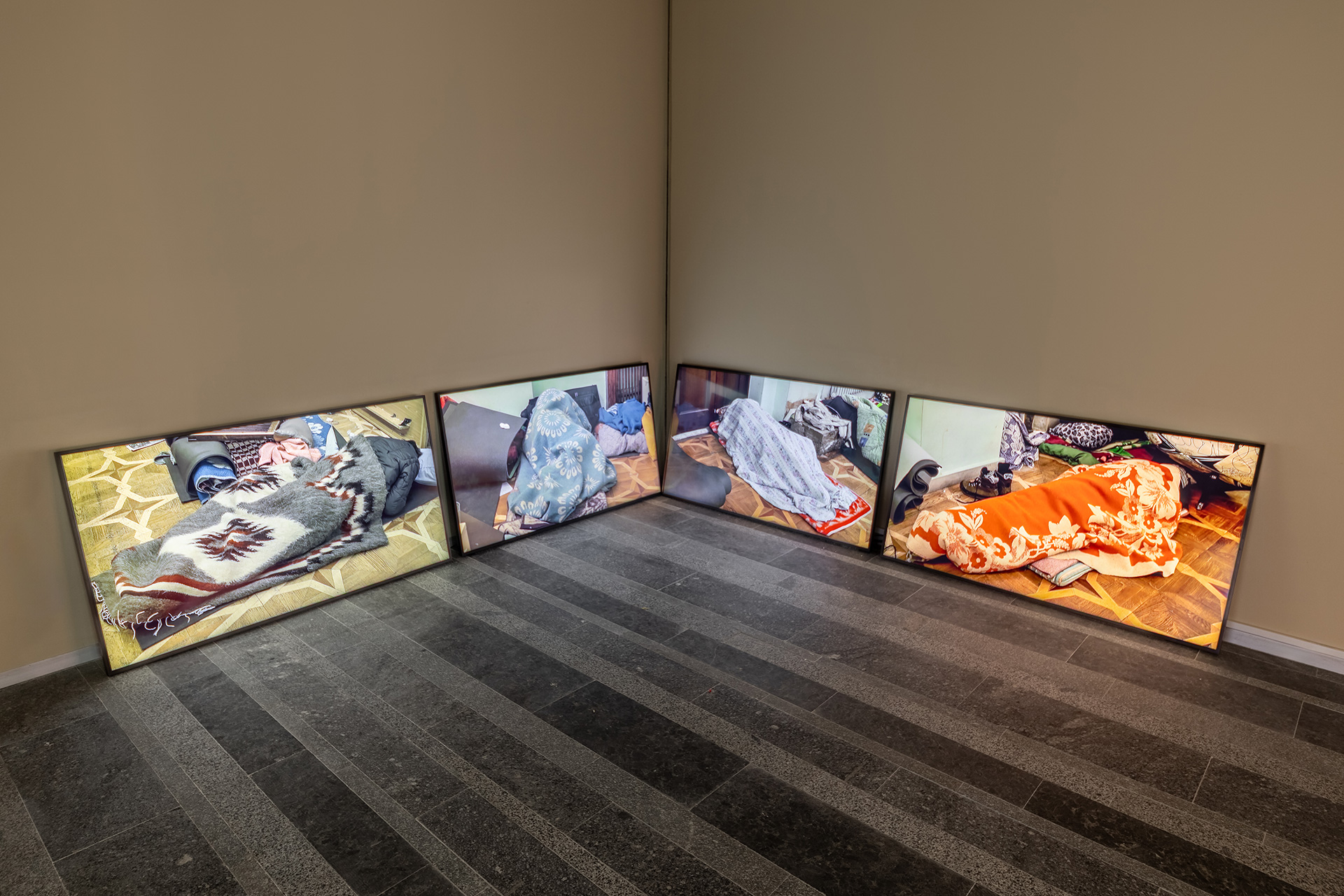
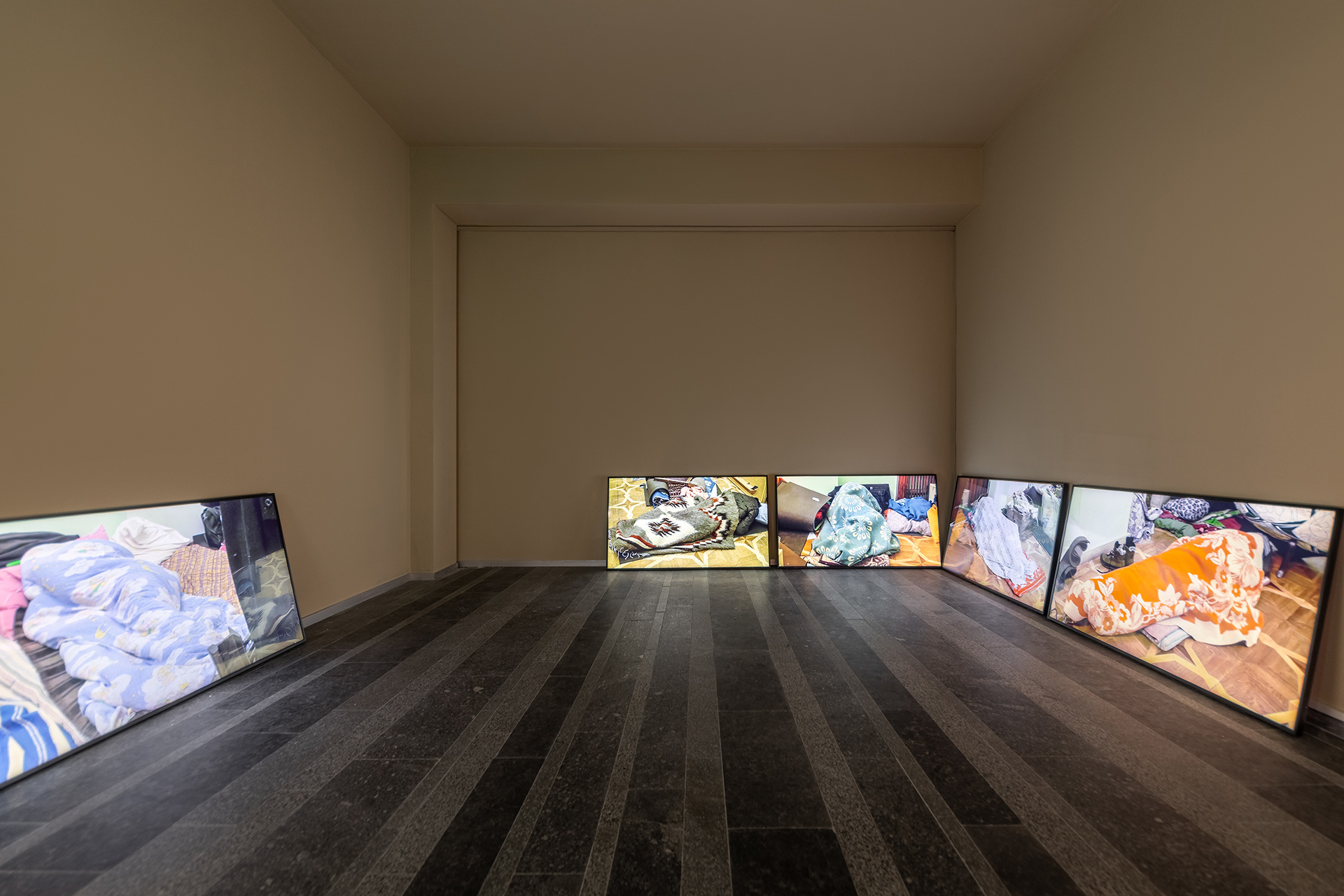
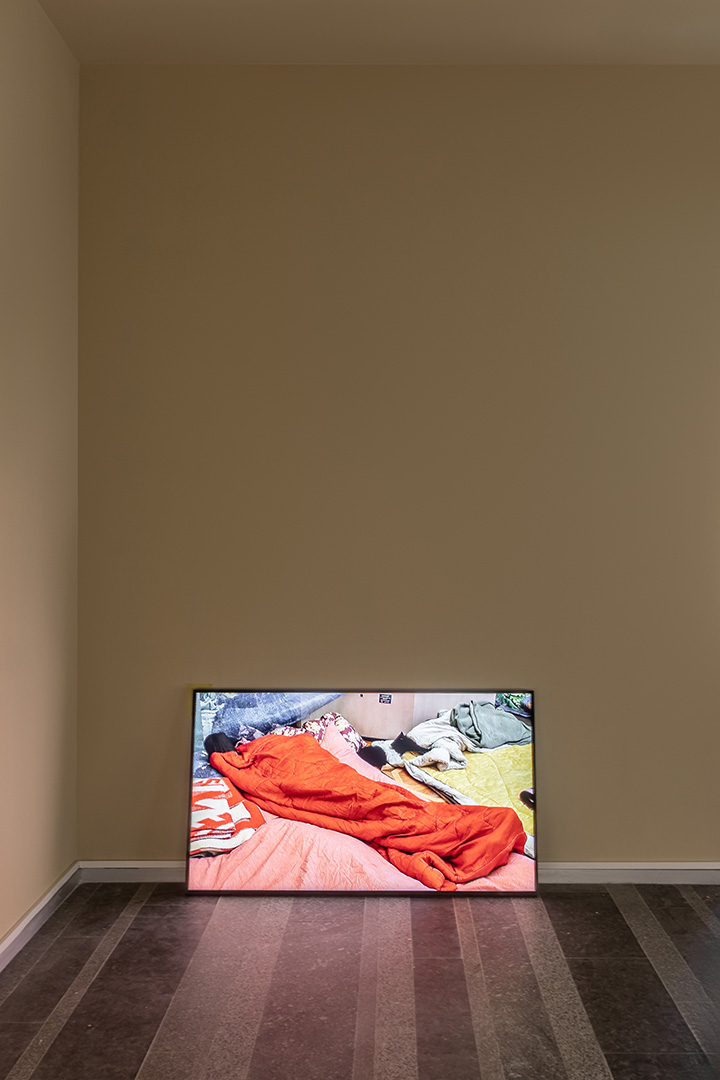
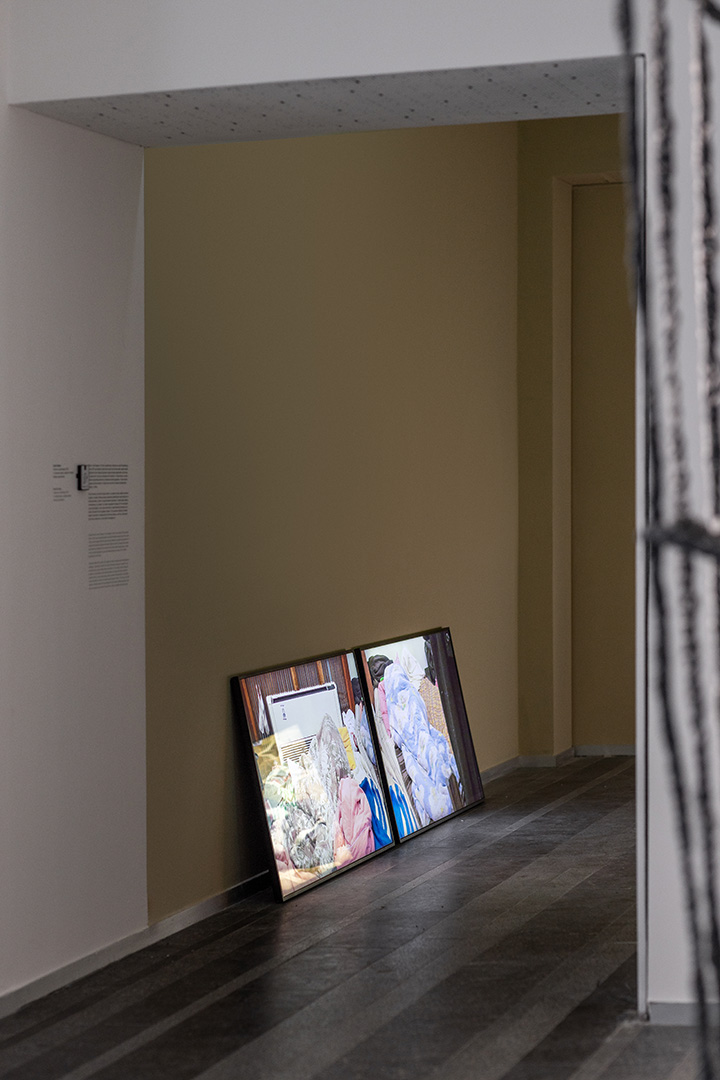
Sasha Kurmaz’s work I Sleep for a Revolution refers to the events of Euromaidan, when in 2013 a wave of protest actions and demonstrations swept across the country. Society was outraged by the then-government’s decision to suspend preparations for signing the Association Agreement between Ukraine and the European Union, which was intended to strengthen the European vector of the state’s foreign policy, as well as by the violent dispersal of a peaceful student protest by forces of the “Berkut” special police unit in Kyiv.
During the rallies in the center of the capital, activists occupied several administrative buildings. In particular, the Kyiv City State Administration became a place for rest, overnight stays, and providing medical assistance. In the video, Kurmaz captures protesters as they sleep: covered with blankets and rugs, their bodies resemble sculptural forms, and only the barely visible movement characteristic of breathing makes it possible to discern the body beneath layers of fabric. In this way, the artist depicts an intimate moment of vulnerability in the very midst of political upheaval, when the body, exhausted by protest, finds itself in a state of complete defenselessness.
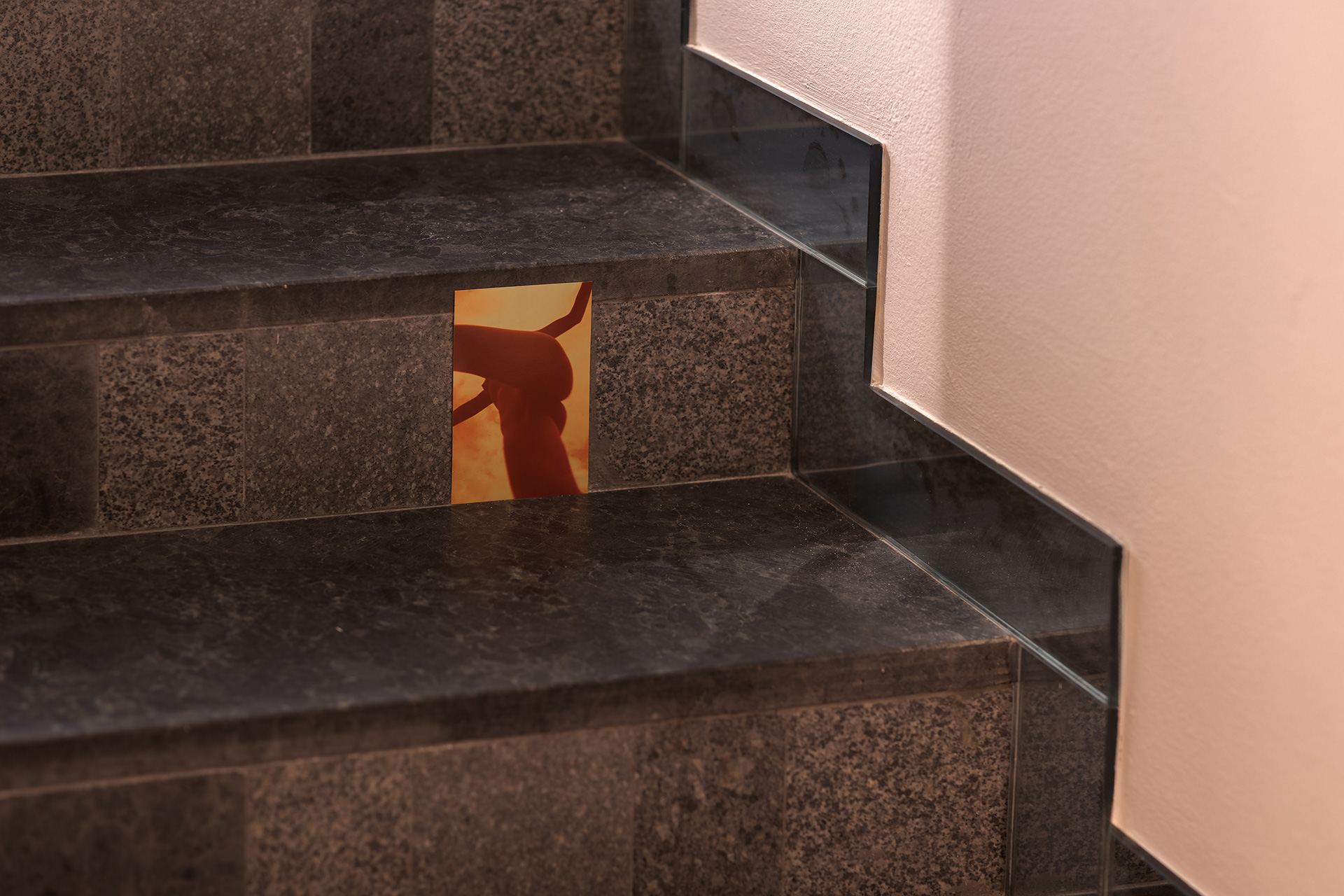
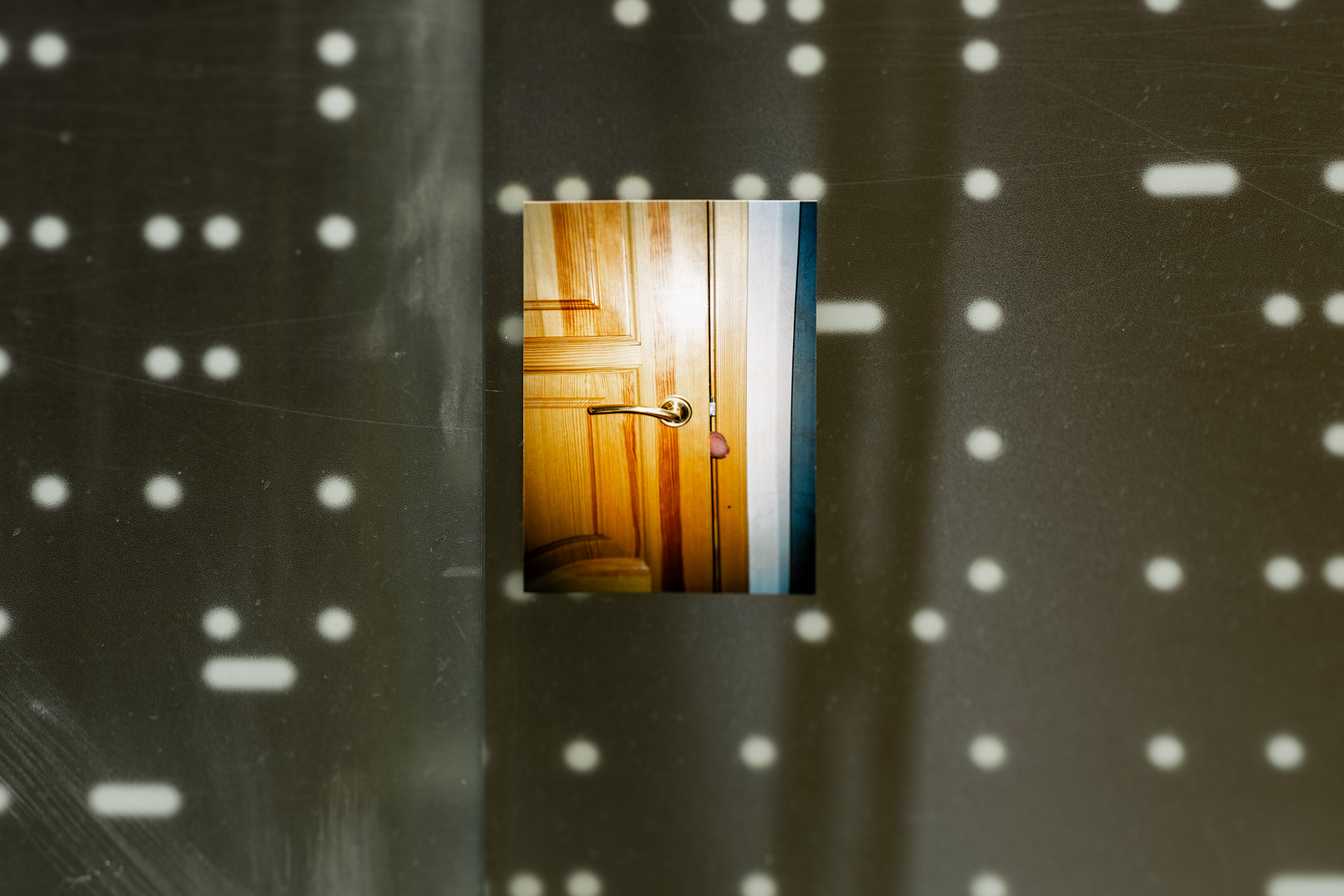
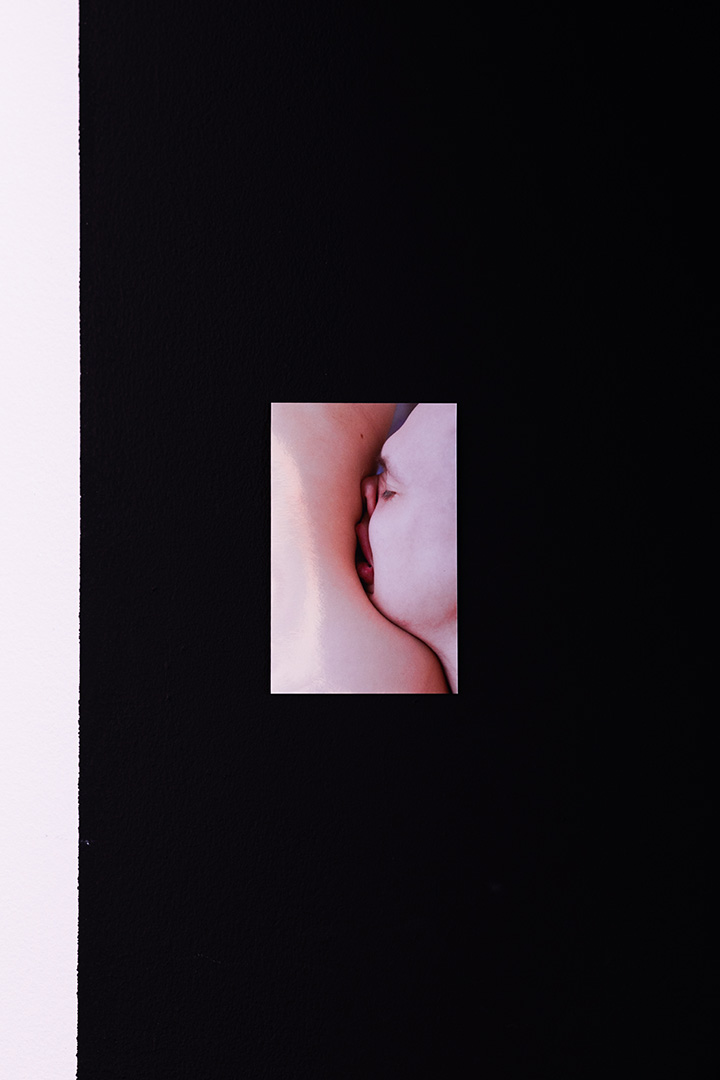
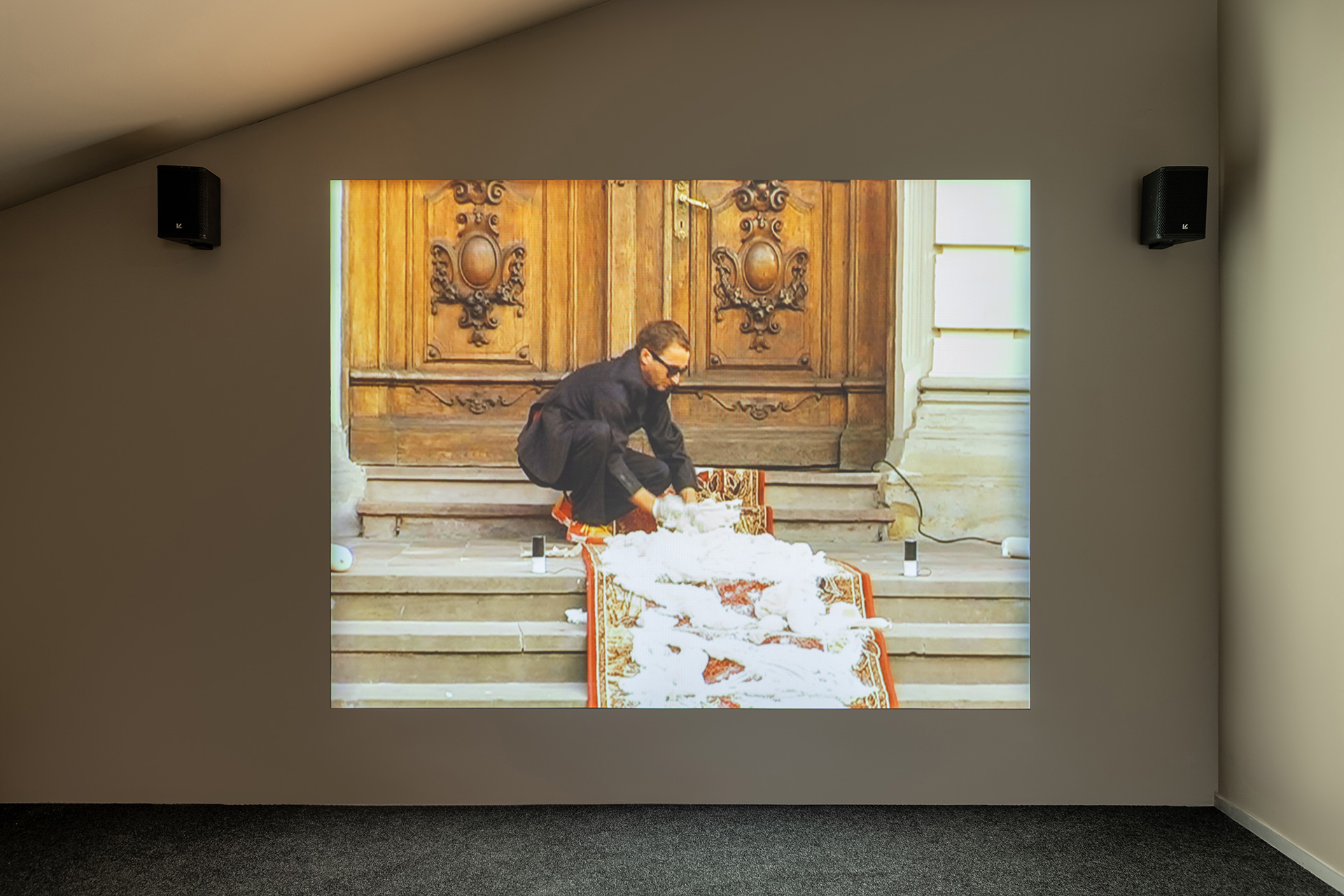
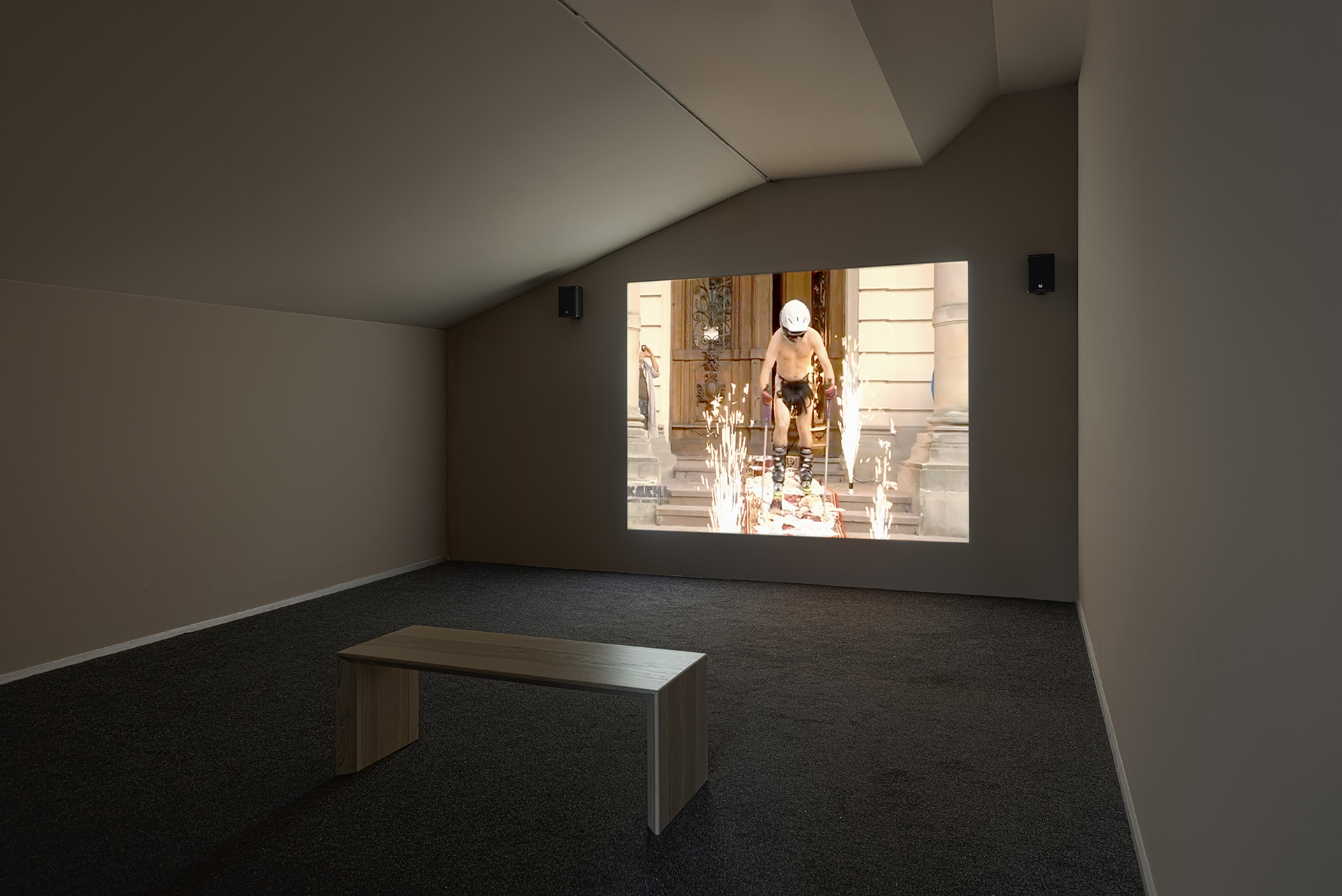
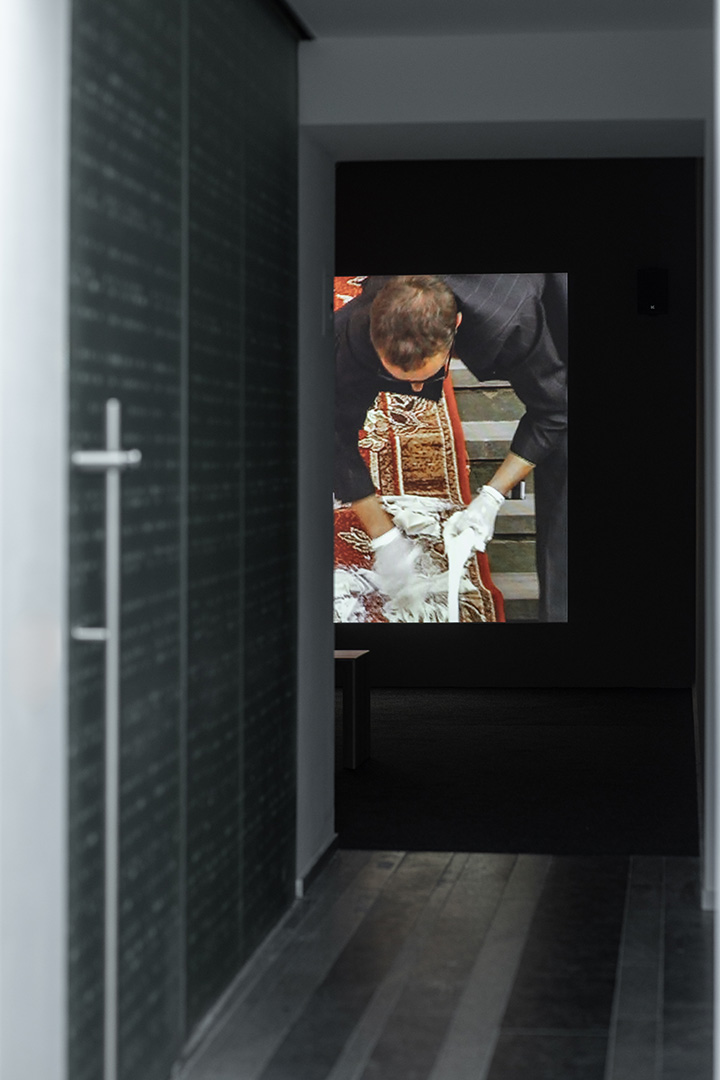
Myroslav Vaida performed Feralization in 2010 at the “Days of Performance Art in Lviv. School of Performance”. The guests watched the sequence of the artist’s actions, whose logic sometimes remained obscure but captivated the audience with its unpredictability. Dressed in a business suit, the Vayda first carefully greases the red carpet leading from the entrance to the building with pork fat, and then, naked but wearing ski gear, skis down the stairs and disappears into the bushes.
The work was created in the year Viktor Yanukovych became the president of Ukraine, when fatigue and disappointment with the policies of the new government were increasingly noticeable in public sentiment. The Potocki Palace in Lviv, where the performance took place, became one of the presidential residences at the time. In this context, Vayda’s work takes on a political dimension, addressing the theme of excess power and wealth and their oversaturation, which can lead to political tyranny. The use of animal fat in the performance refers to the Ukrainian idiom “to go crazy from fat,” alluding to luxury divorced from reality. At the same time, this gesture can also be perceived as a reaction to powerlessness: on the one hand, evidence of frustration, and on the other, an attempt to resist despair and protest against it.
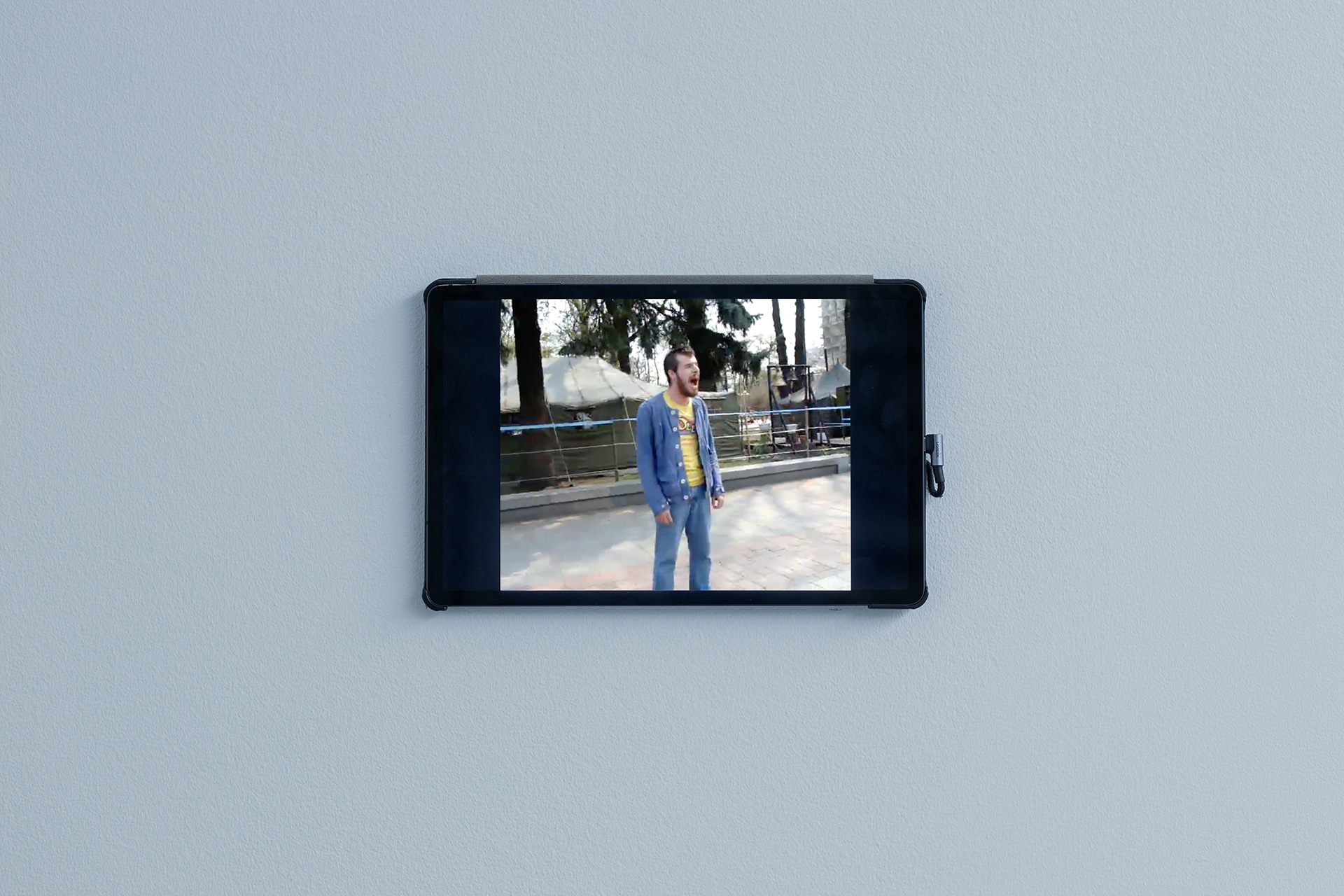
The video documents the performance How Long Could You Scream? by Piotr Armianovski, conducted in spring 2011 near the Verkhovna Rada of Ukraine. The artist stands by the metal fence in front of the building’s entrance and continuously screams, directing his voice toward the parliament. Police officers approach him, attempt to start a conversation, push him, but he does not react and does not stop screaming. Eventually the artist’s voice gradually weakens, the scream becomes a rasp and almost fades away.
This gesture arose against a backdrop of political tension that intensified after Viktor Yanukovych’s victory in the 2010 presidential elections. A sharp rise in corruption, the cancellation of social benefits, and pro-Russian reforms by the new government caused a wave of discontent among the population. Remembering the experience of the Orange Revolution of 2004, Ukrainian society increasingly asserted its position, using protesting as a right to express its own opinion. Armianovski’s scream here appears as a concentrated manifestation of this tension — a protest taken to the limits of physical exhaustion.
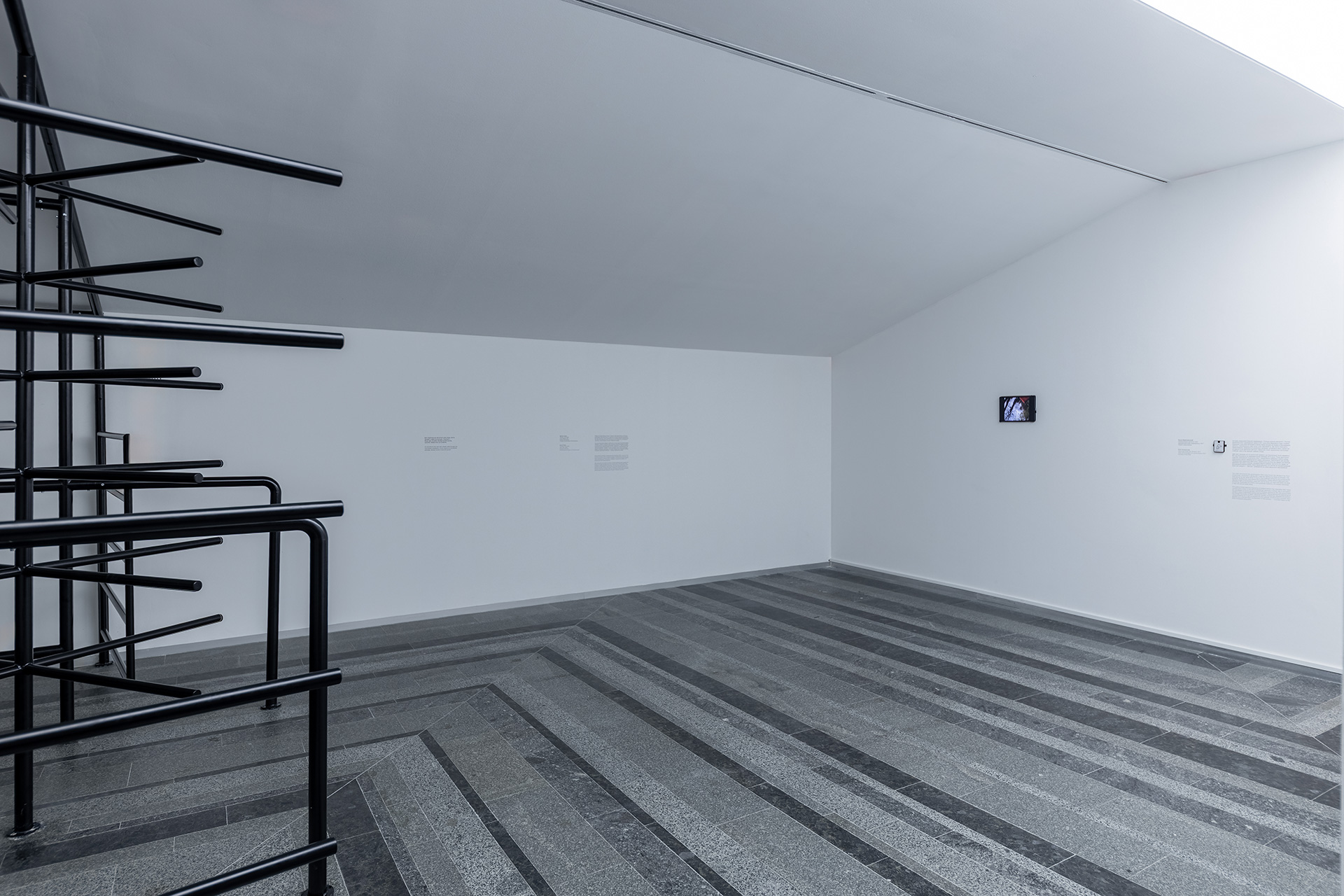
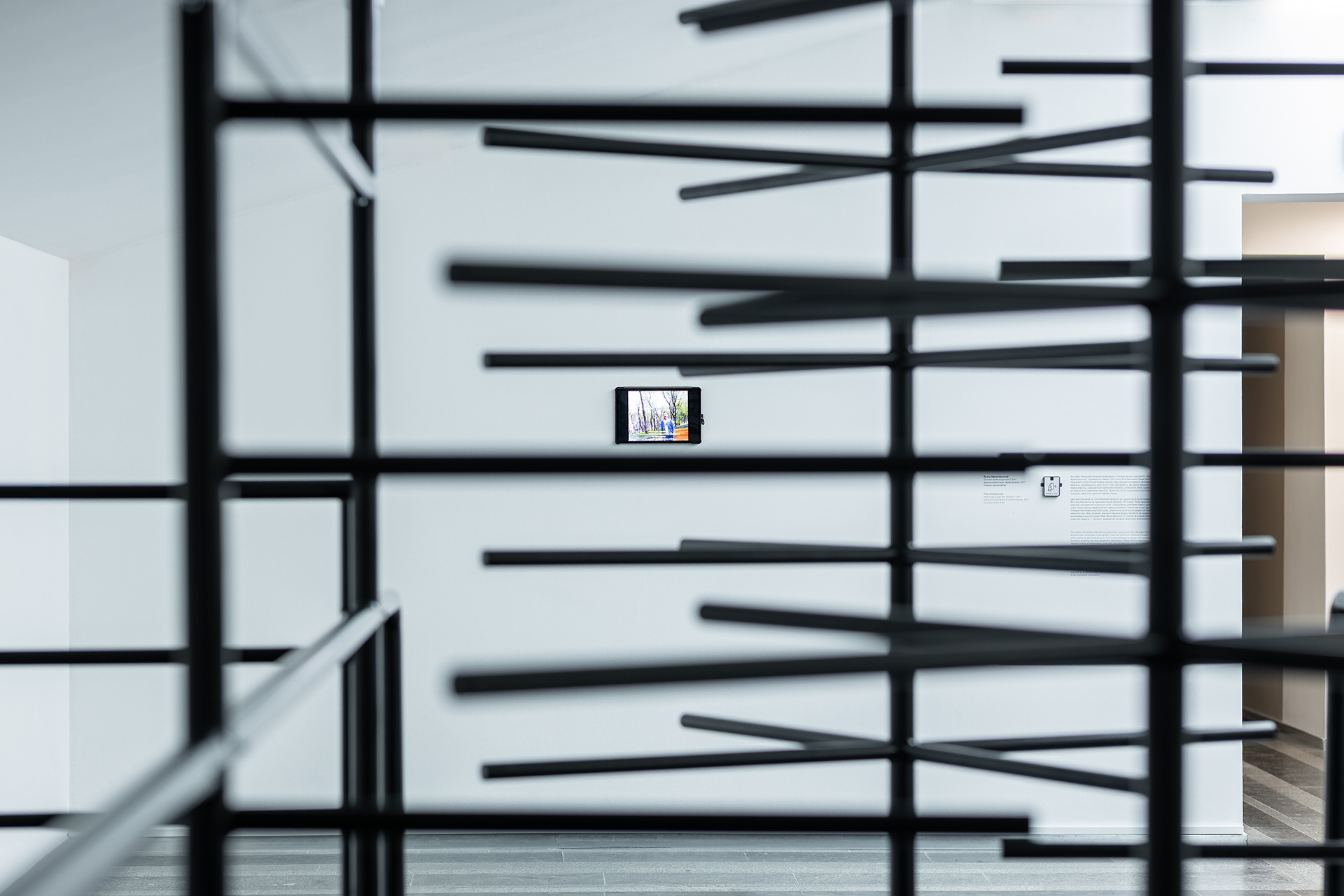
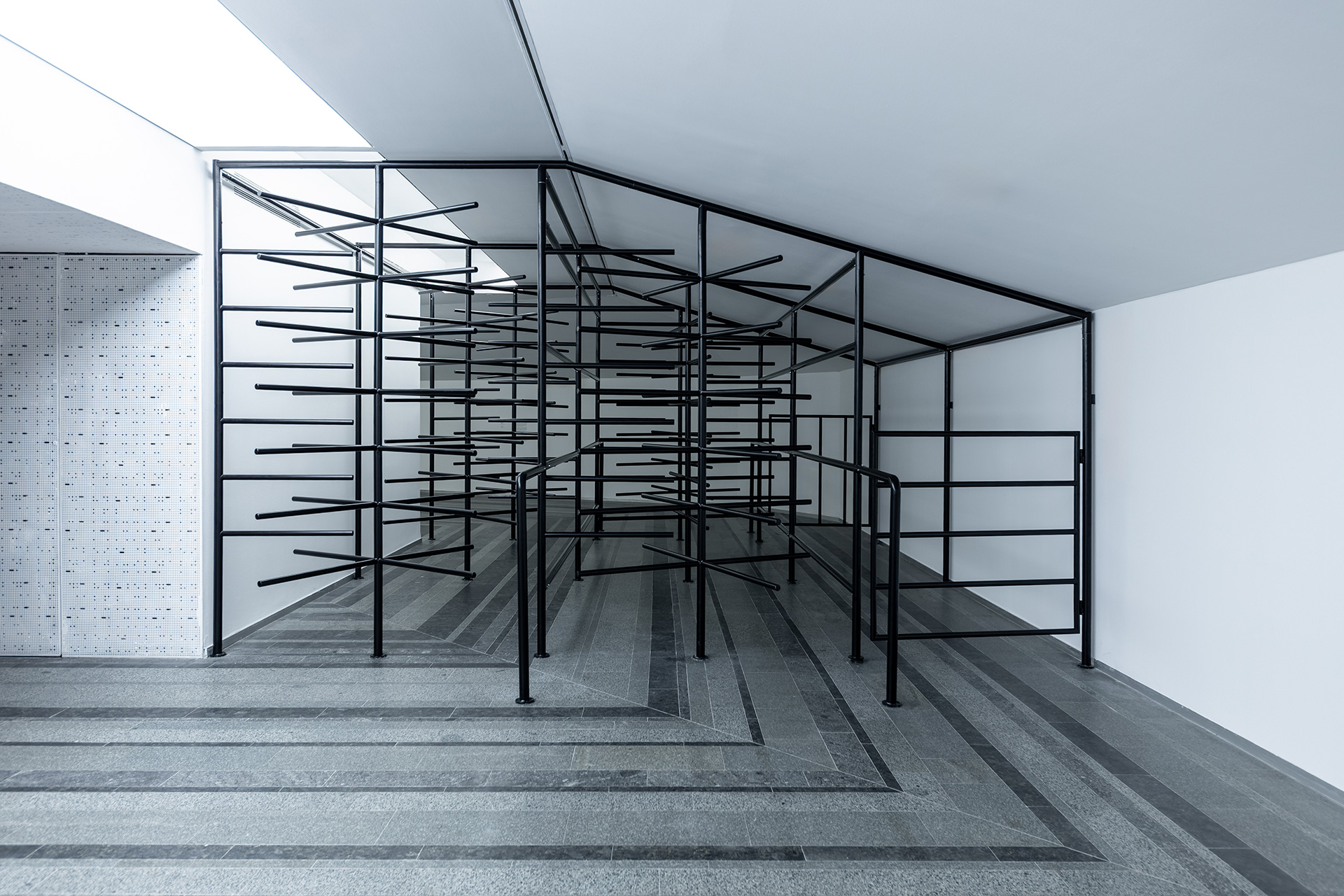
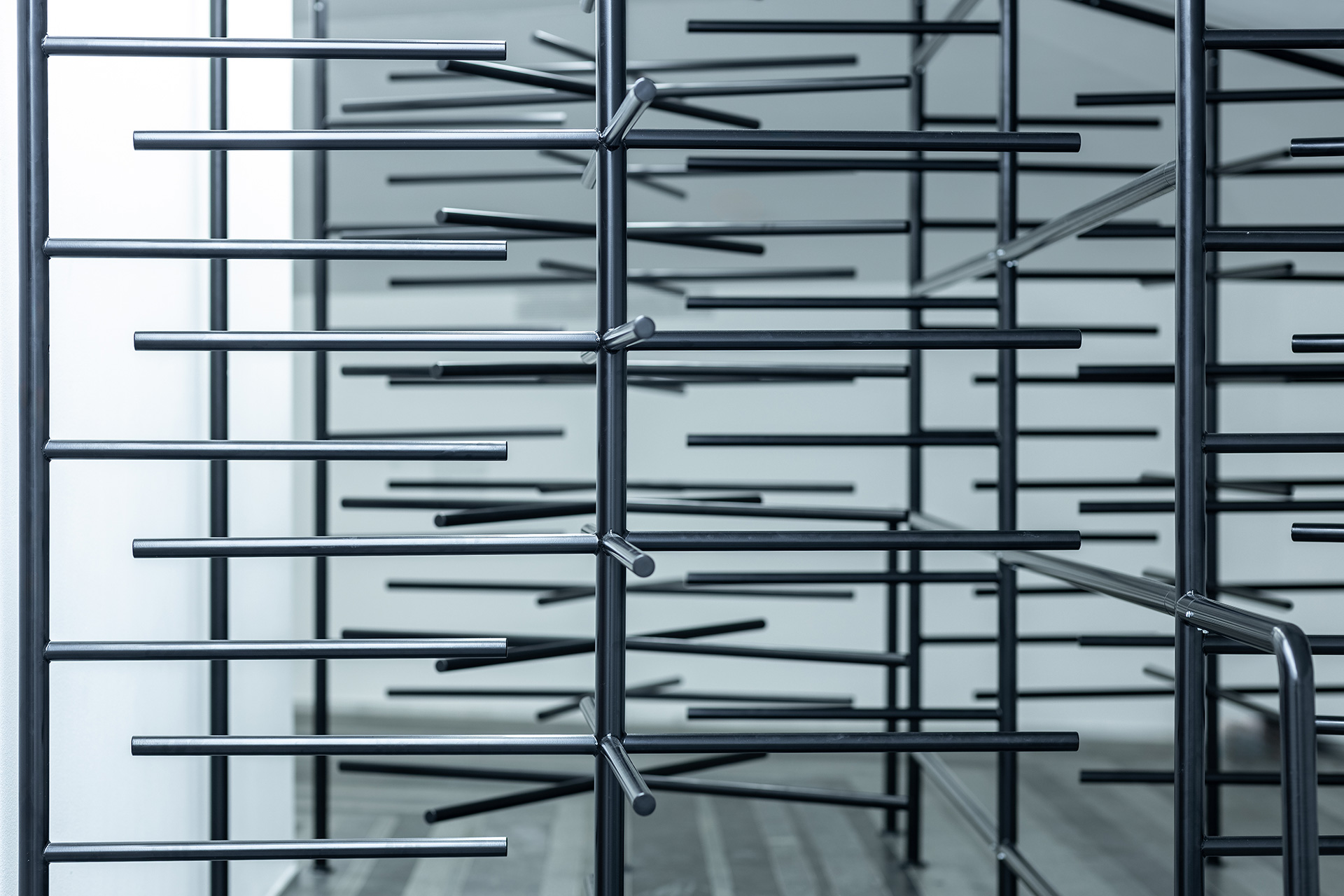
Danylo Halkin‘s installation Tourniquet was first presented in 2013, on the eve of the Revolution of Dignity and the subsequent ousting of President Viktor Yanukovych. The work is constructed in a way that makes it impossible to move further through the exhibition without interacting with it. The structure, consisting of a sequence of turnstiles, is an essential part of the viewing experience.
After passing the first turnstile, the body’s movement becomes strictly regulated: the direction and speed are determined by the structure itself. It directly affects bodily sensations, causing discomfort and tension. The work is thus a commentary on the experience of subordination, where the body finds itself completely dependent on external constraints. Tourniquet becomes a metaphor for the grip of power and one’s interaction with power structures, when even the simplest actions require permission and are subject to enforced restrictions on freedom, movement, and choice.

In his artistic practice, Taras Kamennoy often turns to his own experience. He carefully examines the systems and rules that define the social situations in which he finds himself. After completing his service in the army, the artist began to create graphic works using a wood burner on plywood. Their visual language resembled schematic drawings and the instructions used to regulate army life and discipline.
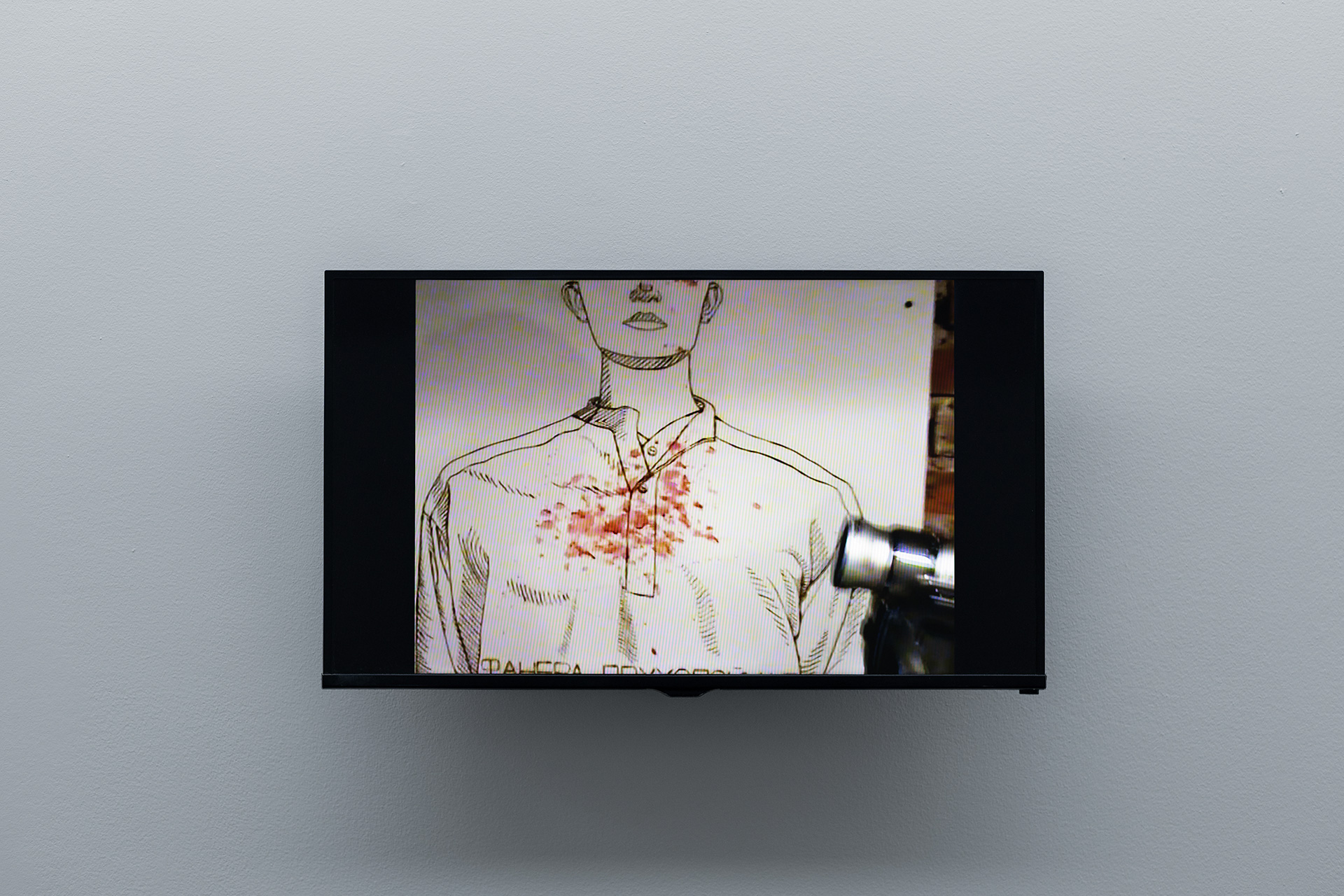
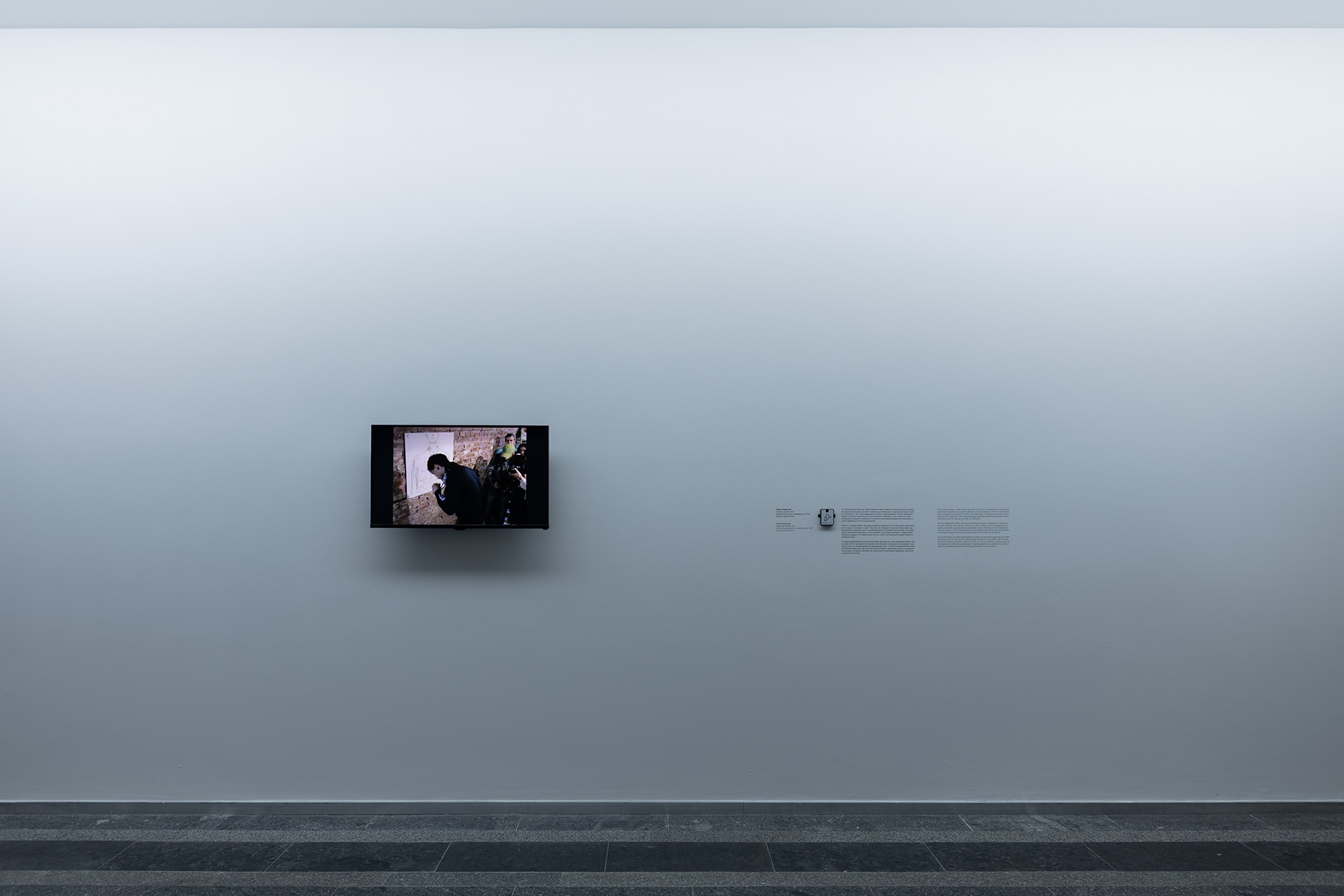
The work Aggression Meter refers to the practice of hazing, widespread in the army at the time when the artist served. Violence by senior military personnel against junior soldiers was often accompanied by established rituals. Kamennoy’s work is based on one such custom, which is reminiscent of an amusement park game: you have to strike a mechanical object, and the device shows how many points you’ve scored.
In his performance, the artist reproduces this principle, but directs the aggression at himself. He punches his own self-portrait, leaving traces of blood on the surface, until his body refuses to continue the action.
Kamennoy, who, by his own admission, was also part of the system and at times benefited from privileges at the expense of junior soldiers, thus tries to resist the accepted hierarchies and critically reinterpret his own actions.
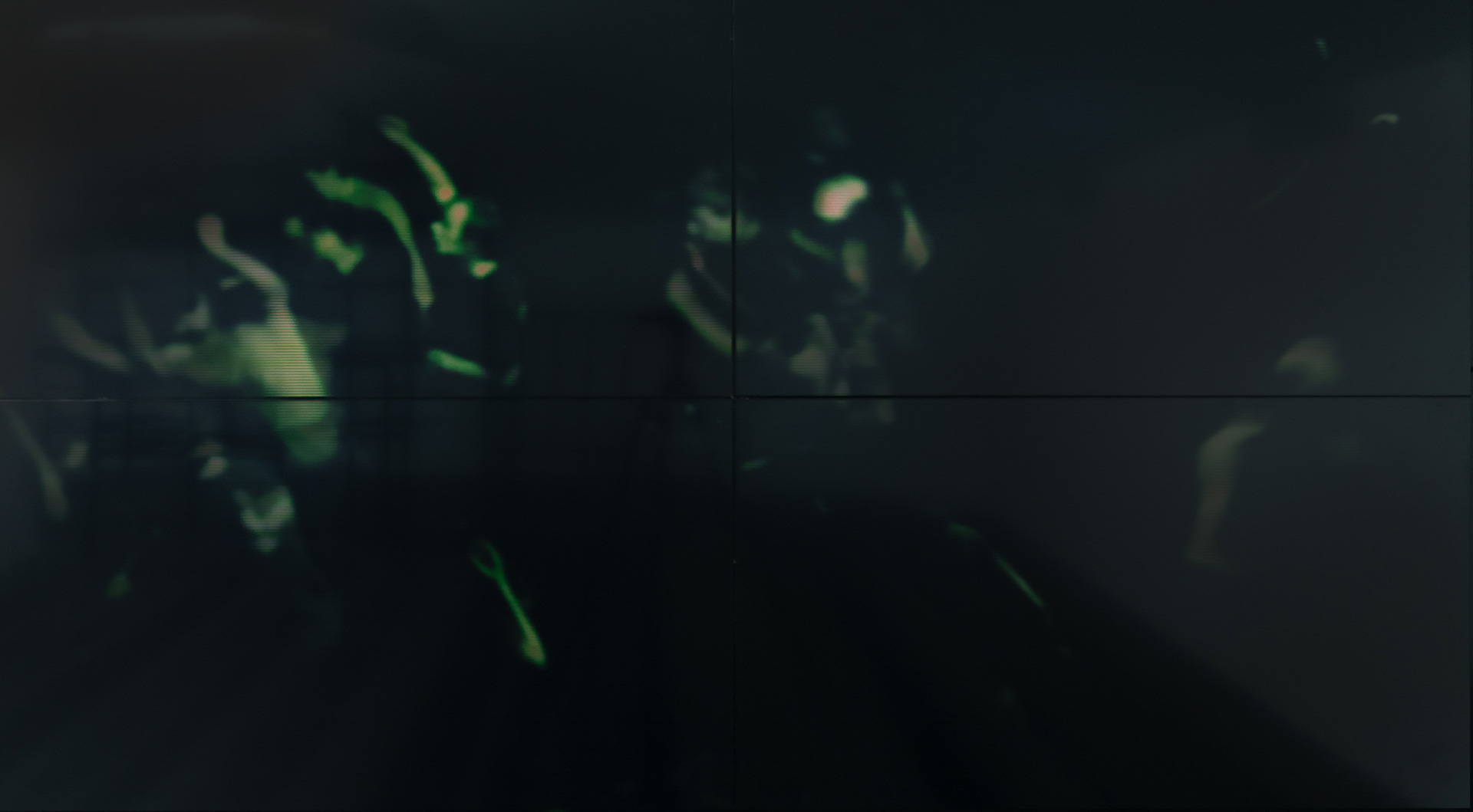
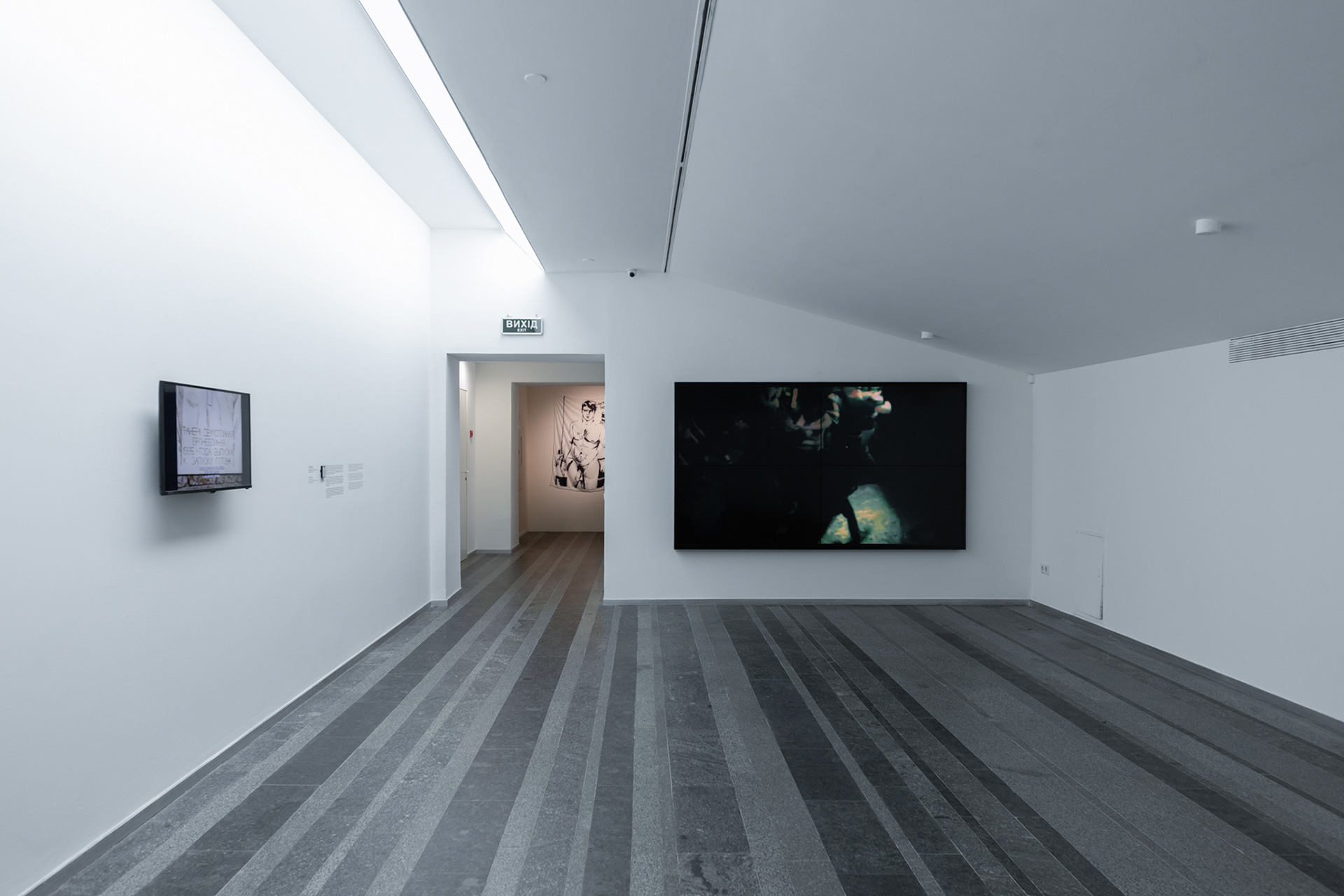
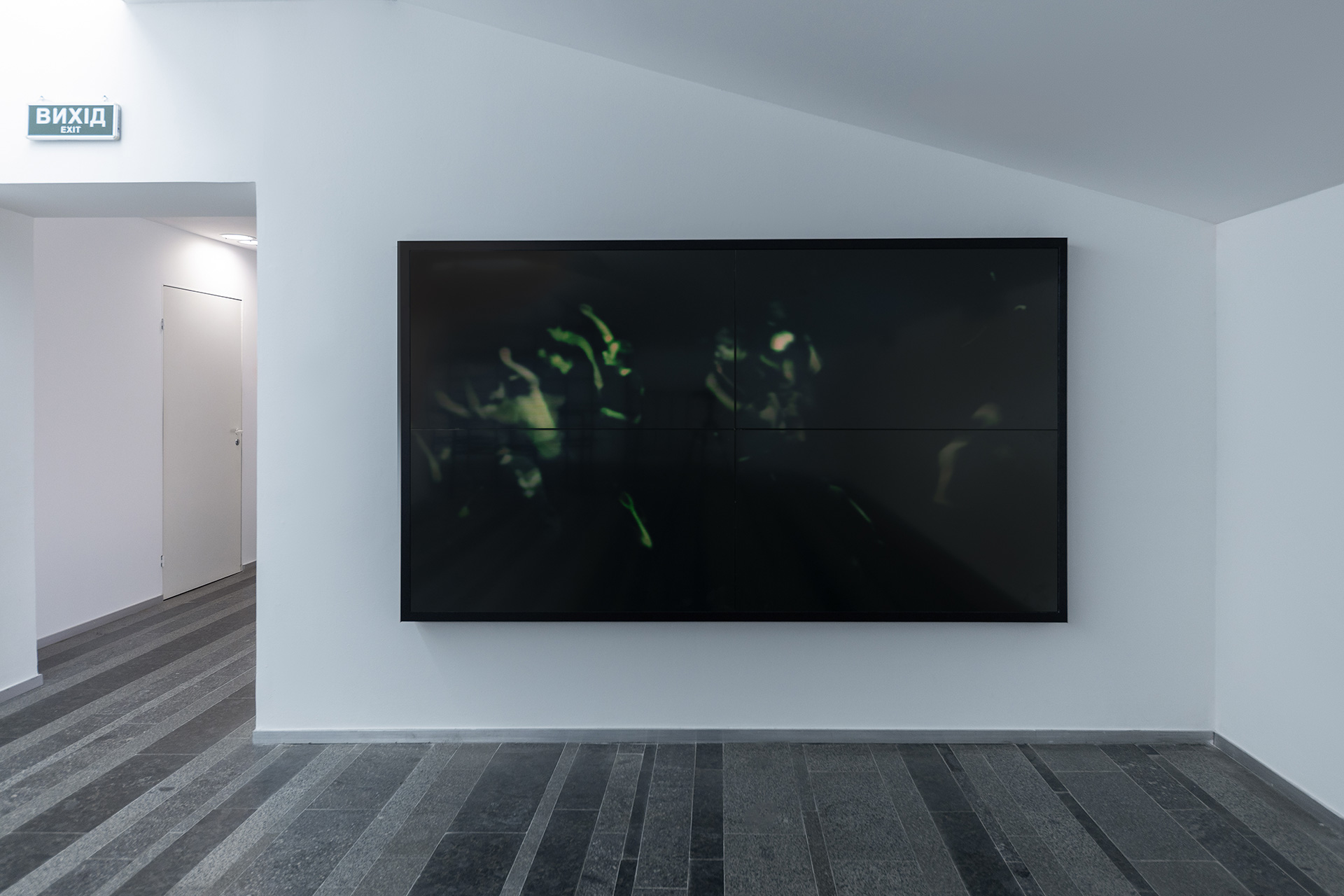
In their works, the members of the SOSкa Group often turned to exploring subcultures of the 2000s. In the video Forest, a rock concert at the Kharkiv nightclub Fort is filmed. Shot in night vision mode, it captures fragments of a slam — the pushing in the crowd characteristic of heavy music parties. In the final edit, the artists replaced the original sound of the performance with a recording of birdsong, the intensity of which fluctuates from quiet chirping to anxious cawing depending on the events on the dance floor.
The work unfolds in the tension between aggression and care. In nature, birds of prey can hide behind melodious singing; at the same time, they are capable of caring attentively for one another while remaining aggressive toward other species. A similar polarity manifests in the slam, where physical collision coexists with readiness to support those who fall. Accumulated tension here transforms into aggression by consent, regulated by the unwritten rules of interaction. Like flocks of birds, teenage subcultures form into communities where conflict and solidarity become part of a shared experience.
Anatoliy Belov‘s artistic practice revolves around exploring corporeality, sexuality, and queer identities. He often created his early graphic series for public spaces. In them, the artist spoke to a broad audience, drawing its attention to the lack of visibility of LGBTQIA+ communities and making their vulnerable position visible in the context of the homophobic attitudes prevalent in the country.
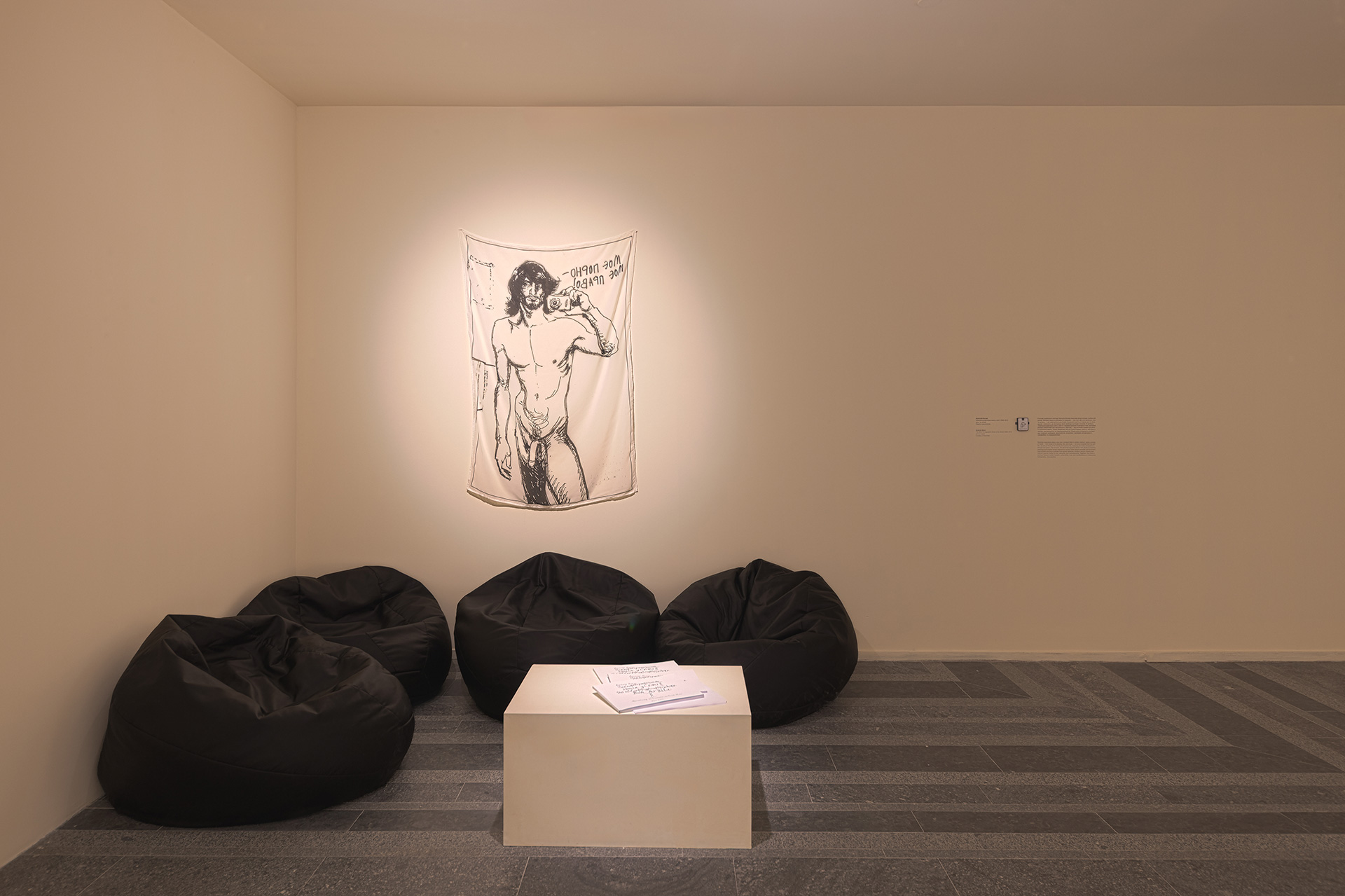
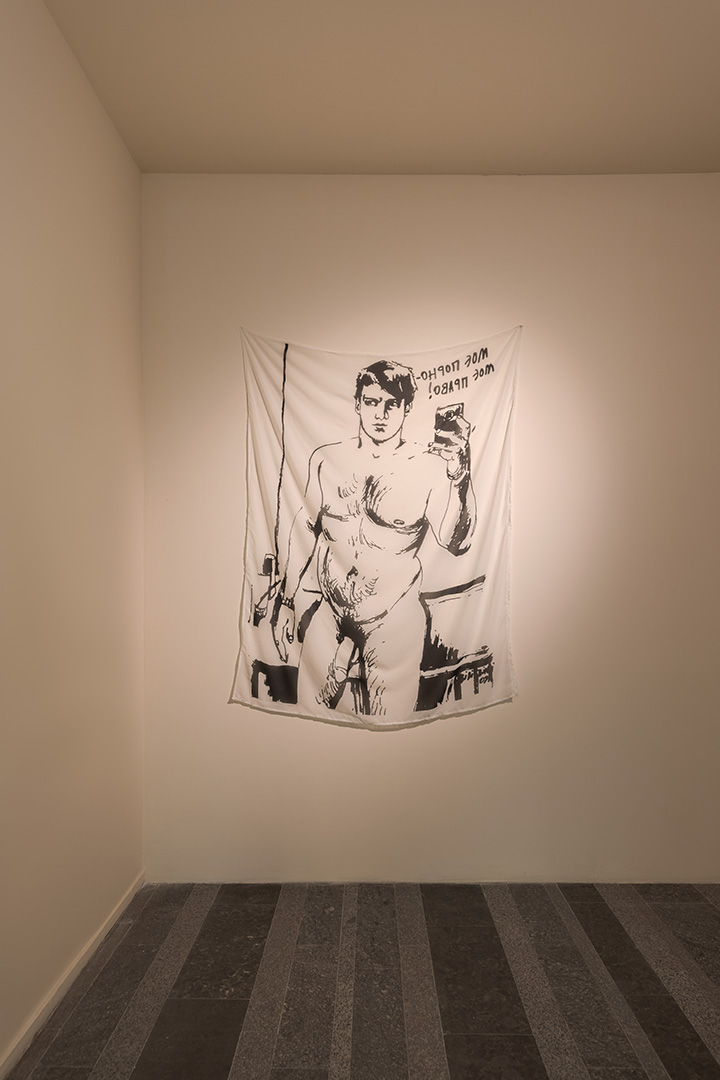
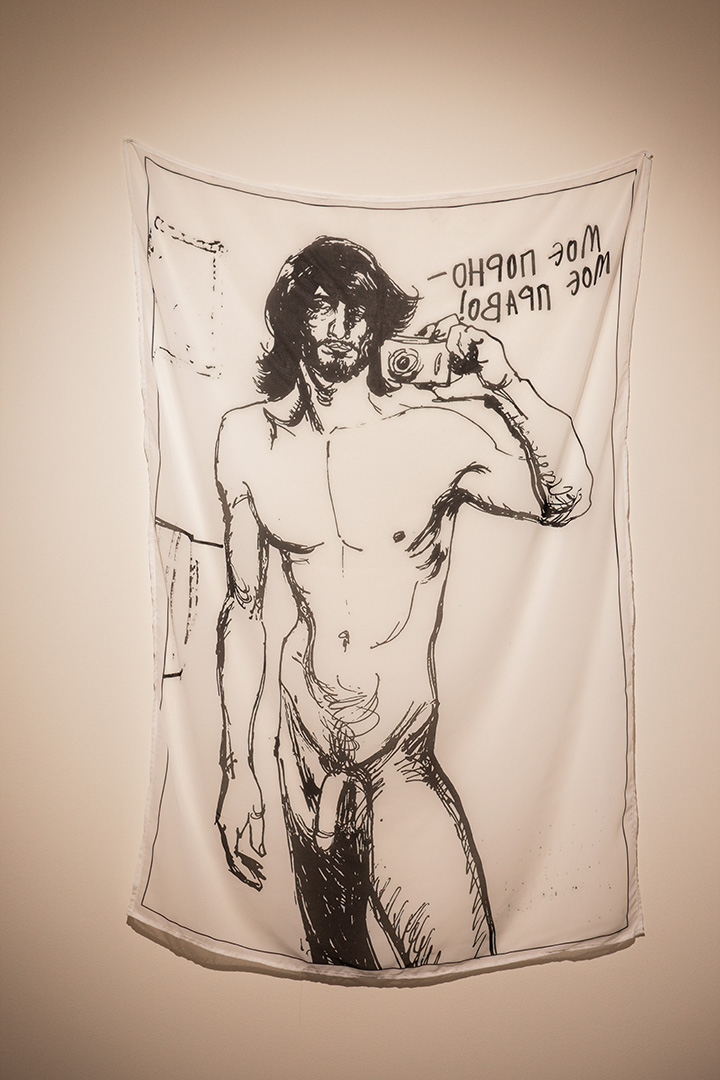
Among such works is the series My Porn — My Right! which emerged as a reaction to the adoption of a law to combat the distribution of pornography. The vagueness of how the law was formulated and the unclear definition of pornography created a situation where even private intimate photographs could potentially become the subject of criminal prosecution. The works depict naked male figures in interiors reminiscent of private homes. At the same time, the mirror-written slogan from the series’ title creates the effect of a view from a lineup room — an allusion to the police procedure of identifying suspects. In this way, the artist problematizes the boundary between private and public, raising questions about the right to a personal life in which sexuality can exist beyond the threat of persecution.
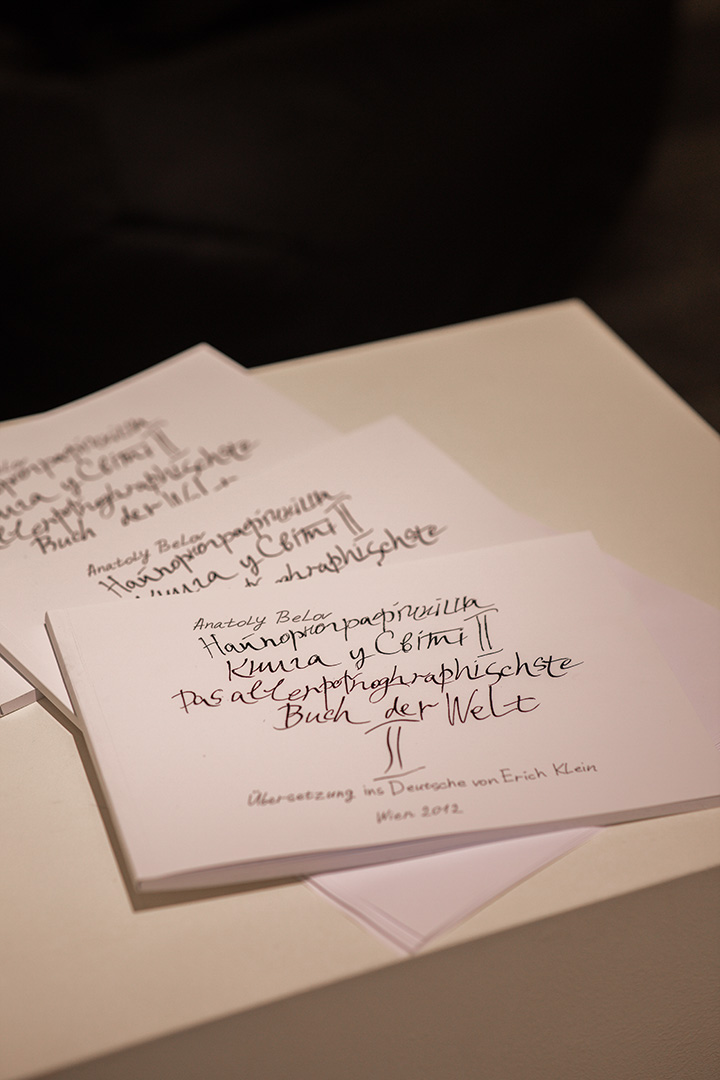
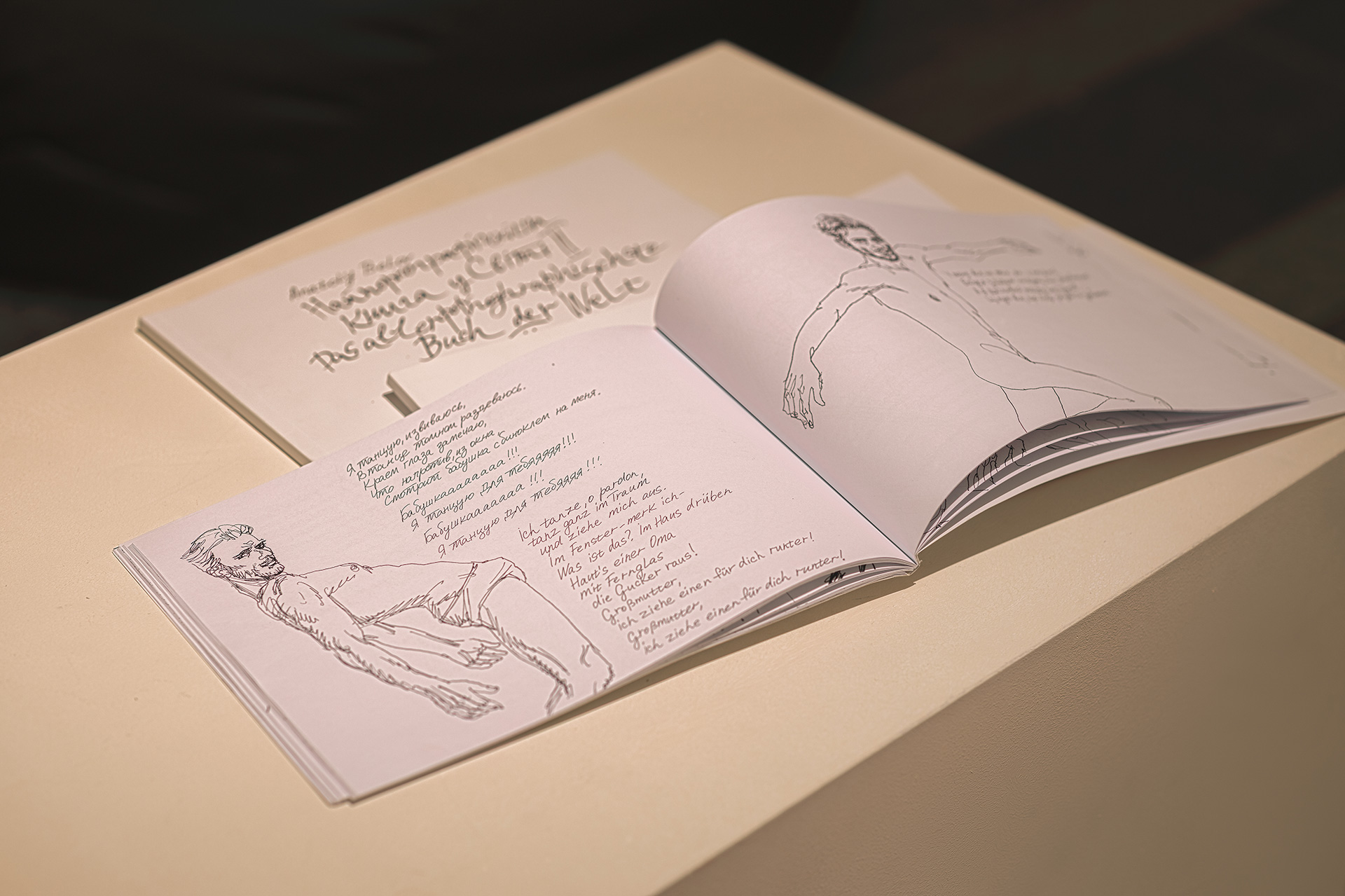
Personal experience plays a key role in Anatoliy Belov‘s artistic method. Using a variety of media — from street art to drawing, film, and music — he turns to stories from his own life, as well as those of his friends and community, exploring the limits of freedom of thought and action. The art book The Most Pornographic Book in the World 2 combines drawings and original songs inspired by various ideas about sexuality and eroticism, from ancient sources to quotes from social networks. Another source of texts was Internet queries related to sex, sexuality, and homosexuality. Together, they form a contrast between bodily freedom, vulnerability, love, and manifestations of intolerance, homophobia, and prejudice.
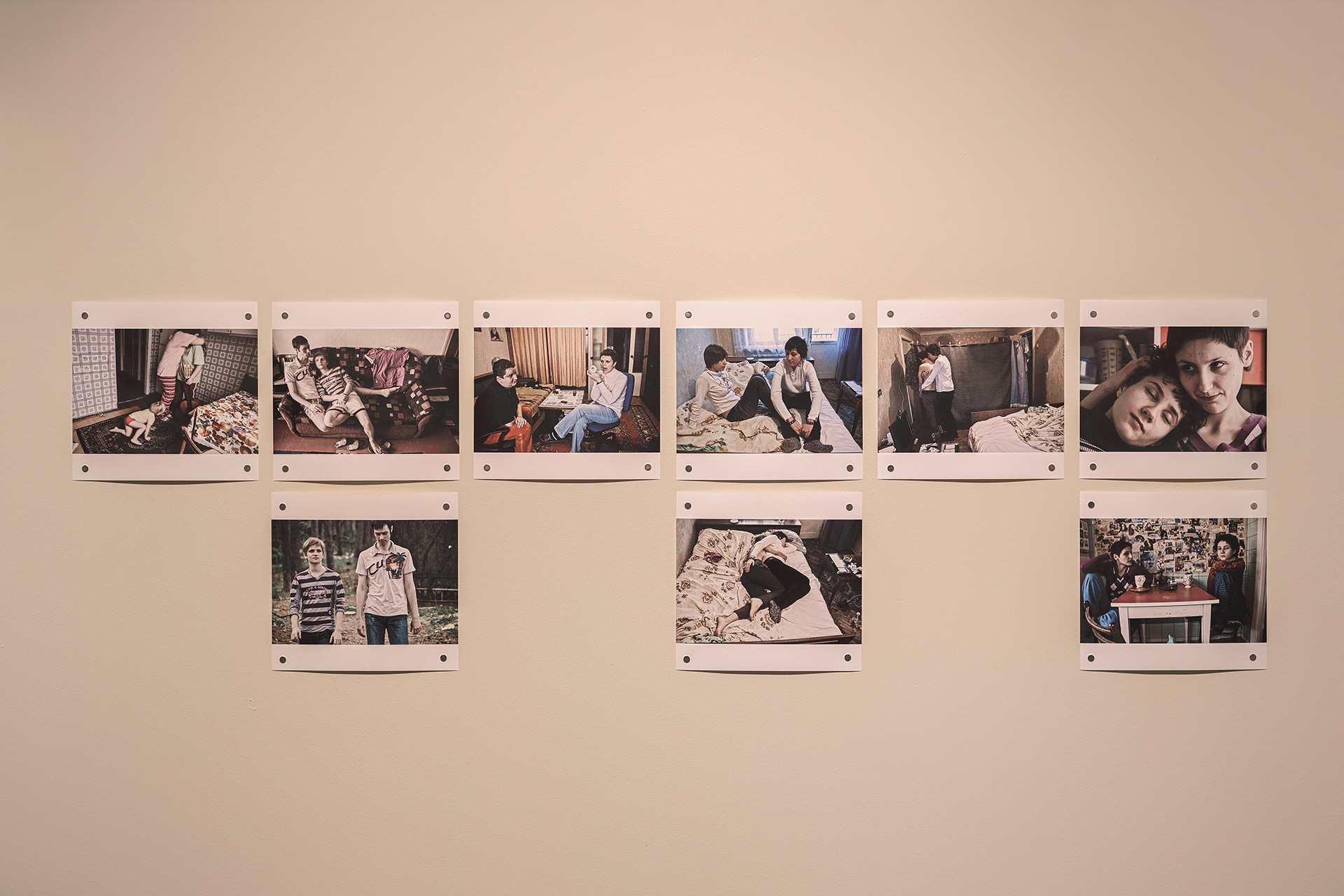
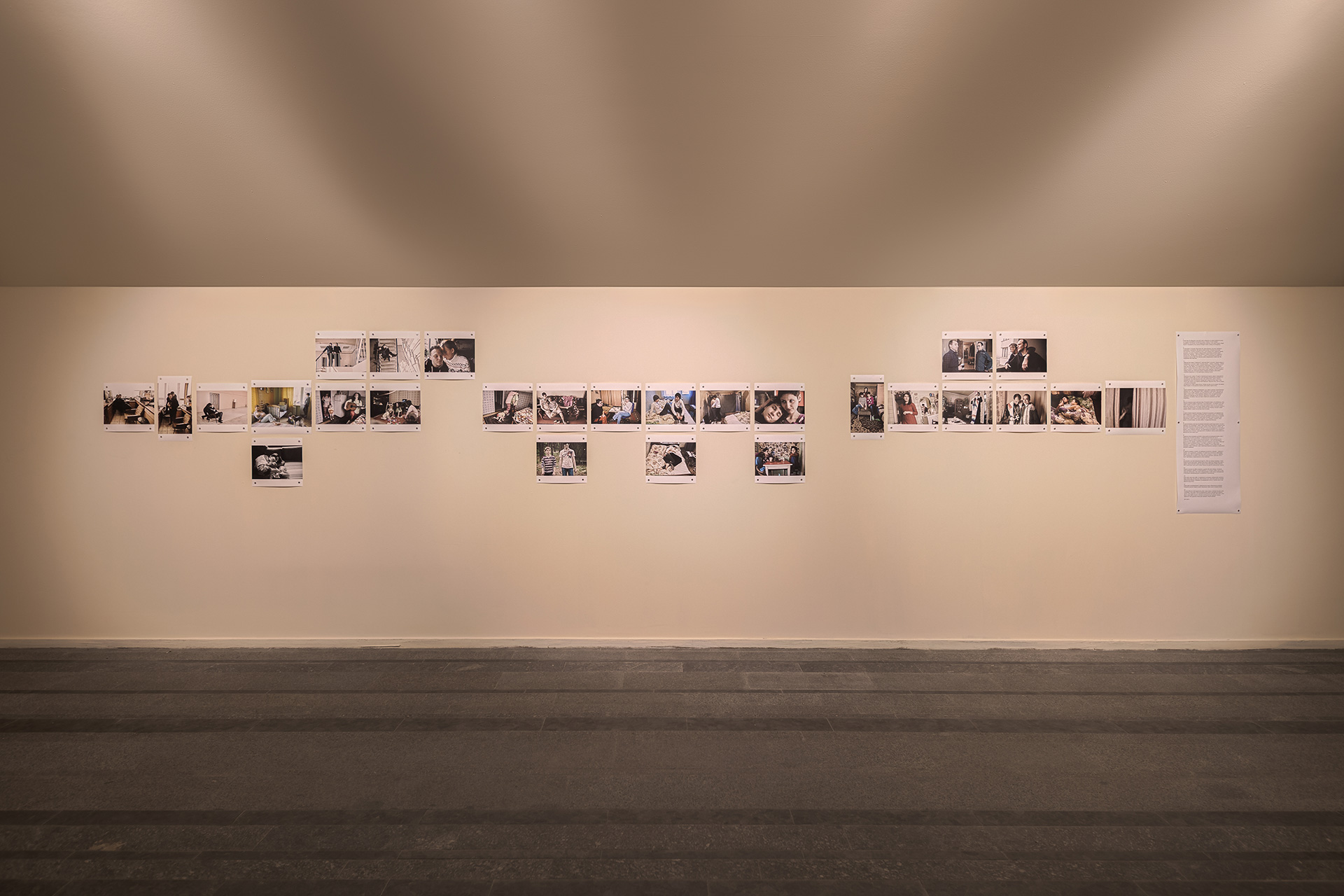
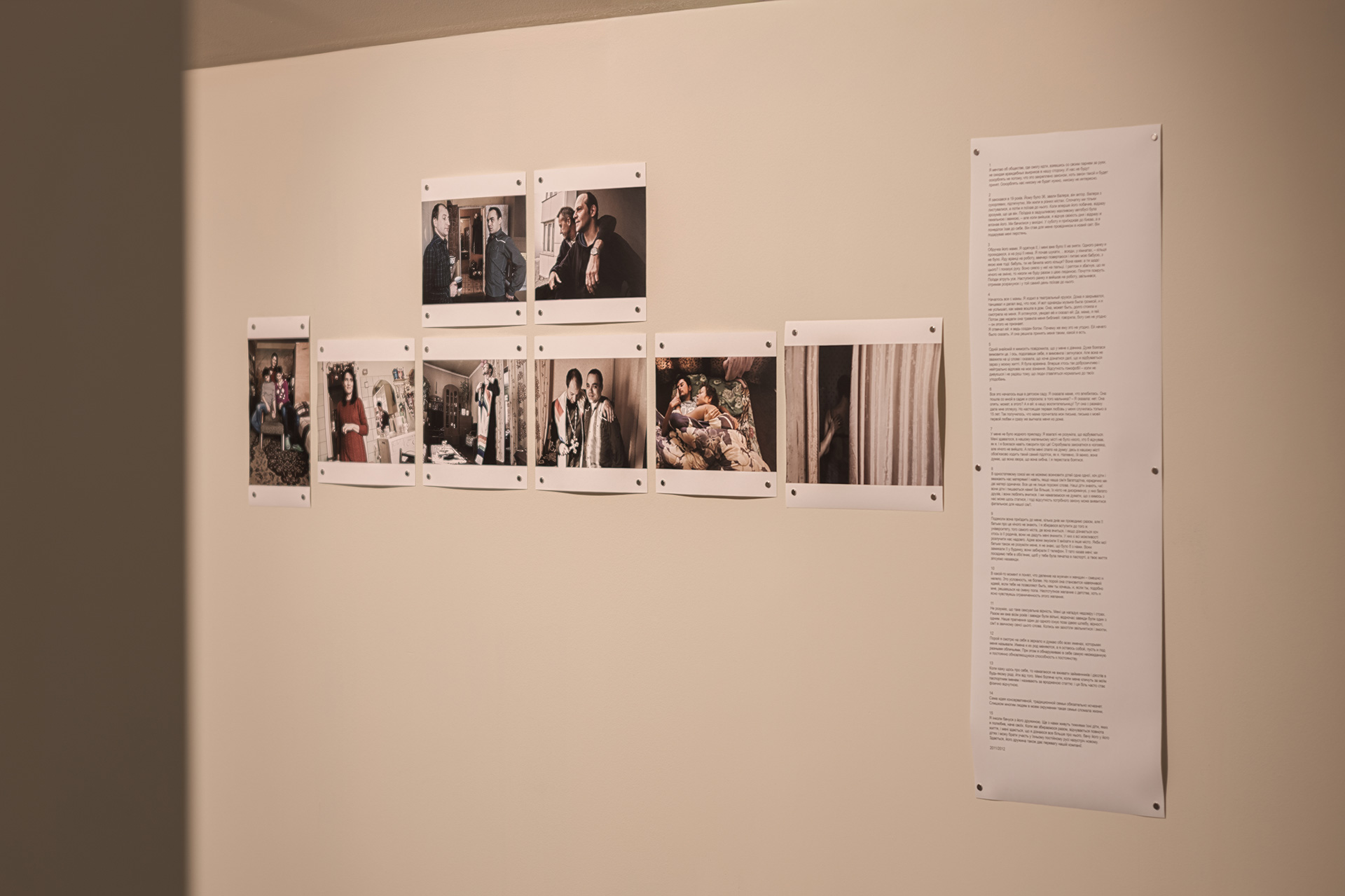
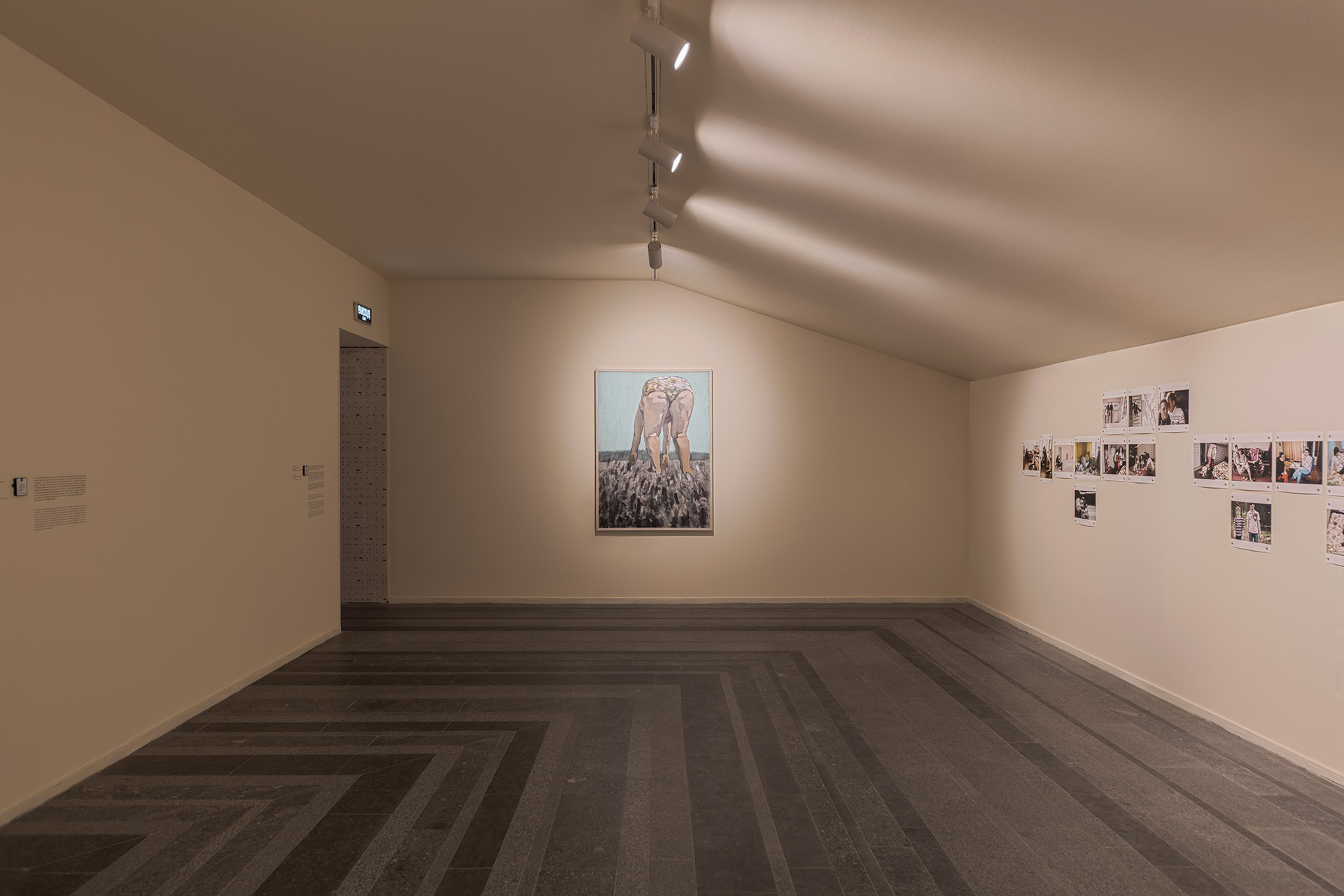
Yevheniia Belorusets‘ series A Room of My Own documents the lives of LGBTQIA+ and queer families whom the artist met during her travels through Ukrainian cities. In photographs taken in private homes, intimate scenes of closeness and daily routine contrast with a sense of forced isolation. Due to the risk of persecution based on sexual orientation and gender identity, public spaces emerge here as a zone of potential threat.
The texts that accompany the photographs are an integral aspect of the work. They are written based on conversations with the protagonists who agreed to share their own stories. Despite the danger of public condemnation, they speak openly about their daily lives and the challenges they face.
In 2012, the artist’s solo exhibition presenting the series A Room of My Own as part of the parallel program of the Kyiv Biennial of Contemporary Art ARSENALE 2012 was attacked: two men damaged the display, tearing and scratching the works. This incident was not only testimony of the homophobic attitudes prevalent in society but also confirmed the fragility of the very safety that the series addresses.
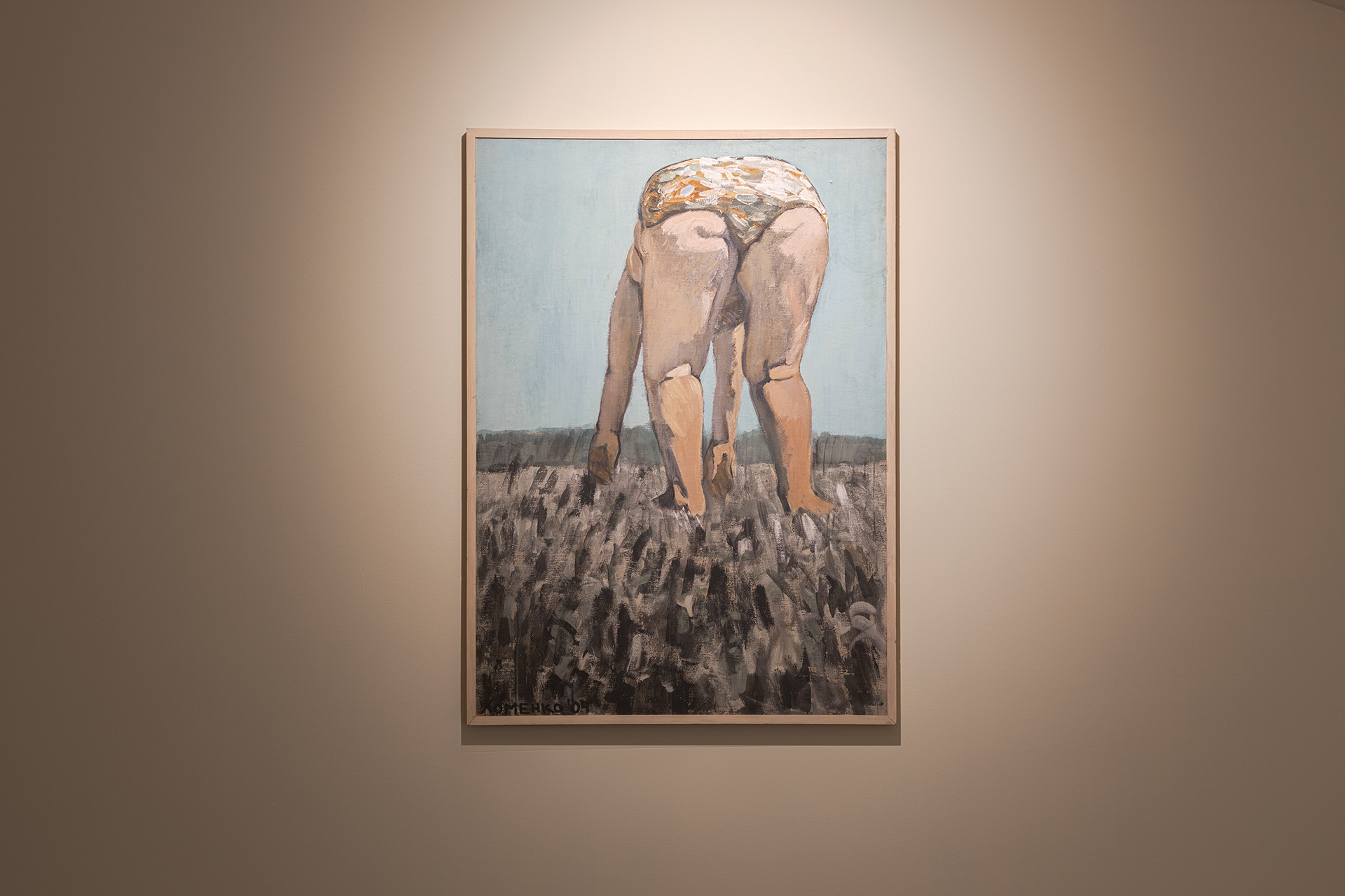
The subjects of Lesia Khomenko’s painterly series Dacha’s Madonnas are women working in the flowerbeds of their country plots. There is no judgement, they are shown in swimsuits or underwear that is comfortable for physical labor, engaged in working the land or during a short break.
The artist turns to the culture of dacha life and offers a critical view of common notions about the body formed by Soviet authorities and inherited by independent Ukraine. Young, athletic, and healthy — these were the bodies shown on propaganda posters, bas-reliefs, and painted canvases, in cinema and official documentary chronicles. These images reinforced norms about which bodies have the right to appear in the public space and which should remain hidden and invisible.
In this work, Khomenko, who in her artistic practice often draws on her own experience of academic education, attempts to rethink traditional approaches to life drawing. She avoids idealization, instead capturing the realities of everyday women’s labor. The lowered perspective here symbolically refers to the Soviet tradition of depicting heroines of labor.
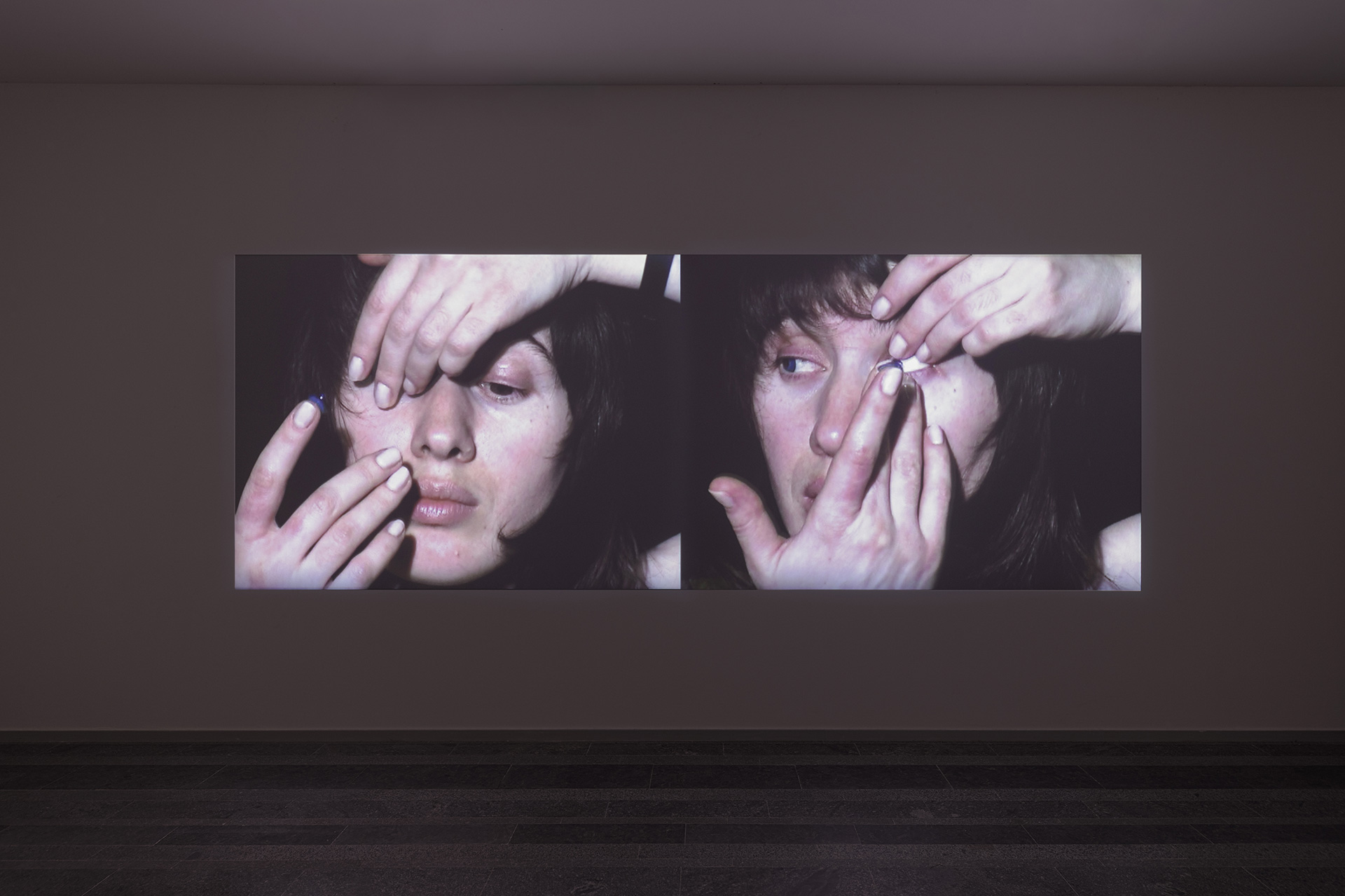
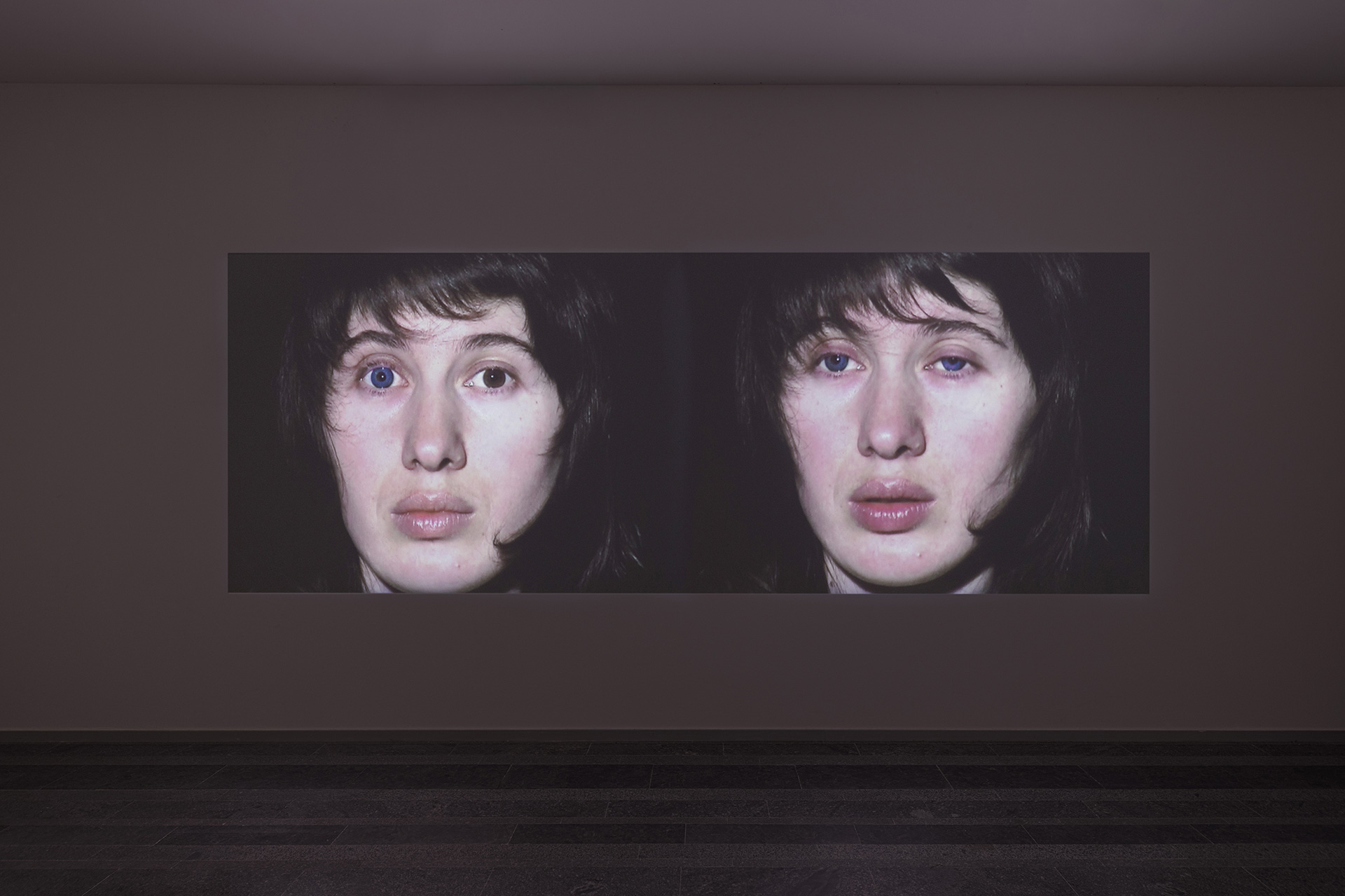
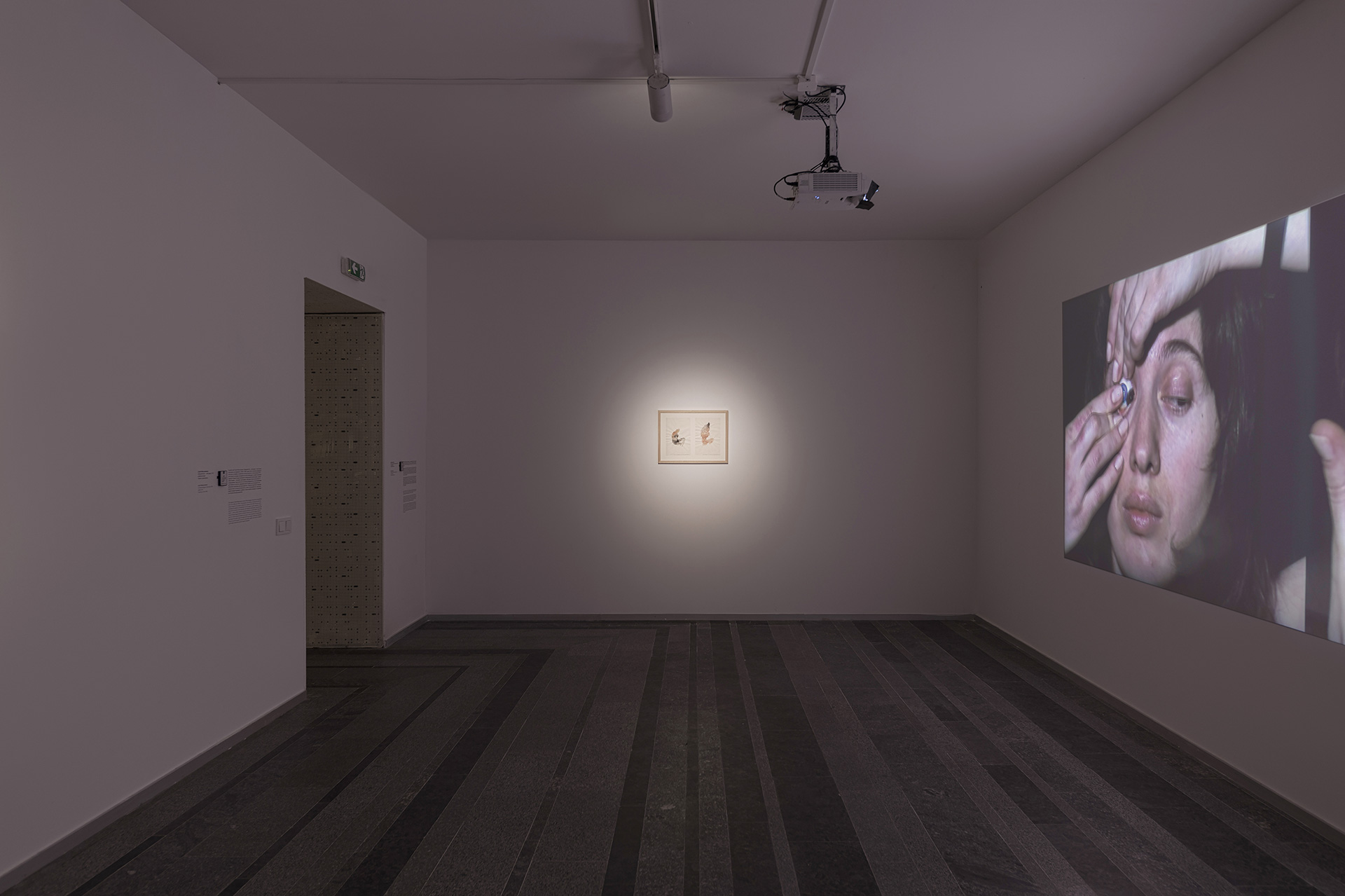
Alevtina Kakhidze’s work I Can Be A Girl with Blue Eyes consists of two videos with close-ups of the artist’s face. In slow motion, she tries on blue lenses that are supposed to change the natural brown color of her eyes. This process appears physically uncomfortable: her eyes gradually redden from irritation, and the action itself takes on a tense, almost painful quality.
This is how Kakhidze, an artist with Ukrainian and Georgian roots, responds to a comment that it would be “beneficial” for her to change her eye color, and it would look natural. The work raises the issue of standardized notions of female beauty and the expectations imposed on a woman’s appearance. This gesture, however, can also be viewed as something else: an act of emancipation, a conscious choice to define and change the ways one’s identity is represented.
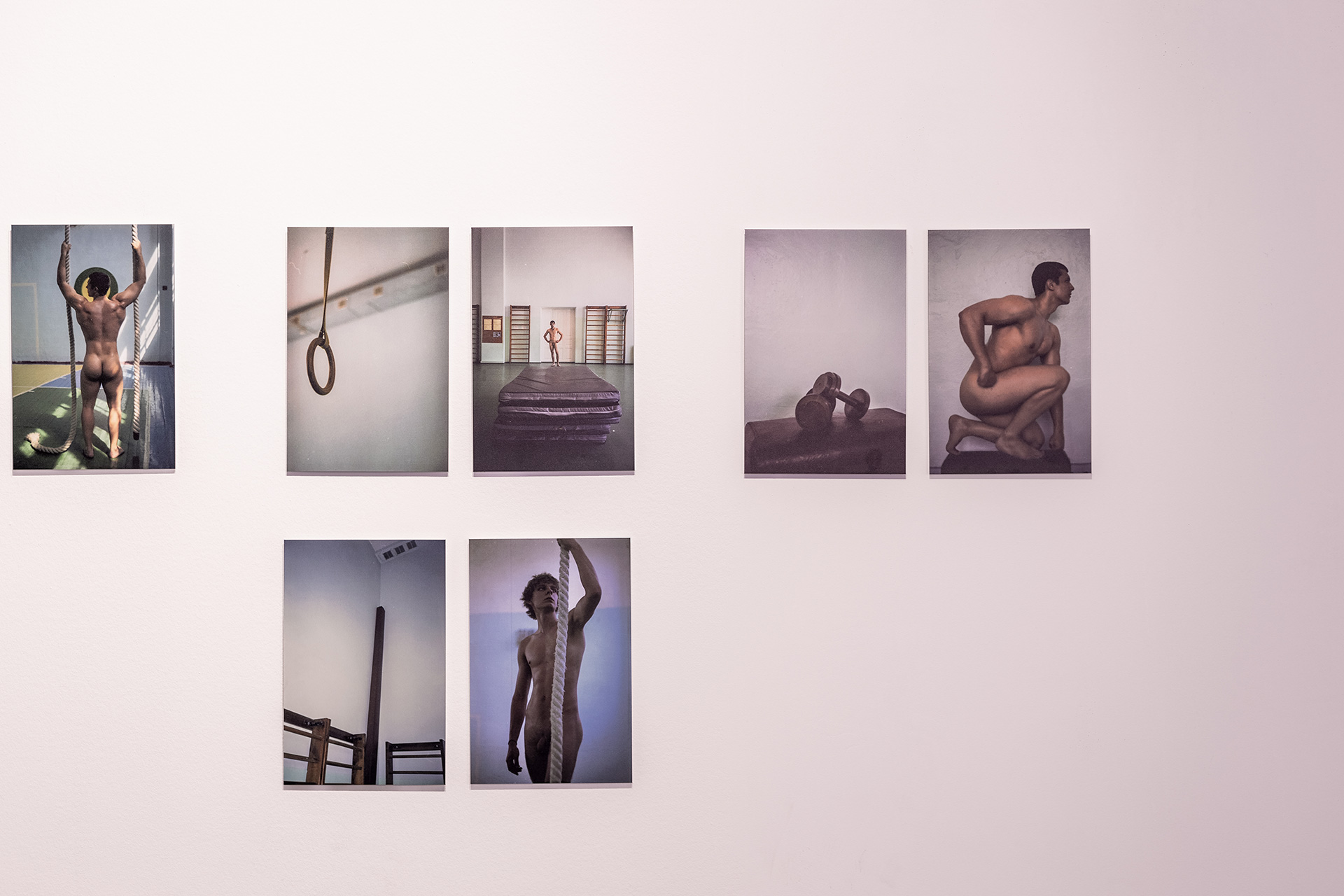
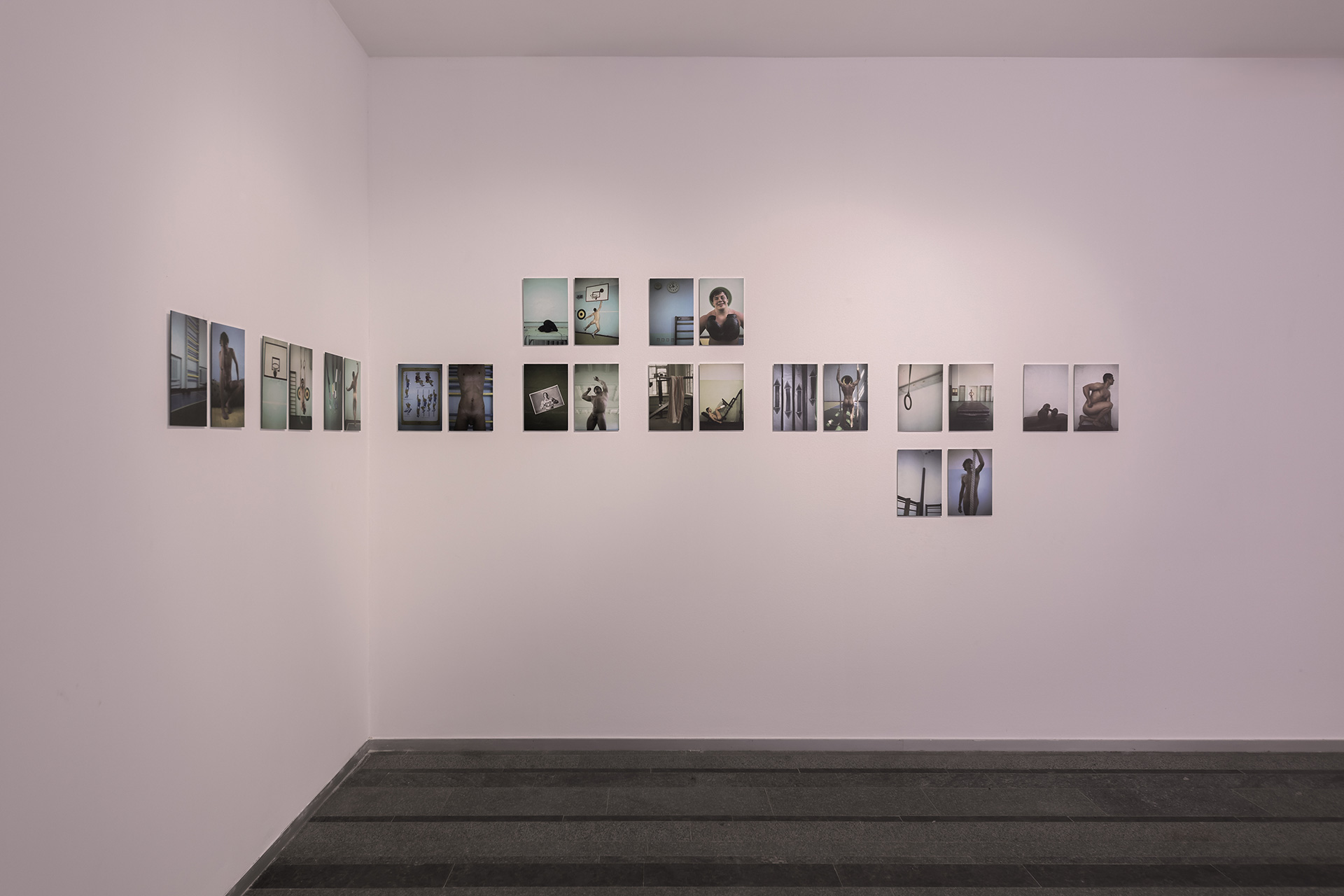
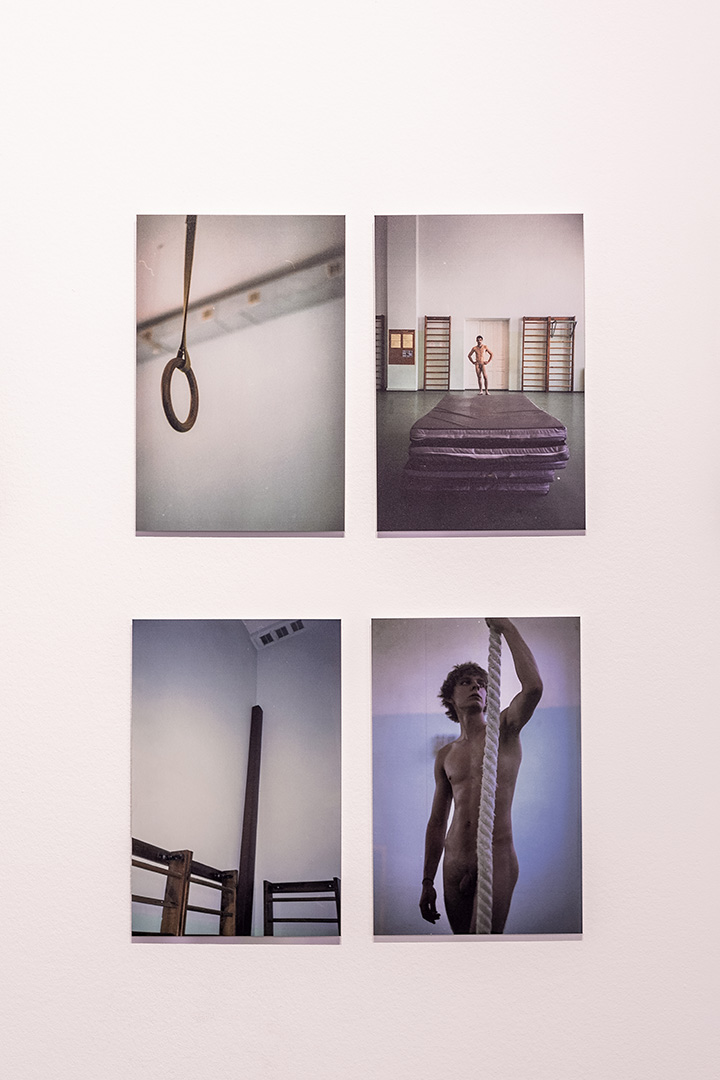
The subjects of Serhii Melnychenko‘s series Schwarzenegger Іs My Idol are young athletes born in the 1980s and 1990s. Photographed in the interiors of Soviet gyms that have barely changed in the decades following the collapse of the USSR, they pose naked, emulating the aesthetics of bodybuilders from the pages of sports magazines. These young men are united by their fascination with Hollywood blockbusters, particularly their heroes — strong, athletic symbols of physical perfection and self-discipline. Figures like Arnold Schwarzenegger became an attractive reference point for teenagers forced to seek role models beyond the limited social space of their hometowns. By capturing the gap between the global image of strength and the local reality in which these bodies are formed, the artist managed to convey the vulnerability, fragility, and in part the naivety of youth hidden behind the muscular facade of discipline.
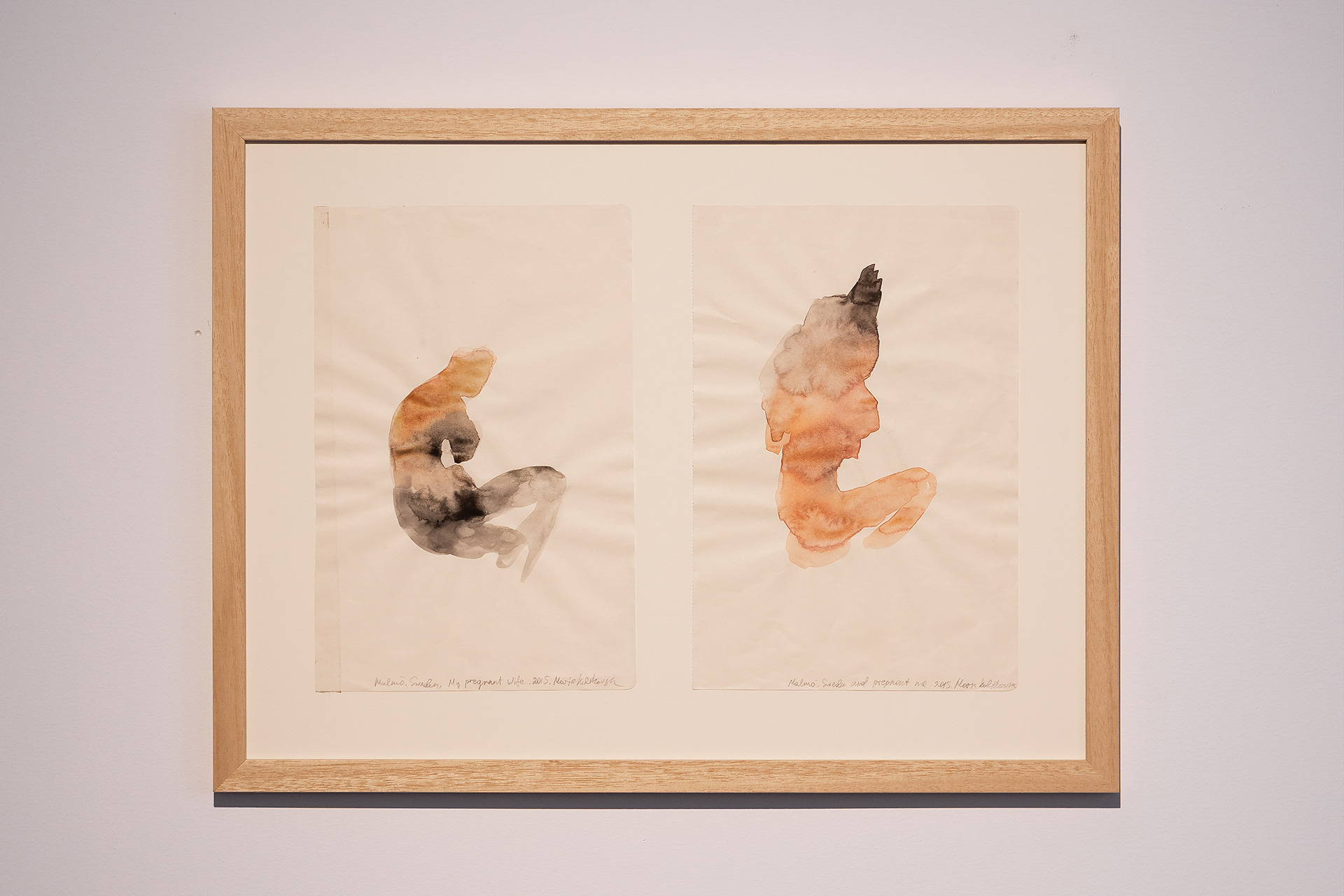
My Pregnant Wife with Pregnant Me is a watercolor diptych consisting of two small images of bodies. It is based on two personal experiences that Maria Kulikovska combines into a single statement about corporeality, loss, and the right to choose.
The first image is connected to the story of the artist and her ex-wife from Sweden: their marriage became part of Kulikovska’s performative practice. At the time, her partner was pregnant but later terminated the pregnancy. The second image refers to the artist’s own subsequent experience of pregnancy termination. These stories intertwine, forming a complex narrative about intimacy, responsibility, and bodily autonomy.
The work also reflects the complexity of decision-making in situations marked by forced migration, war, and occupation. In the instability that followed the Revolution of Dignity, the body’s vulnerability becomes especially tangible against the backdrop of a shifting political scene, leading to a loss of control, both over one’s own body and over life circumstances. The artist reflects on an experience in which the desire for motherhood, freedom, and self-determination collide with violence, external pressure, and the need for compromise.
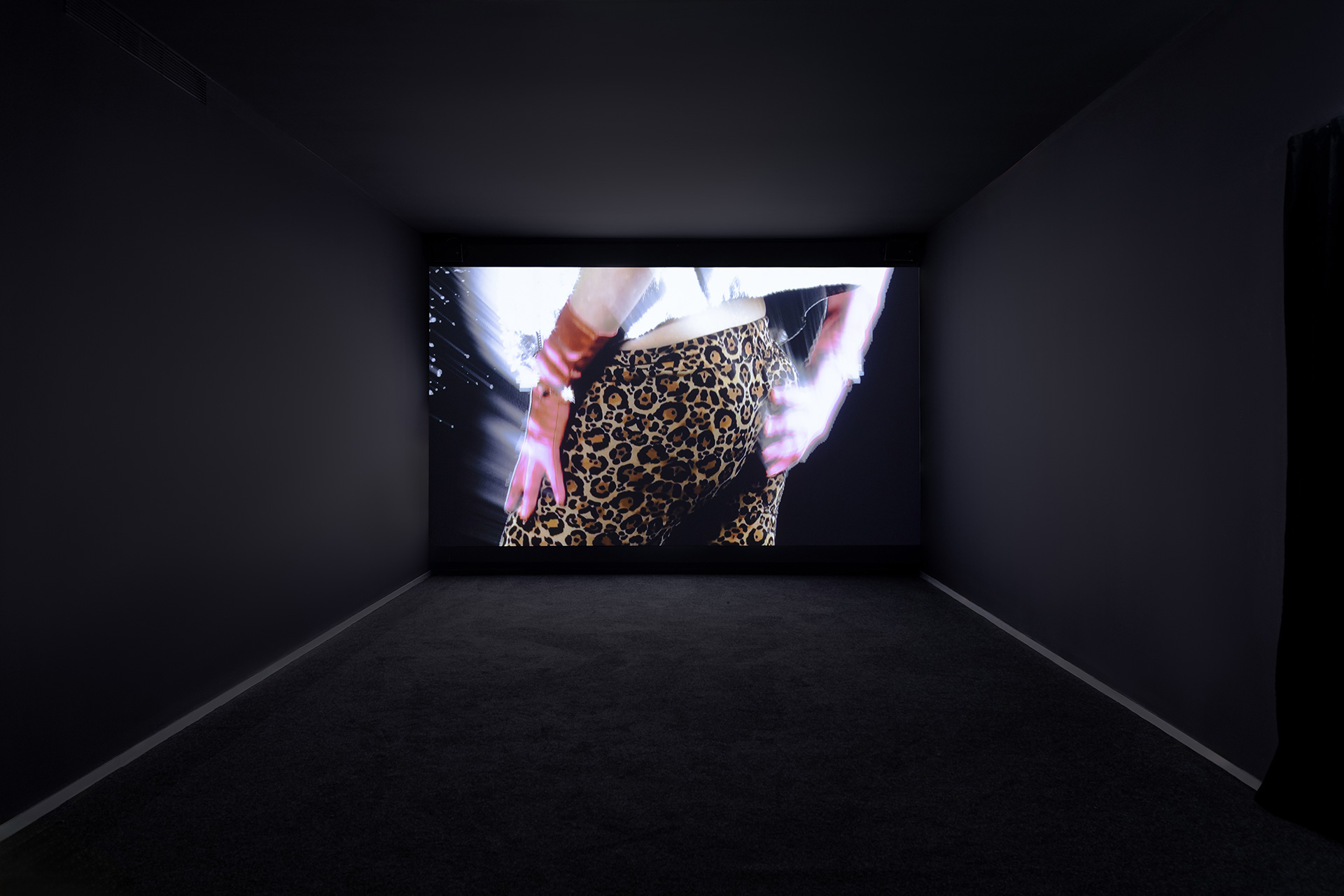
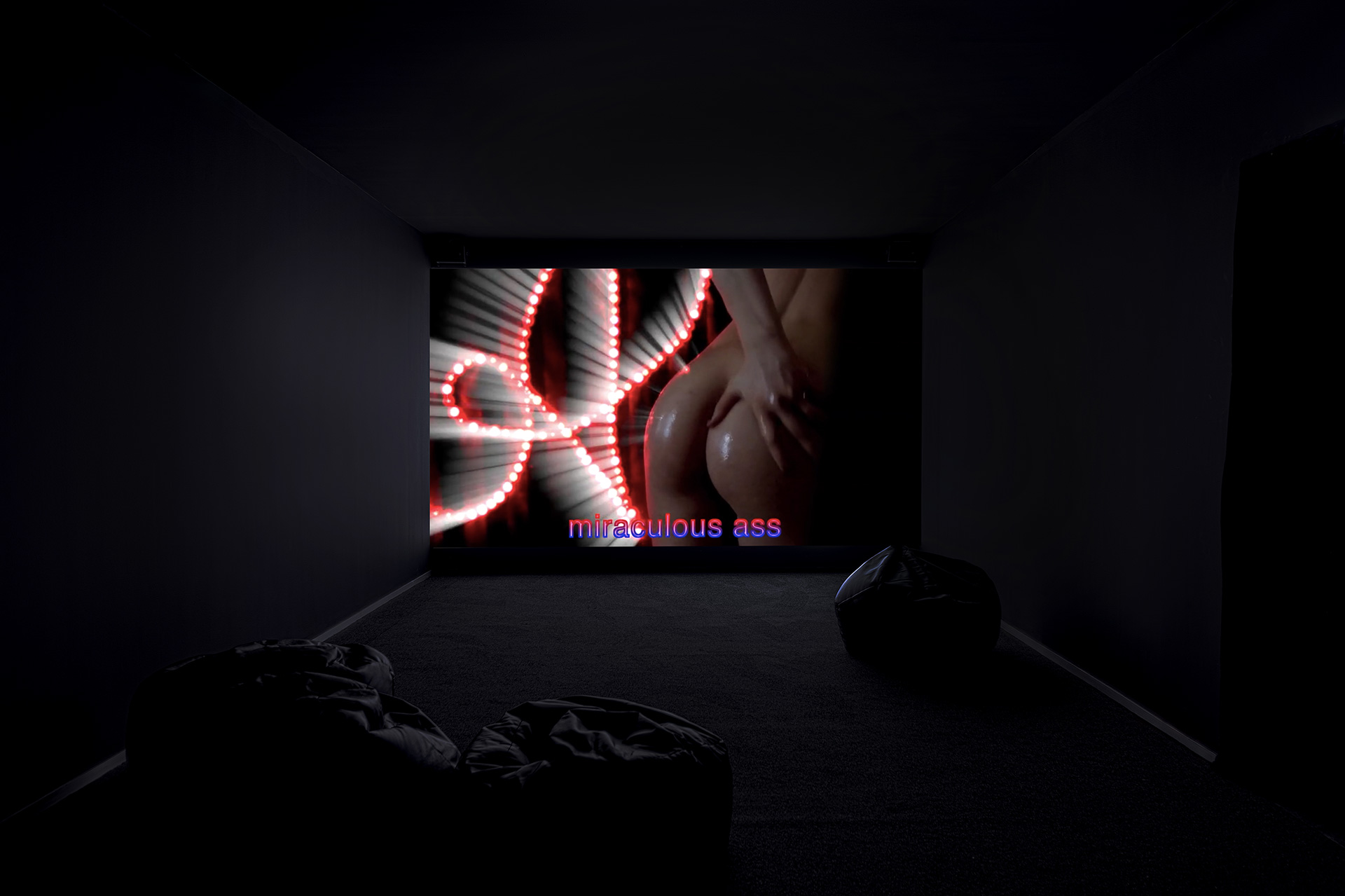
In the Super A. Shave your heart series, which includes the Miracle Ass video, Alina Kleitman plays with common stereotypes about women and the social roles imposed on them. At the same time, she undermines them through deliberate exaggeration and transgression so that the eroticized body appears not as an object of desire but as something disturbing and threatening.
The video tells the story of a modern superheroine, Super A, who gained the ability to heal all diseases and misfortunes as a result of an electric shock in childhood. However, this gift takes on an ironic dimension: the artist actually turns her own body into an object of public display and creates a kind of advertisement for herself as a product. In this way, Kleytman explores the mechanisms by which the female body is objectified and commercialized, pushing them to the point of absurdity. She shifts the focus from attractiveness to discomfort, forcing viewers to rethink their own perspective and role in reproducing these stereotypes. By combining humor and provocation, the artist creates space for critical reflection on how desire, the body, and power are intertwined in contemporary culture.