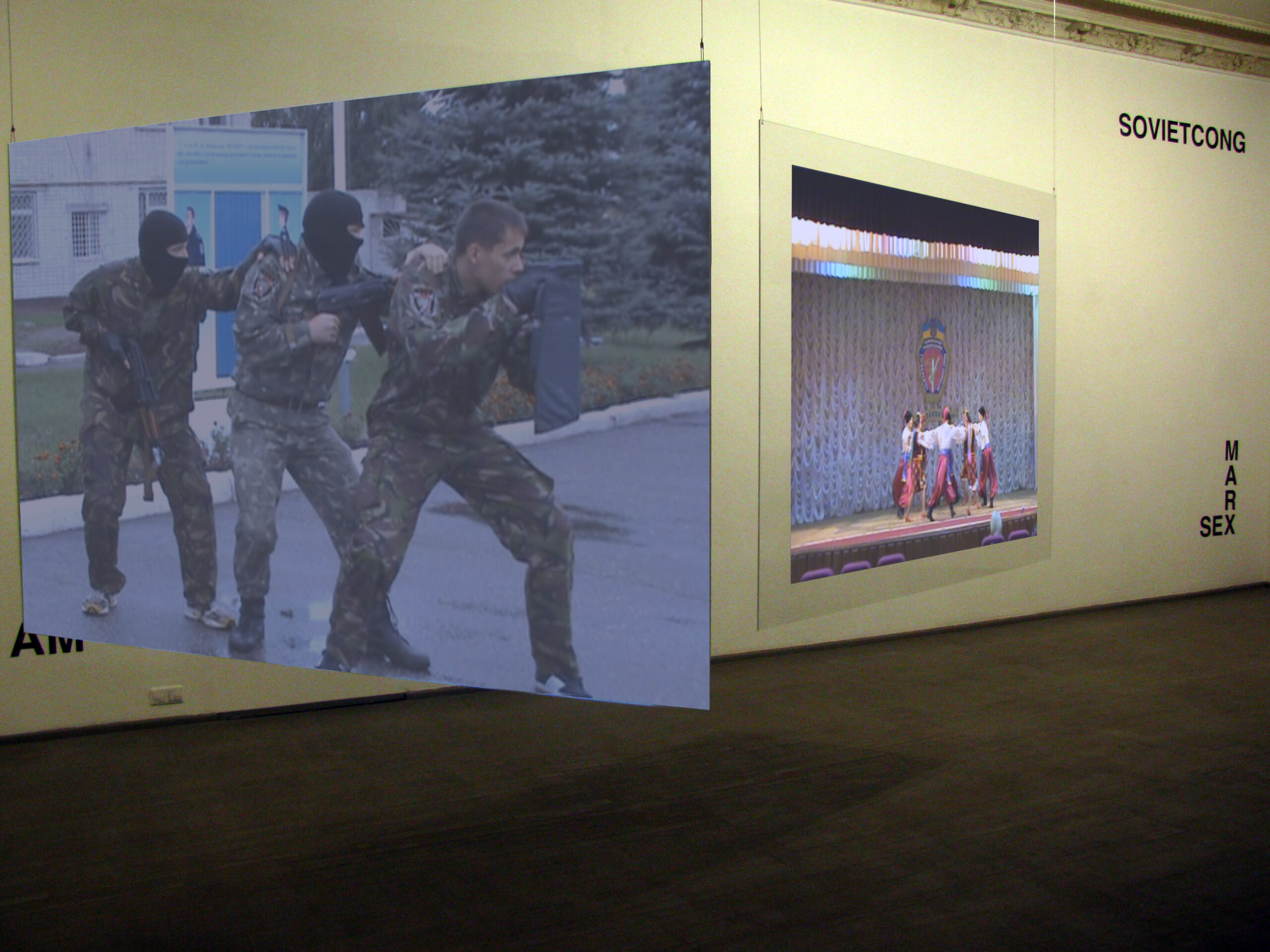
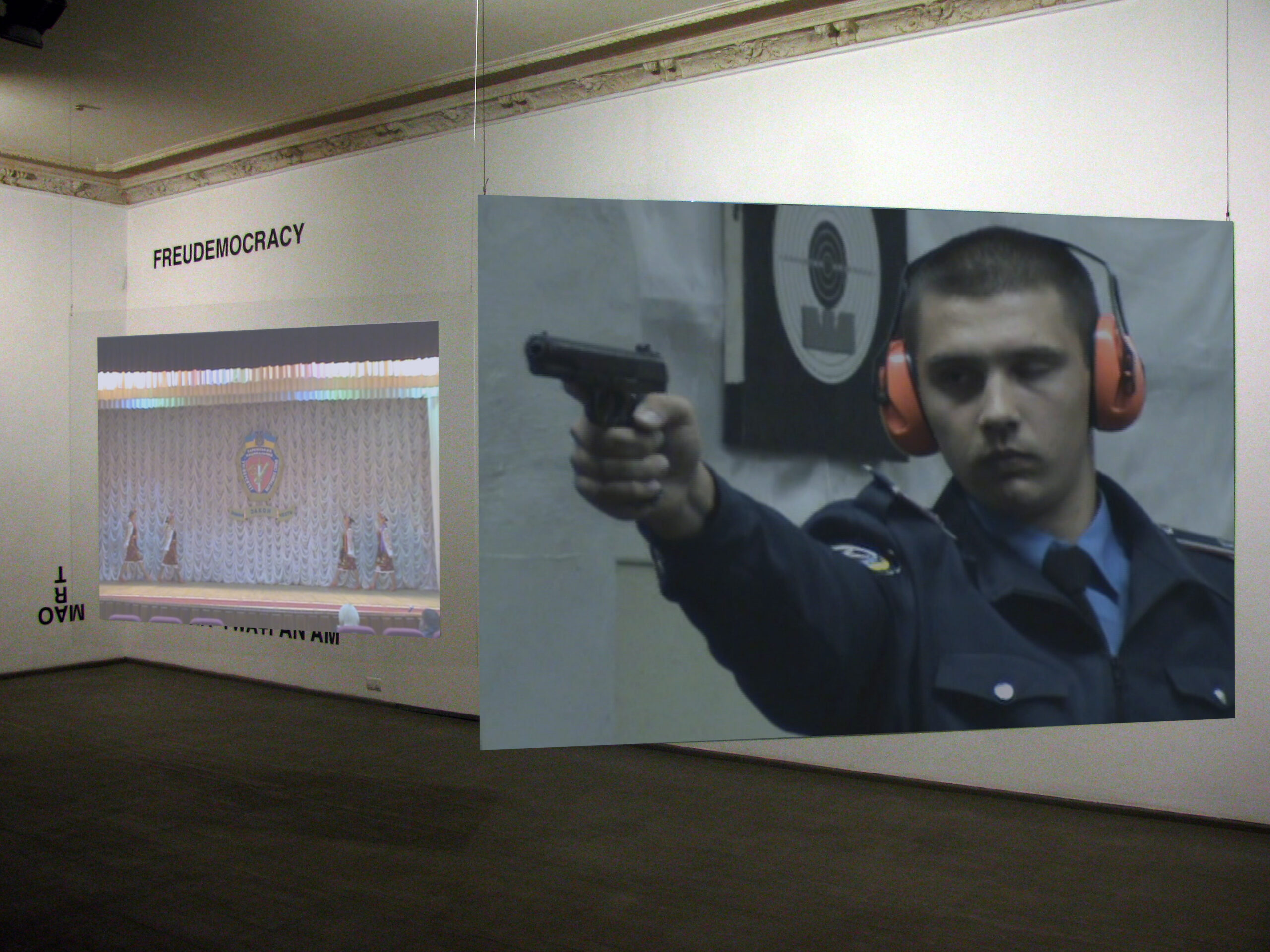
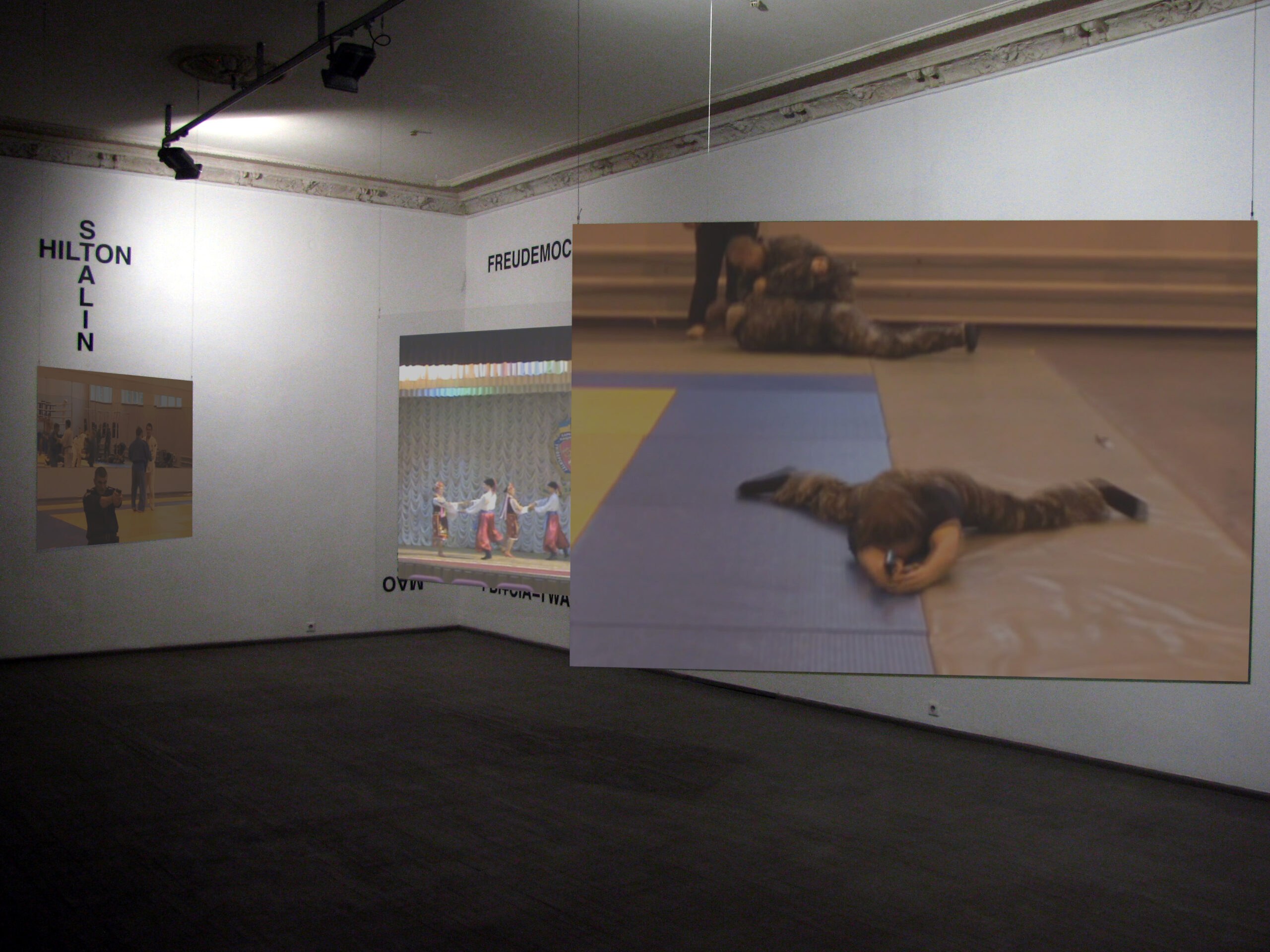
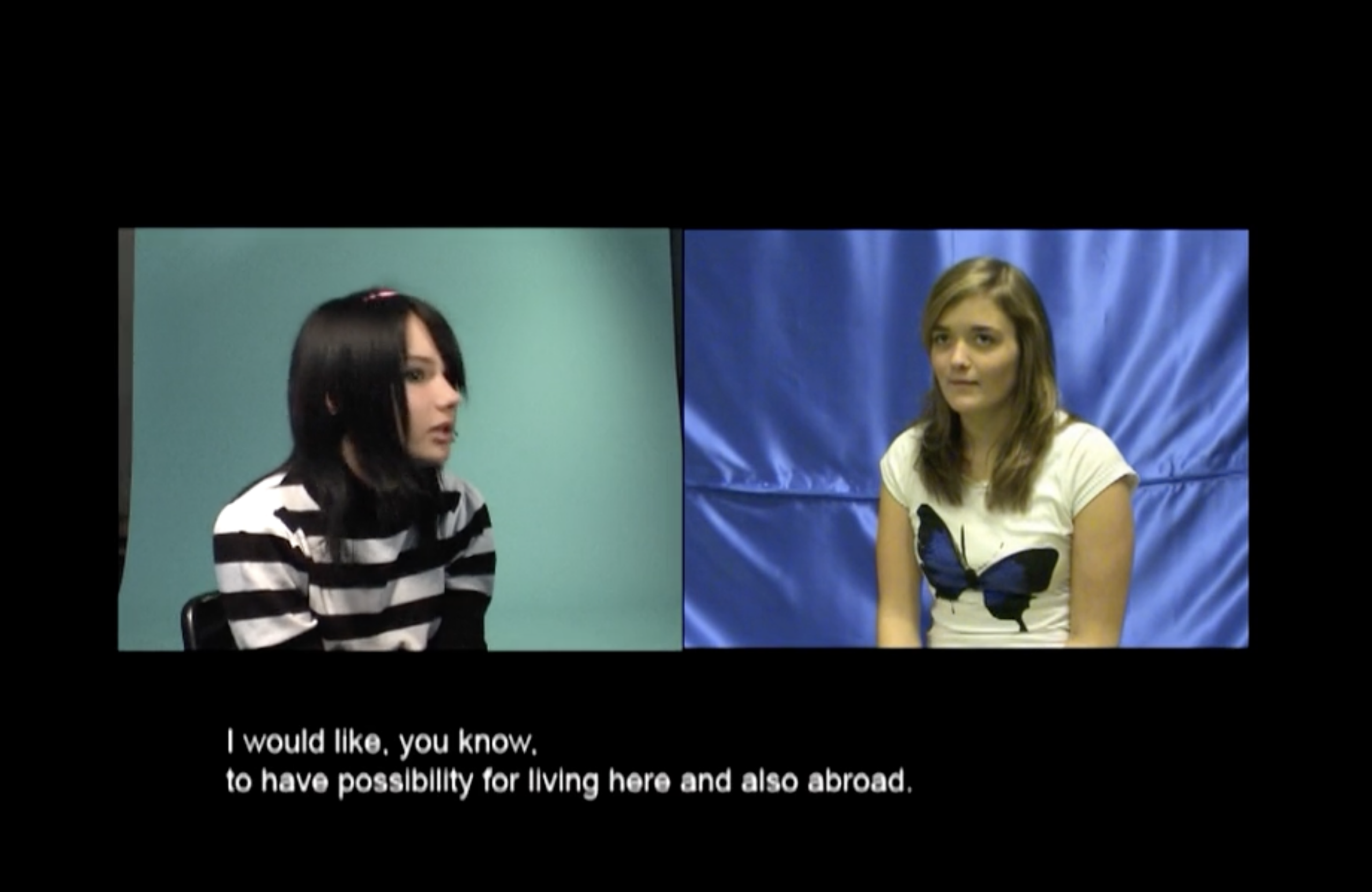
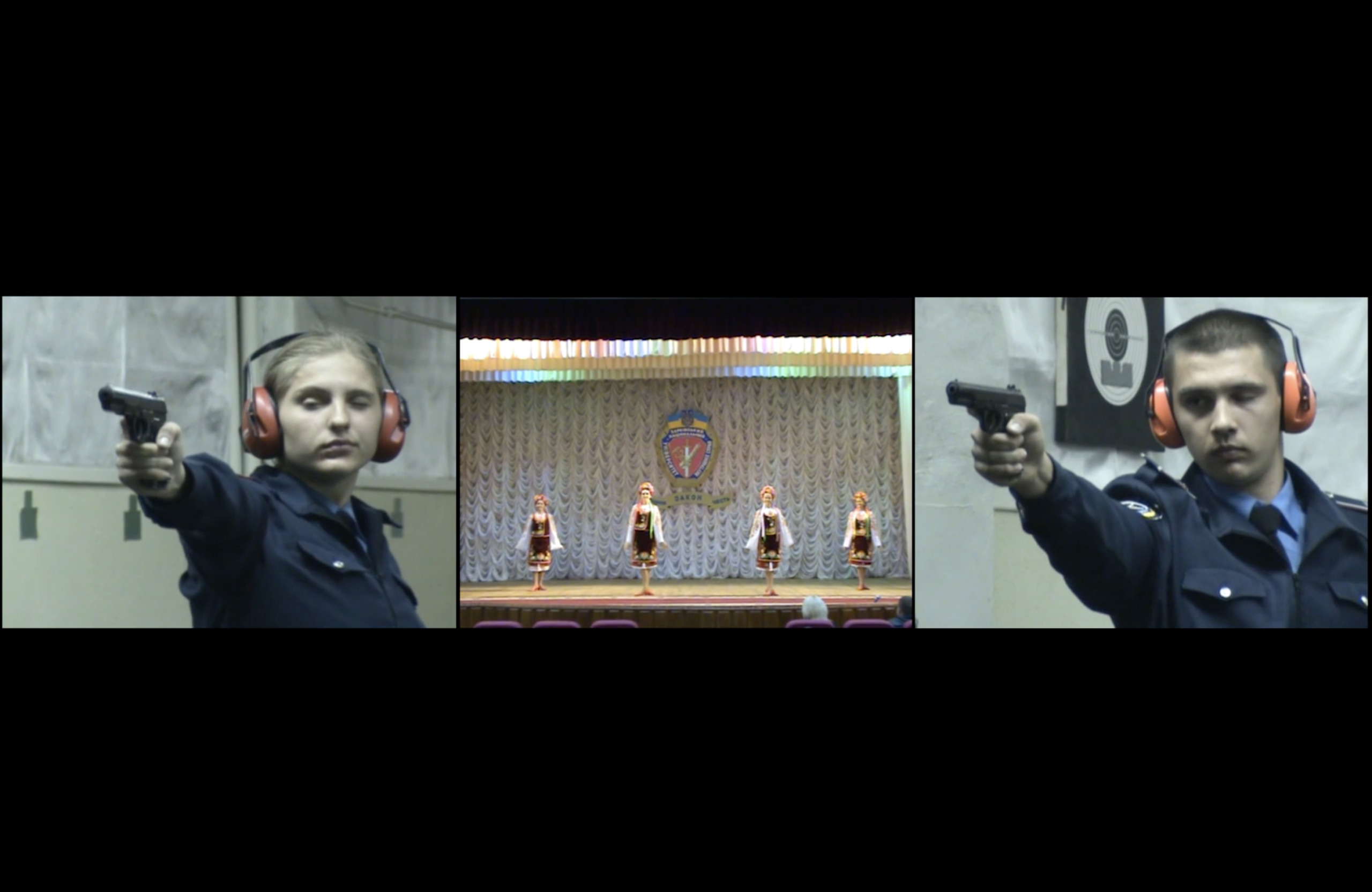
SOSкa Group. Police Academy. 2009–2015. Three-channel video installation, 4′59″
Work Description
The 2000s became a period of active intervention by conservative authorities in cultural processes and private space for Ukrainian society. It was then, in 2004, that the National Expert Commission of Ukraine on the Protection of Public Morality appeared, which at the peak of its activity in 2008–2009 was also supported by radical right-wing groups. The commission existed until 2015. For its part, the work of law enforcement agencies, in particular the police, was mostly associated with corruption, attacks on civilians, and unauthorized abuse of power.
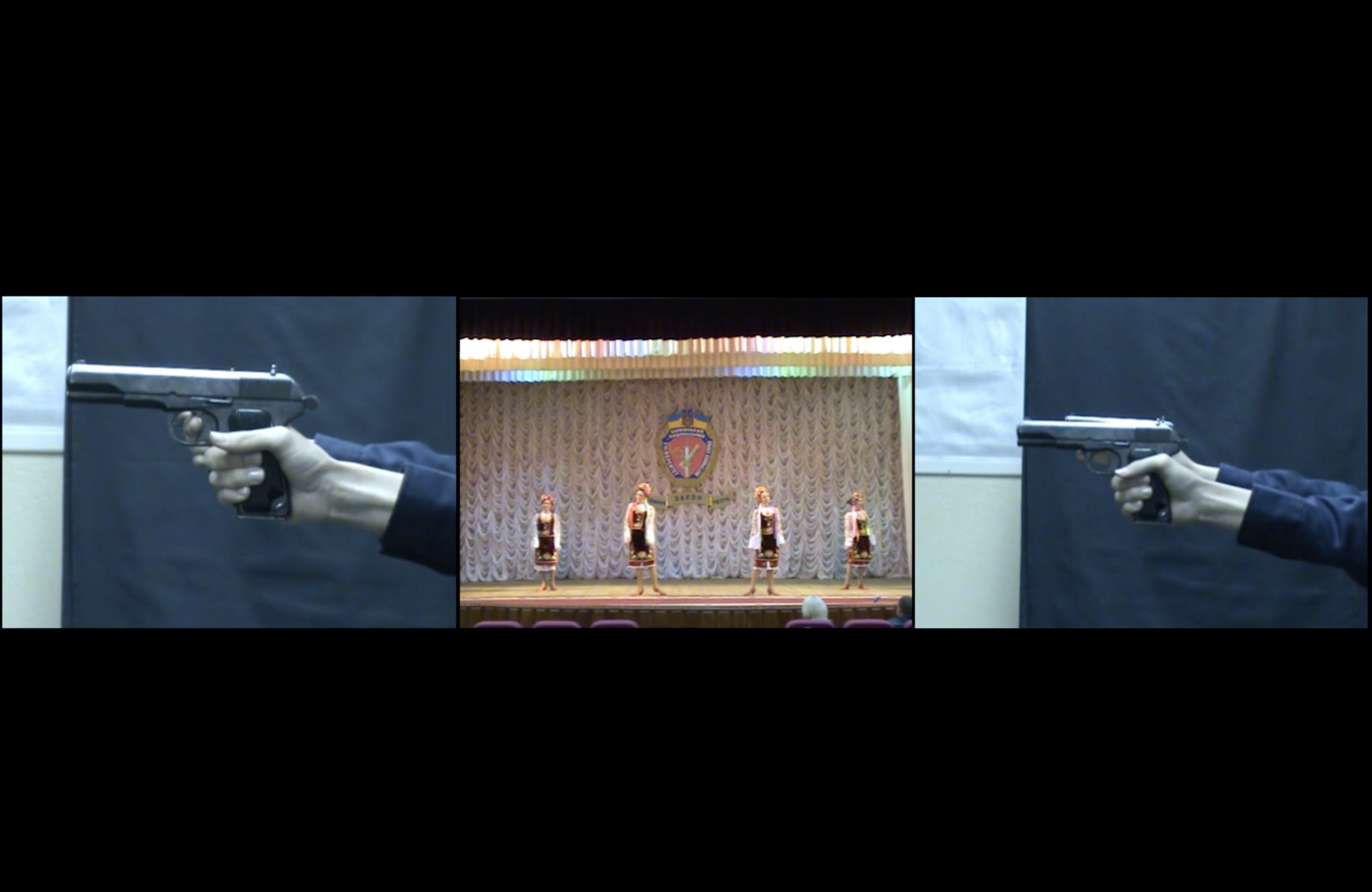
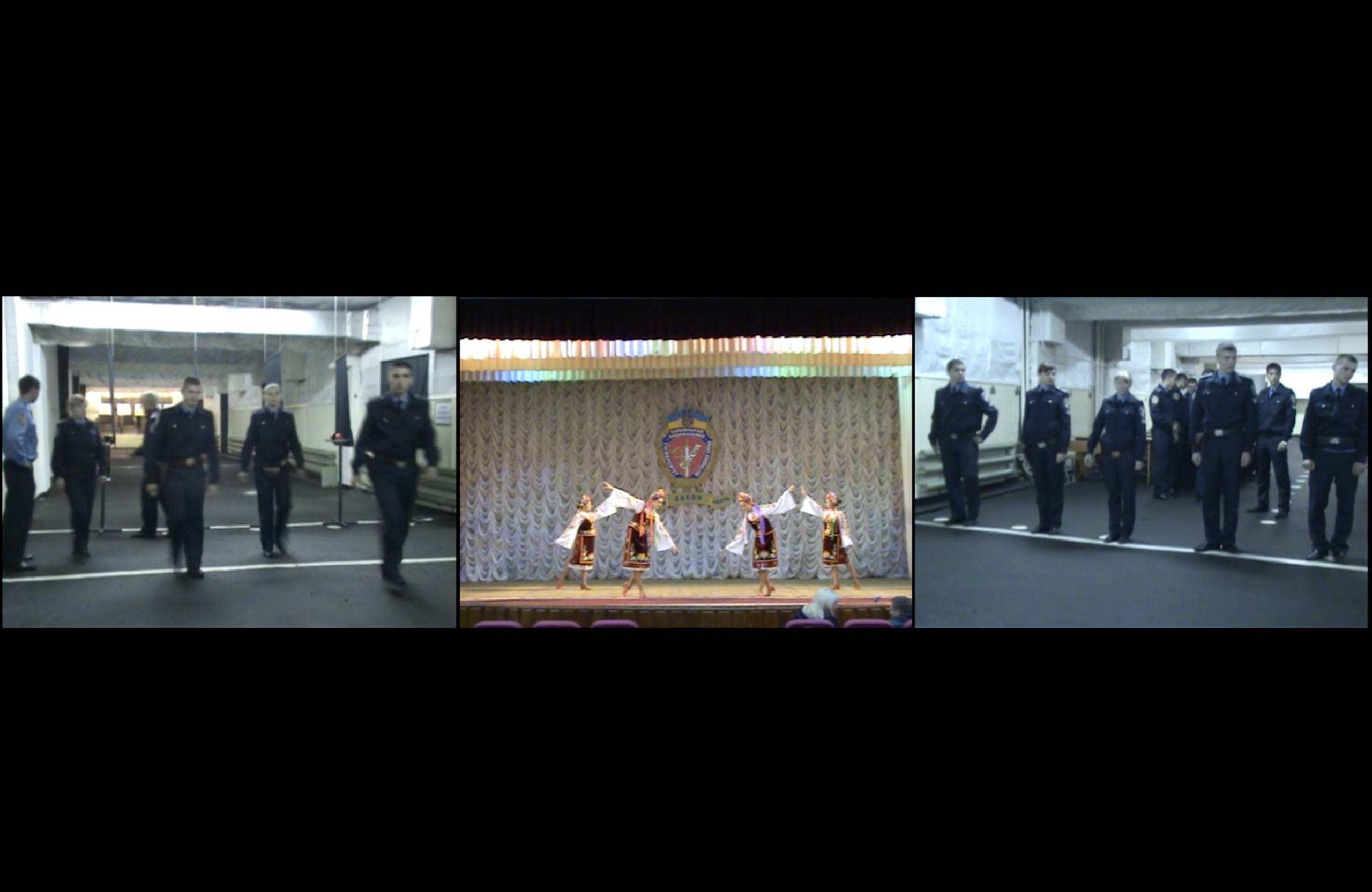
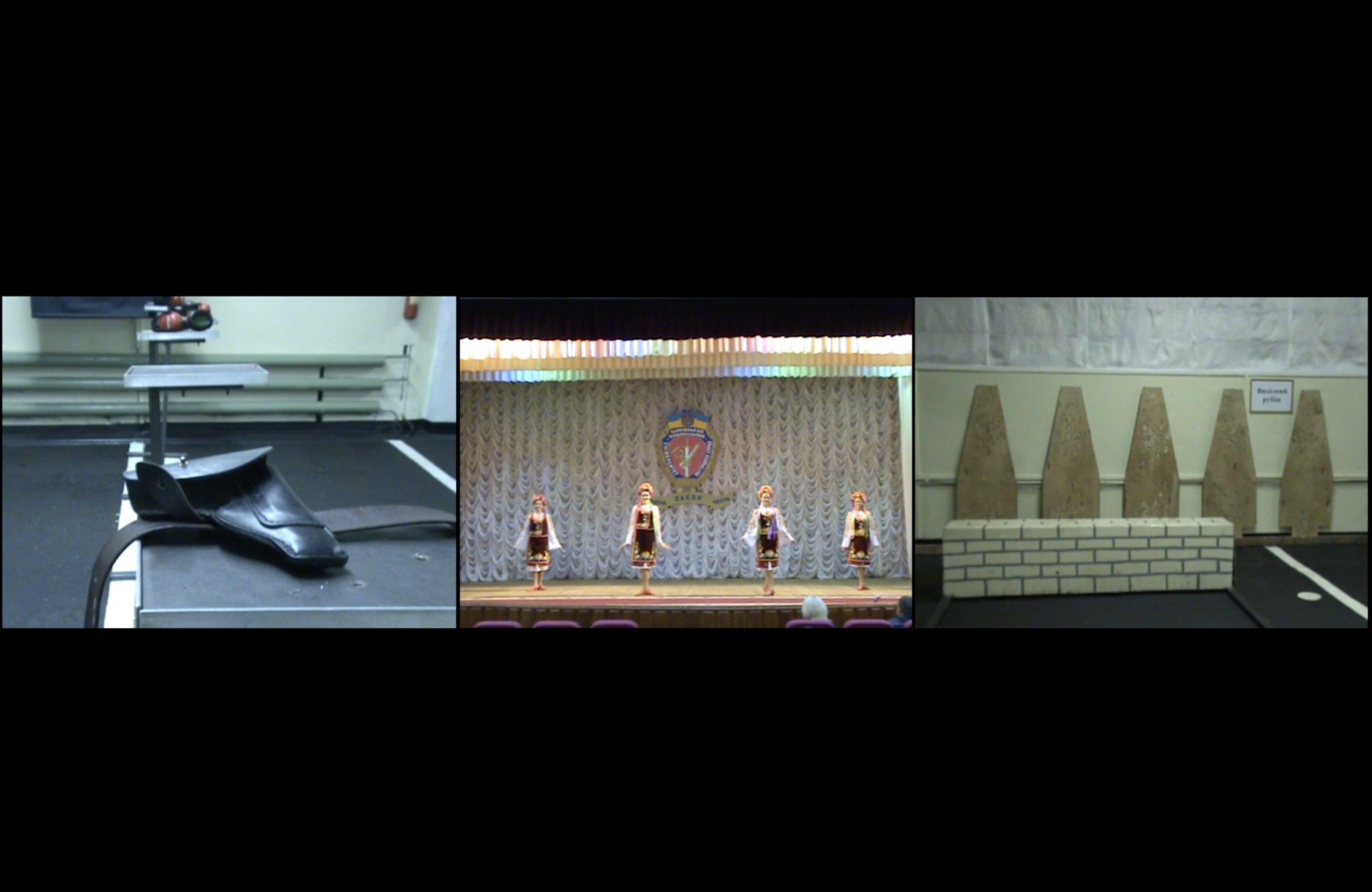
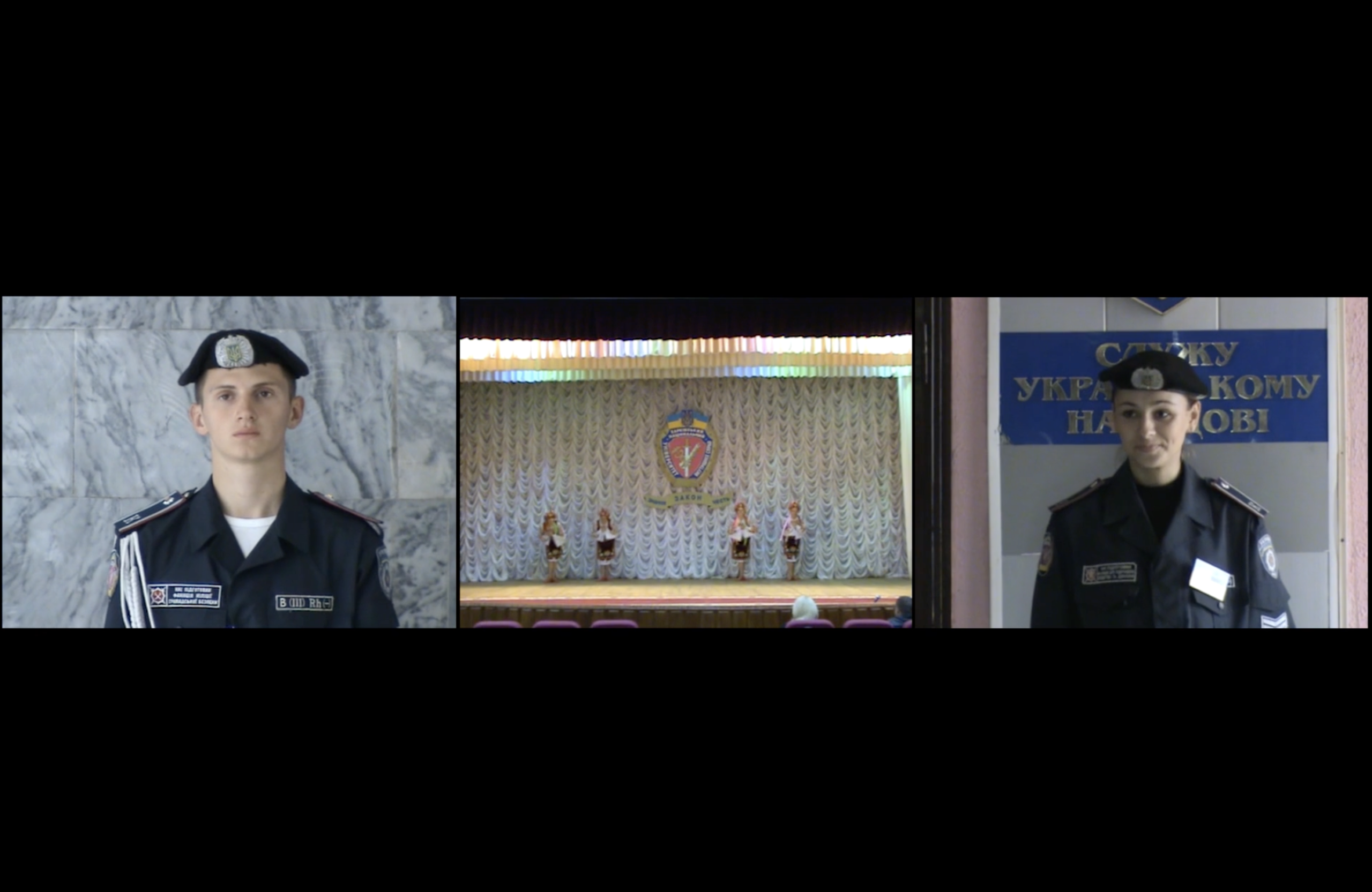
It was during this period that the SOSka group created the work Police Academy, documenting the internal processes of the Kharkiv National University of Internal Affairs. The artists were fortunate to go on a tour of this educational institution and record events usually hidden from outsiders. They witnessed combat training taking place alongside dance performances by students in traditional ethnic costumes — a legacy of the Soviet representation of Ukrainian culture as “sharovary” style. This emphasized that despite the change of power and the achievement of independence, neither the educational system nor cultural programming in Ukraine had been properly reconsidered or reformed.
Researcher Comment
According to the archives of the SOSka group, the creation of the work is dated between 2009 and 2015. The video was actually shot in 2009, but by 2015 the topic had acquired new context, so during exhibitions the artists indicated this time frame, adding an extended commentary. In particular, they highlight 2013–2014 as the period of the greatest discrediting of the law enforcement system, associated with the killings of activists during the Revolution of Dignity. The group questions the reform of the militia into the police, considering the changes insufficient and unsystematic, as they mostly concerned the external appearance of the body. The artists also reflect on whether transformation of the structure is possible given only isolated dissent among its individual members.