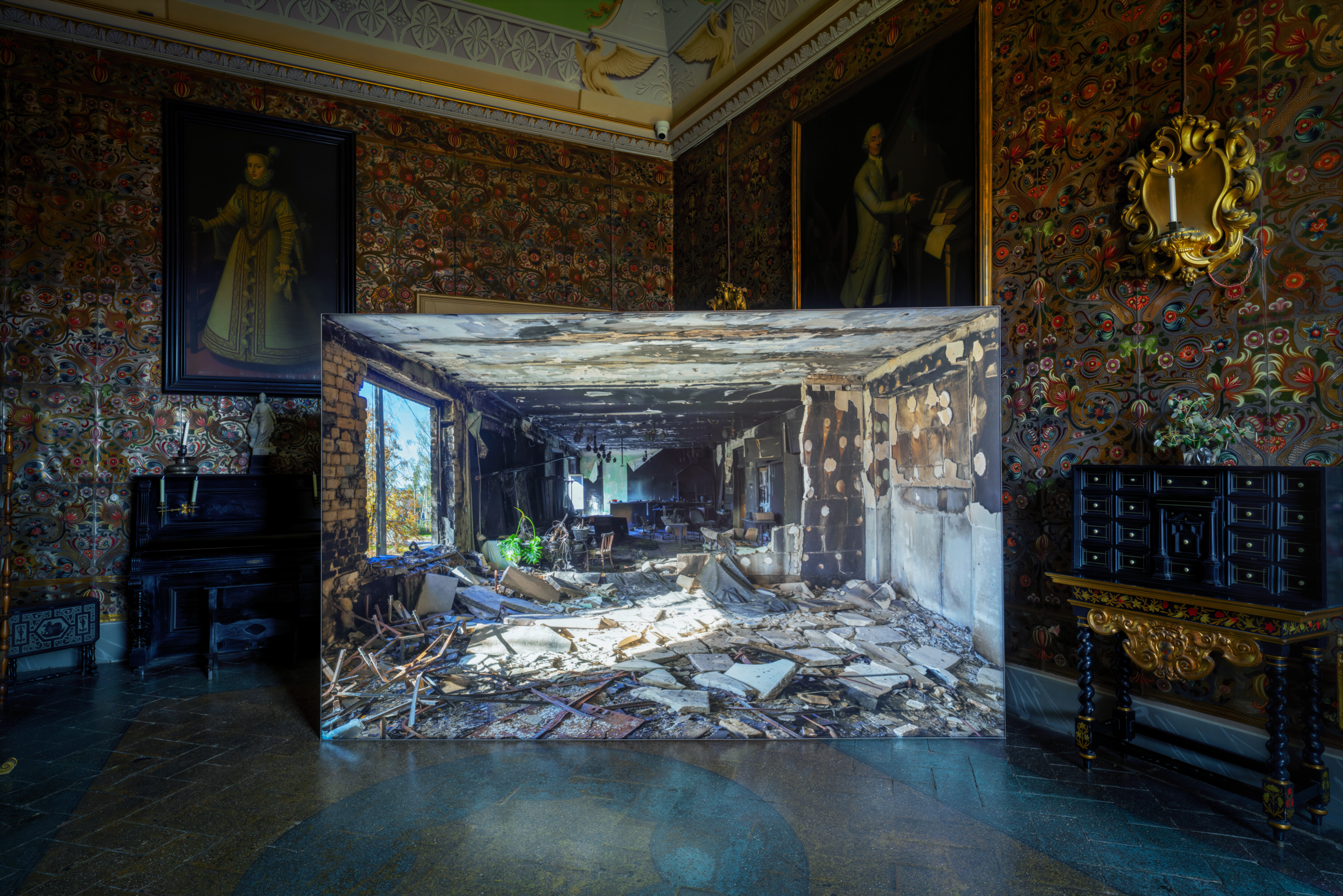
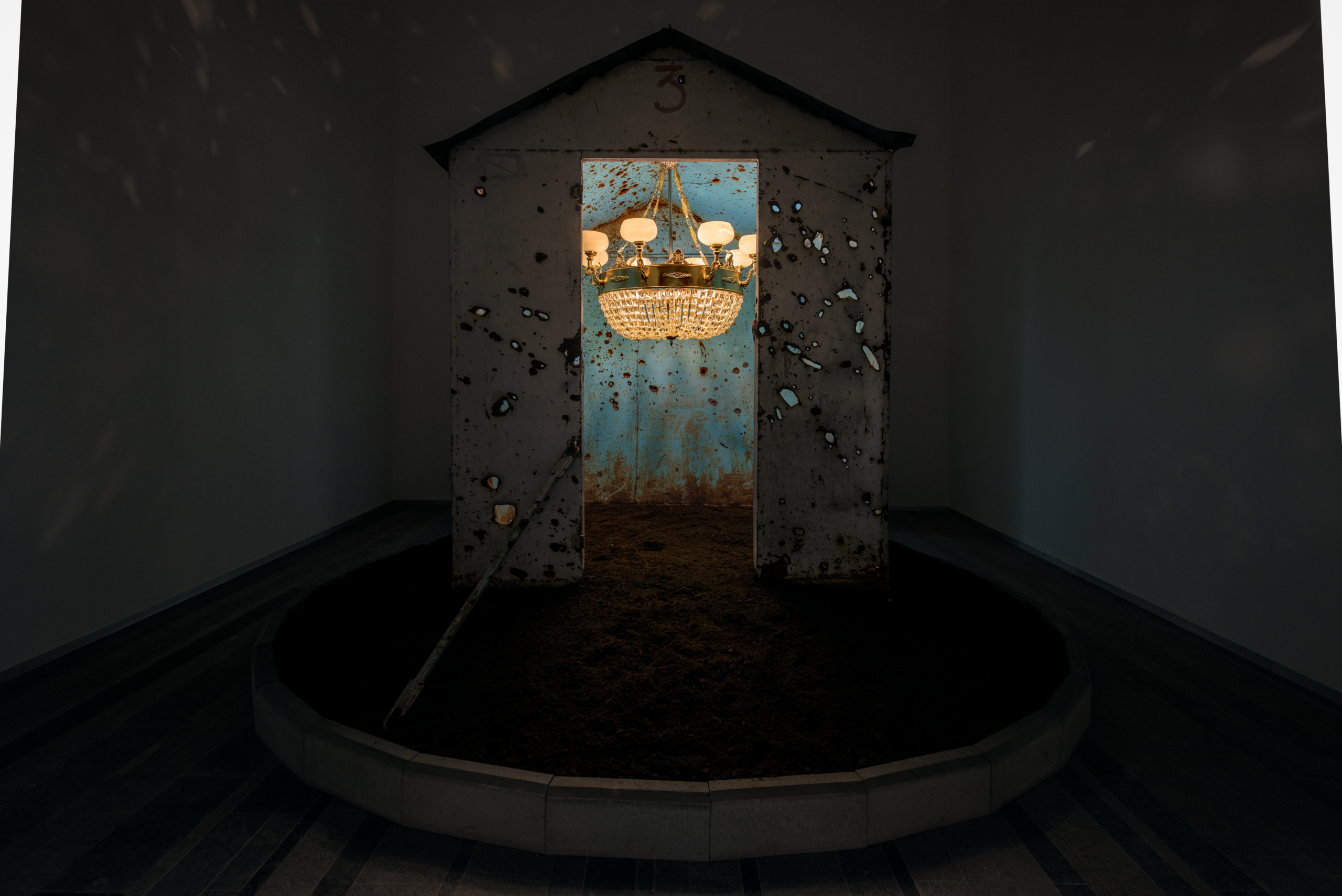
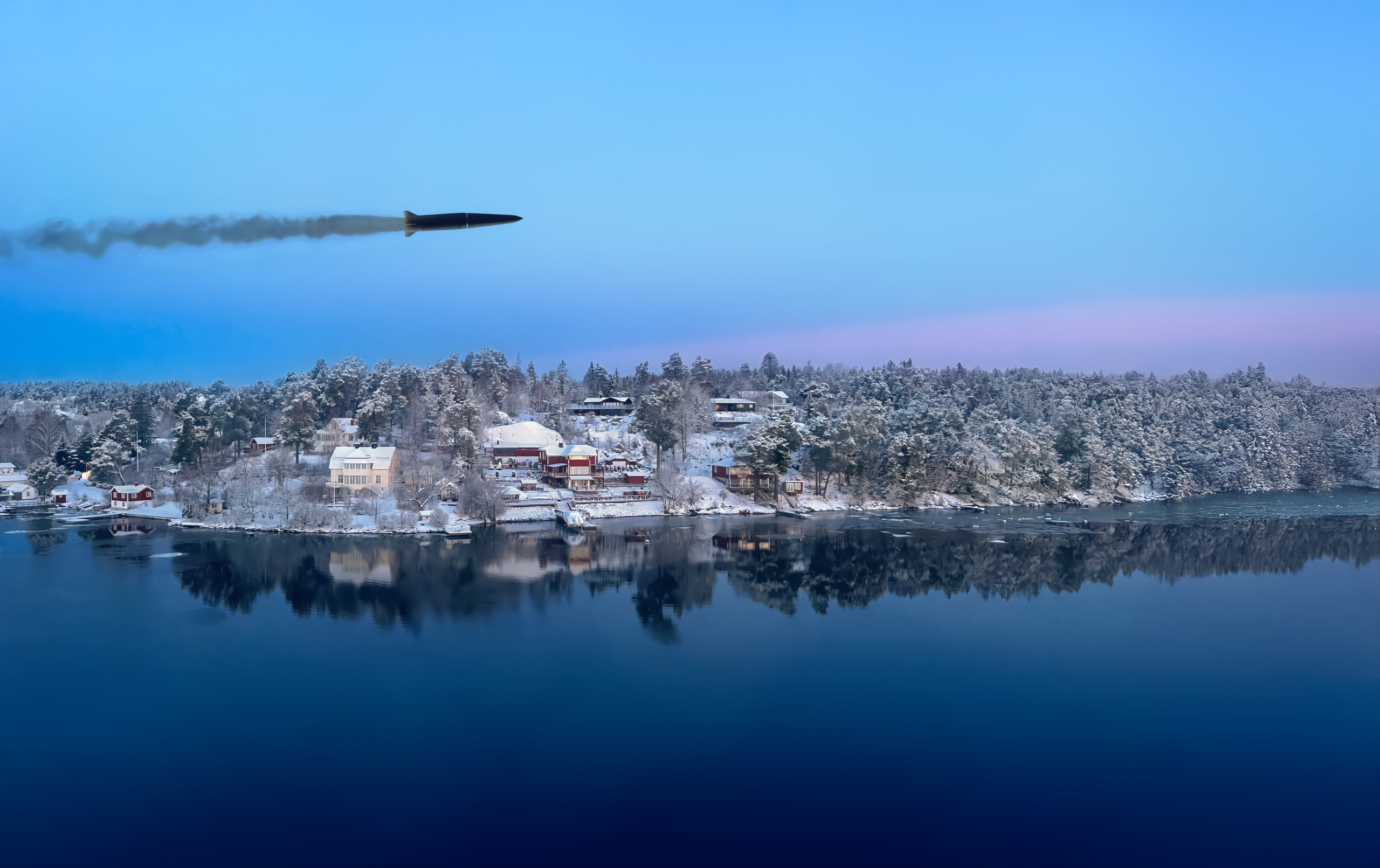
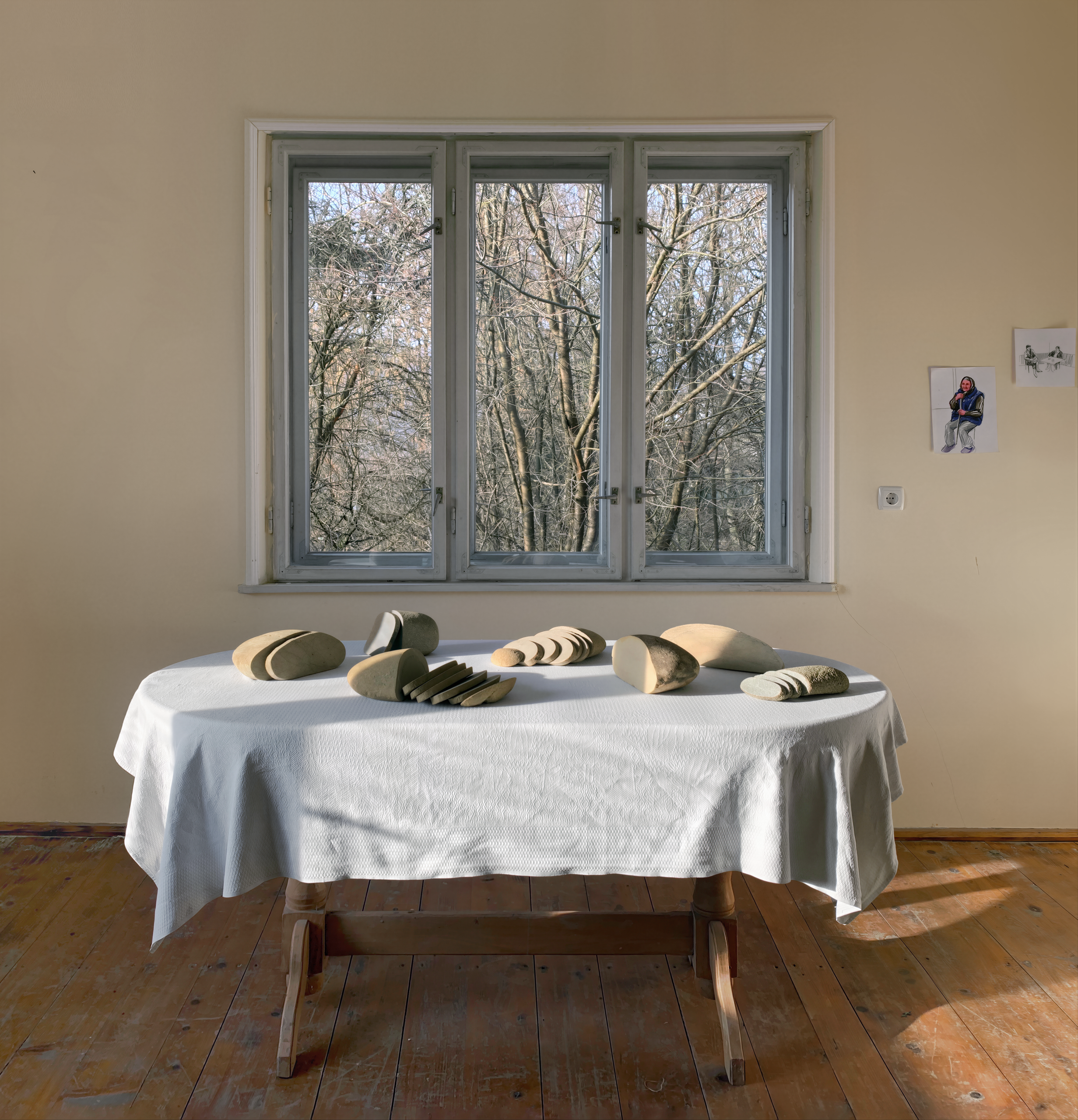
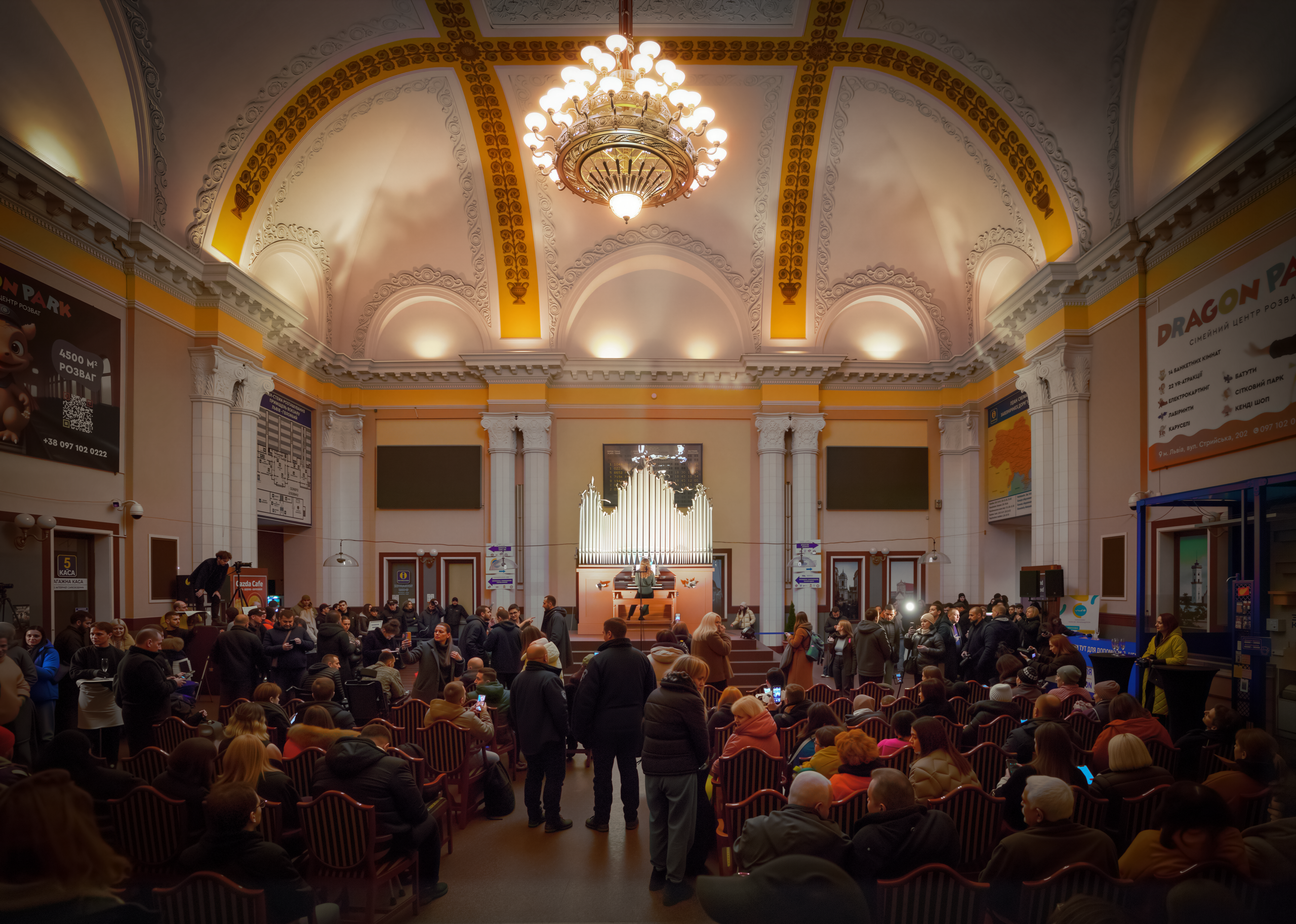
Zhanna Kadyrova. Instrument. 2024. Organ, fragments of fired Russian shells, performance
Work description
The Instrument by Zhanna Kadyrova — an organ from a small German church, reconfigured in the Czech Republic and later supplemented with rocket fragments. Shell fragments are fixed on the tops of each pipe of the musical instrument. The work was first presented at the 60th Venice Biennale in 2024, and later moved to the railway station in Lviv, where it was exhibited for a long time. There, the organ became an interactive installation and an instrument for concerts. Initially, musicians from different countries played it, and later soldiers undergoing rehabilitation in the city and even passengers waiting for their trains played it.
During the war of Russia against Ukraine, we have repeatedly witnessed how soldiers on the front line play damaged and out-of-tune instruments found in abandoned houses. For them, such seemingly incompatible with war activities become a therapeutic act and an opportunity for at least a few minutes of rest. The music of broken instruments, through their own malfunction, documents the disagreement and resistance of the performer. Paradoxically, destruction only enhances this sound .
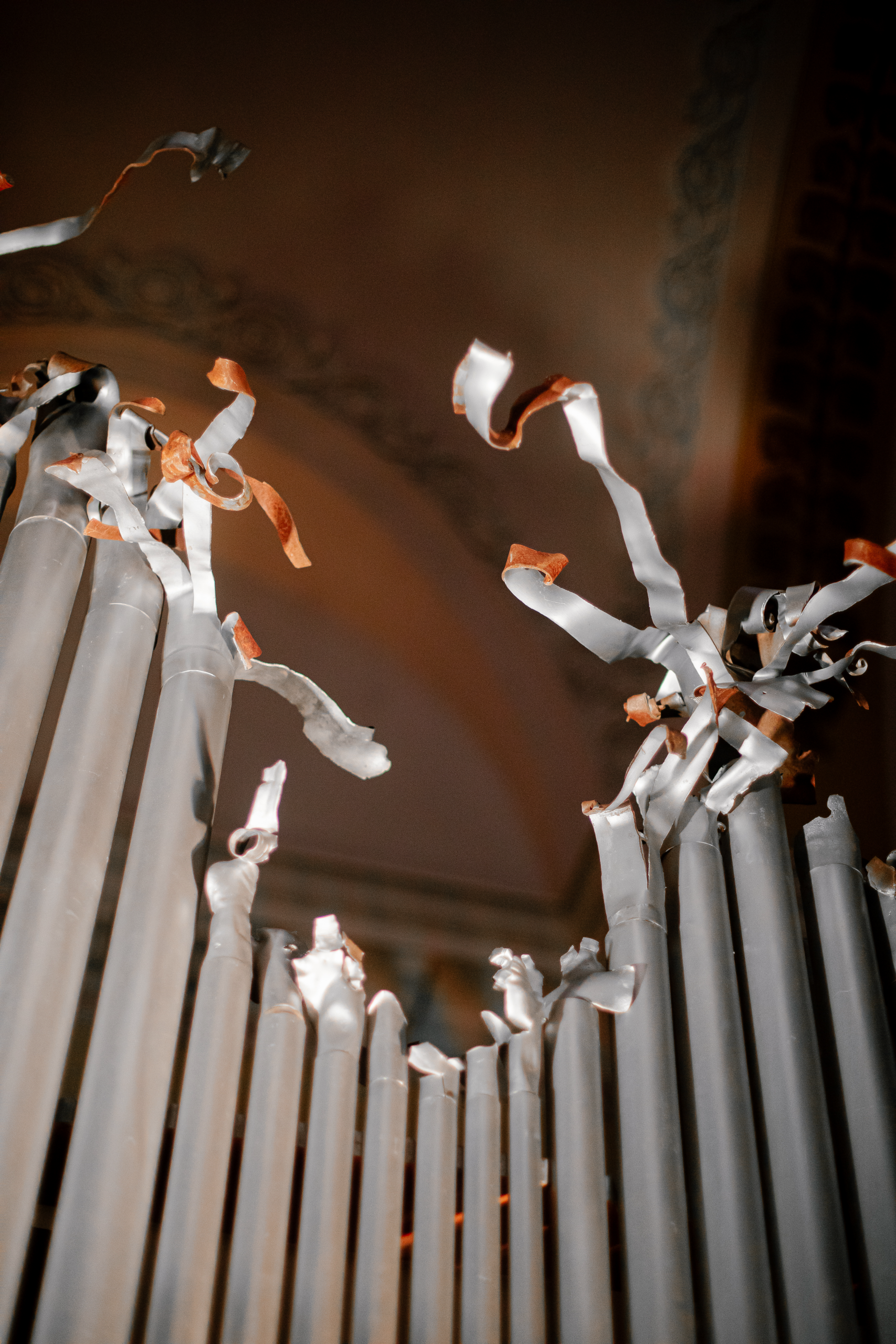
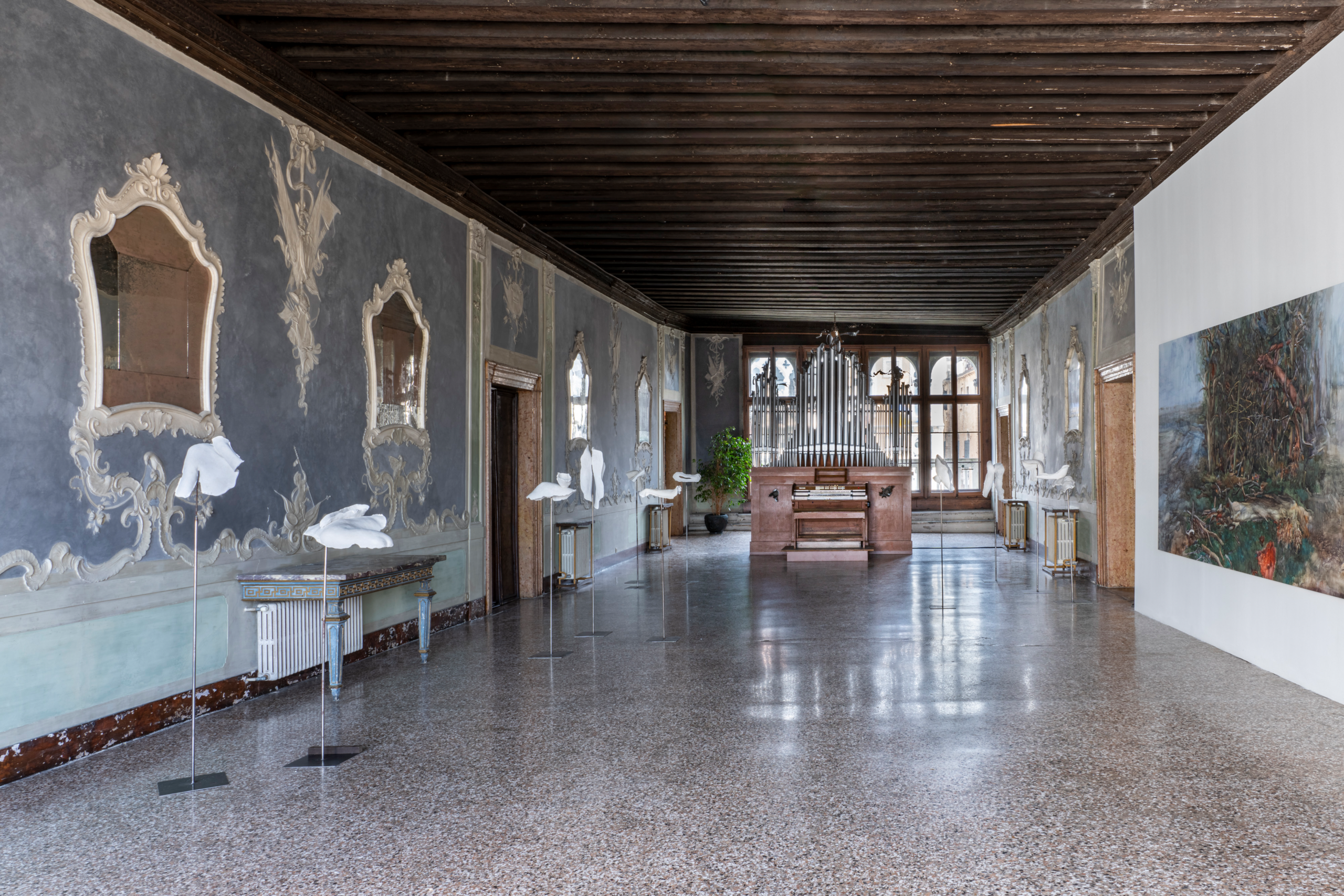
One of the names originally considered for this work was Russian Baroque. Why baroque and why Russian? The metal casing of the tubes, torn by the explosive stored inside, twists into shapes reminiscent of baroque volutes. Just as Zhanna deconstructed ceramic mosaics and transformed this originally architectural element into autonomous sculptures in Second Hand (2015–2019), here the fragment of shrapnel becomes a “baroque” whole in the form of an organ. The term “Russian Baroque” refers not only to the morphological similarity of the “curls” associated with Baroque aesthetics and the forms resulting from the explosions, but also to the export of classical music and art through which the Russian Federation seeks to legitimize its imperial ambitions, concealing an inferiority complex while demonstrating its power in the world.[1].
- Sterec P., “Instrument,”. in Zhanna Kadyrova. (Berlin : Distanz, 2026), 56.