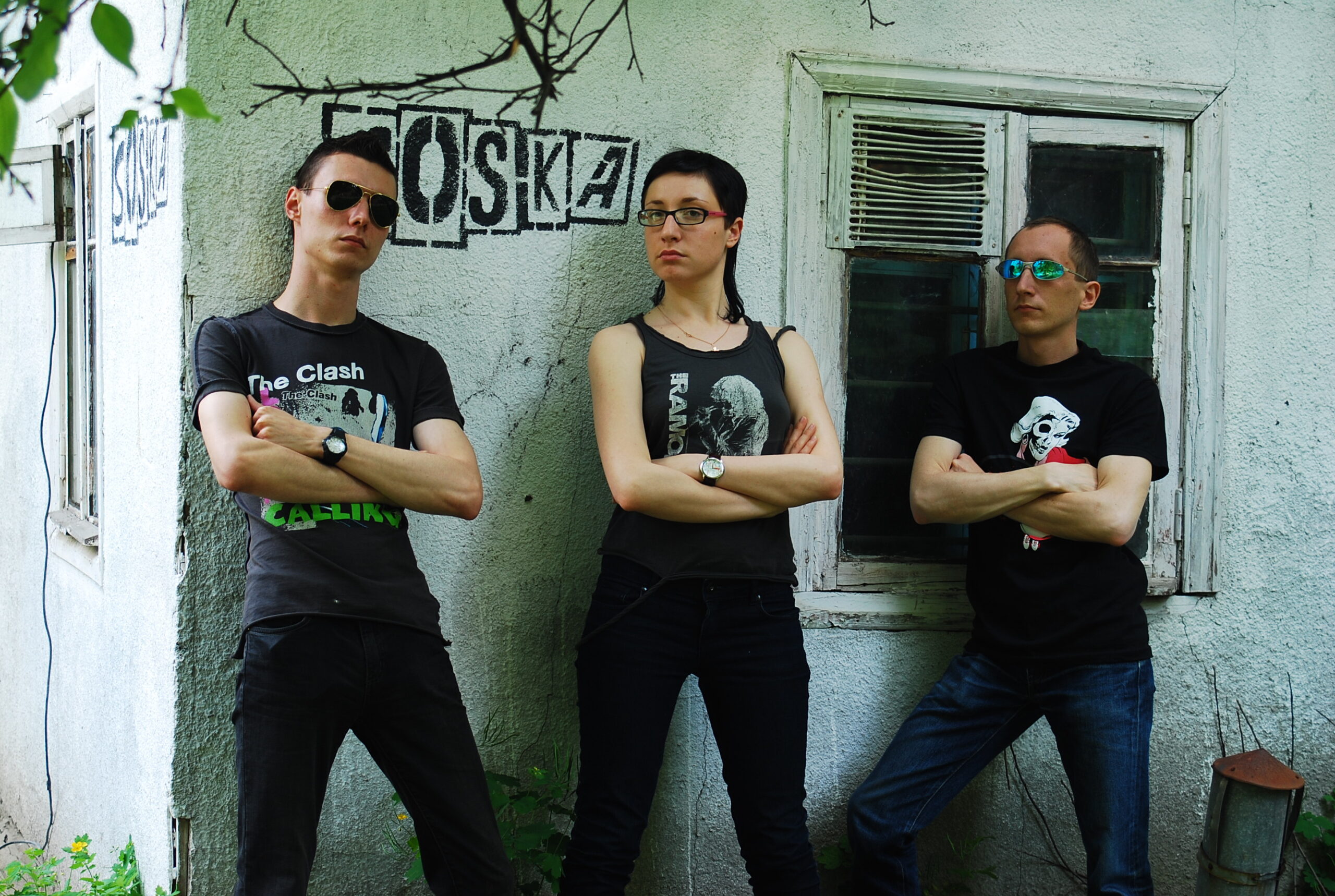
The SOSкa Group emerged in Kharkiv in 2005, shortly after the creation of the eponymous gallery-laboratory, which artists squatted in one of the abandoned small residential premises in the city center. It was a mud-brick hut belonging to the Union of Artists of Ukraine, located on the grounds of the workshop of Mykola Ridnyi’s father, sculptor Oleksandr Ridnyi, a member of the Union. From the outset, the gallery was run by Mykola Ridnyi, Hanna Kryventsova, Olena Polianshchenko, and Bella Lohachova. Later, Ridnyi and Kryventsova, joined by Serhii Popov, formed an art group whose practice was rooted in public activism. Thus, the gallery functioned as a platform for laboratory programs and research responding to the needs of the local art environment, while the group focused on performative and participatory practices that engaged with society or prompted it to act, or at least to respond, in public space.
The group’s name combined several meanings. First and foremost, it referred to the abbreviation SOS (Save Our Souls), while also evoking the image of a baby pacifier. In this way, the artists described the gallery’s mission: to support and organize educational and exhibition programs for young artists and students of local art institutions. At the same time, the group itself represented artists who were just beginning to develop their own practices. The name also alluded to the pejorative meaning associated with prostitution, serving as a critique of the lack of adequate resources and support within the contemporary art system.
The emergence of the SOSкa gallery-laboratory was significantly influenced by the practice of self-organized spaces in Kharkiv, particularly the Up/Down gallery, which was established in the 1990s in the studio of Serhii Bratkov, a participant in the Kharkiv School of Photography (KSOP) and the Fast Reaction Group (FRG). Bella Lohachova had previously collaborated with another gallery, Navproty, while Serhii Popov recalled the considerable influence of photographer Andrii Avdiiev and his gallery, Palitra, where he worked as an assistant and met many photographers. When most of these galleries ceased to operate, Lohachova, Polianshchenko, Kryventsova, and Ridnyi created their own space, where exhibitions, discussions, and workshops took place. Here, they presented their own projects as well as works by colleagues who lacked adequate representation within the underdeveloped infrastructure of local cultural institutions. The artists’ curatorial practice combined work in the squatted gallery with festival-style programs organized in cooperation with studios and artist-run initiatives throughout Ukraine, as well as projects in public space.
One important example of the group’s curatorial practice was its work on the group exhibition New History at the Kharkiv Art Museum in 2009, which featured artists from Eastern Europe and Russia. Although this exhibition is primarily associated in the history of Ukrainian art with an act of censorship — it was closed by the institution’s director, Valentyna Myzghina, the following day — the project is significant in the context of the development of institutional critique. New History focused on the possibilities of interaction between the traditional museum and contemporary art.
The first action from which the artistic practice of the SOSкa Group can be traced is considered to be Trapped on the Streets (2006), during which the artists, wearing masks of Ukrainian politicians Viktor Yushchenko, Viktor Yanukovych, and Yulia Tymoshenko, begged on the streets of Kharkiv and Kyiv. The collective began actively searching for its own artistic language, which developed through a synthesis of direct engagement with issues arising from the local context and an artistic and theoretical continuity with the work of their predecessors. The artists positioned themselves as followers of the Kharkiv artistic tradition, in particular the Kharkiv School of Photography and the Rapid Response Group, whose members included Serhii Bratkov, Borys Mykhailov, Serhii Solonskyi, and Vita Mykhailova.
From the group’s inception, the artists acknowledged the influence of the KSOP‘s practices on their work; its participants, including members of the FRG, had also begun turning toward activism. While the KSOP focused on the transition from the Soviet era to Ukrainian independence, SOSкa, following their example, observed the specific conditions of its own time: the chaos and irresponsibility of politicians during the first fifteen years of independence, the global economic crisis and the development of the art market, as well as the moods and interests of young people, including representatives of various subcultures. In her 2007 text SOSкa: Between Action and Institution, Hanna Kryventsova describes the practices of the early 2000s as symptomatic, emerging in the form of a radically directed artistic gesture that combined a critical left-wing position with attempts to functionally imitate institutional activity in conditions of a cultural vacuum [1]. According to Serhii Popov’s recollections, the group members organized discussions in which they identified topics that were important to them and discussed the works of other artists, primarily from different regions of Ukraine and representatives of Moscow conceptualism [2].
Mykola Ridnyi, for his part, recalls that the works of that period initially contained allusions to the classics of world culture. In constructing the dramaturgy of Trapped on the Streets, Hanna Kryventsova drew on Pieter Bruegel the Elder’s The Parable of the Blind (1568) [3], which was based on the biblical story from the Gospel of Matthew 15:14 [4]. Such situational references to works of world art served SOSka primarily as a source of universal semantic parallels rather than as an attempt to continue the traditions of European modernism. The masks depicting the Ukrainian politicians had no eye holes, forcing Kryventsova, Ridnyi, and Popov, who embodied them, to feel their way forward while remaining closely grouped together. Thus, in 2000s Ukraine, it was not only society that was disoriented: the lack of stable political development was also embodied by the state officials themselves.
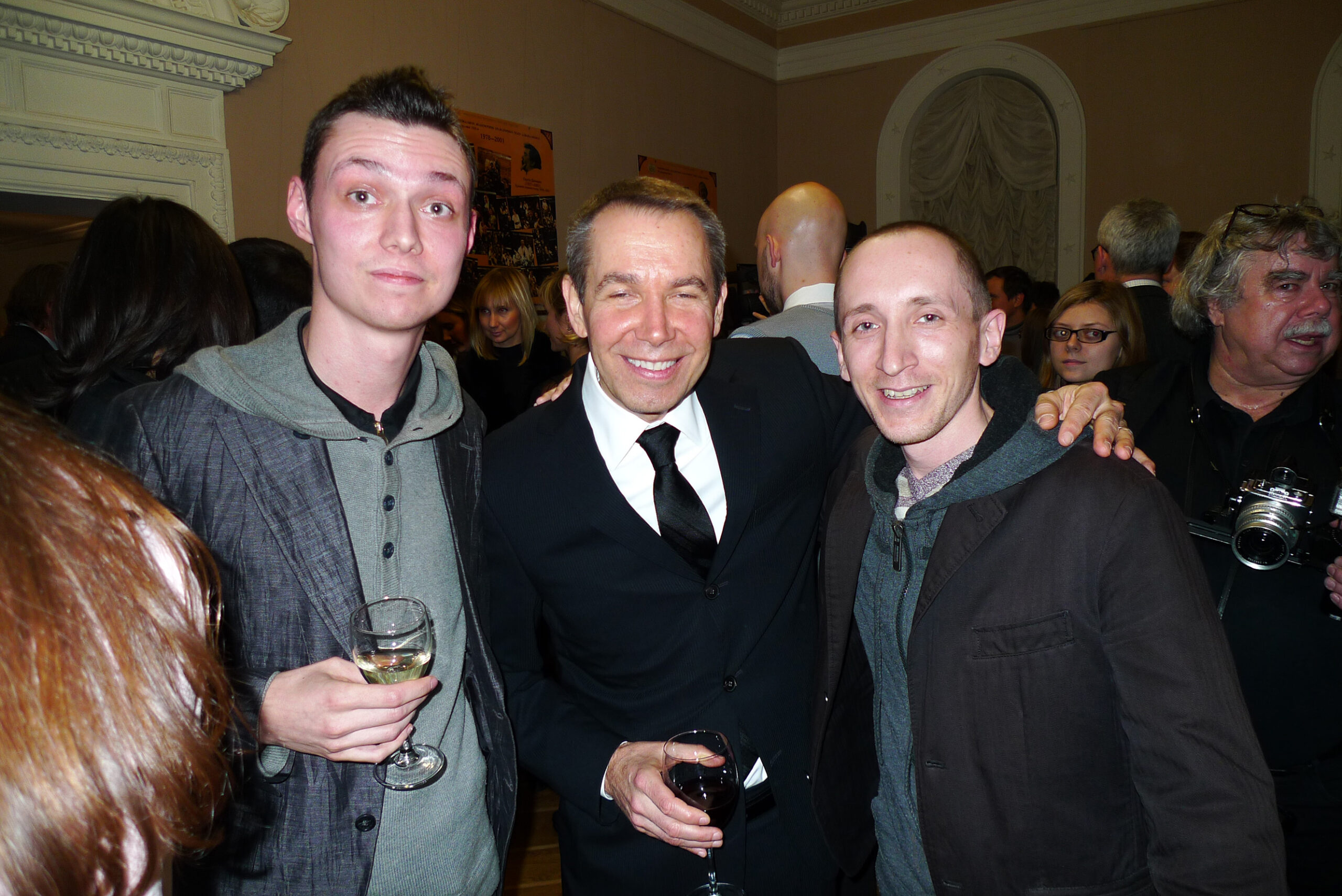
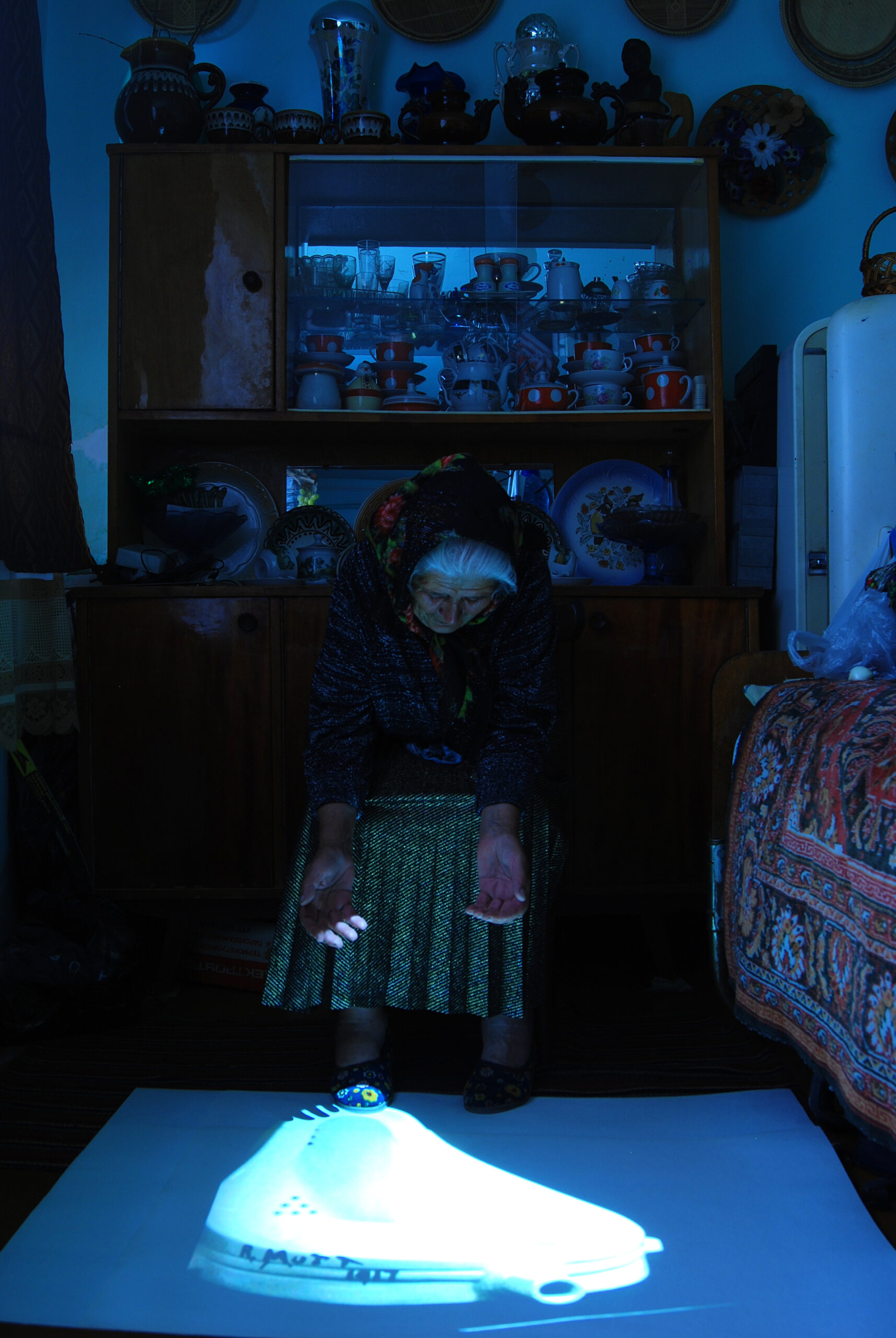
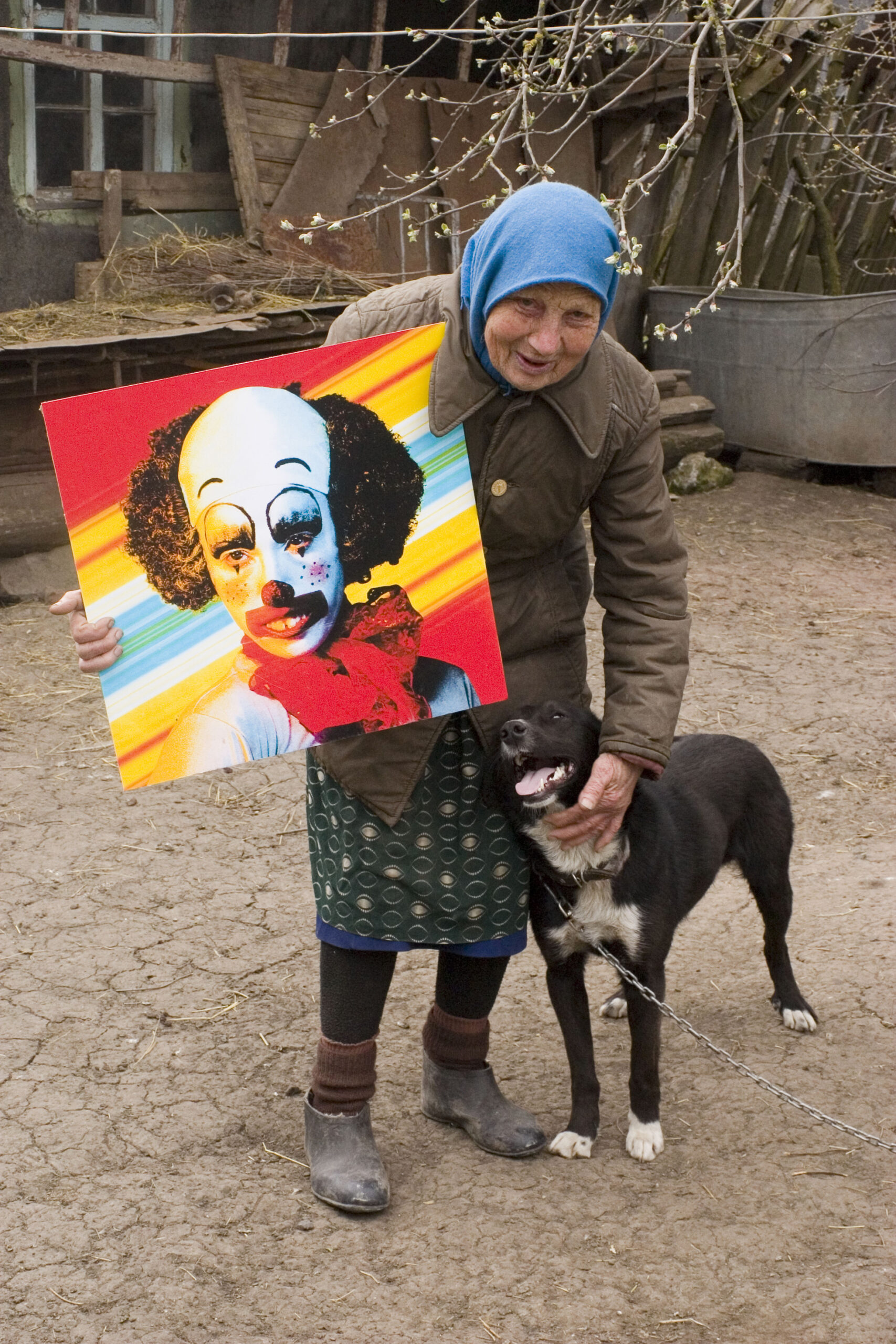
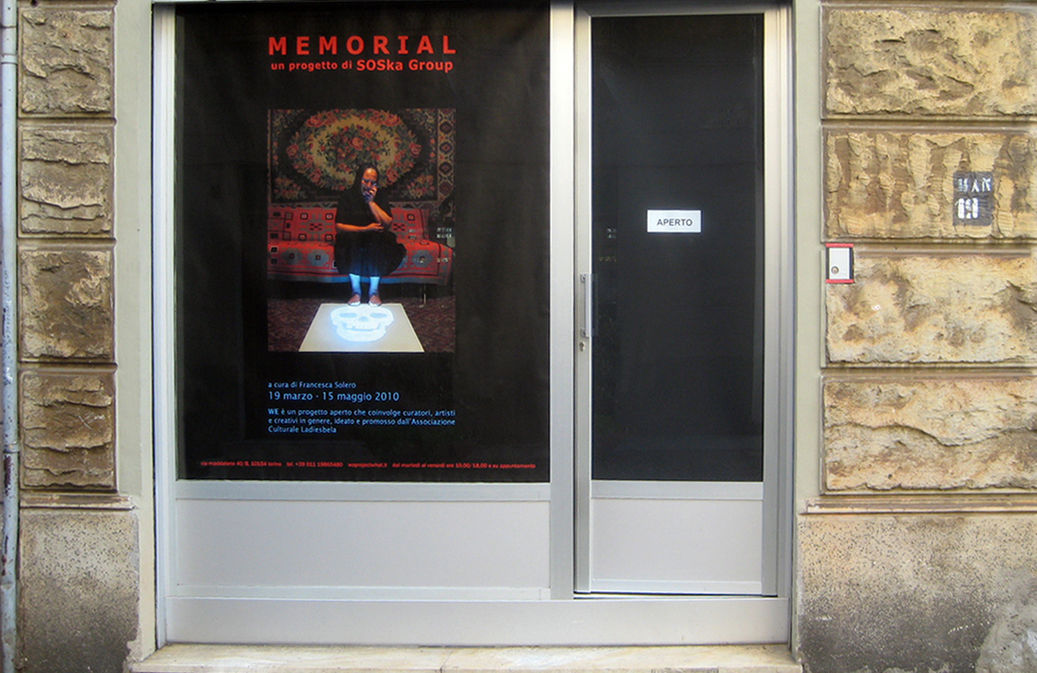
A year later, the artists carried out the action Barter (2007), during which, in the village of Prokhody in the Kharkiv region, they exchanged reproductions of works by stars of contemporary international art with local residents for food products or even domestic poultry. This and several subsequent projects, including Funeral Rites (2009), in which professional mourners lamented the commercialization of the same art, and Distance (2011), in which the artists photographed themselves with star artists at a party, reflected an increasingly critical and programmatic engagement with the international context. Each of these works illustrated the gap between the privileged position of Western art, supported by substantial financial and educational resources, and the marginalized conditions of artistic development in Ukraine, characterized by an underdeveloped art market, a lack of grant programs, and the need to establish underground research practices in the absence of educational reform. Issues surrounding the global economy and the art market were of particular interest to the SOSka group, as evidenced both by these works and by texts from the period. The artists actively criticized the commercial trajectory of Western art, which reached its peak in the 2000s and, in their view, hindered the development of critical discourse by emphasizing the spectacular and entertaining aspects of art.
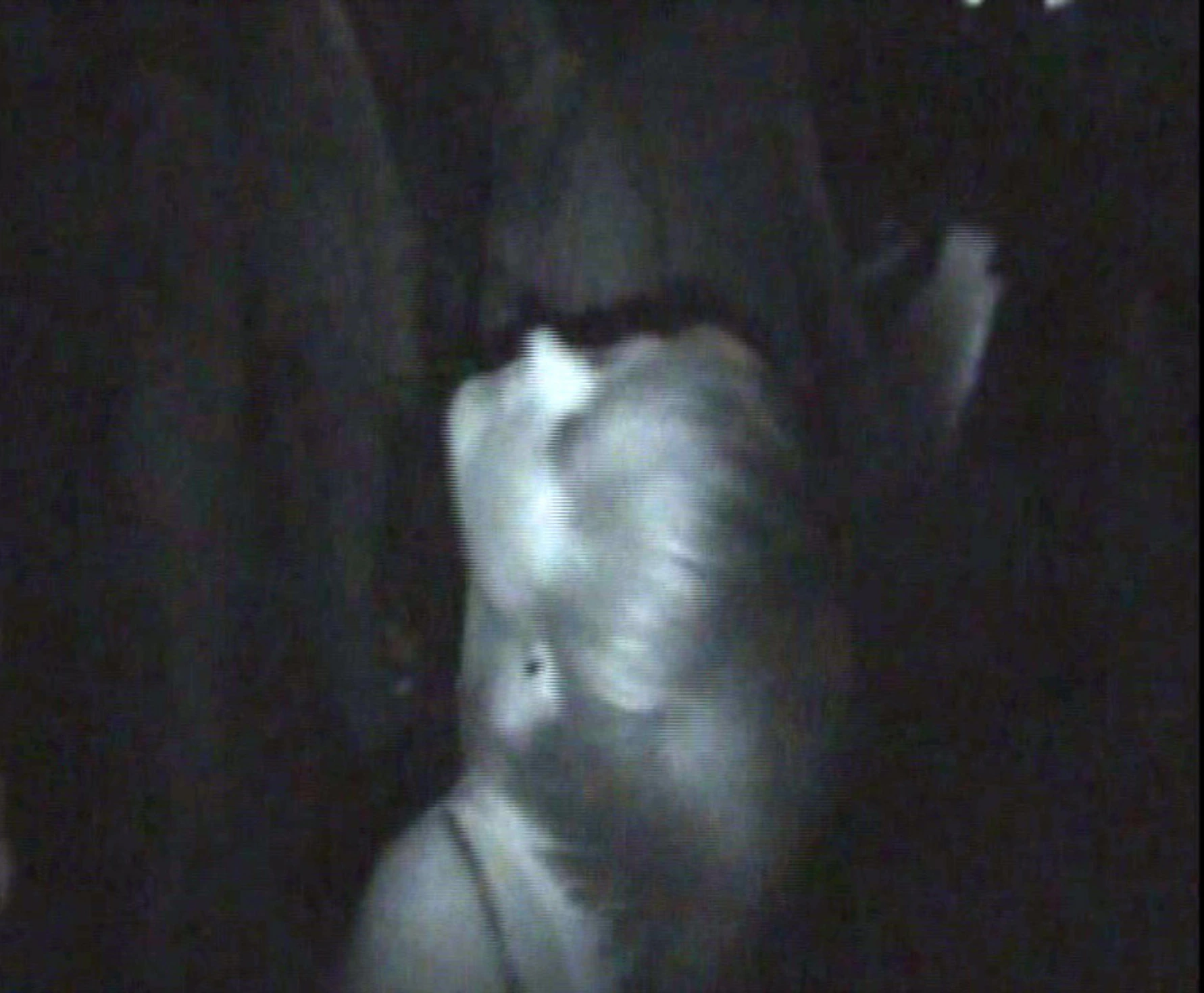
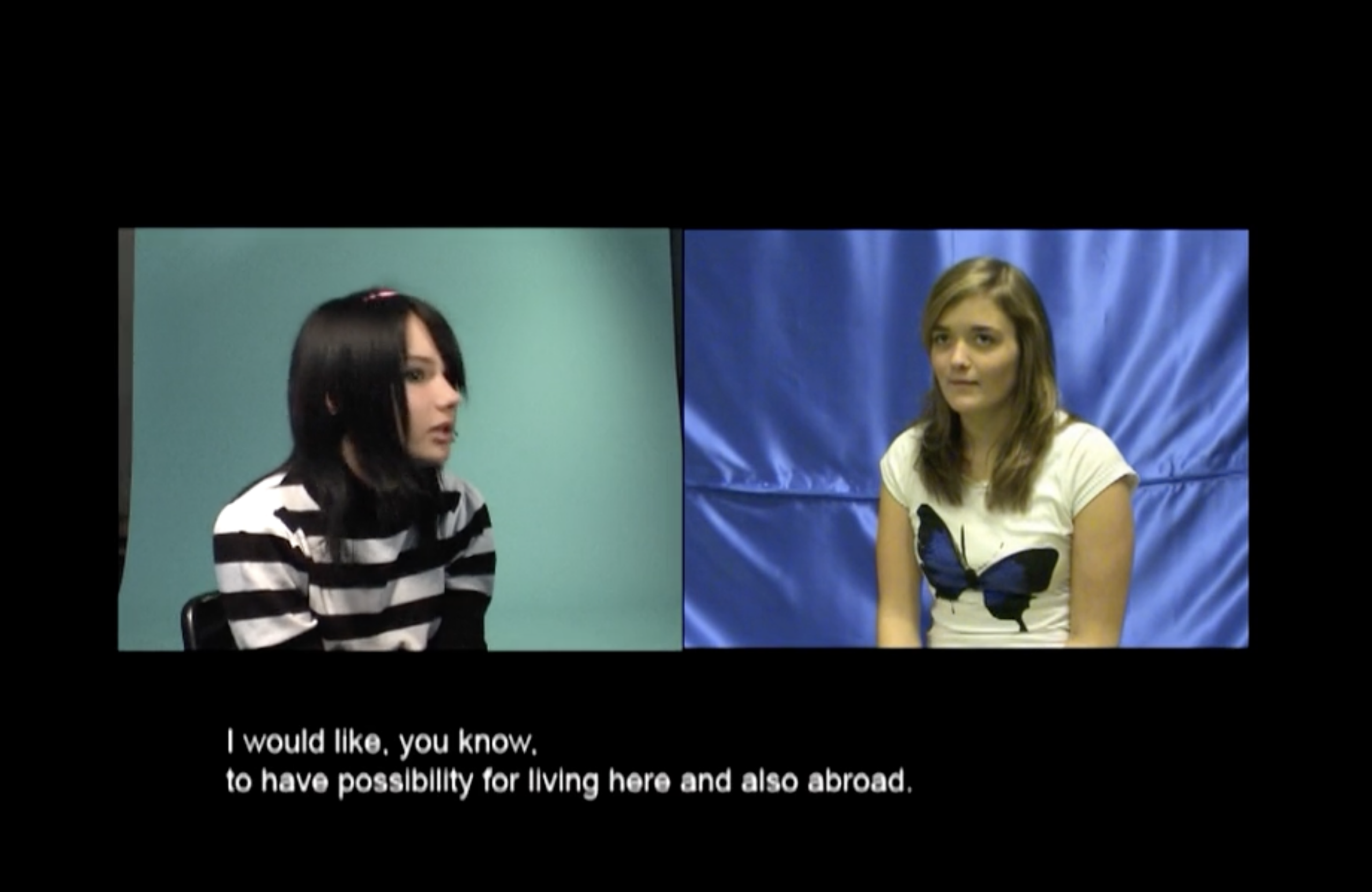
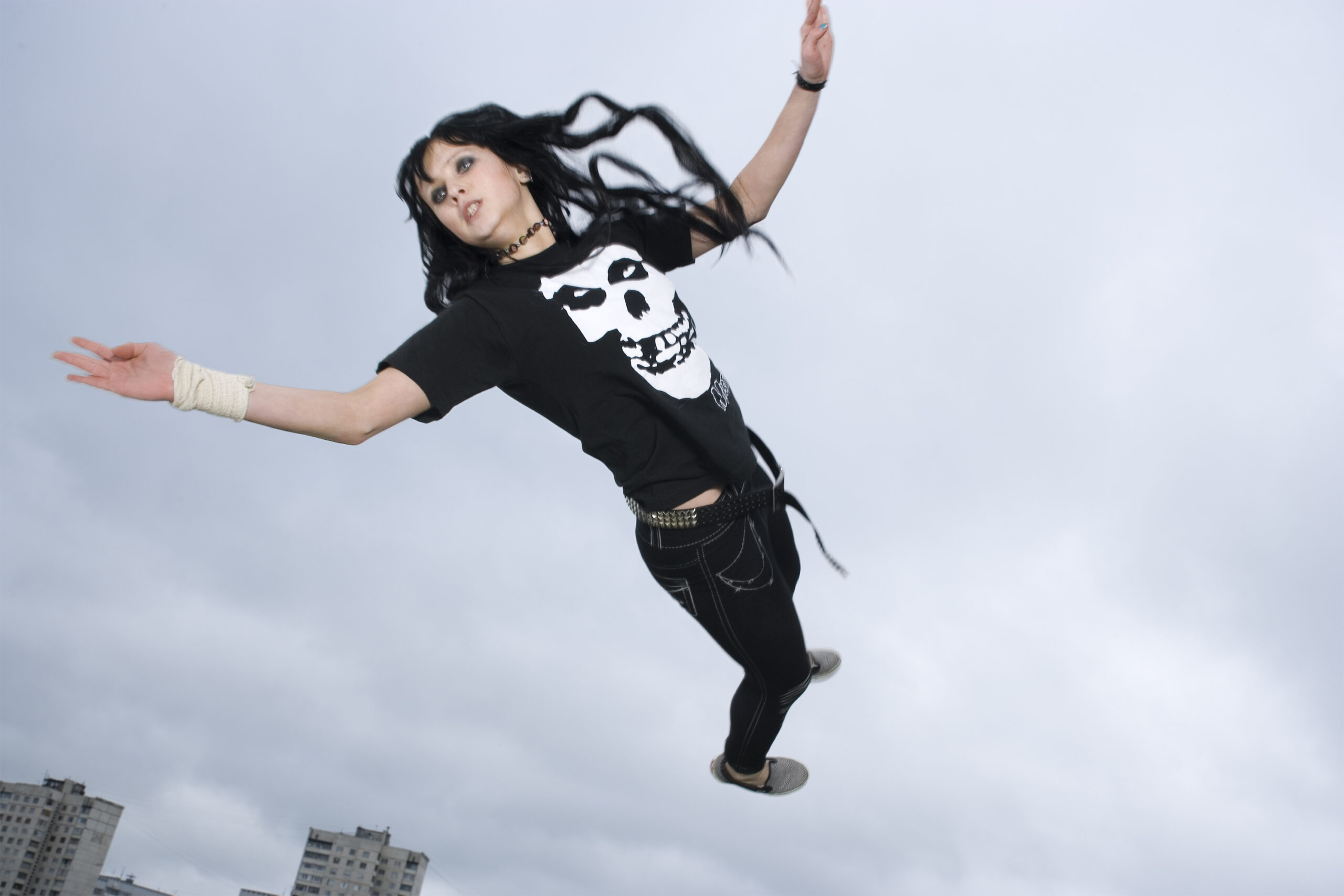
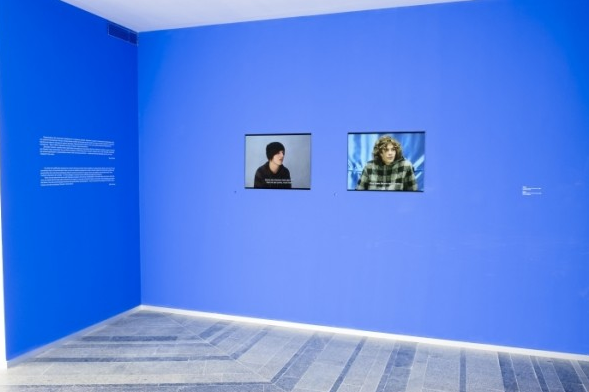
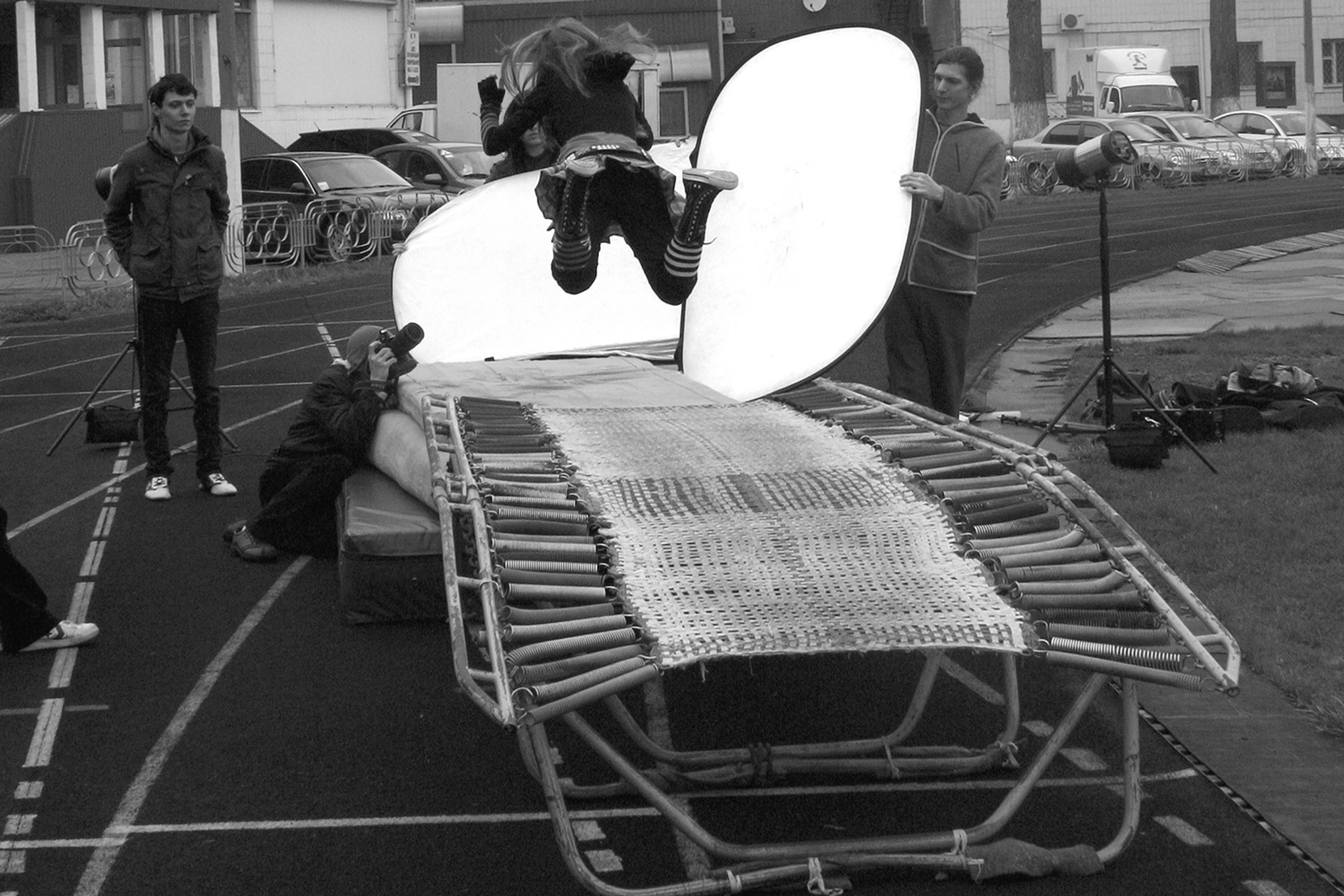
Another direction of the collective’s artistic practice concerned the interests and worldview of Ukrainian youth in the 2000s, particularly local subcultures. The first work in this direction was Dreamers (2008) — a video featuring emo teenagers screaming and growling, alongside footage of their levitation. Later, working with the same teenagers, the artists created the video I Have a Dream / I Don’t Know (2009), in which they shared their own dreams — mostly concerning the desire to go abroad — alongside Austrian schoolchildren who knew nothing about Ukraine. They also documented a subcultural concert at a Kharkiv nightclub in the video Forest (2009). Each of these works reflected the social dimension of escapism, disappointment with the political situation, and the younger generation’s sense of despair regarding the possibility of change.
Unlike the aforementioned, more provocative works, the projects involving young people and teenagers reflected a process of observation and co-creation between the artists and their invited protagonists. At the same time, they demonstrated a departure from staged narratives toward the documentation of live performance: dance, vocal techniques, and direct comments on the participants’ feelings within the social context of the time. Works such as Dreamers, I Have a Dream / I Don’t Know, and Forest clearly resonate with the aesthetics of interaction proposed in the 1990s by the French art historian Nicolas Bourriaud. According to this concept, the artist becomes a catalyst who facilitates the integration of art into a social context and collective action with the audience — both offstage or outside the camera’s field of vision and directly within the conditions of the work.
By contrast, in works such as They Are on the Street and Distance, the artists did not interact with their environment on equal terms but constructed situations according to the logic of the artwork. These works are closer to Situationism — a theoretical and artistic movement associated, among others, with the French philosopher Guy Debord and the artists’ and intellectuals’ organization Situationist International, active in the 1950s and 1960s [5]. As Guy Debord writes in Report on the Construction of Situations… (1957), the Situationists worked through small-scale experiments that served as a preparatory ground for further change [6]. In this way, they independently and deliberately constructed situations with the potential for development, even if they initially appeared unlikely or even illogical [7]. In these works, the SOSka group employed provocation to prompt society to react and reconsider its views. Accordingly, the earlier works, which are closer to relational aesthetics, focus on establishing inclusive connections and participatory encounters, while the later works, closer to Situationism, operate more radically and are directed toward political change and critique. Likewise, the former tend to engage with the institutional field and exist within its boundaries, whereas the latter are often realized in public space.
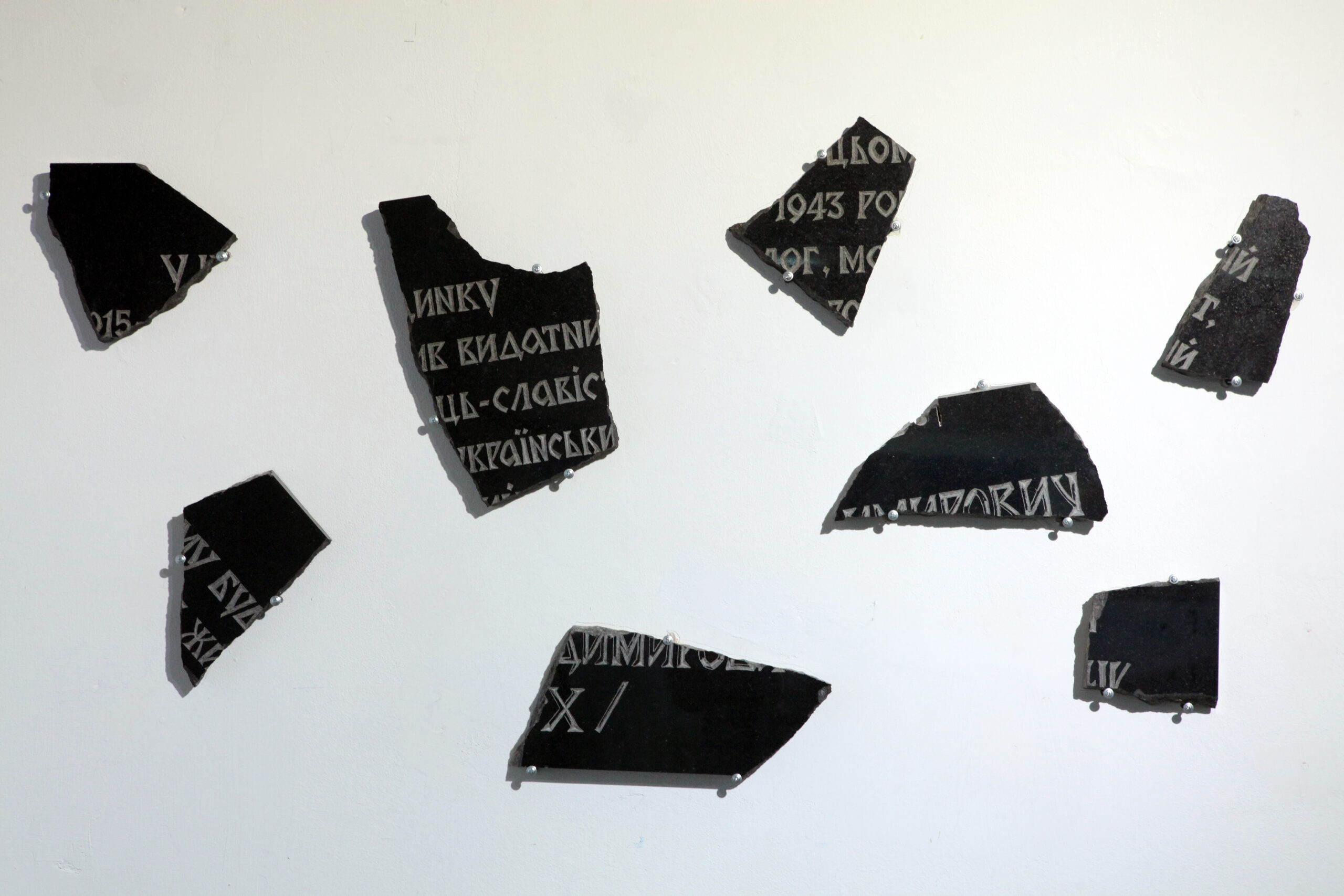
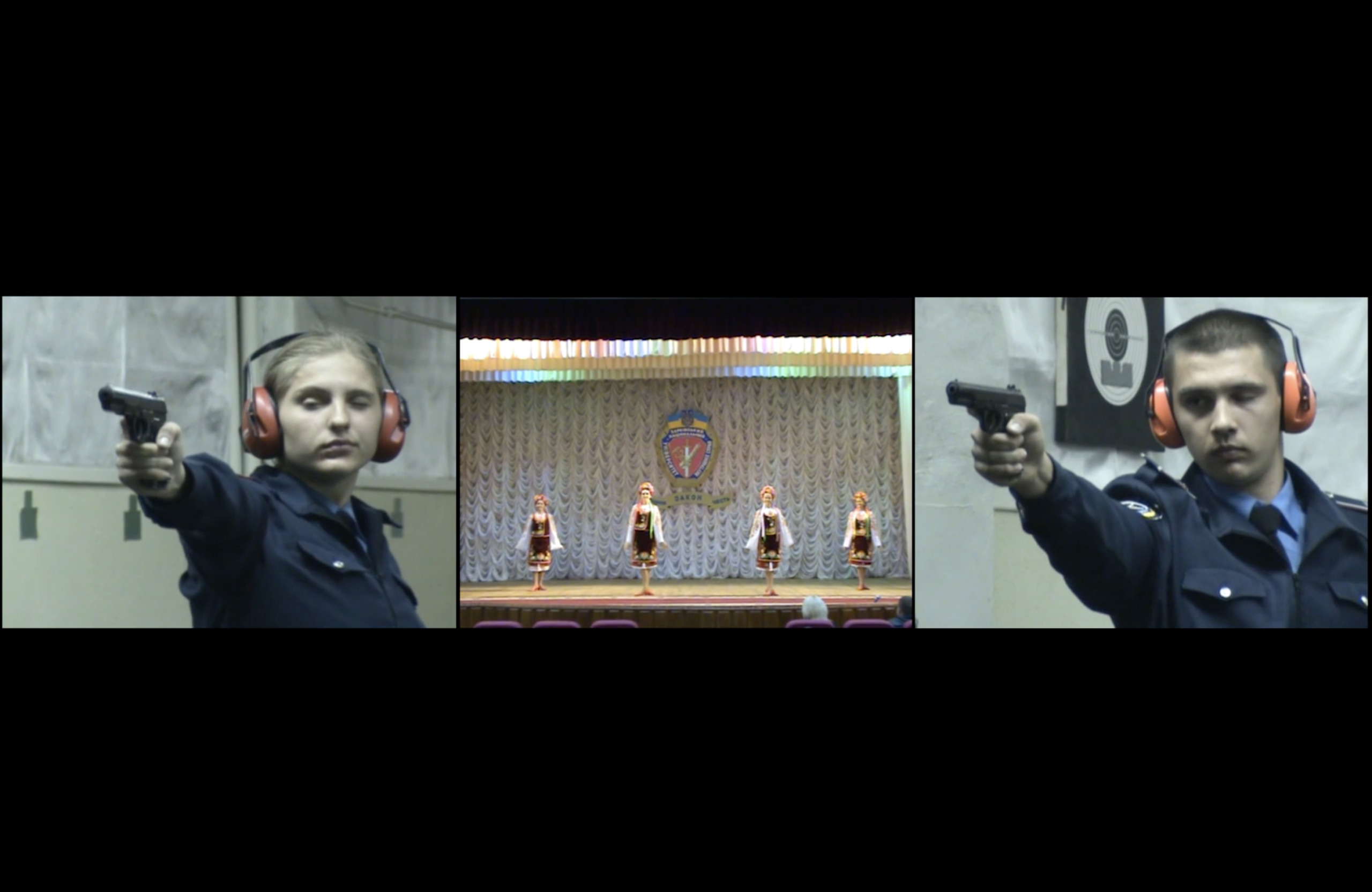
Over time, the artists’ language changed significantly, as evidenced by their later works, including Police Academy (2009–2015), dedicated to training at the Kharkiv National University of Internal Affairs, and Fragments (2013–2014), which addressed cases of vandalistic destruction of monuments to Lenin and Shevelov. Serhii Popov and Mykola Ridnyi, who at that time worked as a duo within the collective, subsequently moved away from activist and participatory projects toward installation and documentary video. In these works, the artists drew attention to the activities of state institutions and local authorities and prompted critical reflection on them. In particular, their work addressed the police, Kharkiv city officials, and right-wing radical groups. Thus, the artists continued their sustained practice of social provocation and diagnosis, but increasingly from the position of documentation and analysis rather than direct action or interaction.
Fragments became the SOSka group’s final collective work, after which the artists continued to work separately. In 2009, Hanna Kryventsova left the group and began her own psychotherapeutic practice. Mykola Ridnyi and Serhii Popov continued working as a duo until 2014, after which Ridnyi focused on his individual artistic practice, while Popov became, in 2017, a co-initiator of Kyiv Non Objective, an international platform for non-figurative art.
- Kryventsova H. SOSka: between action and institution. Moscow Art Magazine, 2007.
- Research interview with Serhii Popov 01.05.2025.
- Research interview with Mykola Ridnyi 23.04.2025.
- “Leave them: they are blind guides for the blind. And if a blind man leads a blind man, both will fall into a pit…” According to the translation of the Bible by Professor Ivan Ohienko.
- Hanna Kryventsova and Mykola Ridnyi in their text “SOSka Group and the Method of Reaction Diagnosis,” published in the catalog for the exhibition “Dreamers,” also note that the group follows practices developed by the situationists. See: SOSka Group. Dreamers. Kyiv: PinchukArtCentre, 2008. P. 6.
- Guy Debord. Report on the Construction of Situations and on the International Situationist Tendency’s Conditions of Organization and Action (1957) in Situationist International Anthology, edited and translated by Ken Knabb (Berkeley: Bureau of Public Secrets, 2006), 41.
- Ibid.