
Mire Lee
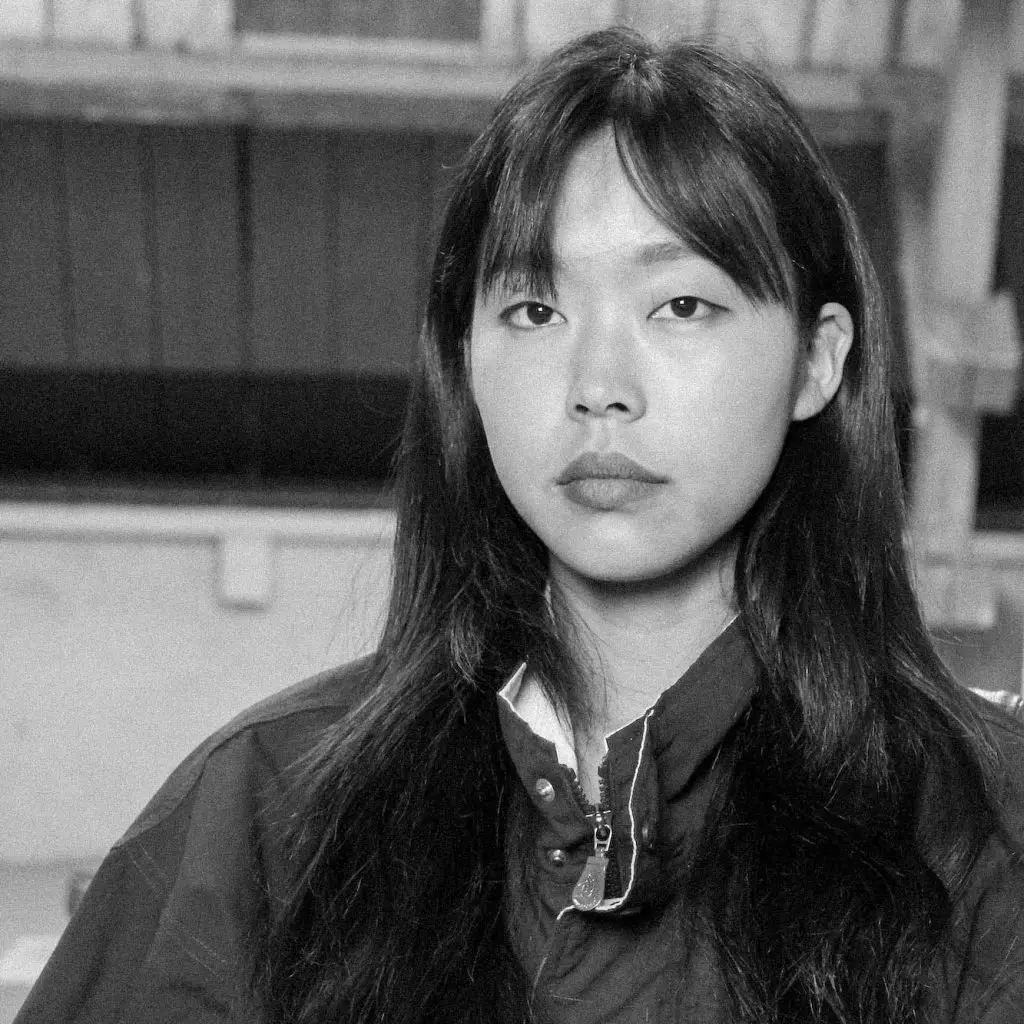
Mire Lee (b. 1988) pursues an artistic process based on substances the act of “making.” With a primary interest is in the material properties and movement of three-dimensional media, she explores affect and energy—including desire, sentimentality, vitality, and drive. She has taken part in various exhibitions, including the solo exhibition War Isn’t Won by Soldiers It’s Won by Sentiment (Insa Art Space) and the group exhibitions Moving / Image (Arko Art Center), 2016 Media City Seoul, NERIRI KIRURU HARARA (Seoul Museum of Art), 15th Lyon Contemporary Art Biennale, Where Water Comes Together with Other Water, etc.
Mire Lee (b. 1988) pursues an artistic process based on substances the act of “making.” With a primary interest is in the material properties and movement of three-dimensional media, she explores affect and energy—including desire, sentimentality, vitality, and drive. She has taken part in various exhibitions, including the solo exhibition War Isn’t Won by Soldiers It’s Won by Sentiment (Insa Art Space) and the group exhibitions Moving / Image (Arko Art Center), 2016 Media City Seoul, NERIRI KIRURU HARARA (Seoul Museum of Art), 15th Lyon Contemporary Art Biennale, Where Water Comes Together with Other Water, etc.
For her installation, Mire Lee creates an architectural interior made of formworks — typical tools for modeling building facades. The molds are removed after the material inside dries and are then reused over and over again. In a sense, these formworks “give birth” to concrete blocks, a process in which their surfaces appear to carry the traces of all the produced modules. The structure can be entered, allowing the viewer to walk through its inner architecture. Being inside of this half-closed space we find ourselves surrounded by walls, confined by formwork skin.
From here, the structure can be navigated as if it is an internal space of a body: there are two organ spaces and vessels that connect them. In the adjacent symmetric formwork rooms, there are constantly working peristaltic pumps. The sculptures on the top of the machines are entangled, creating a hybrid body. The physical feeling of outside and inside becomes blurred in all elements of Lee’s installation. The dry and hard facade surface is covered with concrete, while the outer layer of the sculptures are cracked allowing a viscous liquid to flow out. The slush inside bursts through a shell that once looked solid.
The materiality and movement of the sculptures directly targets our more tactile senses. Thus, the possibility of interpretation goes beyond a verbal means of communication, becoming the work’s foundational sinew. When language as a means supersedes human understanding, certain uncomfortable emotions become aesthetic experiences that can then be shared in common.
