
Nolan Oswald Dennis
Working with decolonial politics, history, and knowledge production, Nolan Oswald Dennis are interested in how pedagogical tools transform the gallery space into a place of learning – a study room or a library. Their new work Preoccupations unfolds across three adjoining spaces. Upon entering, the audience witnesses a three-channel film which plays in silence. Leaking in from another room along with the noises of the exhibition, the soundtrack of the film acts as a self-sufficient ambient sound piece. The film explores a 20th-century history of revolutionary education as a whole-earth project where political aspirations are entangled with natural and cosmic ambitions. The film combines original and archival materials with virtual images, diagrammatic maps, and earth-system simulations to produce a meditative and speculative reflection on the whole-world as a radical aspiration – a planet with many worlds within it.
The two adjoining spaces act as study rooms. Reflecting the history of topic-specific library reading rooms, which over centuries were created and modified to better suit knowledge of the world, they are arranged with library furniture designed to hold only one object, twice. In one room, a wall-mounted bookshelf, inspired by Placcius’ 17th century Arca Studiorum, holds an English and Ukrainian translation of The Pedagogy of the Oppressed (1970) by Brazilian educator Paulo Freire. This doubling is also repeated in the soft globe placed on the bookshelf and two articulated study desks, each holding a globe.
In the other room, Melville Dewey’s 19th-century Danner series of revolving bookcases is reimagined now as a relation-making shelf connecting two parallel atlases – English and Ukrainian Atlases and a black void. While libraries are imagined as an archive for general universal knowledge, artists imagine them as a space for specific pluri-versal relation making – a place to care for knowledge from the void between worlds. A wall drawing reimagines a wall map as a game-like space where many different kinds of worlds can be imagined. Presented as a series of options, the diagrammatic lines connecting this grid of worlds emphasize the relations between different kinds of worlds over the possibilities of any individual notion.
The history undercommons of the fugitive, prohibited, and illicit spaces of (black, indigenous, queer, working-class) study, where single books are shared and reshared amongst many people and where, against the convention of libraries as silent spaces, knowledge is shared by talking, singing, dancing and other opaque practices of freedom. The work reflects on historical and spatial disjunctions, ruptures, doublings, projections, simulations, and dreams in which an imaginary condition called a more-free-earth might be possible.
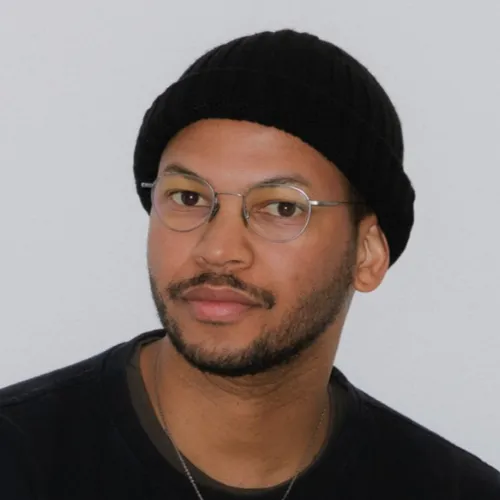
Working with decolonial politics, history, and knowledge production, Nolan Oswald Dennis are interested in how pedagogical tools transform the gallery space into a place of learning – a study room or a library. Their new work Preoccupations unfolds across three adjoining spaces. Upon entering, the audience witnesses a three-channel film which plays in silence. Leaking in from another room along with the noises of the exhibition, the soundtrack of the film acts as a self-sufficient ambient sound piece. The film explores a 20th-century history of revolutionary education as a whole-earth project where political aspirations are entangled with natural and cosmic ambitions. The film combines original and archival materials with virtual images, diagrammatic maps, and earth-system simulations to produce a meditative and speculative reflection on the whole-world as a radical aspiration – a planet with many worlds within it.
The two adjoining spaces act as study rooms. Reflecting the history of topic-specific library reading rooms, which over centuries were created and modified to better suit knowledge of the world, they are arranged with library furniture designed to hold only one object, twice. In one room, a wall-mounted bookshelf, inspired by Placcius’ 17th century Arca Studiorum, holds an English and Ukrainian translation of The Pedagogy of the Oppressed (1970) by Brazilian educator Paulo Freire. This doubling is also repeated in the soft globe placed on the bookshelf and two articulated study desks, each holding a globe.
In the other room, Melville Dewey’s 19th-century Danner series of revolving bookcases is reimagined now as a relation-making shelf connecting two parallel atlases – English and Ukrainian Atlases and a black void. While libraries are imagined as an archive for general universal knowledge, artists imagine them as a space for specific pluri-versal relation making – a place to care for knowledge from the void between worlds. A wall drawing reimagines a wall map as a game-like space where many different kinds of worlds can be imagined. Presented as a series of options, the diagrammatic lines connecting this grid of worlds emphasize the relations between different kinds of worlds over the possibilities of any individual notion.
The history undercommons of the fugitive, prohibited, and illicit spaces of (black, indigenous, queer, working-class) study, where single books are shared and reshared amongst many people and where, against the convention of libraries as silent spaces, knowledge is shared by talking, singing, dancing and other opaque practices of freedom. The work reflects on historical and spatial disjunctions, ruptures, doublings, projections, simulations, and dreams in which an imaginary condition called a more-free-earth might be possible.
