

Anton Saenko
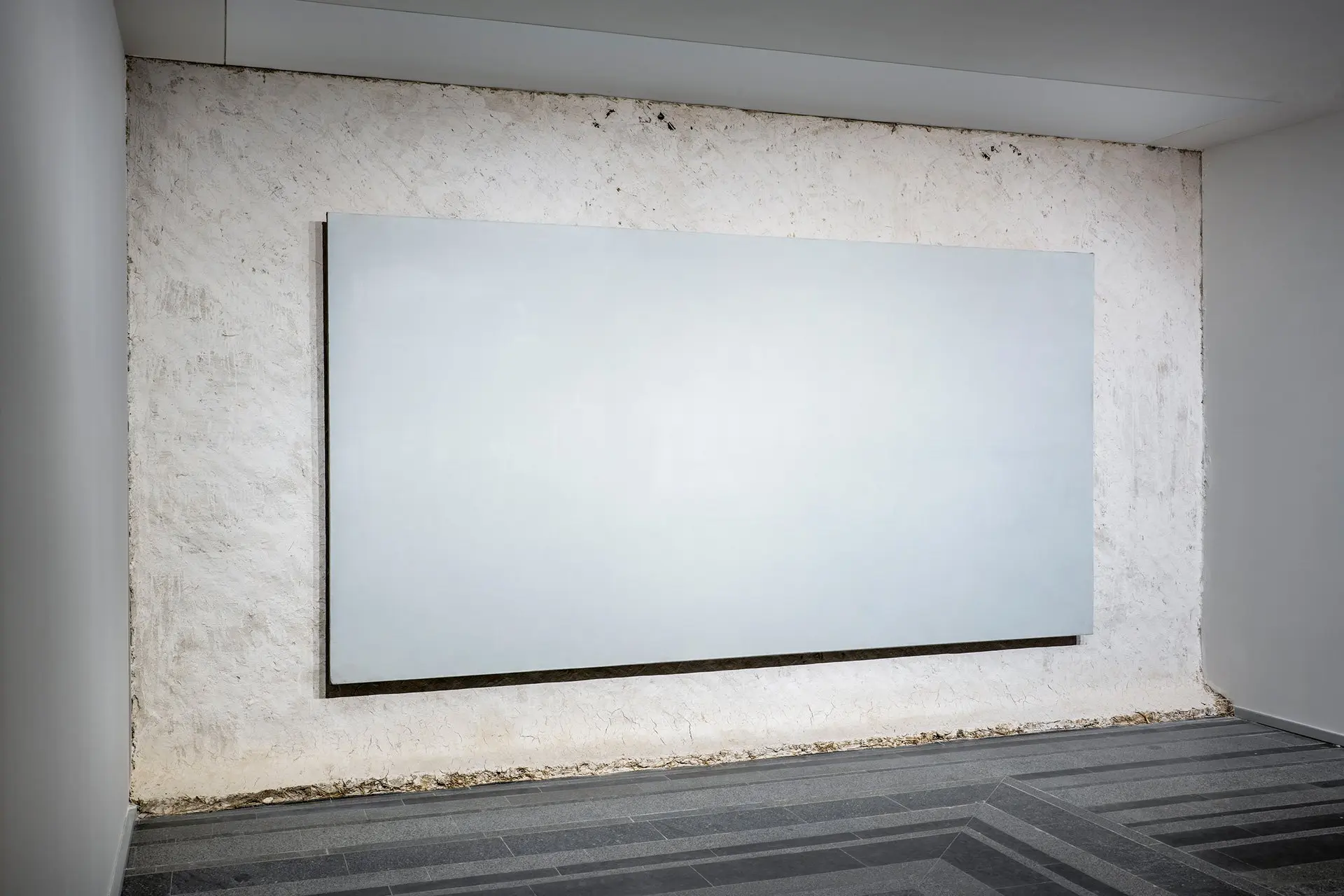
In Anton Saenko’s work Mud Hut, an abstract painting seems to emerge from the surface of the wall, resembling a mazanka clay hut. Thus, a picture that portrays nothing combines with a dense texture that references a very specific image of traditional Ukrainian housing, saturated with various connotations. In this way, the artist reveals the ‘principle of the abstract’: any non-figurative image has a specific, primary foundation, a material source. But art transforms it, and creates a part of reality that escapes interpretations, symbolic meanings, and functions. Color, texture, and light come to the forefront. The outlines of the viewers and the process of contemplation itself appear against the intense white backdrop.
At the same time, the image of the mazanka hut, as if it strives to be read and explained, loses its specificity next to the abstract painting. The surface becomes visible with its physical properties, which eventually become much more specific than any definitions. Importantly, Saenko painted over an old work to create the new one. Using the glazing technique (applying translucent paints over the base color), the artist hid the previous layers. They have not disappeared completely, remaining somewhat visible — the new work thus has its own past which is nevertheless inaccessible to the viewer.
White stands out among all the colors, revealing emptiness, exposing its own incompleteness, and evoking further potential layering and continuation. The invisible, yet present, history of the canvas; the white color hinting at a new beginning; the dissonance and complementarity of the abstract and the specific — all of this creates nuance that provokes observation and reflection.
Artworks
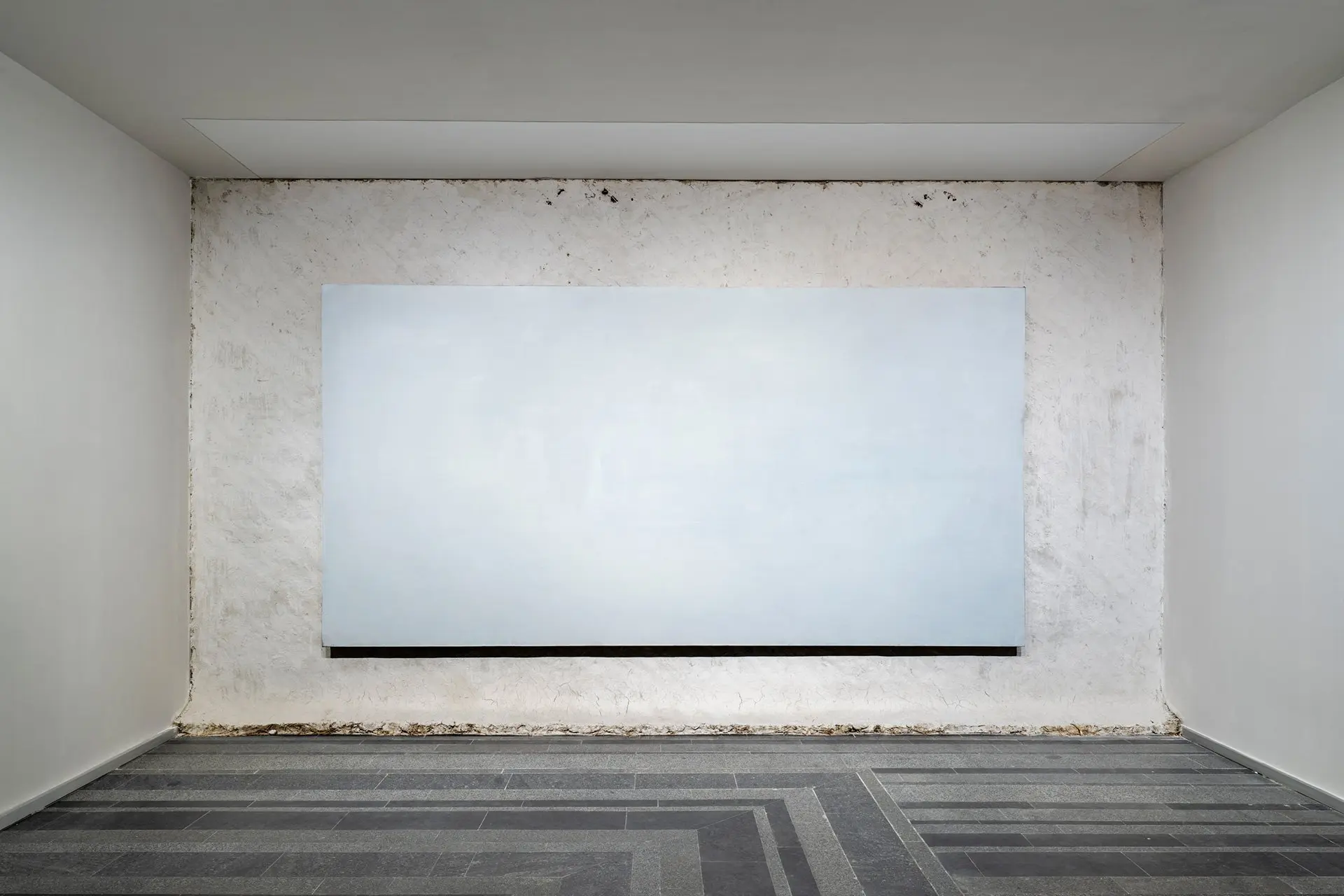
clay, chalk, oil on canvas Courtesy of the artist
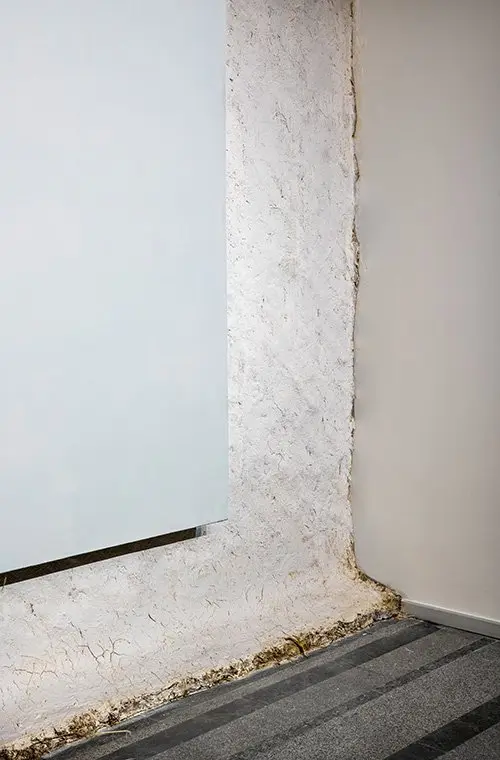
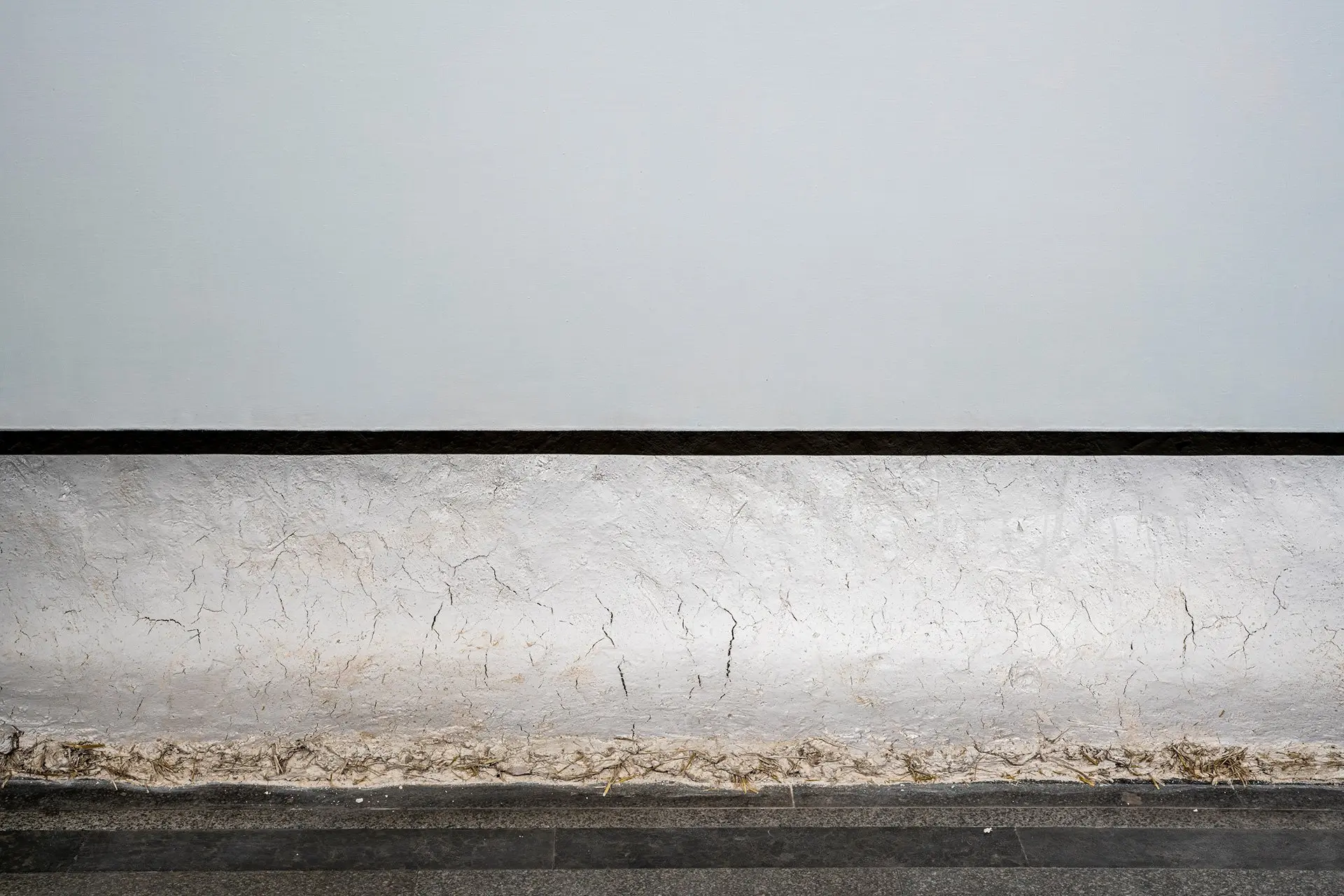
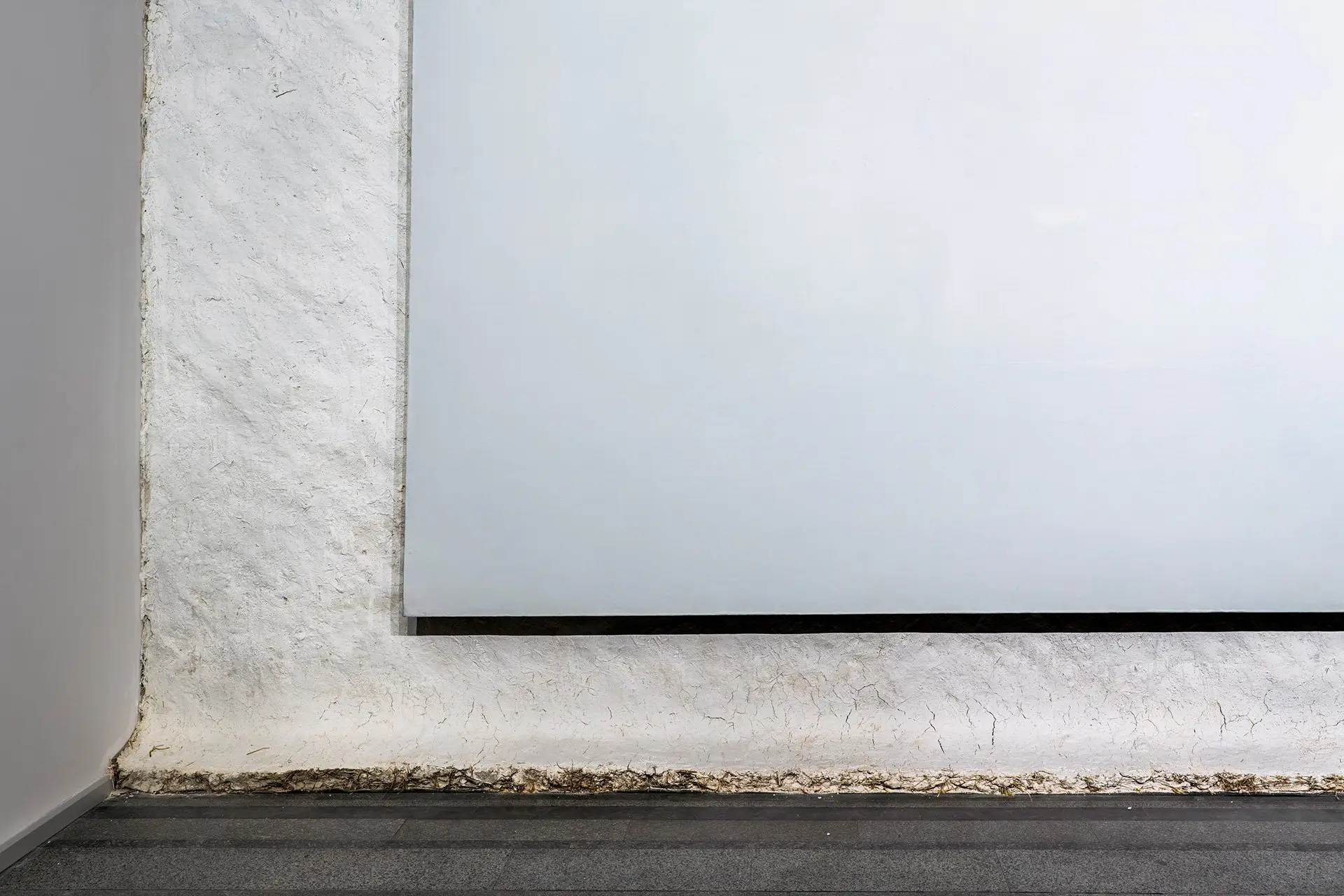
clay, chalk, oil on canvas Courtesy of the artist