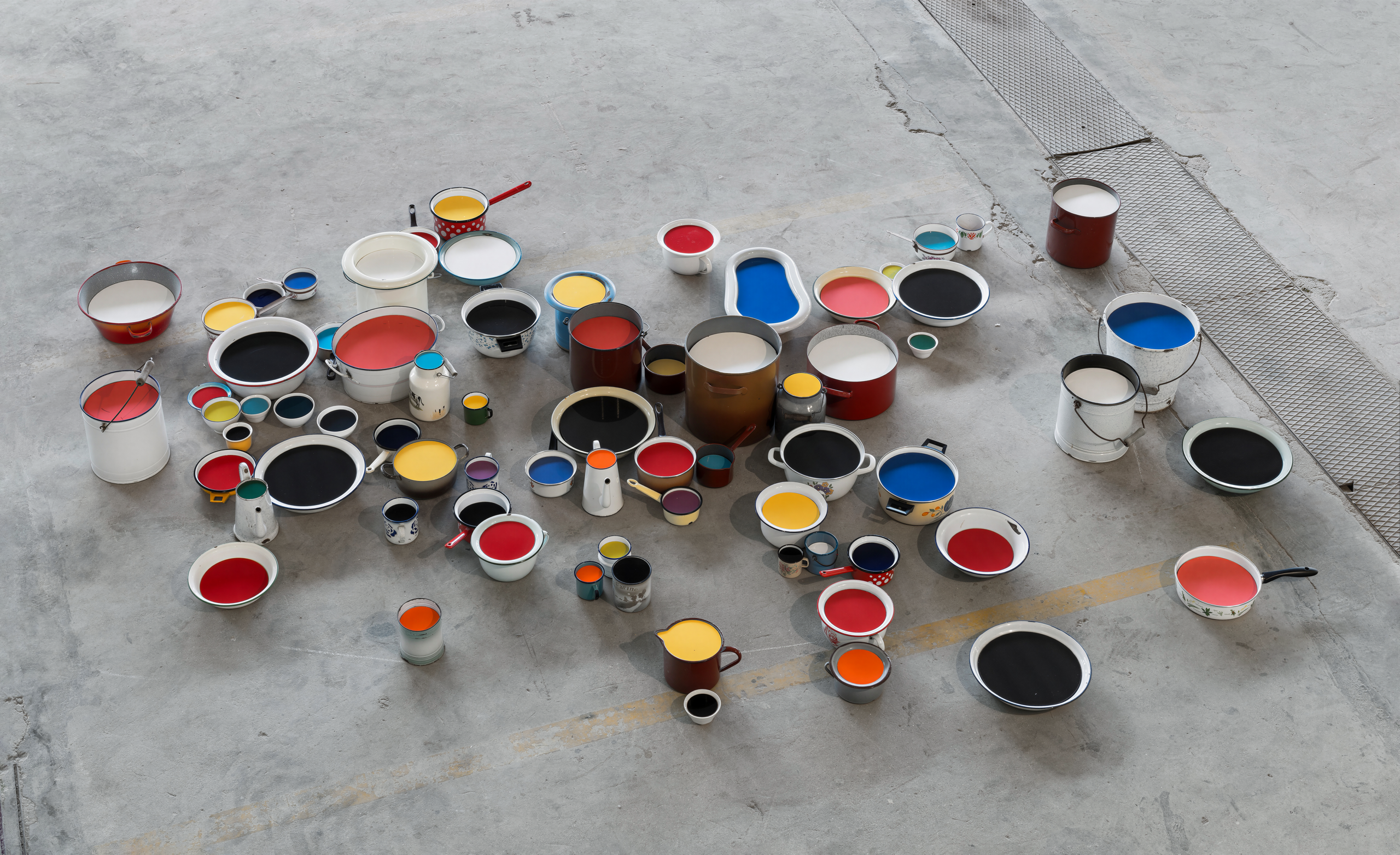
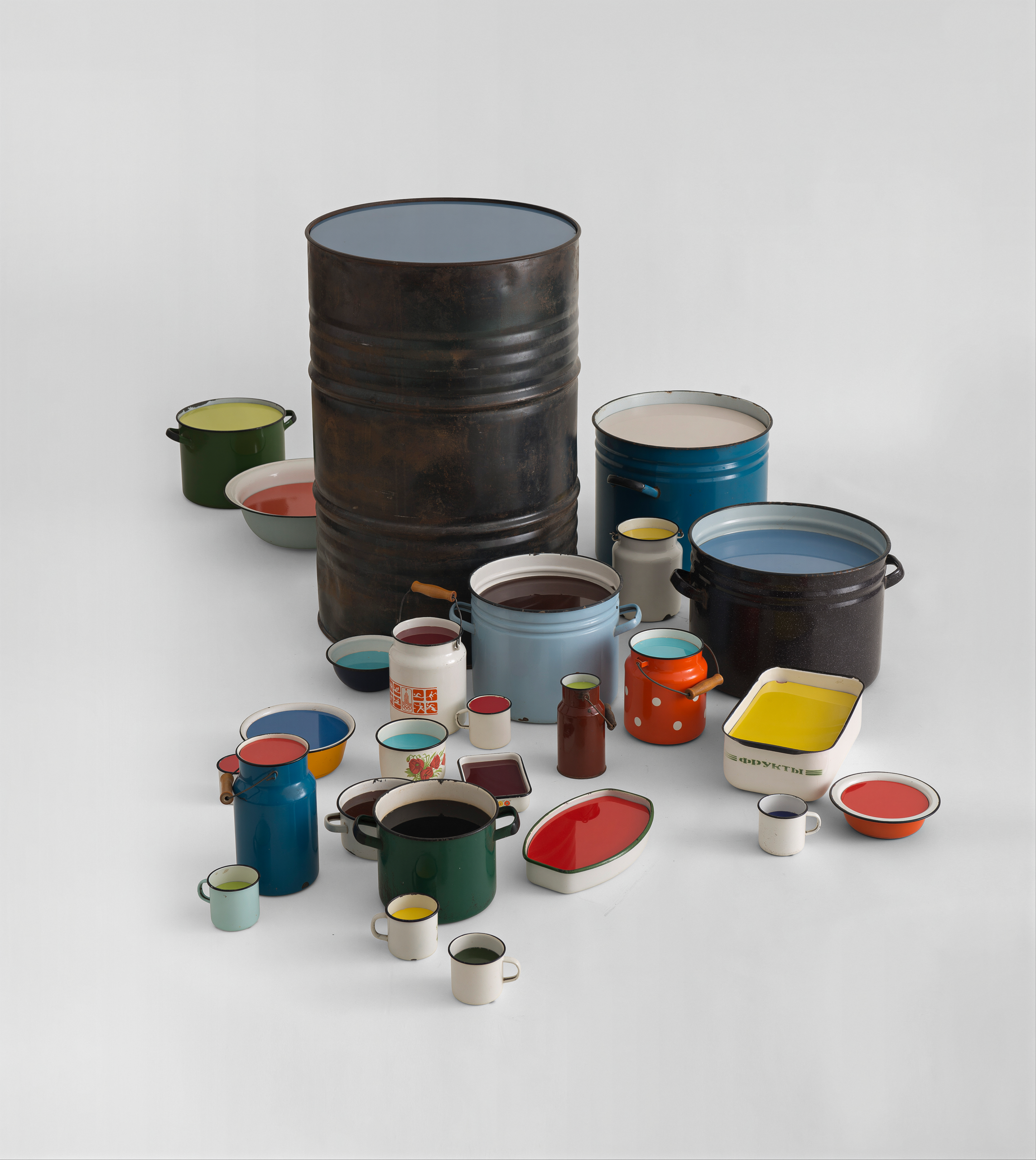
Zhanna Kadyrova. From the Abstract Fill series. 2012. Enamel dishware, metal canister, ceramic tile. Variable sizes
Series description
In this series, Zhanna Kadyrova offers an artistic concept of “filling.” Common to the projects is the cutting out of circular shapes from tiles, which physically and conceptually fill selected objects or entire spaces — from dishes to interventions in the concrete landscape of cities.
One of the first variants of the series was an installation with kitchenware, where each item was filled with a perfectly even layer of ceramics, creating the illusion of poured liquid. During one of the lectures at the Kyiv Academy of Media Arts (KAMA), Kadyrova explained that these fillings are a double illusion, as beneath the thin layer of tile there is emptiness. The artist sought to challenge the notions of content and container: to what extent is what appears full or meaningful actually so, and to what extent is it only an appearance? At the same time, she reflects on the place of modernist experiments in the local context, rejecting the realistic compositions promoted during her studies. Her sculptural objects resonate to some degree with the ideas of American Color Field painting of the 1940s–1950s and minimalist art in general. Evidently, she does not simply reproduce this trend of world art from the past but rather tests formalist gestures in everyday scenes, combining the low and the high, gallery and domestic, aesthetic and critical. Moreover, the artist consistently develops work with a single material that has its own history.
According to the original concept, the artist recreated the “Filling” series at the vernissages of her own exhibitions: she filled glasses with tiles that imitated red wine. All visitors could “enjoy the drinks” and take these objects with them. Often such installations mimicked a feast or resembled a place of cleaning or repair, traces of which remained after the installation was completed.
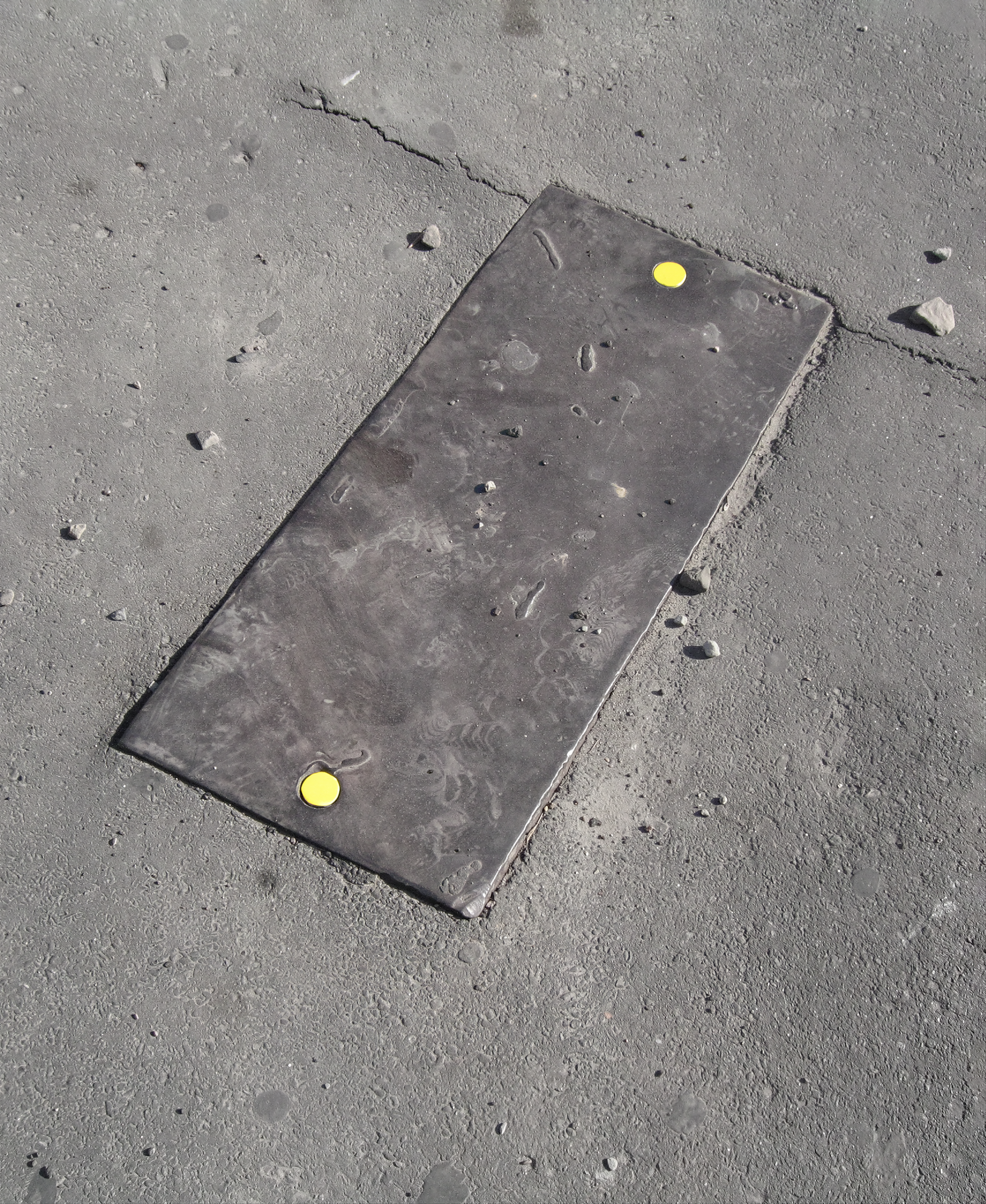
Another variant of the project was a series of interventions in concrete sidewalks and other pedestrian traffic zones where there were cracks or holes. The artist similarly filled them with colored tiles. The multicolored plates in the gray concrete drew attention to damaged areas or the consequences of industrial activity. On one hand, Kadyrova “patches” the space with art, and on the other — draws attention to existing problems. These works also often became a way of marking space — places dear to the artist or random points on the map that later gained significance for her. Most interventions, like other examples of spontaneous street art, eventually disappeared.